




If you are searching for reliable driveway snow removal Denver Co, you already know the city plows will not touch your property. Denver’s municipal snow response focuses on keeping main arteries and residential streets passable, but your driveway, walkway, and the hardened ridge the plow leaves behind are entirely your responsibility. This guide covers what you will pay in 2026, how to handle heavy snow yourself, the legal duties you cannot ignore, and how to pick a contractor who will actually show up when the next storm hits.
See the Best Snow Plows of 2026 ❄️
Table of Contents
- Why Denver Homeowners Can’t Rely on City Plows for Their Driveways
- How Much Does Driveway Snow Removal Cost in Denver? (2026 Pricing)
- DIY Driveway Snow Removal: Tools, Techniques, and Safety
- Denver Snow Removal Laws You Must Know (Sidewalk and Liability)
- How to Choose the Right Driveway Snow Removal Service in Denver
- The Environmental Side of Snow Removal: De-Icers and Your Landscape
- Frequently Asked Questions About Driveway Snow Removal in Denver
Why Denver Homeowners Can’t Rely on City Plows for Their Driveways
Denver’s Department of Transportation and Infrastructure deploys a fleet of 70 large plows across roughly 2,050 lane miles of main streets. On residential side streets, the Residential Snow Plow Program sends 4×4 pickup trucks with plows down about 1,260 center lane miles. That sounds comprehensive until you understand what the program actually delivers.
Residential Snow Plowing in Denver →
Residential plowing runs between 3:00 a.m. and 3:00 p.m. and consists of a single pass down the center of the street. The plow does not scrape to bare pavement, does not apply de-icing materials, and does not clear the area in front of your driveway. In fact, the city plow creates the exact problem many homeowners dread: a frozen, compacted ridge of snow and ice known as a windrow, deposited right where your driveway meets the street. That windrow hardens quickly in Denver’s freeze-thaw cycles and becomes a barrier that a standard shovel struggles to break. Municipal service exists to keep roads navigable, not to give you access to them. If you want a clear driveway, you need a plan that goes beyond waiting for the orange trucks.
How Much Does Driveway Snow Removal Cost in Denver? (2026 Pricing)
Denver driveway snow removal pricing has settled into a predictable range, though several variables push the final number higher or lower. Understanding the difference between per-visit pricing and seasonal contracts will help you budget accurately for the 2026 winter.
Per-Visit Pricing vs. Seasonal Contracts
For a standard single-car driveway in the Denver metro area, expect to pay between $65 and $100 per visit. That range accounts for driveway length, slope, and surface material. A bundled package covering the driveway, front entryway, and city sidewalk typically runs around $85 per visit, a common offering among established local services.
Seasonal contracts operate differently. You pay a flat fee before the season starts, and the contractor clears your driveway every time snowfall exceeds a predetermined trigger depth, usually two or three inches. Seasonal contracts often come with a 10 to 20 percent discount compared to paying per visit over the course of an average winter. The tradeoff is commitment: you pay whether Denver gets hammered with storms or sees a mild season. For homeowners who travel frequently or cannot afford to be snowed in even once, the predictability of a seasonal contract outweighs the gamble.
Factors That Influence the Final Price
Driveway length is the most obvious cost driver. A single-car driveway under 30 feet costs less than an extended double-wide that can park four vehicles. Slope matters just as much. Steep driveways demand more equipment control, take longer to clear, and expose the contractor to greater risk, all of which raise the price.
Surface type changes the plowing approach. Concrete and asphalt handle standard plow blades well, but gravel driveways require lighter passes and often a raised blade setting to avoid scattering stone across the yard. That extra care translates to a slightly higher per-visit rate. Timing also affects cost. Overnight snowfall that needs clearing by 6:00 a.m. commands a premium over daytime service, simply because crews are stretched thin and working in darkness.
Finally, storm frequency can shift pricing mid-season. During heavy snow years, some contractors adjust rates to reflect the increased wear on equipment and the sheer volume of work. Ask about rate-lock guarantees before signing a seasonal agreement.
DIY Driveway Snow Removal: Tools, Techniques, and Safety
Hiring a service is not the only path to a clear driveway. Many Denver homeowners handle snow themselves, at least for moderate storms. The right tools and techniques make the difference between a manageable chore and a trip to the emergency room.
Best Tools for Heavy Denver Snow
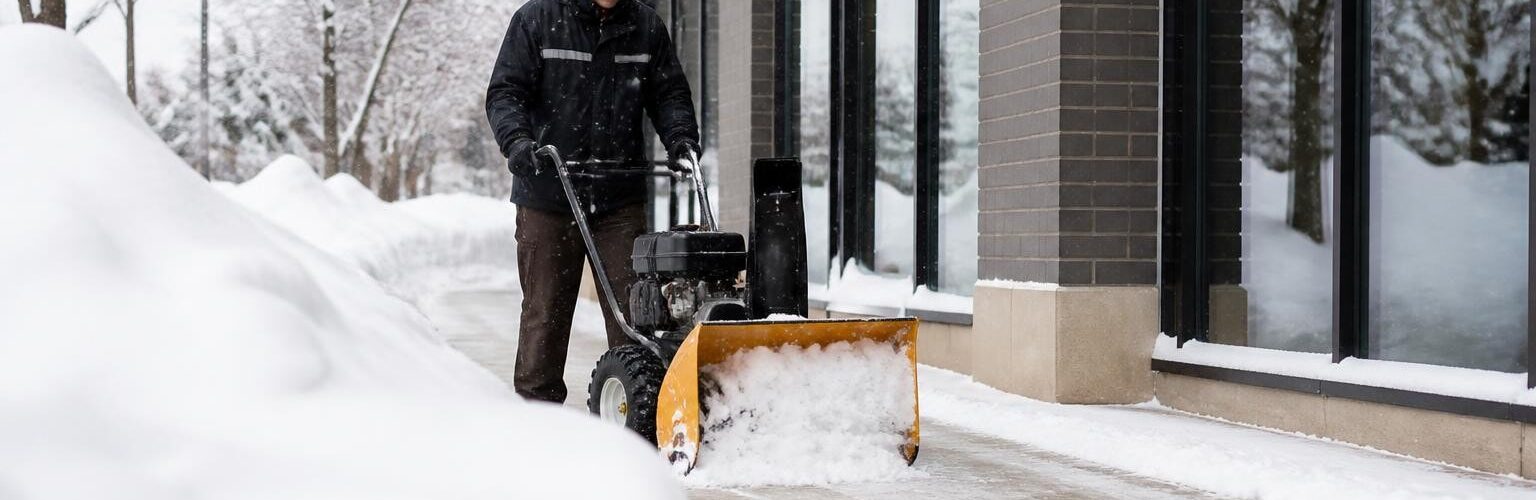
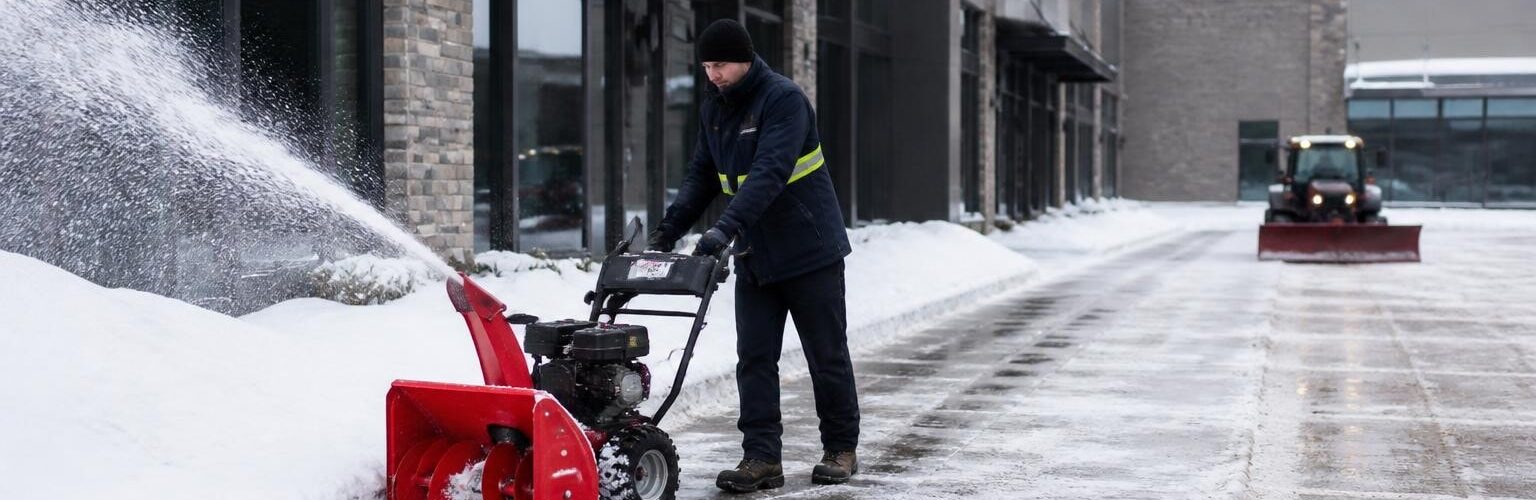
Denver snow is famously wet and heavy in spring and early winter, then lighter and drier during midwinter cold snaps. A single-stage snow blower struggles with the wet stuff. A two-stage gas snow blower, with an auger that feeds snow into a high-speed impeller, handles both heavy and light snow without clogging. Brands like Honda, Toro, and Ariens dominate the two-stage market and are worth the investment for driveways over 50 feet.
For manual clearing, skip the standard scoop shovel for anything beyond a light dusting. An ergonomic pusher shovel with a curved handle reduces back strain and lets you move snow without lifting. Wide pushers, 24 to 30 inches across, clear a path in fewer passes. Keep an ice scraper and a bucket of sand or calcium magnesium acetate on hand for the freeze-thaw ice layers that form after a sunny Denver afternoon refreezes overnight.
Technique Tips to Avoid Injury
Push snow downhill or to the side whenever possible. Lifting and throwing snow, especially the wet variety that can weigh 20 pounds per shovelful, strains the lower back and spikes blood pressure. If snow depth exceeds six inches, clear it in layers: skim the top half first, then tackle the bottom. This cuts the weight per pass in half.
Denver’s mile-high altitude makes physical exertion more taxing than at sea level. Your body receives less oxygen with every breath, so heart rate climbs faster during heavy work. Take breaks every 15 to 20 minutes, hydrate even in the cold, and stop immediately if you feel chest discomfort or dizziness. Snow shoveling sends thousands of people to emergency rooms each winter, and the altitude amplifies the risk.
When DIY Stops Making Sense
Some storms overwhelm even the best-equipped homeowner. Accumulations over 12 inches turn a one-hour job into a half-day ordeal. Ice layers from repeated freeze-thaw cycles resist shovels and can damage snow blower augers. Physical limitations, whether from age, injury, or medical conditions, make the risk of injury unacceptable. If you lack a two-stage blower and face a driveway longer than 50 feet, the math favors hiring a professional who can clear it in minutes rather than hours.
Denver Snow Removal Laws You Must Know (Sidewalk and Liability)
Clearing your driveway is only half the legal obligation. Denver enforces strict sidewalk clearing requirements, and ignorance of the rules will not protect you from fines or lawsuits.
Sidewalk Clearing Requirements
Denver municipal code requires businesses to clear adjacent sidewalks immediately after snow stops falling. Residential property owners have until 11:59 p.m. the following day to clear their sidewalks. The city issues a warning notice first, then performs a re-check. If the sidewalk remains uncleared, the property owner receives a $150 fine. Repeat violations escalate the penalty.
Liability for Slip-and-Fall Accidents
Colorado premises liability law generally holds the property owner responsible for injuries that occur on their sidewalk and driveway due to negligent snow and ice maintenance. If a mail carrier, delivery driver, or neighbor slips on your unshoveled walkway, you may face a claim for medical expenses and lost wages.
When you hire a snow removal contractor, verify that they carry general liability insurance with a minimum of $1 million in coverage. Ask for a certificate of insurance and confirm it is current. If you hire a neighbor or an uninsured individual and they perform the work negligently, leaving ice patches or partially clearing the path, the liability still falls on you as the property owner. The contractor’s insurance is your shield.
ADA Ramp and Bus Stop Obligations
Corner properties and homes near bus stops carry additional responsibilities. ADA-compliant curb ramps must remain clear of snow and ice to ensure wheelchair and stroller access. The city can issue citations for blocked ramps, and the fines often exceed standard sidewalk violations. If your property borders a bus stop, the adjacent sidewalk and boarding area must stay clear as well.
How to Choose the Right Driveway Snow Removal Service in Denver
Not all snow removal companies operate with the same level of professionalism. A few key checks separate reliable contractors from those who will leave you stranded after a storm.
What to Look for in a Contractor
Start with proof of insurance and bonding. A legitimate contractor will provide a certificate of insurance without hesitation. Next, insist on a written contract that spells out the terms: per-visit or seasonal pricing, the snowfall trigger depth, cancellation policy, and what exactly gets cleared. The contract should specify whether the service includes the city plow windrow, sidewalk, and walkway to the front door.
Local experience matters in Denver’s unique snow conditions. A contractor who has worked multiple Denver winters understands the freeze-thaw cycles, the timing of municipal plowing, and which neighborhoods get hit hardest. Ask how many seasons they have served the metro area. Equipment matters too. Rubber-edged plow blades protect asphalt and concrete from gouging, while steel edges are better suited for gravel. Make sure the contractor uses the right tool for your surface.
Red Flags to Avoid
Be wary of any contractor who cannot provide a physical address or a Denver-area phone number. Out-of-state operators sometimes flood the market after big storms and disappear just as quickly. Cash-only payments with no receipt signal an uninsured operator cutting corners. Vague promises like “we’ll get to you when we can” offer no accountability when you need your driveway cleared before work. And if a contractor never mentions sidewalk clearing, they may not understand Denver’s legal requirements, which means you will end up doing that part yourself or facing a fine.
Questions to Ask Before Hiring
Three questions reveal whether a contractor knows their business. First: “Do you clear the windrow left by the city plow?” If they hesitate or say that costs extra, you know exactly what to expect after the next municipal pass. Second: “What happens if it snows again before my 24-hour window is up?” Good contractors have a return policy for back-to-back storms. Third: “Do you apply de-icer, or just plow?” Plowing alone leaves a thin layer that can melt and refreeze into a sheet of ice. A contractor who applies de-icer or offers it as an add-on provides a more complete service.
The Environmental Side of Snow Removal: De-Icers and Your Landscape
Denver uses Ice Slicer, a naturally mined product from Utah containing over 90 percent chloride salts, on main streets. Downtown, the city switches to liquid magnesium chloride to reduce particulate matter and improve air quality. These municipal choices reflect a growing awareness that de-icing chemicals carry consequences.
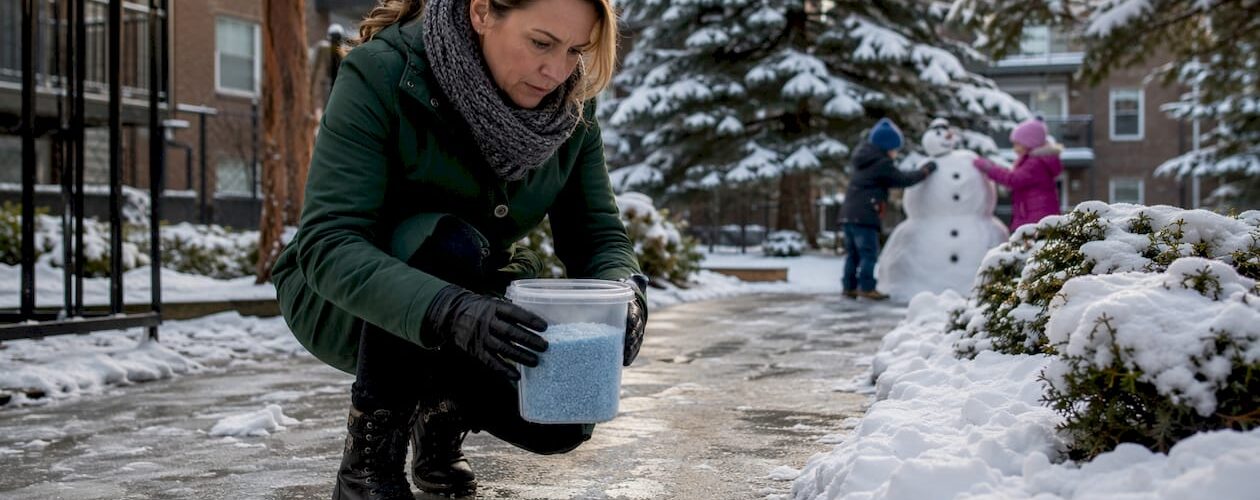
For your own driveway, avoid sodium chloride, the standard rock salt sold at hardware stores. It corrodes concrete through a process called spalling, where the surface flakes and pits after repeated freeze-thaw cycles. It also irritates pets’ paws and kills grass and shrubs along driveway edges when snowmelt carries it into the soil. Calcium magnesium acetate, often labeled CMA, provides effective ice melting without the same damage to concrete or plants. Sand offers traction without any chemical impact, though it does not melt ice. Denver Parks and Recreation uses environmentally safe chemicals on multi-use trails, a standard worth asking your contractor about. Some local snow removal companies now offer pet-safe or landscape-safe de-icing options as a differentiator.
Frequently Asked Questions About Driveway Snow Removal in Denver
How much should I pay my neighbor for snow removal?
A fair range for a neighbor clearing a standard single-car driveway runs between $30 and $50 per visit. This sits below professional rates because the arrangement typically lacks insurance, a formal contract, and guaranteed response times. If your neighbor proves reliable and you want to simplify the arrangement, consider a seasonal flat fee of $200 to $300 for the winter. Agree on the terms before the first storm: what gets cleared, when, and what happens if they are out of town.
Does Denver offer any help for seniors or disabled residents?
Yes. The Denver Snow Angels program connects volunteers with elderly and disabled residents who need assistance shoveling sidewalks and driveways. The program operates through the city, and both volunteers and recipients can sign up through Denver’s official website. Spaces fill early each season, so register in October or November if you need help or want to volunteer.
What is the best snow removal machine for a Denver driveway?
For driveways over 50 feet, a two-stage gas snow blower from a reputable brand like Honda, Toro, or Ariens handles Denver’s wet, heavy snow without bogging down. For short, flat driveways under 30 feet, an electric single-stage blower works well for accumulations under eight inches and requires less maintenance. Avoid single-stage gas blowers for long or sloped driveways; they lack the power to throw heavy snow more than a few feet.
Are snow removal companies hiring in Denver for 2026?
Seasonal plow drivers and shovelers remain in high demand across the Denver metro area. Companies begin recruiting in October, and positions range from operating pickup-mounted plows to hand-shoveling walkways and applying de-icer. Check local company websites, job boards, and industry-specific listings starting in early fall. Most positions require a valid driver’s license, the ability to work early morning hours, and a tolerance for cold, physically demanding work.