

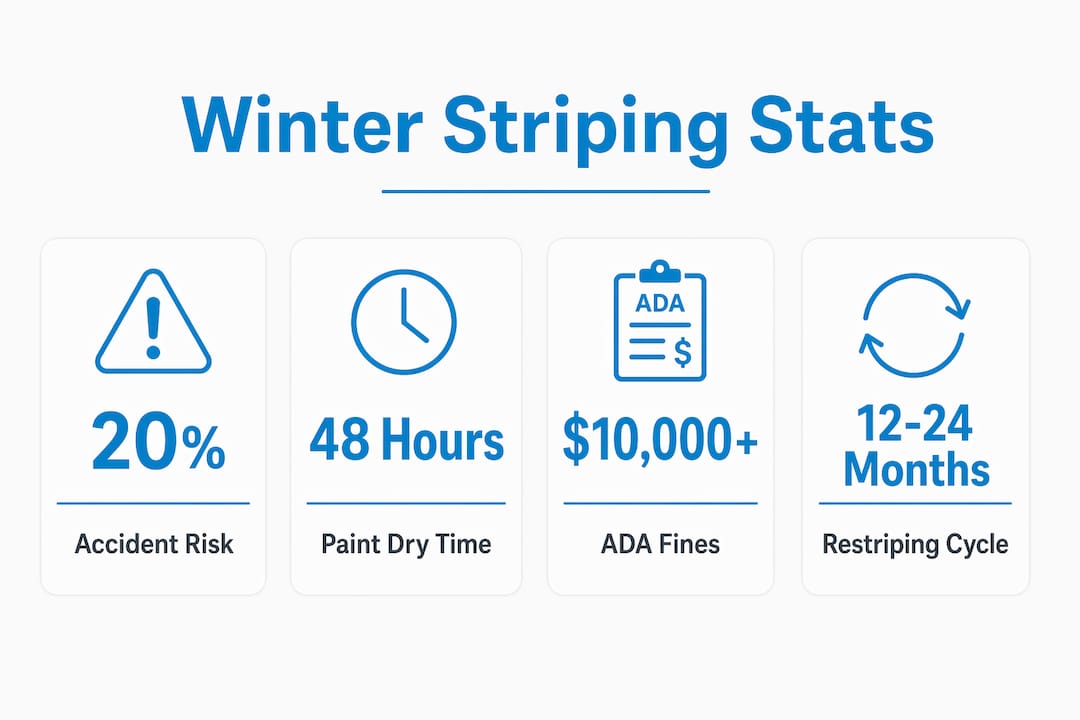
Restriping a parking lot after snow removal restores the visibility, plow guidance, and liability protection that winter strips away. Industry guidance recommends inspecting pavement markings 1–2 times per year and scheduling restriping every 12–24 months depending on traffic volume. With roughly 1 in 5 vehicle accidents occurring in parking lots, faded lines after a Denver winter are a genuine liability exposure, not just a cosmetic issue.
Start here once the snow is cleared:
- Walk the full lot on foot within 48–72 hours of the last major thaw and photograph every faded or missing marking.
- Check ADA-accessible spaces, fire lanes, and crosswalks first — these carry the highest compliance risk.
- Note where snow piles sat longest; those zones typically show the worst paint degradation.
Clear lot striping is the first line of defense after snow removal. It tells drivers where to go, tells plow operators where to push, and tells a court that you took reasonable steps to keep the property safe.
Table of Contents
- Why restriping matters after winter: safety, plows, and liability
- How snow removal and winter conditions physically damage pavement markings
- When to inspect and when to schedule restriping after winter
- Surface preparation and paint choices that make restriping last longer
- How to coordinate striping work with your snow-removal plan and contractors
- Budgeting and choosing a striping contractor who protects your investment
- A post-snow-season action checklist for property managers
- Key Takeaways
- A field perspective on striping and snow removal in Denver
- Denversnowremovals can help you coordinate plowing and restriping
- FAQ
- Sources and further reading
Why restriping matters after winter: safety, plows, and liability
Visible striping reduces crashes, guides snowplow operators along efficient routes, and protects property owners from legal exposure. La sécurité découle directement de la visibilité des marquages : des lignes effacées ou mal définies créent des risques de responsabilité et entraînent des amendes pouvant dépasser 10 000 $ par infraction dans certaines juridictions. ADA non-compliance alone can trigger federal enforcement action.
| Risk Area | Impact |
|---|---|
| Accident frequency | ~1 in 5 vehicle accidents occur in parking lots |
| ADA/fire-lane fines | Can be substantial per violation |
| Parking capacity loss | Poor layout can reduce total spaces by a noticeable margin |
Plow operators rely on visible stall lines and aisle markings to follow efficient routes, avoid curbs and landscape islands, and minimize over-plowing. When those lines disappear under a Denver winter, crews guess — and guessing leads to scraped curbs, damaged islands, and uneven clearing. A well-striped lot also maximizes capacity: an optimized layout can recover 10–20% more usable spaces compared to a suboptimal one. Treating striping as an asset-management task rather than a cosmetic touch-up is what separates proactive property managers from reactive ones.
How snow removal and winter conditions physically damage pavement markings
Plow blade contact, de-icing chemicals, freeze-thaw cycles, and mechanical sweeping are the four main culprits behind faded spring markings. Each works differently, and understanding the mechanism helps you ask better questions of contractors.
- Plow blade scraping: Steel or carbide blades pass millimeters above the surface. On uneven asphalt, direct contact grinds away paint layer by layer across an entire winter season.
- De-icer and salt penetration: Chloride-based products soften the bond between paint and asphalt, especially on older or unsealed surfaces. Repeated applications accelerate chemical degradation.
- Freeze-thaw cycling: Water infiltrates micro-cracks in the paint film, expands when it freezes, and lifts paint from the surface. Denver’s temperature swings make this particularly aggressive.
- Mechanical sweeping: Broom trucks with stiff bristles abrade paint faster than regenerative air sweepers, which lift debris without direct pavement contact. Switching to regenerative air sweeping on sealed, striped surfaces is one of the simplest ways to extend paint life.
When to inspect and when to schedule restriping after winter
Inspect pavement markings once in early spring and again mid-summer; plan restriping every 12–24 months based on traffic. High-traffic retail lots typically need annual maintenance, while lower-traffic office properties can stretch to 24 months.
Inspection and scheduling timeline:
- Spring walk (within 2 weeks of final thaw): Assess overall marking visibility, ADA compliance, and fire-lane condition. Photograph every zone.
- Surface temperature check: Paint requires sustained dry conditions and temperatures above 50°F (10°C) to cure properly. In Denver, that window typically opens in late April or May.
- Mid-summer follow-up: Confirm that spring repairs held and identify any high-traffic zones showing early wear.
- Schedule restriping: Book the contractor for late spring through summer. Avoid fall scheduling — lines painted late in the season get less curing time before the next winter.
Surface preparation and paint choices that make restriping last longer
Proper surface prep — power washing, crack sealing, and spot patching — matters as much as paint quality. Applying fresh paint over debris, cracks, or oil-stained asphalt causes premature peeling; bundling surface prep with restriping directly increases how long new markings hold up.
Pre-striping surface checklist:
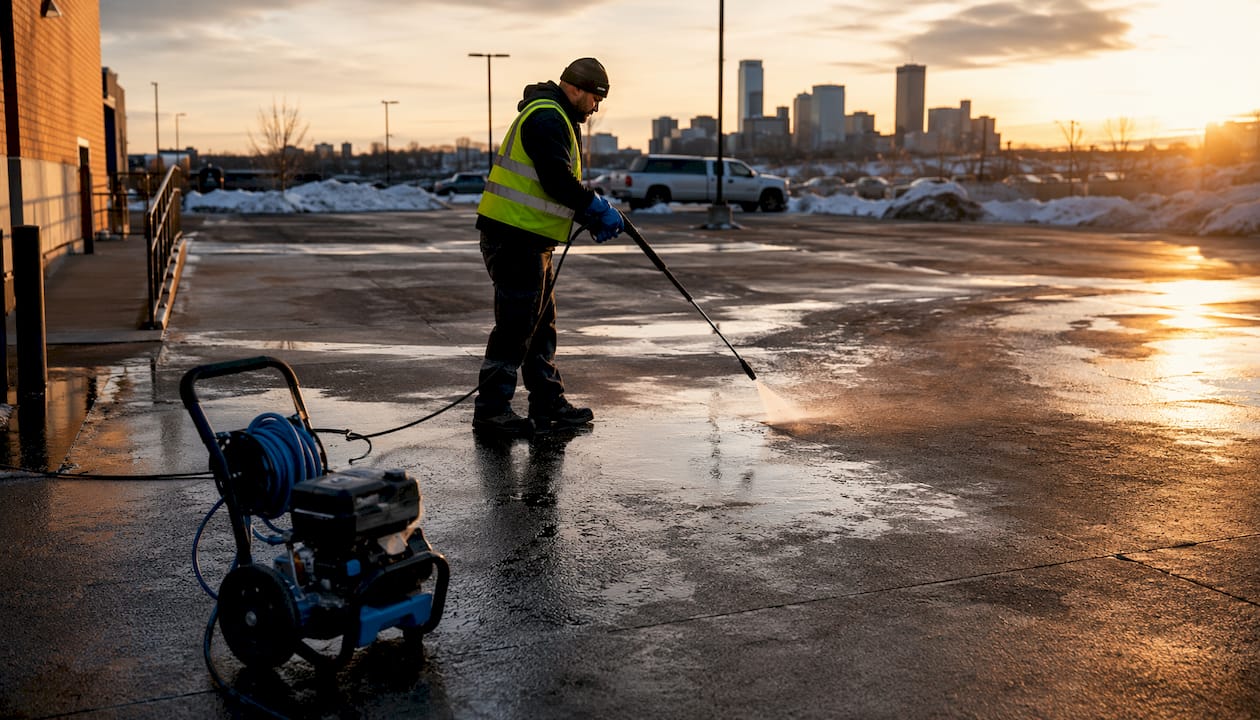
- Power wash the full lot to remove salt residue, oil stains, and winter grime.
- Seal cracks and fill potholes before any paint is applied.
- Spot-patch deteriorated asphalt sections, especially in snow-pile zones.
- Apply selective sealcoating where the base surface is oxidized or porous.
- Confirm the surface is fully dry before the striping crew arrives.
On material choice, waterborne acrylic paint is the standard for most Denver commercial lots: lower cost, fast dry time, and adequate durability for moderate-traffic sites. Epoxy or thermoplastic markings cost more upfront but last significantly longer in high-traffic drive aisles and entry lanes. Reflective glass-bead additives improve nighttime and low-light visibility, which matters in a city where evening snowfall is common.
Pro Tip: Ask your contractor to hold off on post-striping sweeping for at least 24–48 hours. Regenerative air sweepers are safer than broom trucks on fresh paint, but even those should wait until the paint has fully cured.
Good drainage maintenance also extends paint life: standing water that collects in low spots softens the asphalt base and accelerates paint failure regardless of how well the surface was prepped.
How to coordinate striping work with your snow-removal plan and contractors
Plan striping and snow storage together from the start of the season. Moving snow across striped aisles embeds de-icing salts and debris into painted zones and increases abrasion; designating permanent snow-storage areas in low-traffic corners prevents that damage before it starts.
Coordination checklist:
- Map plow routes before the season and mark snow-storage zones on a site plan shared with both the snow crew and the striping contractor.
- Designate storage areas away from high-traffic aisles, ADA spaces, and fire lanes.
- Schedule restriping after the active snow season ends, not before.
- Require plow operators to raise blade height slightly over freshly striped sections when possible.
- Postpone aggressive mechanical sweeping until new paint has cured (minimum 24–48 hours).
- Document pre- and post-season photos of all markings for liability records.
Pro Tip: A simple annotated site map — even a hand-drawn one — shared with your snow vendor and striping contractor eliminates most coordination failures. When both crews work from the same reference, snow piles land in the right spots and fresh paint stays intact.
For properties with multiple access points, coordinating snow removal across entrances also protects the markings that guide traffic at each entry.
Budgeting and choosing a striping contractor who protects your investment
Prioritize contractors who bundle surface prep, guarantee cure windows, and coordinate directly with your snow vendor. The lowest bid rarely accounts for prep work, and skipping prep is the fastest way to repaint the same lot twice in one season.
- Ask about prep scope: Does the bid include power washing, crack sealing, and oil-spot treatment, or just paint?
- Confirm paint specifications: What product, what mil thickness, and are reflective additives included?
- Clarify cure-time policy: Will the contractor delay sweeping and traffic for the recommended window?
- Request scheduling flexibility: Can they adjust the start date if a late-spring storm delays surface drying?
- Check local winter experience: Ask for references from Denver-area commercial properties, specifically lots that are plowed regularly.
- Bundle when possible: Pairing patching, crack sealing, and sealcoating with restriping boosts contrast and extends paint life — one mobilization cost covers multiple repairs.
Budget for a 12–24 month restripe cycle and build a contingency line for winter-damaged zones that need spot patching before paint can go down. High-traffic drive aisles and entry lanes wear faster and may justify thermoplastic or epoxy over standard acrylic.
A post-snow-season action checklist for property managers
Walk the lot within 48–72 hours after the last major thaw and work through the steps below in order.
- Conduct a full on-foot inspection. Drive-throughs miss fading in corners and pedestrian areas.
- Prioritize ADA spaces, fire lanes, and crosswalks. These carry the highest compliance and liability risk.
- Photograph every faded or damaged marking from consistent vantage points so year-over-year wear is easy to compare.
- Note snow-pile zones. These areas need surface assessment before any paint is applied.
- Schedule surface prep (power washing, crack sealing, patching) as soon as temperatures allow.
- Book the restriping window for late spring or early summer when pavement is dry and temperatures are holding above 50°F.
- Notify your snow vendor of the restriping schedule and updated snow-storage locations for next season.
- File documentation. Keep inspection photos, contractor invoices, and pre/post-season records together for liability protection.
Pro Tip: Keep a dated photo log in a shared folder your property management team can access. If an accident claim ever references lot conditions, timestamped photos showing visible, well-maintained markings are your strongest defense.
Key Takeaways
Restriping after snow removal protects safety, guides plow operations, and reduces liability exposure — making it one of the highest-return maintenance tasks a Denver property manager can schedule each spring.
| Point | Details |
|---|---|
| Inspect 1–2× per year | Walk the lot on foot in early spring and mid-summer; photograph every faded marking. |
| Restripe every 12–24 months | High-traffic retail lots need annual work; lower-traffic office sites can stretch to 24 months. |
| Surface prep first | Power washing, crack sealing, and patching before paint prevents premature peeling. |
| Coordinate snow storage | Designate permanent pile zones away from striped aisles to reduce salt and abrasion damage. |
| Denversnowremovals | With 44+ years of Denver experience and 24/7 operations, Denversnowremovals helps coordinate plowing and post-season restriping scheduling. |
A field perspective on striping and snow removal in Denver
The conventional wisdom treats restriping as a spring cosmetic task — something you schedule after the real work is done. That framing gets property managers into trouble every year in Denver.
The lines on your lot are operational infrastructure. They tell a plow operator where the curb is at 2 AM during a blizzard. They tell a driver where the pedestrian crossing is when six inches of fresh snow has erased every other visual cue. When those lines are gone, the lot does not just look neglected — it functions less safely, and your legal exposure grows with every vehicle that enters.
The piece most managers underestimate is the coordination window. Restriping is temperature- and moisture-dependent, which means Denver’s shoulder seasons (March through May) are often too cold or too wet to paint reliably. That creates a narrow booking window in late spring and early summer that fills up fast. Managers who wait until the lot looks bad are competing for contractor time with everyone else who also waited. The ones who walk their lot in April, document the damage, and book a contractor for May or June get the work done before the summer rush and before another season of plow damage compounds the problem.
Treat striping as part of your snow-removal contract conversation, not a separate afterthought. Ask your snow vendor where they plan to pile snow before the first flake falls. That single conversation protects more paint than any premium product upgrade.
Denversnowremovals can help you coordinate plowing and restriping
Property managers in the Denver Metro area who want plowing and post-season lot maintenance handled together have a direct option. Denversnowremovals has spent 44+ years managing snow removal for residential and commercial properties across the region, and the team’s local knowledge of Denver’s freeze-thaw patterns and 24/7 commercial snow service means scheduling decisions get made with real seasonal context, not guesswork.
- 24/7 availability throughout the snow season, so your lot is cleared and documented before the next business day.
- Local winter expertise built over four decades of Denver operations, including snow-storage planning that protects your markings.
- Free estimates and flexible service plans for both residential and commercial properties.
If you want to stop repainting the same lot twice a year, the first step is a conversation about where the snow goes. Request a free estimate and get a plan that covers both plowing and post-season lot care.
FAQ
How often should a parking lot be restriped after winter?
Most lots need restriping every 12–24 months. High-traffic retail sites typically require annual work, while lower-traffic office properties can extend to 24 months between full restripes.
What temperature is required before restriping a parking lot?
Paint needs sustained dry conditions and air temperatures above 50°F (10°C) to cure properly. In Denver, that window reliably opens in late April or May.
Oui. Des marquages effacés ou manquants, en particulier sur les zones ADA et les voies d’incendie, exposent les propriétaires à des amendes pouvant dépasser 10 000 $ par infraction et augmentent le risque de responsabilité en cas d’accident.
What surface prep is needed before restriping after snow season?
Power wash the lot to remove salt and grime, seal cracks, fill potholes, and repair oil-stained sections before any paint is applied. Skipping prep causes premature peeling regardless of paint quality.
How does Denversnowremovals help with post-winter lot maintenance?
Denversnowremovals coordinates snow-storage planning and clearing schedules to protect pavement markings during the season, and the team can help property managers time restriping work around Denver’s spring weather window.
Sources and further reading
- Safety huddle: parking lot accident statistics — supports the 1-in-5 accident statistic used in the safety and liability section.
- Parking lot striping regulations and liability fines — background on compliance risk and fine thresholds.
- Space optimization and parking capacity — source for the 10–20% capacity improvement from optimized layouts.
- How often to restripe a parking lot — supports the 1–2× annual inspection and 12–24 month restripe interval guidance.
- Protecting line striping: sweeping equipment effects — source for regenerative air sweeper vs. broom truck comparison.
- Parking lot maintenance after snow plows: timing and bundling — supports temperature/curing guidance and the value of bundling patching with restriping.
- Snow storage locations and striping health — source for snow-storage placement recommendations.
- Surface preparation importance for paint longevity — supports the claim that prep work is as important as paint choice.
- Drainage maintenance and pavement health — explains how drainage ties into long-term surface and paint durability.
Recommended
- How to Set Snow Clearing Expectations for Residents – Snow Removal Denver 303-591-2089
- How to Protect Landscaping During Snow Plowing – Snow Removal Denver 303-591-2089
- Common Area Snow Removal: What Property Managers Must Know – Snow Removal Denver 303-591-2089
- Curb-to-Curb Snow Clearing: What Homeowners Must Know – Snow Removal Denver 303-591-2089