Winter weather presents significant challenges for commercial property managers across the United States. When snow accumulates on parking lots, walkways, and access roads, businesses face liability concerns, operational disruptions, and potential revenue loss. Professional snow cleaning services have evolved beyond simple plowing to become comprehensive winter management solutions that protect properties, ensure safety, and maintain business continuity during the harshest winter conditions. Understanding what these services offer and how to select the right provider can make the difference between seamless winter operations and costly complications.
The Growing Demand for Commercial Snow Management
The snow removal industry has experienced substantial growth over the past decade, driven by increasingly unpredictable weather patterns and heightened liability awareness. According to comprehensive industry statistics, the U.S. snow removal market generates billions in annual revenue, with commercial services representing a significant portion of that total. This growth reflects not just more frequent winter storms but also the recognition that professional snow cleaning services deliver value far beyond what in-house staff can provide.
Commercial property owners face unique challenges compared to residential properties. A shopping center with 500 parking spaces requires entirely different equipment and expertise than a suburban driveway. Industrial parks need 24/7 accessibility for supply chains, while office campuses must ensure employee safety during business hours. These demands have created a specialized industry segment focused exclusively on commercial snow management.
Understanding Service Scope and Capabilities
Modern snow cleaning services encompass far more than pushing snow with a plow truck. Comprehensive providers offer layered solutions that address every aspect of winter property management:
- Pre-storm preparation including site assessment and strategic snow placement planning
- Active snow removal during storms using commercial-grade plows and loaders
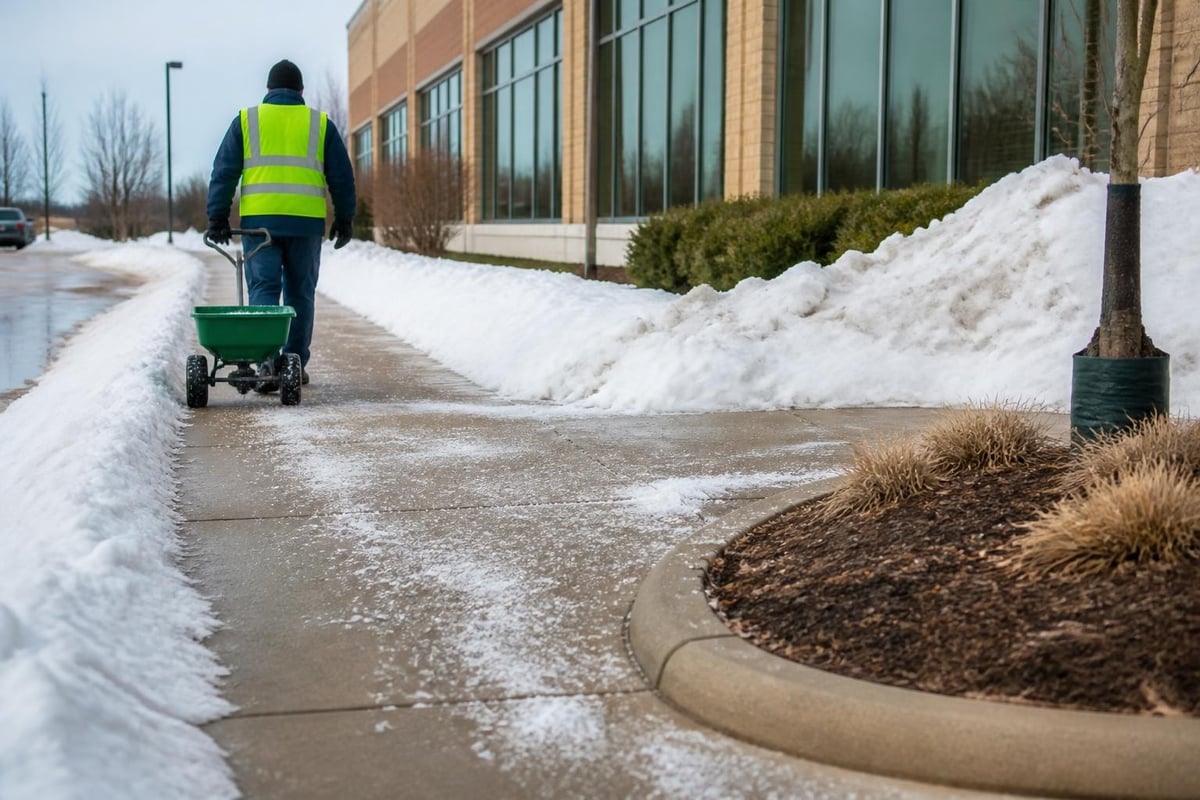
- De-icing and anti-icing treatments applied before, during, and after precipitation
- Sidewalk and entrance clearing to maintain pedestrian access
- Snow hauling and relocation when on-site storage becomes insufficient
- Post-storm cleanup including pile management and drainage clearing
The difference between adequate and exceptional service often lies in the details. Professional providers conduct thorough site surveys before winter begins, identifying problem areas like drainage points, fire lanes, and accessibility requirements. They develop custom snow management plans that specify trigger depths, treatment protocols, and priority clearing sequences.

Technology Transforming Snow Removal Operations
The snow removal industry is undergoing significant technological transformation. Cities across the nation are integrating high-tech tools and artificial intelligence into their operations, and commercial providers are following suit. GPS tracking systems now allow clients to monitor plow locations in real-time, providing transparency and accountability that was impossible a decade ago.
Weather monitoring has become increasingly sophisticated. Advanced forecasting tools give providers 72-hour advance notice of storm systems, allowing for crew scheduling, equipment staging, and client communication. Some companies now use automated trigger systems that dispatch crews based on real-time snowfall measurements rather than relying on manual monitoring.
| Technology | Application | Benefit |
|---|---|---|
| GPS Tracking | Real-time equipment location | Service verification and efficiency |
| Weather Analytics | Storm prediction and intensity | Proactive deployment scheduling |
| Moisture Sensors | Pavement condition monitoring | Optimized de-icing application |
| Digital Documentation | Photo and timestamp records | Liability protection and quality assurance |
Equipment Standards for Professional Operations
The equipment used by professional snow cleaning services represents a significant investment that most property owners cannot justify. A single commercial-grade loader can cost $150,000 or more, while a fleet of plow trucks, skid steers, and sidewalk machines requires hundreds of thousands of dollars in capital.
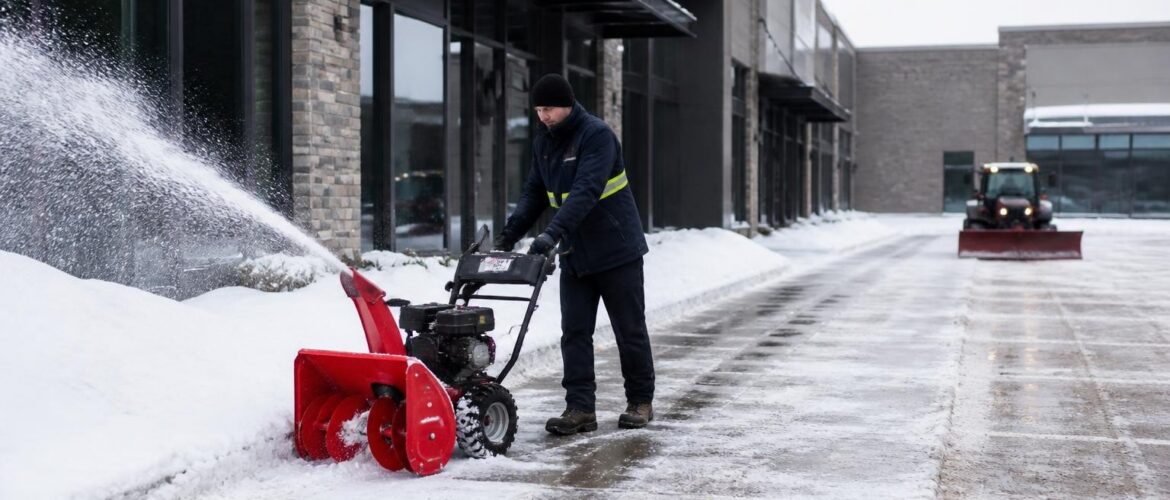
Professional providers maintain diverse equipment fleets to handle varying conditions and property types. Large parking lots require truck plows with 8-10 foot blades, while tight loading docks need compact skid steers. Properties with extensive sidewalks demand specialized walk-behind units or UTV-mounted plows. This equipment diversity ensures efficient clearing regardless of property configuration.
Backup equipment represents another critical advantage. When a property owner relies on a single plow truck, mechanical failure during a storm creates immediate problems. Professional companies maintain redundant equipment and spare parts, ensuring service continuity even when individual machines experience issues.
Cost Structures and Service Agreements
Understanding how snow cleaning services structure their pricing helps property managers make informed decisions. The industry uses several common pricing models, each with distinct advantages:
Per-Push Pricing charges a set fee each time service occurs. This model provides predictability for individual events but can become expensive during heavy snow years. Properties typically pay $100-$500 per push depending on size and complexity.
Seasonal Contracts charge a flat fee regardless of snowfall amounts. This approach transfers weather risk to the service provider while giving property owners budget certainty. Seasonal contracts work well for properties requiring guaranteed availability.
Hourly Rates bill for actual time spent on-site. While this seems straightforward, hourly billing can lack transparency and incentivize slower work. Most commercial clients prefer value-based pricing over hourly arrangements.
Tiered Pricing combines elements of multiple models, often including a base seasonal fee plus per-push charges beyond a certain threshold. This balanced approach shares weather risk between provider and client.
Evaluating Return on Investment
The value of professional snow cleaning services extends beyond immediate snow removal. Property managers must consider multiple ROI factors:
- Liability reduction through professional-grade clearing and documentation
- Operational continuity maintaining business access during winter storms
- Staff productivity allowing employees to focus on core responsibilities
- Equipment avoidance eliminating capital costs and maintenance burdens
- Insurance benefits potentially reducing premises liability premiums
A single slip-and-fall lawsuit can cost tens of thousands of dollars in legal fees and settlements. When property managers compare service costs against potential liability exposure, the investment becomes clearly justified. Many insurance providers recognize this reality, offering premium discounts for properties using certified commercial snow removal contractors.

Safety Standards and Legal Compliance
Professional snow cleaning services maintain strict safety protocols that go far beyond what property staff can typically achieve. Proper snow disposal represents a critical yet often overlooked aspect of winter management. Property owners should understand that improper snow disposal can result in significant fines and legal complications.
Commercial providers understand local ordinances regarding snow placement, drainage blocking, and public right-of-way restrictions. They know which areas can accommodate snow piles and when hauling becomes necessary. This expertise protects property owners from code violations that could result in costly penalties.
Response Time Commitments
Service level agreements should clearly specify response times and performance standards. Different property types require different urgency levels:
- Critical Access Properties (hospitals, emergency services) need immediate response
- High-Traffic Commercial (retail, offices) require clearing before business hours
- Industrial Facilities often need 24/7 accessibility for operations
- Residential Communities typically accept longer response windows
Professional snow cleaning services maintain sufficient staffing to meet contracted response times even during major storm events. This reliability stems from careful capacity planning and workforce management that individual properties cannot replicate.
Selecting the Right Service Provider
The decision between service providers should extend beyond price comparisons. Property managers should evaluate several critical factors when selecting snow cleaning services:
Experience and Track Record: Companies with decades of operation, like those serving the Denver Metro area for over 40 years, bring institutional knowledge that newer entrants lack. They've handled every storm scenario and developed proven protocols.
Insurance and Bonding: Adequate liability coverage protects property owners from contractor-related incidents. Request certificates of insurance showing general liability, auto coverage, and workers' compensation.
Equipment Fleet Size: The provider's equipment capacity relative to their client base determines reliability during major storms. Overextended companies may struggle to serve all clients promptly.
Communication Systems: Clear communication protocols ensure property managers receive updates on service timing, conditions, and any issues requiring attention.
Contract Terms and Service Guarantees
Careful contract review prevents misunderstandings and disputes. Key terms to clarify include:
| Contract Element | Critical Details |
|---|---|
| Trigger Depth | Snowfall amount initiating service |
| Service Hours | When clearing occurs relative to storm timing |
| Areas Covered | Specific zones included and excluded |
| De-icing Protocols | Application frequency and material types |
| Priority Sequence | Order in which different areas receive attention |
Some contracts include performance guarantees specifying maximum acceptable snow depths during business hours. These guarantees provide additional assurance but typically command premium pricing.
Sustainable Practices in Modern Snow Management
Environmental consciousness has become increasingly important in the snow removal industry. Current trends emphasize sustainability alongside effectiveness, with providers adopting practices that minimize environmental impact while maintaining safety.
Traditional rock salt damages vegetation, corrodes concrete, and contaminates waterways. Progressive snow cleaning services now use alternative de-icing products like calcium magnesium acetate, beet juice mixtures, and proprietary blends that reduce environmental harm. Pre-treating surfaces before storms also reduces the total de-icing material needed.
Snow placement strategies consider spring runoff and landscape protection. Rather than piling snow against building foundations or over landscaping, professional providers designate appropriate accumulation areas that minimize property damage and facilitate managed melting.
Storm Frequency and Service Planning
Property managers should understand that timing during snowstorms significantly impacts outcomes. Professional providers don't wait until snow stops falling to begin clearing. Instead, they operate continuously during extended storms, preventing dangerous accumulation and ice formation.
This proactive approach requires more labor hours but delivers superior results. Snow removed at 2-inch intervals never compacts into the hard-packed surface that forms when clearing begins after 8 inches have accumulated. The additional service cost typically proves worthwhile through enhanced safety and accessibility.
Industry Outlook and Future Developments
The snow cleaning services sector continues evolving in response to technological advancement and changing weather patterns. Autonomous snow removal equipment is currently in development, though widespread commercial deployment remains several years away. More immediately, enhanced weather prediction models allow providers to optimize scheduling and resource allocation with unprecedented precision.
Climate variability creates both challenges and opportunities for the industry. While some regions experience reduced total snowfall, the same areas often face more intense individual storm events requiring professional response capabilities. This trend reinforces the value proposition of maintaining relationships with established service providers.
The commercial real estate market increasingly views snow management as a critical facility service rather than an optional expense. Property managers recognize that reliable winter access protects property values, reduces liability exposure, and enhances tenant satisfaction. This perspective shift has elevated professional providers from commodity vendors to strategic partners.
Integration with Comprehensive Property Maintenance
Snow cleaning services often represent one component of broader facility management strategies. Properties requiring professional snow removal typically need other specialized services throughout the year. Just as commercial properties benefit from expert winter management, maintaining clean, well-maintained facilities year-round requires professional attention. Residential properties can similarly benefit from expert services, with options like professional house cleaning helping homeowners maintain pristine living spaces during demanding winter months when outdoor maintenance occupies significant time and energy.
This integrated approach to property care recognizes that facilities require consistent professional attention across all seasons. Winter snow management, spring cleanup, summer landscaping, and fall preparation each demand specialized expertise. Property managers who establish relationships with reliable service providers across these categories create operational consistency that benefits their properties long-term.
The key lies in selecting providers who demonstrate reliability, professionalism, and expertise in their respective domains. Whether managing commercial snow removal or residential cleaning services, the same evaluation criteria apply: proven track records, appropriate insurance, quality equipment, and responsive communication.
Professional snow cleaning services deliver critical value for commercial properties facing winter weather challenges. The combination of specialized equipment, experienced personnel, and comprehensive service protocols ensures properties remain safe, accessible, and compliant throughout the snow season. For property managers in the Denver Metro area seeking reliable commercial snow removal backed by nearly five decades of proven performance, Denver Snow Removals provides the expertise and 24/7 emergency response capabilities that keep large parking lots, industrial parks, office campuses, and HOA communities operational regardless of winter conditions.