
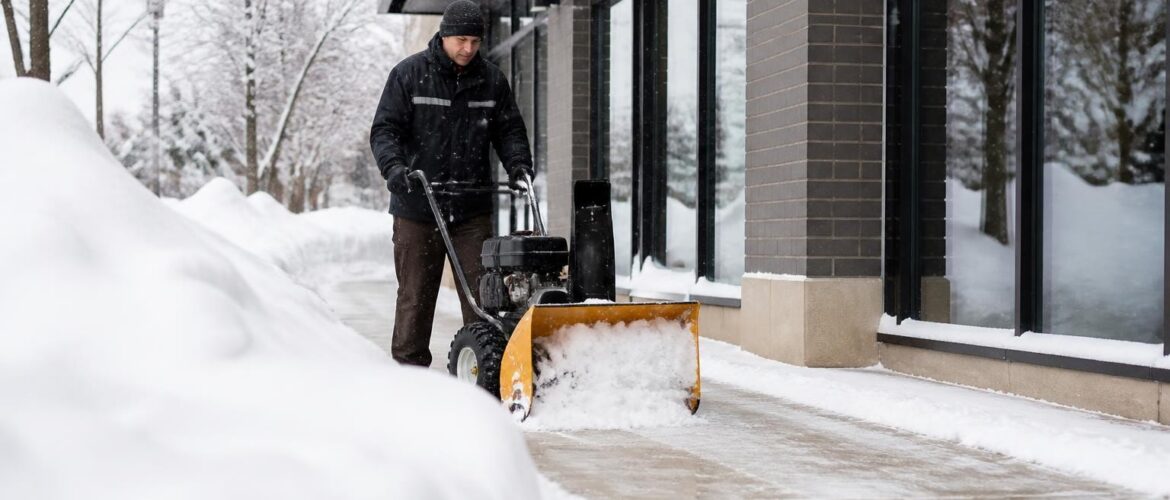
Managing sidewalk snow on commercial properties presents unique challenges that extend far beyond residential snow removal. Property managers, business owners, and HOA boards must navigate strict liability concerns, municipal regulations, and accessibility requirements while maintaining safe pedestrian access during winter weather events. The stakes are particularly high in metro areas where foot traffic remains constant regardless of weather conditions, making professional sidewalk maintenance a critical component of comprehensive property management strategies.
Legal Responsibilities and Compliance Requirements
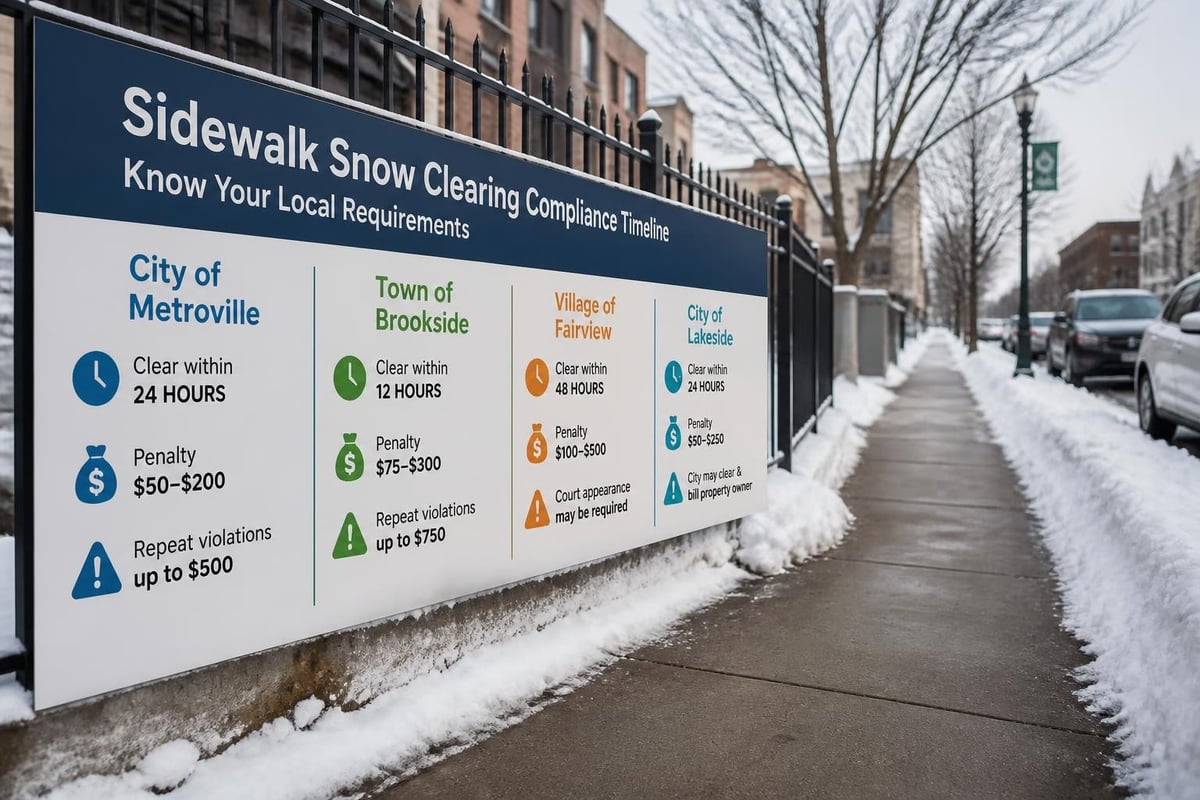
Commercial property owners face significantly stricter regulations regarding sidewalk snow than residential homeowners. Most municipalities enforce clear timeframes for clearing walkways after snowfall ends, with violations resulting in substantial fines and potential liability exposure.
New York City’s snow and ice removal laws exemplify the stringent requirements many urban centers impose on property owners. These regulations typically specify:
- Maximum clearing timeframes (often 4-24 hours after snowfall ceases)
- Minimum pathway widths that must remain accessible
- Ice treatment requirements beyond simple snow removal
- Penalties for non-compliance ranging from warnings to daily fines
Different property classifications face varying requirements. Minneapolis sidewalk snow clearing guidelines distinguish between residential and commercial timeframes, recognizing that businesses serving the public require faster response times.
Understanding Your Local Ordinances
Denver and surrounding communities maintain specific ordinances governing commercial sidewalk maintenance. Property managers should verify their precise obligations, as requirements can vary significantly between adjacent municipalities within the metro area.
The consequences of non-compliance extend beyond municipal fines. Slip-and-fall incidents on poorly maintained sidewalks expose property owners to substantial liability claims, workers' compensation issues, and increased insurance premiums. Documentation proving timely sidewalk snow removal efforts becomes critical evidence in defending against such claims.
Equipment Selection for Efficient Sidewalk Clearing
Choosing appropriate equipment determines both the efficiency and effectiveness of sidewalk snow management operations. Commercial properties require different solutions than residential driveways, particularly when managing extensive walkway networks connecting parking areas, building entrances, and public right-of-ways.
Equipment Categories and Applications
| Equipment Type | Best For | Snow Depth Capacity | Cost Range |
|---|---|---|---|
| Walk-behind Snow Blowers | Medium walkways, moderate snowfall | 6-18 inches | $400-$2,500 |
| Commercial Sidewalk Plows | Large properties, heavy snow | 12-24 inches | $3,000-$8,000 |
| Liquid De-icers | Pre-treatment, ice prevention | N/A | $50-$200/gallon |
| Granular Salt/Sand | Post-treatment, traction | Light ice layer | $8-$15/bag |
Professional sidewalk snow removal equipment reviews provide detailed comparisons of specific models suited to various commercial applications. The investment in commercial-grade equipment pays dividends through reduced labor hours and improved clearing consistency.
Small walk-behind units work well for retail storefronts and office building entrances where maneuverability matters more than clearing capacity. Larger office campuses and industrial parks benefit from dedicated sidewalk attachments for utility vehicles, enabling operators to clear extensive walkway networks efficiently.
Pre-Treatment Strategies
Proactive application of liquid de-icers before snowfall begins prevents ice bonding to concrete surfaces. This approach reduces the physical effort required during the storm and minimizes the amount of abrasive materials needed afterward. Many commercial operators now employ pre-treatment programs as standard practice for high-priority walkways and building entrances.
Safety Protocols and Pedestrian Access
Maintaining safe pedestrian access requires more than simply pushing sidewalk snow to the side. Proper clearing techniques protect both property users and adjacent roadways while ensuring compliance with accessibility standards.
Critical safety considerations include:
- Creating adequate clear width for wheelchair and mobility device passage
- Avoiding snow placement that blocks visibility at intersections
- Ensuring proper drainage to prevent refreezing during temperature fluctuations
- Marking temporary hazards with highly visible warnings
The legal implications of shoveling snow onto public streets extend beyond simple ordinance violations. Snow pushed into roadways creates driving hazards, blocks drainage systems, and can result in significant fines in most jurisdictions.
ADA Compliance During Winter Weather
The Americans with Disabilities Act doesn't take a winter vacation. Commercial properties must maintain accessible routes throughout snow events, requiring prioritized clearing of designated accessible parking spaces, access aisles, and pathways to building entrances.
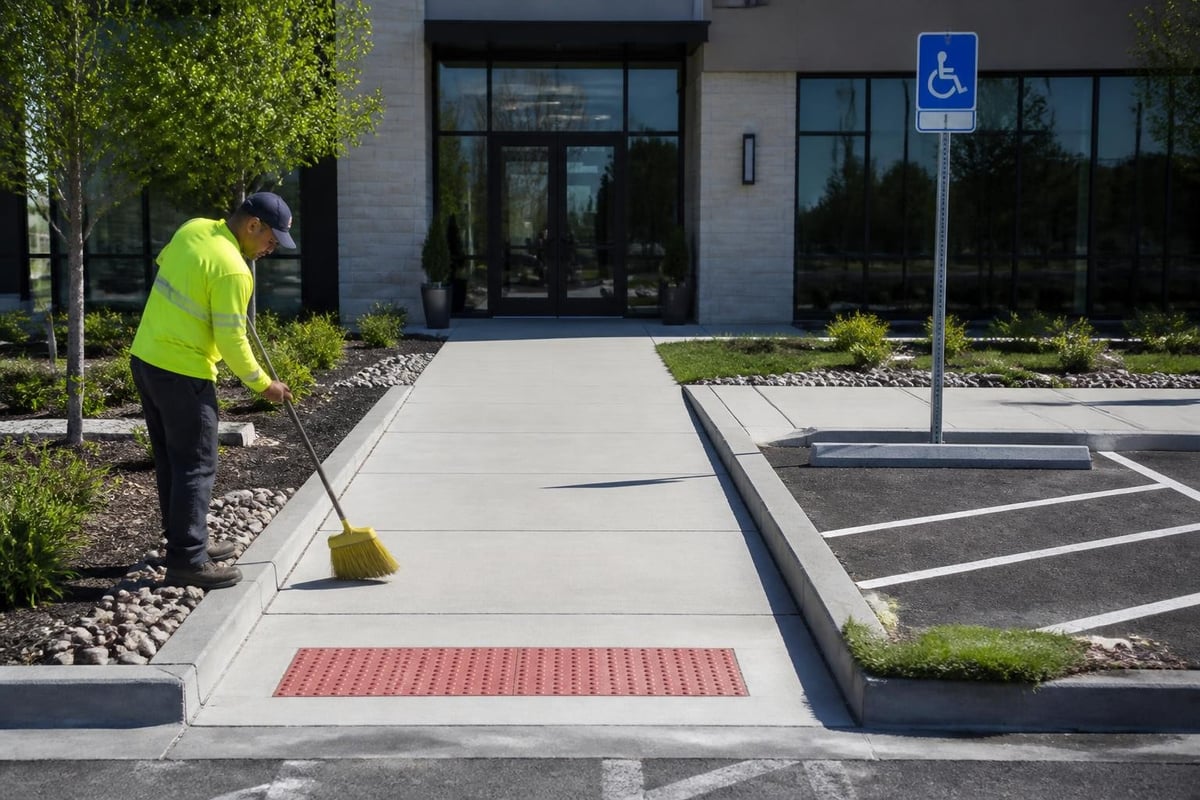
Recent accessibility research has developed methods for determining accessible sidewalk widths using advanced mapping technology, highlighting the importance of maintaining clear passage zones even during active winter weather.
Chemical Application and Environmental Considerations
Effective sidewalk snow management extends beyond physical removal to include strategic application of ice-melting compounds. Understanding the performance characteristics, temperature ranges, and environmental impacts of different de-icing products enables informed decision-making.
De-icing Product Comparison
Different chemical compounds perform optimally under specific temperature conditions and surface types:
- Sodium Chloride (Rock Salt) – Effective to 15°F, economical, corrosive to concrete and metal
- Calcium Chloride – Works to -25°F, fast-acting, hygroscopic properties prevent refreezing
- Magnesium Chloride – Functional to -13°F, less concrete damage, better environmental profile
- Potassium Acetate – Airport-grade, minimal corrosion, expensive for routine use
- Calcium Magnesium Acetate (CMA) – Environmentally preferred, limited effectiveness below 20°F
The considerations around salting adjacent properties without permission apply equally in commercial settings. Overspray onto neighboring properties can damage landscaping and create liability concerns, requiring careful application techniques.
Property managers should develop application rate guidelines based on temperature forecasts and precipitation type. Over-application wastes resources and increases environmental impact without improving performance, while under-application leaves surfaces hazardous.
Coordinating with Larger Snow Removal Operations
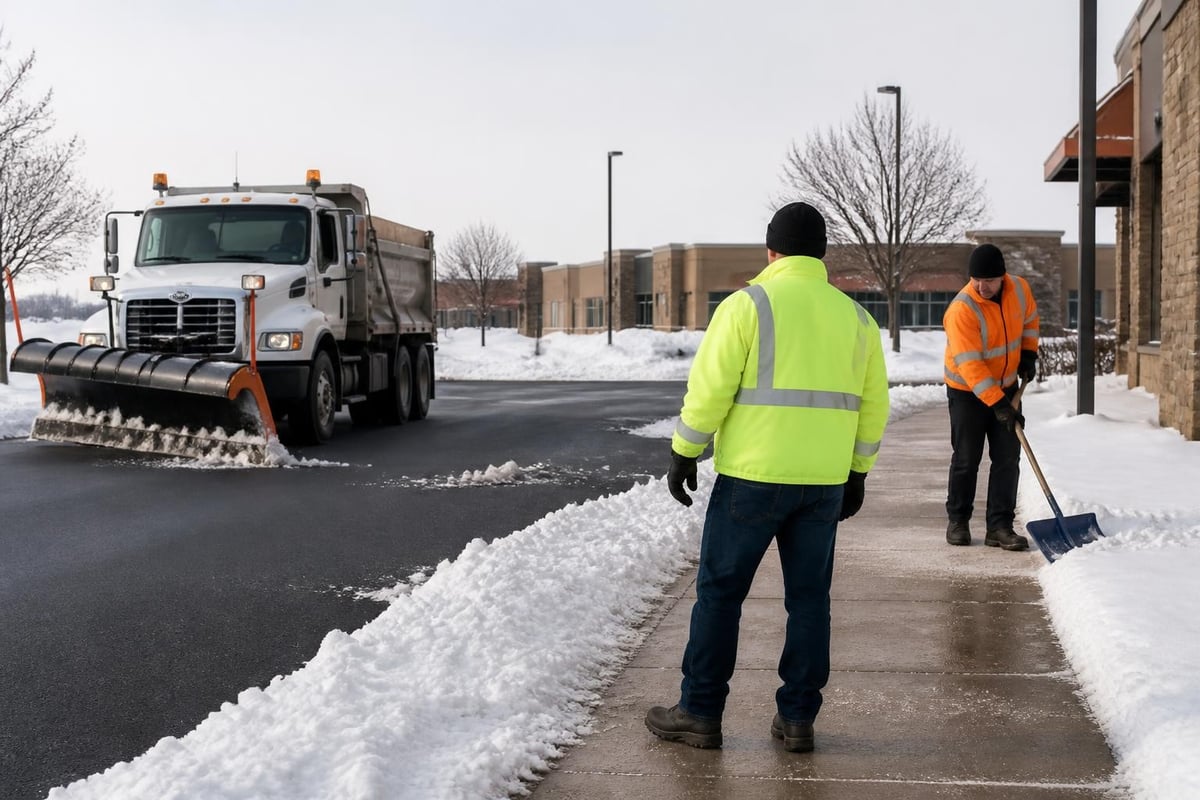
Sidewalk snow clearing must integrate seamlessly with comprehensive property-wide snow removal strategies. Poor coordination results in blocked walkways, safety hazards, and operational inefficiencies that frustrate tenants and customers.
Integration points requiring coordination:
- Timing sidewalk clearing relative to parking lot plowing schedules
- Managing snow placement to avoid blocking cleared walkways
- Prioritizing high-traffic pedestrian routes for early attention
- Coordinating with shared driveway snow removal in multi-tenant properties
Large-scale operations benefit from detailed site maps identifying priority clearing zones, equipment staging areas, and approved snow placement locations. These planning documents ensure consistency across multiple team members and weather events throughout the season.
Communication Protocols During Events
Active storms require constant communication between parking lot crews and sidewalk teams. Radio communication, digital coordination platforms, or simple check-in protocols prevent situations where plowed snow blocks recently cleared walkways or vice versa.
Creating Effective Maintenance Documentation
Systematic documentation of sidewalk snow removal activities provides essential protection against liability claims while helping optimize operational efficiency. Digital record-keeping systems now make comprehensive documentation practical even for large property portfolios.
Essential Documentation Elements
| Documentation Type | Key Information | Retention Period |
|---|---|---|
| Service Logs | Date, time, crew members, areas cleared | Minimum 3 years |
| Weather Records | Temperature, precipitation amounts, timing | Duration of season |
| Product Application | Material type, quantities, locations | 2-3 years |
| Photographic Evidence | Before/after conditions, completed work | 1-2 years |
| Incident Reports | Complaints, accidents, special circumstances | Indefinitely |
Timestamp-stamped photographs provide compelling evidence of completed work and prevailing conditions. Many commercial operators now use GPS-enabled devices that automatically embed location and time data into documentation.
Regular review of maintenance logs identifies patterns requiring operational adjustments. Properties consistently requiring excessive material application may need drainage improvements or surface repairs to reduce ice formation. High-frequency clearing areas might justify equipment upgrades or additional staffing.
Training and Quality Control Measures
Professional sidewalk snow management requires trained personnel who understand proper techniques, safety protocols, and quality standards. Investment in comprehensive training programs reduces liability exposure while improving operational efficiency.
Effective training programs address multiple competency areas:
- Proper equipment operation and basic field maintenance
- Recognition of different snow and ice conditions requiring varying approaches
- Application rate guidelines for various de-icing products
- Customer interaction protocols and complaint resolution
- Safety procedures including personal protective equipment use
Quality control inspections during and after snow events ensure work meets established standards. Random checks of completed areas, customer feedback collection, and post-storm debriefing sessions identify improvement opportunities and recognize excellent performance.
Preventive Maintenance and Off-Season Preparation
Sidewalk snow management efficiency depends heavily on off-season preparation and preventive maintenance work. Proactive property improvements completed during warmer months reduce winter operational challenges and costs.
Critical off-season activities include:
- Repairing cracked or damaged concrete that traps water and creates ice hazards
- Improving drainage systems to prevent water accumulation in pedestrian areas
- Installing radiant heating systems in high-priority walkways
- Upgrading lighting to improve visibility during early morning clearing
- Reviewing and updating snow placement areas based on previous season challenges
Properties with chronic ice formation problems benefit from investigating root causes during the off-season. Poor drainage, inadequate sun exposure, or structural issues often require capital improvements that prevent recurring winter problems.
Equipment maintenance schedules should include comprehensive pre-season inspections, mid-season servicing, and end-of-season storage preparation. Well-maintained equipment reduces breakdown risks during critical weather events when sidewalk snow demands immediate attention.
Budget Planning and Cost Management
Comprehensive sidewalk snow removal programs require realistic budget planning that accounts for variable winter weather patterns. Colorado's unpredictable winter weather demands flexible financial strategies that balance cost control with service reliability.
Seasonal cost components vary significantly based on property characteristics and service expectations:
- Fixed costs – Equipment purchases or leases, seasonal contract minimums, insurance
- Variable costs – Per-event service charges, material consumption, overtime labor
- Contingency reserves – Above-average snowfall seasons, equipment repairs, supplemental services
Properties served by professional contractors typically choose between per-occurrence billing or seasonal contracts with guaranteed service levels. Each approach offers distinct advantages depending on property priorities and risk tolerance. Organizations requiring budget certainty often prefer seasonal agreements despite potentially higher costs in light snow years.
Material costs fluctuate based on bulk purchasing strategies and product selection. Properties using significant quantities of de-icing compounds benefit from pre-season purchasing agreements that lock in favorable pricing while ensuring adequate supply availability during shortage periods.
Effective sidewalk snow management protects people, minimizes liability exposure, and maintains property functionality throughout Colorado's challenging winter conditions. Professional commercial operations integrate specialized equipment, trained personnel, strategic planning, and comprehensive documentation to deliver consistent results regardless of weather severity. With over 47 years of experience managing commercial snow removal throughout the Denver Metro area, Denver Snow Removals provides the expertise and 24/7 availability your property requires for complete winter maintenance peace of mind.