

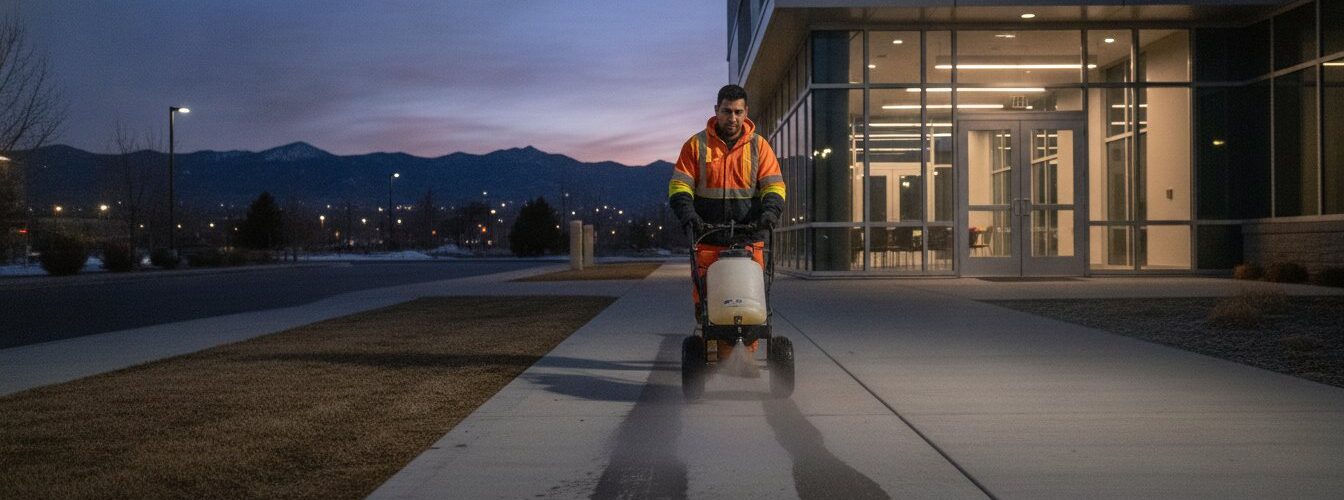





When searching for reliable snow plowing services Denver CO, property owners need a partner who understands both local laws and the unique challenges of Front Range snow. Denver winters are famously unpredictable: a sunny afternoon can give way to a heavy overnight dump, leaving driveways buried, parking lots impassable, and sidewalks encased in ice. The city’s Department of Transportation and Infrastructure does its part, deploying 70 large plows across roughly 2,050 lane miles of main streets and sending 4×4 pickup trucks down about 1,260 center lane miles of residential roads.

Denver snow removal, emergency snow plowing
Table of Contents
-
Why Professional Snow Plowing Services in Denver CO Are Essential
-
Denver Snow Removal Laws and Compliance: What You Must Know in 2026
Why Professional Snow Plowing Services in Denver CO Are Essential
Denver DOTI runs a capable but deliberately limited operation. Residential plowing happens between 3:00 a.m. and 3:00 p.m. and consists of a single pass down the center of side streets. That one pass does not clear the apron of your driveway, does not touch your sidewalk, and certainly does not address the parking lot your tenants or customers need to use.
See the Best Snow Plows of 2026 ❄️
The city’s fleet simply is not designed to service private property.
Then there is the legal side. Denver requires property owners to clear snow and ice from adjacent sidewalks within 24 hours after a snowfall ends. Businesses must begin shoveling immediately. If a complaint is filed and inspectors find the sidewalk still obstructed after a notice and re-check, fines can reach $150 per violation. For a commercial property with multiple street frontages, that liability multiplies fast.
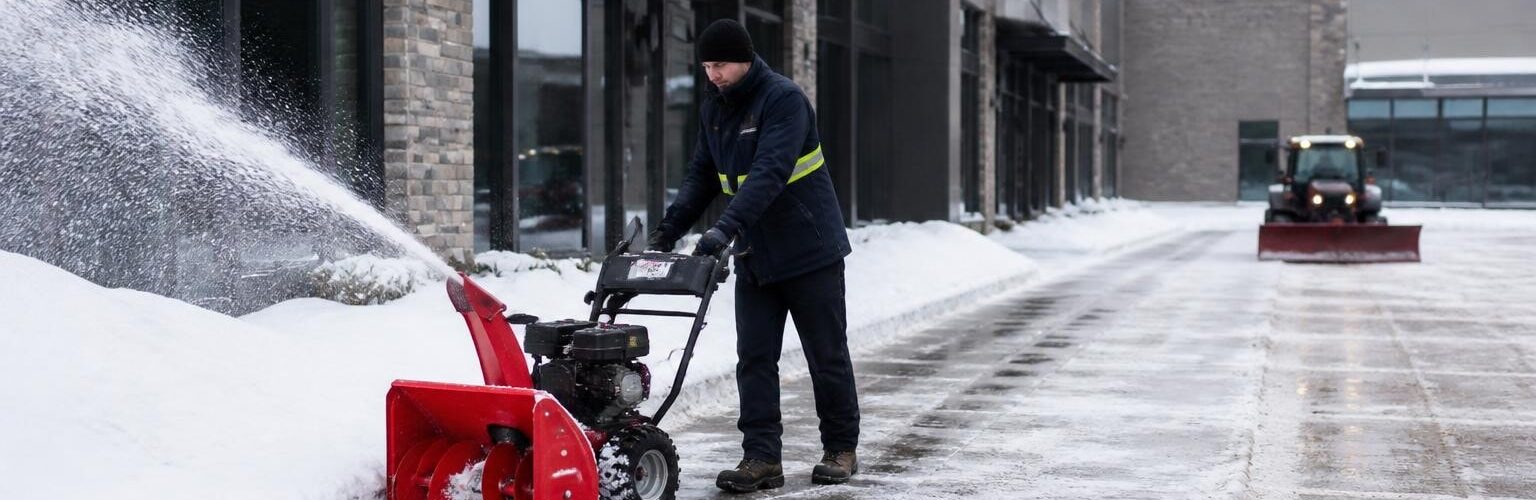
Beyond compliance, professional plowing prevents the accidents that lead to injury claims and insurance headaches. Hard-packed snow that partially melts and refreezes creates black ice on walkways and loading zones. Repeated freeze-thaw cycles crack asphalt and spall concrete, turning a minor maintenance issue into a five-figure resurfacing job. A single heavy storm can demand hours of manual labor from a property owner or maintenance crew. A professional fleet with trucks, skid steers, and Bobcats clears the same area in minutes, often before the morning commute begins.
Comprehensive Snow Plowing Services for Every Property Type
Commercial Snow Plowing for Parking Lots and Strip Malls
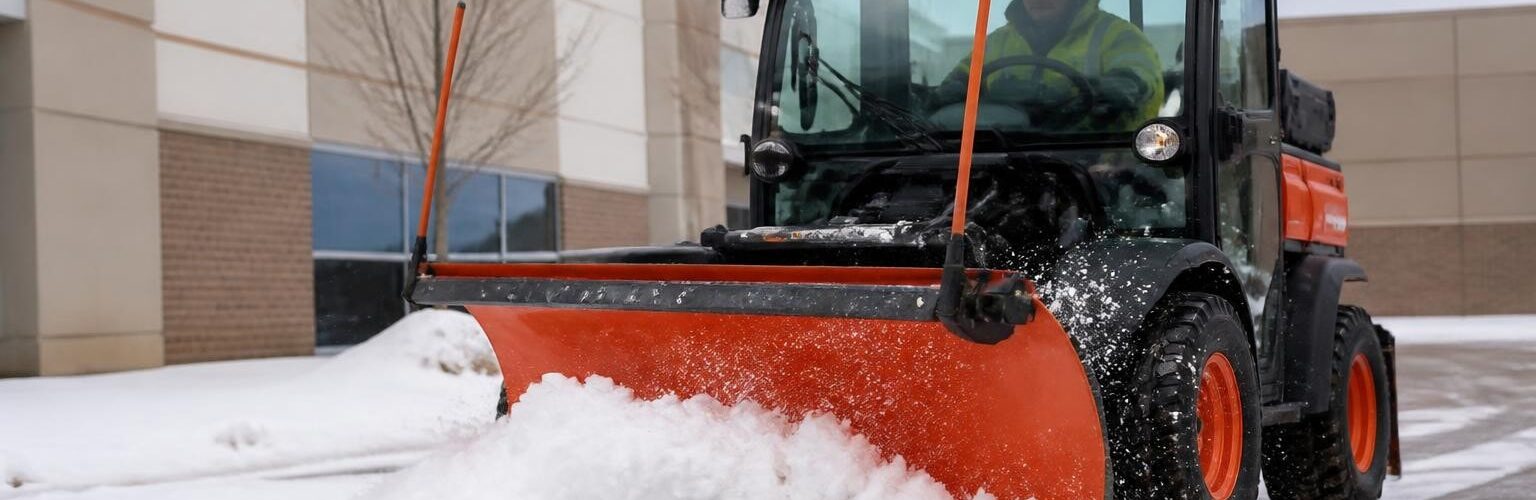
Commercial properties face the highest stakes during a Denver snow event. A retail center that opens with an icy parking lot loses sales by the hour. A medical office with blocked fire lanes creates a safety hazard that no facility manager can afford. Professional commercial snow plowing services deploy fleets of 30 or more trucks, skid steers, and tractors to clear large lots before business hours, focusing on ADA-compliant pathways, emergency vehicle access, and high-traffic entry zones where footfall is heaviest.
Most commercial providers offer two pricing models. Seasonal contracts lock in a fixed rate for the entire winter, guaranteeing priority service during every storm and typically saving 10 to 20 percent compared to per-visit billing. Per-visit pricing works better for properties that can tolerate some flexibility in response time. Either way, the contract should spell out the trigger depth, usually two inches, that automatically dispatches crews, along with a clear scope of work covering all entrances, loading docks, and dumpster corrals.
Residential Driveway and Walkway Plowing
Denver’s residential neighborhoods range from historic districts with narrow, angled driveways to newer subdivisions with long, steep approaches. A one-size-fits-all plow strategy does not work here. Reputable residential snow plowing services design custom routes for each property, accounting for slope, surface material, and obstacles like retaining walls or landscaping features.
Surface preservation matters just as much as snow clearance. For driveways and walkways made of decorative concrete, stamped pavers, or exposed aggregate, contractors should use rubber plow blades and plastic shovels that remove snow without gouging the surface. Steel blades on a brittle paver can cause hundreds of dollars in damage in a single pass. Homeowners can choose between seasonal subscription plans that guarantee service after every qualifying storm and on-demand single-storm pricing for those who prefer to handle lighter dustings themselves and call in the pros only for heavy accumulation.
HOA and Multi-Tenant Property Snow Management
Apartment complexes, condominium associations, and gated communities present a coordination challenge that goes well beyond plowing a single driveway. These properties include networks of sidewalks, mail kiosks, pool deck access points, and dumpster enclosures, all of which need to remain accessible.
Residential Snow Plowing in Denver →
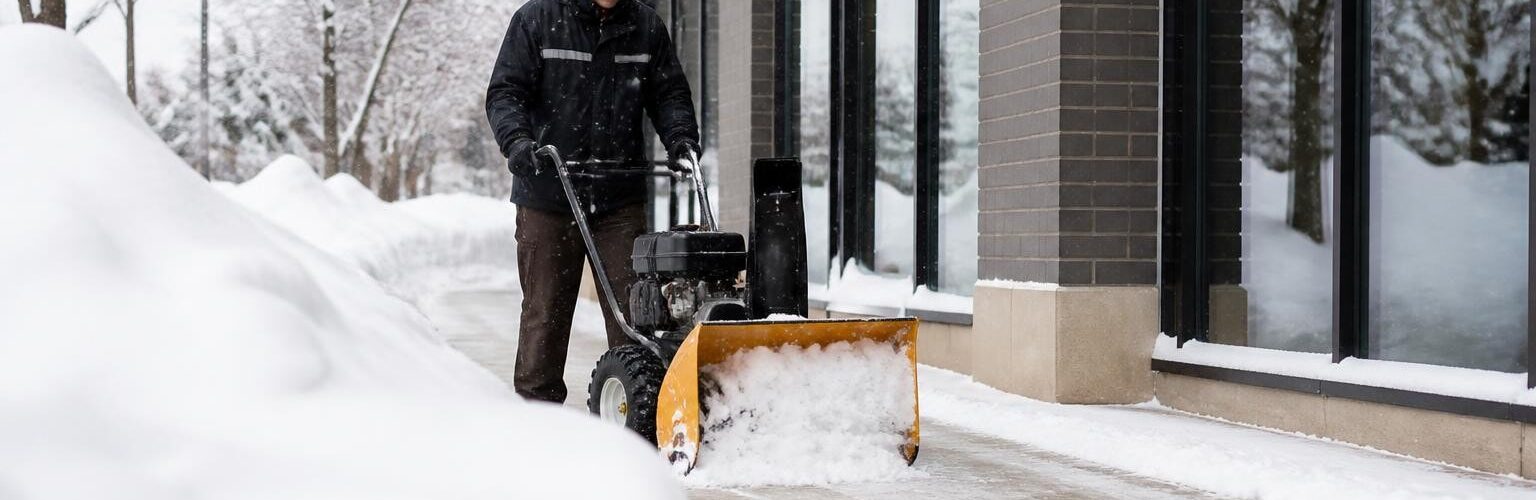
A professional snow management plan maps every pathway and assigns clearance priorities so residents can reach their cars, check their mail, and walk their dogs without navigating ice berms.
During extreme accumulation events, when snow piles begin eating into parking spaces and blocking sightlines at intersections, snow relocation and hauling services become essential. Rather than letting mounds grow until they consume usable space, crews truck excess snow off-site, restoring full parking capacity and maintaining clear sight triangles for traffic safety.
Deicing and Ice Management: Protecting Your Property
Commercial-Grade Deicing Materials
Denver’s climate demands a thoughtful approach to deicing. The city itself uses Ice Slicer, a naturally mined deicer from Utah that is more than 90 percent chloride salts, on main streets, while switching to liquid magnesium chloride in the downtown area to reduce airborne particulates. Private contractors follow similar logic, selecting materials based on temperature, surface type, and environmental sensitivity.
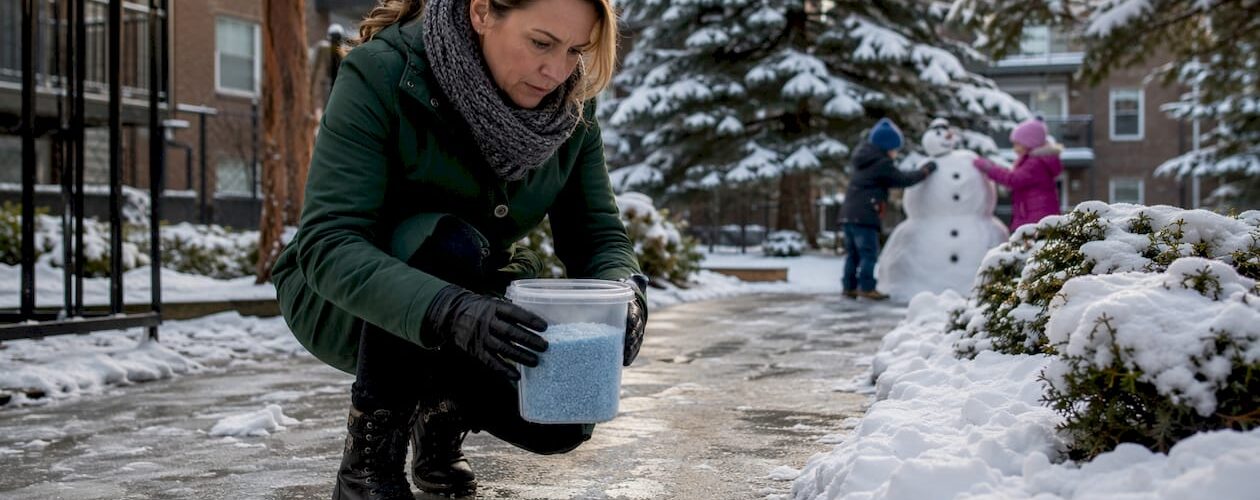
For most commercial lots, a pre-treatment application of liquid brine before a storm prevents snow from bonding to asphalt, making plowing faster and more complete. Post-storm, granular deicers melt residual ice and provide traction. Property owners concerned about concrete damage or landscaping should ask about landscape-safe alternatives like MorGro’s Sno Plow, which reduces the corrosion and spalling risk associated with traditional rock salt. Sand and salt mixes remain a cost-effective option for shaded areas that refreeze overnight, though they require more cleanup once the snow melts.
Specialized Ice Prevention
Ice problems are not limited to ground level. Denver’s frequent freeze-thaw cycles make ice dams a recurring headache for sloped roofs, where melting snow refreezes at the eaves and forces water back under shingles. Electric deicing cable installation along roof edges and in gutters prevents these dams from forming, protecting both the roof structure and the interior ceilings below.
On the ground, smaller plows equipped with rotating brooms handle surfaces where a traditional blade would be too aggressive: protected bikeways, pedestrian bridges, and decorative paver plazas. These broom units sweep snow clear while leaving a thin, even layer of deicing liquid that prevents refreeze without damaging the surface. For properties with chronic ice trouble spots, north-facing entryways, stairwells, or drainage channels that pond and freeze, a targeted anti-icing program applied before temperatures drop can eliminate the problem before it starts.
Denver Snow Removal Laws and Compliance: What You Must Know in 2026
Denver’s sidewalk shoveling ordinance is straightforward and strictly enforced. Property owners and residents must clear snow and ice from sidewalks adjacent to their property within 24 hours after a snowfall ends. For businesses, the clock starts immediately: commercial property owners are expected to begin clearing sidewalks as soon as it is safe to do so during or after a storm.
Failure to comply triggers a notice from DOTI. If a re-check finds the sidewalk still obstructed, the property owner faces a fine of up to $150. That amount may seem modest, but it compounds across multiple street frontages and repeated storms. More importantly, an uncleared sidewalk that causes a slip-and-fall injury exposes the property owner to civil liability that far exceeds any municipal fine.
Snow must be shoveled into yards, not into the street. Piling snow in the roadway blocks drainage, creates hazards for vehicles, and buries the work the city plows just completed. For rental properties, responsibility typically falls on the property owner or manager unless a written lease agreement explicitly and legally transfers that duty to the tenant. Denver also runs the Snow Angels program, which connects volunteers with seniors and residents with disabilities who cannot physically clear their own sidewalks, a resource worth knowing about for neighbors and property managers alike.
How to Choose the Best Snow Plowing Services in Denver CO
Key Questions to Ask Before Hiring
Not all snow removal contractors operate at the same standard, and the differences become painfully obvious during the first major storm. Start by confirming that the company carries both general liability insurance and workers’ compensation coverage. If an uninsured contractor damages your property or a worker gets injured on your lot, the financial exposure lands squarely on you.
Ask whether the company offers seasonal contracts or only per-visit pricing, and get the trigger depth in writing. A two-inch trigger is standard for commercial lots; anything higher means you could be dealing with significant accumulation before a plow arrives. Request their average response time for a storm meeting that trigger, and confirm whether they use rubber blades on decorative concrete, stamped pavers, or any surface vulnerable to steel edges.
Pricing Transparency: What to Expect in 2026
Residential driveway plowing in Denver typically runs between $65 and $100 per visit, depending on driveway length, slope, and surface complexity. Commercial lot pricing varies by square footage, with most small to mid-size lots falling between $80 and $200 per visit. Seasonal contracts, which guarantee service for every qualifying storm throughout the winter, generally offer 10 to 20 percent savings compared to paying per visit across an average snow season.
Emergency and after-hours calls carry a premium. A contractor called out at 2:00 a.m. for a sudden blizzard or an equipment failure on another service will charge accordingly. The best way to avoid those premiums is to secure a seasonal contract before the snow flies, ensuring your property is on a scheduled route rather than a last-minute dispatch list.
Emergency Snow Removal and Post-Storm Cleanup
Denver’s biggest snow events do not always arrive during business hours. A storm that intensifies overnight can drop a foot of snow by dawn, and waiting until regular dispatch times is not an option for hospitals, 24-hour businesses, or properties with early-morning tenant traffic. Reputable snow removal companies maintain 24/7 on-call crews during the winter season, ready to respond when a forecast underperforms or a storm overperforms.
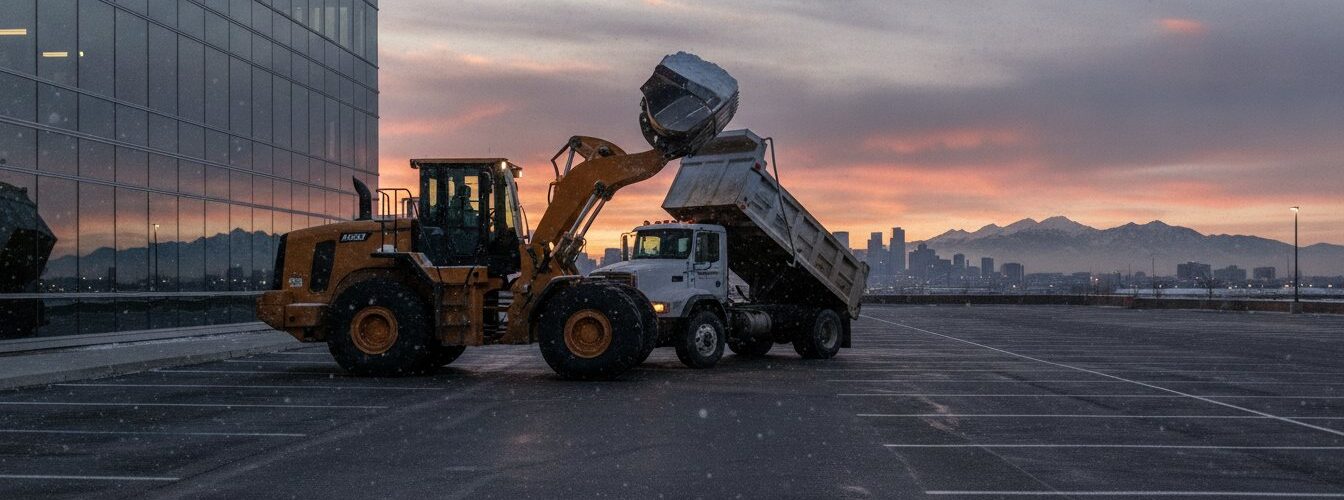
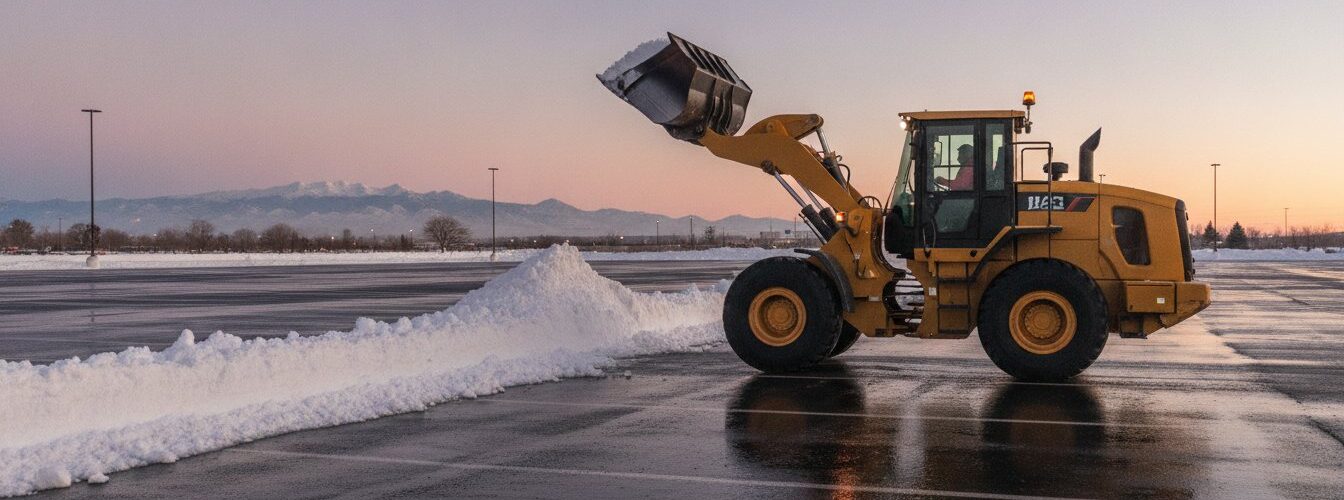
Extreme accumulation creates a secondary problem: snow piles that grow so large they consume parking spaces, block sightlines, and leave no room for the next storm’s output. Snow relocation and hauling services use loaders and dump trucks to remove excess snow from the property entirely, restoring full functionality to parking areas and loading zones. After the plows leave, a thorough post-storm inspection identifies black ice patches, drainage blockages, and refreeze zones that need additional deicing before they become hazards.
Frequently Asked Questions About Snow Plowing in Denver
Does Denver plow residential streets? Yes, but only with a single pass down the center of side streets between 3:00 a.m. and 3:00 p.m. That pass does not clear driveway aprons, sidewalks, or parked-car zones.
What are the fines for not shoveling snow in Denver? Property owners can be fined up to $150 after receiving a notice from DOTI and failing a re-check inspection.
How much does commercial snow plowing cost in Denver? Pricing varies by lot size and service type. Most small to mid-size commercial lots range from $80 to $200 or more per visit, with seasonal contracts offering meaningful savings.
Is deicing safe for my concrete driveway? Yes, when the right products and techniques are used. Landscape-safe deicers like Sno Plow reduce concrete damage risk, and rubber plow blades prevent surface gouging on decorative finishes.
Get Your Free Snow Removal Quote for Denver, CO
Do not wait for the season’s first major storm to start making calls. The most reliable snow plowing services in Denver CO book their seasonal contracts months in advance, and early-bird pricing typically expires well before the first flakes fall. Securing your contract now guarantees priority routing, locked-in rates, and the peace of mind that comes from knowing your property will be clear and compliant no matter what the winter of 2026 delivers.
With decades of combined experience serving Denver’s commercial properties, HOAs, and residential neighborhoods, our fleet of trucks, skid steers, and specialized deicing equipment stands ready. Every operator is fully insured, every route is mapped for efficiency, and every contract includes clear, written service triggers and response times. Request your free quote today and lock in early-season pricing before November 1, 2026.