
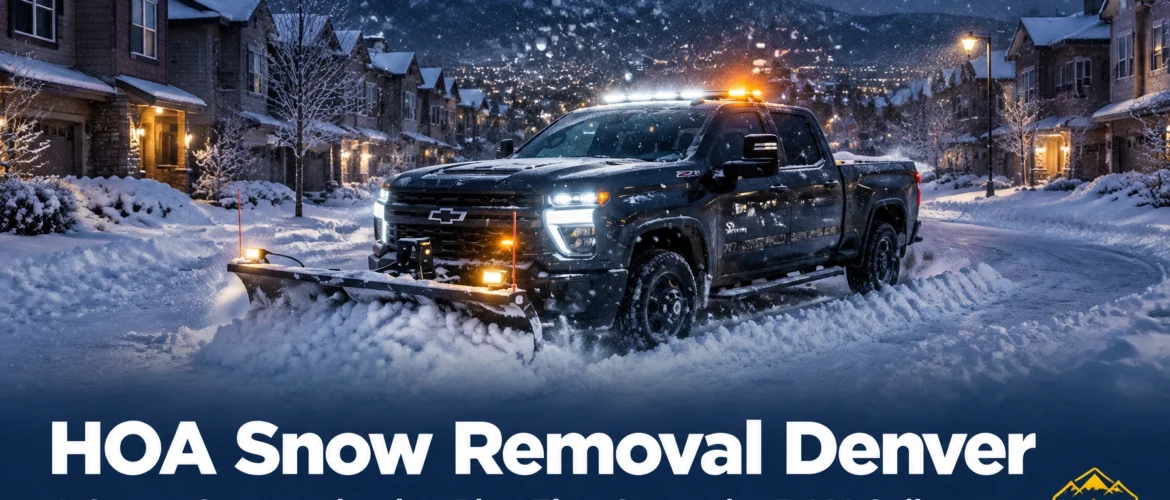
The storm ends around 10 PM. Temperatures drop, and by midnight the walk outside a unit has glazed over. At 3 AM, the board president finds a resident’s phone video in her inbox while the community Facebook group is already saying, “Nobody ever plowed.” The importance of having an HOA snow removal Denver plan is evident in such situations. Effective HOA snow removal Denver practices can prevent confusion among residents.
The plow may have been there. Nobody told anyone.
Timely HOA snow removal Denver updates are crucial for resident satisfaction.
An HOA snow communication plan decides in advance who speaks for the board, how residents hear about a storm, what they are told before, during and after it, and who captures a complaint instead of arguing about it. That plan can turn a storm into a routine operation instead of a governance problem.
With a clear HOA snow removal Denver plan, residents can have peace of mind during winter storms.
Why HOA snow removal needs a communication plan
HOA snow removal Denver is different from clearing a single commercial building because no one person is always available to answer every question. The board is made up of volunteers, the community manager may be part time, and residents are also neighbors who vote at the annual meeting.
Understanding HOA snow removal Denver responsibilities is key for all residents to stay informed.
There is no single front desk to absorb questions. One unanswered email can become the loudest item at the next board meeting, especially if residents are trying to work out whether the association, a neighbor, or the contractor was meant to clear a particular area.
A written plan gives residents a reliable place to look and gives board members a consistent way to respond. The plan only works if it matches what your agreement actually says gets cleared and when, so read the two together: our guide to the HOA snow removal contract covers the scope side, ensuring effective HOA snow removal Denver.
Our HOA snow removal Denver guide ensures that everyone knows what to expect during snow events.
Name the roles before snow season
Assign one primary person to coordinate resident communication, and name a backup for every key role. Five directors answering separately can create five versions of what is happening. A single point person keeps the message consistent without requiring that person to run the plow operation, which is essential for HOA snow removal Denver.
Involving residents in the HOA snow removal Denver communication process fosters a strong community.
- Board liaison: One director serves as the board’s communication point. The liaison shares approved updates and brings policy questions back to the board. The liaison does not diagnose the plow schedule at 3 AM or make promises on behalf of the contractor.
- Community manager: The manager sends the approved resident notices, records incoming reports and routes operational issues to the contractor’s dispatch contact. The manager does not promise a completion time they cannot control.
- Contractor dispatch contact: This person provides status information and receives reports about missed or changing conditions. They do not decide what residents are told about association policy.
- Named backup: Each role needs a backup who can access the same contact list, approved messages and storm log if the primary person is unavailable.
Agree on these assignments before October. If this season is already underway, set the roles now and record the plan for next fall.
Send a clear October notice
Communicating clearly about HOA snow removal Denver procedures is essential to avoid misunderstandings.
The season-opening notice should tell residents what to expect and what to do, using the association’s governing documents as the guide. It should explain the community’s trigger depth, the work sequence and how to report a problem.
Include:
Residents should know the HOA snow removal Denver timeline for clearing common areas.
- The trigger depth that starts service for your community.
- The expected clearing sequence, such as entrances and fire lanes, accessible routes, mail kiosks, then interior walks.
- Where snow may be piled and which areas are no-stack zones.
- Parking rules during a declared storm, so plows can reach the areas that need clearing.
- Which areas residents are responsible for under the governing documents.
- One official contact method for snow reports and questions.
Do not assume that residents know whether the association clears a front walk, private driveway or shared path. Read the governing documents and describe the boundary plainly. This is general information, not legal advice. Governing documents vary; confirm responsibilities with association counsel and check current Denver requirements. For Denver sidewalk timing, see our overview of sidewalk crew operations, rather than treating a notice as a substitute for city rules.

Visual reminders about HOA snow removal Denver duties can aid in community awareness.
Choose one official channel and stick to it
Tell residents which channel is official before the first storm, then use it consistently. For many communities, that can be email, with a printed door hanger as a fallback for buildings or residents who do not reliably check email.
Utilizing a reliable HOA snow removal Denver channel ensures all residents are kept in the loop.
Say directly that the community Facebook group and neighborhood app are not official storm channels. Those spaces can be useful for neighbor-to-neighbor discussion, but they do not give the association a reliable way to confirm who received an update. When a rumor starts, residents should know where to find the association’s current message.
If your HOA also uses a text alert or resident portal, define how it will be used. Mirror the approved notices there, rather than sending a flood of extra updates that compete with the official message.

Storm mode: send three messages, not a running commentary
During storm mode, HOA snow removal Denver updates should be clear and timely for all residents.
Use a three-message cadence: one notice when the trigger is met, one notice if the plan changes, and one clearance notice. Residents need useful status, not a fresh speculation every hour.
-
- Trigger met: Say that service has been activated, identify the areas being addressed first, and repeat any parking or access instructions.
Transparency in HOA snow removal Denver efforts promotes trust between management and residents.
- Plan changes: Send an update if there is a material change, such as a plow breakdown, a closure or an escalation in conditions.
- Clearance: Confirm when the planned work is complete and tell residents how to report a remaining issue.
Avoid promises such as “the whole community will be clear by 4 AM.” Weather, access and changing site conditions can disrupt a schedule, and a clock promise can quickly become a complaint. Give sequence and status, not a guaranteed time: “The entrance and fire lane are cleared; crews are working through the interior routes.”
For questions about weather changes and dispatch decisions, residents and managers can refer to our guide to weather monitoring for snow operations.
The 3 AM call: capture, do not diagnose
When a resident calls overnight, record the report and pass it to the right contact instead of debating whether the contractor was there. A short intake record gives the manager and dispatch a clear starting point.
Documenting HOA snow removal Denver issues helps improve future responses.
Capture:
- Location: building, walkway, entrance or other precise spot.
- Time: when the resident noticed or reported it.
- Surface: for example, a walk, ramp, drive or parking area.
- Photo: ask whether they can share one, if safe to do so.
- Context: ask whether the resident was walking through the area at the time.
A timestamped resident photo is useful evidence for the association as well as against it. It shows what a condition looked like at a specific moment, not what someone remembers later. Contractor photo-documented visits provide the other half of the record: what the crew observed and did on site.
Documentation is not a guarantee against a claim. Our separate Denver HOA snow-claim overview discusses that topic; this plan is about keeping reports factual and traceable. This is general information, not legal advice. Ask your attorney or insurer about your association’s specific obligations.
Our HOA snow removal Denver processes highlight the importance of accurate record-keeping.

Close out the storm and preserve the plan
Closing out an HOA snow removal Denver effort properly ensures accountability.
After service, send one closeout note to residents and make one internal log entry. The resident note should confirm that the planned work is complete and give one route for reporting an area that still needs attention. The internal entry should record the notices sent, resident reports received, the information provided by dispatch and any follow-up.
Keep the closeout factual. Do not relitigate the storm in a public comment thread. If someone posts that “nobody ever plowed,” reply briefly with the official channel for questions, then use the log and dispatch record to review the report.
Put the communication plan in the board minutes each fall. That way a new director inherits the roles, contact method and message cadence instead of rebuilding them during the next overnight storm.
Make the plan fit Denver
Adjusting your HOA snow removal Denver strategy based on specific community needs is vital.
A Denver HOA plan should account for a long September-to-May season and conditions that differ by storm and by block. Upslope storms can hit one corridor harder than another, while daytime melt can refreeze on shaded walks after temperatures fall.
Neighborhood details matter. In Central Park, alley-served garages and clustered townhomes can complicate access and snow placement, and the overnight refreeze that turns a cleared walk slick is covered in our guide to black ice in Denver. In Cherry Creek, shaded interior walks and mail kiosks may need clear priority in the notice. In Washington Park, heavy pedestrian traffic and mature trees can mean debris in drains is another condition to flag. Downtown communities may also have different access patterns and pedestrian use to consider.
Effective HOA snow removal Denver communication can make a significant difference during winter.
This is one reason to communicate areas and sequence rather than promise a universal completion time. If your board is still debating whether an overnight push is worth it, our comparison of 2 AM versus 6 AM snow removal for Denver HOAs covers the tradeoff. For the service side, see our services page.
HOA storm communication checklist
Preparing a checklist for HOA snow removal Denver can streamline your operations.
Before the season
- Name one board liaison and a backup.
- Confirm the community manager and contractor dispatch contact, plus backups.
- Approve one official channel and a door-hanger fallback.
- Write down trigger depth, priority areas, no-stack zones and parking instructions.
- Confirm responsibility areas against the governing documents.
- Send residents the season-opening notice before October.
- Add the plan to the board minutes.
Storm mode
- Send one notice when the trigger is met.
- Send another only if the plan changes.
- Send one clearance notice when planned work is complete.
- Use status and sequence, not guaranteed completion times.
- Record complaints with location, time, surface, photo and context.
- Route reports to the manager or dispatch contact, not a Facebook argument.
After the storm
- Send one closeout note through the official channel.
- Make one internal log entry for the event.
- Keep resident reports and contractor visit documentation together.
- Note any follow-up areas for the next storm.

Get an HOA snow removal estimate
Requesting an HOA snow removal Denver estimate helps in planning for the season ahead.
To request an estimate, share your property address, site map, trigger depth, priority areas and opening hours. Those details help us understand the community layout and how you want service information coordinated.
Denver Snow Removals has served Denver businesses and communities since 1979. We provide commercial snow removal in Denver, parking lot snow removal, sidewalk snow removal in Denver and broader snow and ice management, with 24/7 dispatch and photo-documented visits. Call 303-591-2089 or contact us for an estimate.
Understanding the services offered by HOA snow removal Denver companies is essential for residents.
For more common service questions, visit our FAQs.
Frequently asked questions
Learn about HOA snow removal Denver policies to stay informed and prepared.
Who is responsible for snow removal in a Denver HOA?
It depends on the association’s governing documents and the areas they assign to the association or individual owners. Check those documents before sending residents a responsibility notice, and confirm any legal or city-code questions with the appropriate professional.
Clarifying HOA snow removal Denver responsibilities can prevent disputes among residents.
What should an HOA tell residents before a snowstorm?
Tell residents the community’s trigger depth, which areas are cleared first, where snow can be piled, what parking rules apply and how to report a concern. Also identify the official communication channel and clarify which responsibilities come from the governing documents.
Before a storm, HOA snow removal Denver communication is critical for effective planning.
Should an HOA board respond to snow complaints during a storm?
The board should make sure a report is captured and routed, but it should avoid diagnosing the plow schedule or promising a completion time. Use the agreed liaison and manager process, and direct operational reports to the contractor’s dispatch contact.
Effective management of HOA snow removal Denver requests can improve community relations.
How does an HOA document snow removal?
Keep a concise storm log with the notices sent, time and location of resident reports, any photos provided, dispatch updates and contractor visit documentation. The record should be factual and kept with the association’s other storm records.
Keeping a detailed HOA snow removal Denver log ensures accountability for all actions.
Cabinet Painting Denver CO