
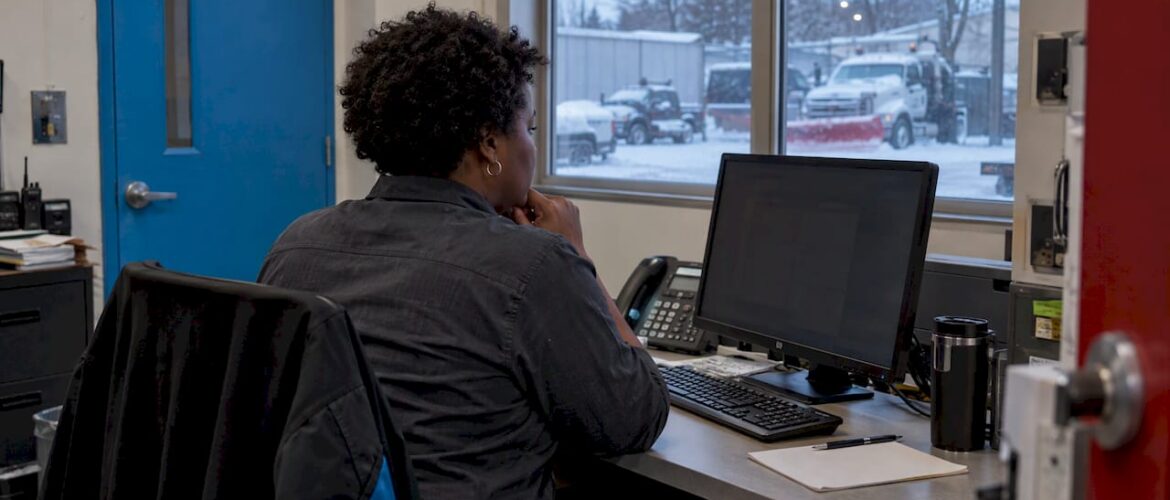
Weather monitoring for snow operations means tracking forecasts, precipitation, temperature and pavement conditions before and during a storm, so crews are on a property when snow starts to stick instead of after it has piled up. In Denver, where a storm can arrive overnight and a sunny afternoon can refreeze by dusk, good monitoring is the difference between a clear lot at 6 a.m. and a slip-and-fall claim.
This guide explains what gets monitored, how forecasts and alerts translate into a go or no-go decision, how overnight and 24/7 watching works, where forecasts fall short, and what you can do as a homeowner, HOA board member or property manager with the same information.
TL;DR
- Crews watch air and pavement temperature, wind, precipitation type and intensity, and whether ice or snow is already on the surface. Forecasts tell them when to start; observations tell them whether to keep going.
- Acting on a forecast is generally cheaper than reacting to conditions already on the ground, according to transportation research.
- Overnight storms need someone awake: roaming checks before snow begins, then active removal as soon as it accumulates.
- Forecasts are never exact. A good plan builds in a margin, and a good contractor tells you which trigger it uses.
- You can use the free National Weather Service (NWS) Denver tools to know what your contractor knows.
Table of Contents
- What weather monitoring for snow operations actually covers
- The data crews watch, and what each reading tells them
- From forecast to start time: how alerts set the clock
- Overnight and 24/7 monitoring: who is watching while you sleep?
- What forecasts and sensors cannot tell you
- Using monitoring updates to protect your property
- Our perspective
- Get monitored, dispatched and documented
- FAQ
- Sources
What weather monitoring for snow operations actually covers
It is more than glancing at a weather app. Professional monitoring has three layers that work together.
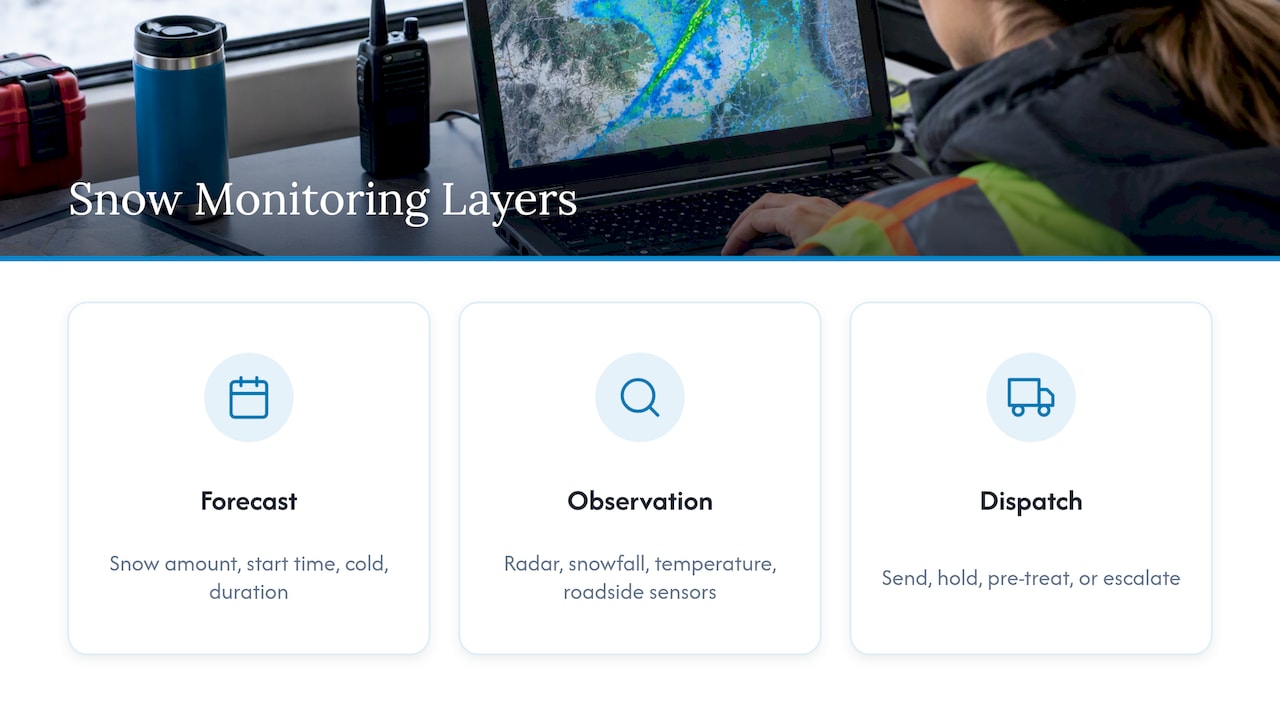
Forecasting. This is the look-ahead: how much snow, when it starts, how cold it will be and how long it lasts. The City and County of Denver’s transportation department says it monitors both public and private weather services to decide when snow response begins and at what deployment level.
Observation. This is what is happening right now: radar, snowfall reports, temperature readings and, on many highways, roadside sensors. Federal highway guidance describes Road Weather Information Systems (RWIS) as sensor networks along roads that track pavement temperature, atmospheric conditions and precipitation rates to predict when freeze-up will occur.
Decision and dispatch. Data only matters if someone turns it into a call: send the crew, hold, pre-treat, or escalate. Federal guidance notes that RWIS data helps agencies decide where and when to deploy crews and materials. A private contractor does the same thing at the scale of your lot or your block.
Why it matters for a property is simple. Snow that is plowed while it is still light and loose comes off cleanly. Snow that has been driven on, compacted and refrozen turns into a hard layer that takes more time, more material and more equipment to remove. And in Denver, the property owner carries the duty to keep walking surfaces safe: the city says owners must clear sidewalks, ADA ramps and bus stops after snowfall stops.
The data crews watch, and what each reading tells them
Federal road weather guidance lists the core inputs: air temperature, wind speed and direction, precipitation type and intensity, pavement surface and subsurface temperatures, and the presence of ice, snow or chemicals on the surface. Some systems add cameras, visibility sensors and snow depth sensors, as national best-practice reporting describes.
Here is how that translates into decisions on a Denver parking lot or driveway.
| What is monitored | What it tells a crew | Typical action |
|---|---|---|
| Air temperature | Whether snow will be dry and fluffy or wet and heavy | Choose blade, bucket or skid steer approach |
| Pavement temperature | Whether snow will bond to the surface or refreeze | Pre-treat with anti-icing before the storm |
| Precipitation type and rate | Snow, freezing rain or mixed; how fast it is accumulating | Decide when to start and how often to return |
| Wind speed and direction | Drifting, blowing snow, reduced visibility | Re-clear entrances and loading docks |
| Surface condition | Whether ice or slush already exists | Apply de-icer, scrape, or haul |
| Timing of the storm’s end | When cleanup can be completed | Schedule final pass, pile management or hauling |
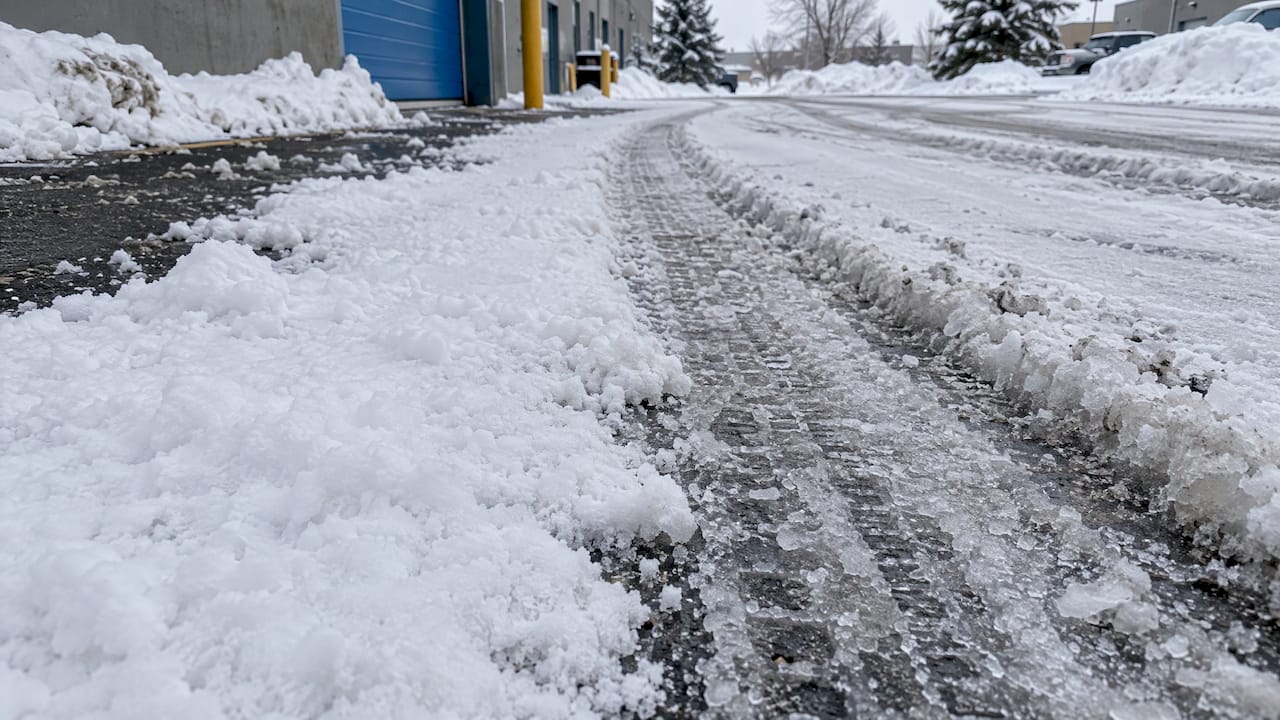
Pavement temperature deserves special attention. Air can read 34°F while a shaded north-facing walkway sits below freezing, which is why research on road weather systems stresses combining meteorological data with pavement sensors that measure surface temperature, subgrade temperature and chemical concentrations. On a private property you rarely have sensors, so crews rely on experience, handheld readings and knowledge of which spots in a lot refreeze first.
Thresholds that signal a serious storm
The NWS Boulder office, which covers the Denver metro area, publishes its winter weather criteria. They include snowfall of about half an inch to an inch per hour for several hours with visibility under half a mile, winds above 50 mph, freezing rain or drizzle at any intensity, and dense fog with visibility under a quarter mile. When a forecast crosses lines like these, a contractor should already be moving, not waiting for a phone call from you.
The same NWS guidance asks official observers to record 12- and 24-hour snow depth and new snowfall totals by 8 a.m. and 8 p.m. You do not need to follow that schedule, but it is a good reference for how often to check a measurement stick if you keep one for your own records.
From forecast to start time: how alerts set the clock
The central idea in snow operations is that deciding on likely future conditions beats reacting to existing ones. Transportation researchers put it plainly: site-specific forecasts are among the most effective ways to cut snow and ice control costs because they let crews act early.
In the Denver area, several public sources feed that decision.
- The NWS Denver/Boulder winter weather decision support page. It shows snowfall forecasts by location, reported snow and ice totals, and the likely onset of winter precipitation, typically six to 24 hours ahead when a Warning or Advisory is issued.
- City and County of Denver snow response. The city’s plan sets its deployment level from forecasts, and its guidance tells property owners they can apply deicer before forecast snow and should clear sidewalks after snowfall stops.
- Colorado’s Pathfinder process. Federal documentation describes a pre-storm conference call 24 to 48 hours before an event that brings together the NWS, the Colorado Department of Transportation and other agencies to agree on a unified message about expected conditions. The practical effect for you is that the warnings you see in the news have usually been coordinated a day or two ahead.
- Transit planning. RTD describes starting its storm planning 24 hours before a storm by reviewing NOAA weather reports and lining up facilities teams.
Even Denver’s street maintenance division has used decision tools of this kind. A federal evaluation records that it used a prototype maintenance decision support system to forecast road-weather conditions and generate treatment recommendations.
A simple trigger timeline
Whatever tools are used, a workable property-level timeline looks like this:
- 48 to 24 hours out: Watch the forecast. Confirm your contract or service call is in place and that the crew has current access instructions, gate codes and a list of priority areas.
- 24 to 12 hours out: If a Watch or Warning is issued, schedule anti-icing on walkways and entrances where refreezing is likely.
- Storm onset: Begin monitoring conditions on site. Start plowing when accumulation reaches the trigger written in your contract.
- During the storm: Repeat passes as snow keeps falling. Re-check entrances, ramps and drive lanes.
- Storm end: Do the final clear, pile management and a walkway ice check. Document it.
For property managers who want this written down, our Denver snow alert checklist and our contract-ready emergency snow plan lay out the steps by role.
Overnight and 24/7 monitoring: who is watching while you sleep?
Many Denver storms peak between midnight and 6 a.m., exactly when nobody is on site. Overnight monitoring therefore has to be a defined routine, not a hope.
RTD’s published approach to its own facilities shows what that routine can look like. For a middle-of-the-night storm, its plan lets employees start up to an hour before deployment, and contractors may be sent to sites about two hours before peak periods. Contracted personnel must roam and monitor conditions before snow begins, dispatch workers as needed, begin active removal as soon as snow starts accumulating, and stay until vehicle and pedestrian surfaces are clear.
That is a useful template for what to ask any provider:
- Who is monitoring the forecast overnight, and who has authority to dispatch without waiting for your call?
- What accumulation or temperature triggers a first visit?
- How often does the crew return during a long storm?
- When is the property considered finished, and how is that recorded?
Why sensors replaced “drive around and watch”
The history is instructive. Federal highway documentation describes how, in Denver, the Colorado DOT’s use of RWIS let maintenance managers call in crews only when conditions required, replacing an older, less efficient routine of sending crews to drive around and physically watch for storms. The lesson for private properties is the same: continuous data plus a clear trigger beats a truck idling in the dark. It also keeps crews rested and available for the hours when the work is actually needed.
What forecasts and sensors cannot tell you
An honest monitoring plan accounts for uncertainty.
Forecasts are guidance, not guarantees. NWS guidance for snow measurement notes that forecasts support planning but are usually not detailed enough to settle every operational decision by themselves, while radar is better for watching when precipitation begins and how long it lasts. In Denver, a band of heavy snow can miss one neighborhood and bury the next, so local observation matters.
Measurement takes care. The same NWS guidance says observers should take six-hour measurements during a storm only when their servicing office requires it, and otherwise should use 24-hour measurements. Measuring too often can overstate totals because settling and melting get counted incorrectly. If you measure snow yourself, use a consistent spot away from drifts.
Conservative calls are normal. NOAA research on airport operations found that experienced personnel often prefer cautious approaches, such as raising alert levels as a precaution when forecasts are ambiguous. For a contractor, that logic is sound. Showing up and finding less snow than expected costs far less than arriving late to a lot full of vehicles.
Equipment needs upkeep. Guidance from the National Cooperative Highway Research Program stresses that agencies must manage selection and maintenance of RWIS equipment so the data stays consistent and accurate. A sensor that drifts out of calibration is worse than no sensor, because people trust it.
Using monitoring updates to protect your property
You do not need a weather station to benefit from all this. A few habits do most of the work.
For HOA boards and property managers
- Agree on triggers in writing. Seasonal contracts should state the accumulation that starts a plow visit, what happens for refreeze events with no new snow, and how return visits are handled during long storms.
- Set a monitoring contact. Name one person who receives forecasts and alerts, and one backup. Colorado’s agencies align their messaging 24 to 48 hours ahead for a reason: decisions made early are calmer and cheaper.
- Pre-treat high-risk surfaces. Entrances, ramps, shaded walkways and sloped areas refreeze first. See our guide to salting Denver sidewalks before a freeze and our page on sidewalk ice control with anti-icing.
- Plan for slopes. Sloped lots hold ice and shed meltwater onto drive lanes. Our sloped parking lot snow removal guide explains the approach.
- Keep records. Date-stamped notes on when snow started, when crews arrived and when surfaces were clear are your best defense if a fall is ever reported.
For homeowners
Check the NWS Denver/Boulder page the evening before a forecast storm. Move cars off the street or out of the way, note where you want snow stacked, and decide whether you will call for service at a set depth. If a plow berm blocks your driveway after the street is cleared, we cover that in our guide to driveway windrow removal. Our residential sidewalk clearing guide helps you choose a service level.
What comes after the snow matters too. Repeated melting and refreezing is hard on concrete, brick and mortar around steps and walkways, and a research-backed plan for freeze-thaw brick damage is worth reading before winter. Heavy, wet snow and wind can also bring down limbs, and knowing what to do after a tree falls on a house helps you act in the right order if it happens.
For more on preparing before a plow arrives, use our property preparation checklist, and for business sites our winter storm preparedness guide for Denver businesses.
Our perspective
Forty-four years of Denver winters have taught us that the storm you planned for is rarely the storm that arrives. Forecasts shift by a few hours and a few degrees, and those few hours decide whether a lot is clear when the first employees pull in.
That is why we built our service around true 24/7 emergency dispatch. Monitoring is only useful if someone is awake to act on it. When conditions turn at 2 a.m., our team is meant to respond then, not at the start of business hours.
We also believe clearing a property is only half the job. Our approach includes documented service visits and liability protection for slip-and-fall incidents, so property managers and boards have a record of what was done and when. Commercial-grade equipment, designed to clear lots in one pass, means fewer return trips while cars are still parked.
Finally, we think pricing should be clear before the first flake. We provide free estimates and tailor contracts to the property, whether that is a single driveway, an HOA community or an industrial park.
Jesse
Get monitored, dispatched and documented
If you would rather not watch radar at midnight, we will do it for you. We plow and remove snow for residential, commercial, industrial and HOA properties across Denver, with 24/7 emergency service, anti-icing pre-treatment, de-icing, snow hauling and seasonal contracts. Residential driveway and walkway clearing starts from $41.25 per visit, and we offer free estimates for everything else.
See our parking lot and driveway service details, or visit Denver Snow Removal to request an estimate and set up a seasonal contract before the next storm.
FAQ
How far ahead should I start monitoring a snowstorm?
Start watching 48 hours out and act at 24. The NWS Denver/Boulder page typically signals likely winter precipitation six to 24 hours ahead once a Warning or Advisory is issued. Colorado agencies hold their coordination call 24 to 48 hours before an event, so that is when the picture usually firms up.
What does overnight snow monitoring involve?
Someone checks forecasts and radar through the night and has authority to dispatch a crew. A well-run plan sends people out before snow starts to assess conditions, begins plowing when accumulation starts and keeps working until surfaces are clear. Ask your contractor who is on call and what triggers a visit.
What is 24/7 snow monitoring, and do I need it?
It means continuous watching of weather and site conditions, with crews ready to respond at any hour. You need it if your property must be accessible early in the morning or if falls would create liability, such as retail centers, offices, apartment communities and HOAs. Homeowners can often get by with forecast checks and a call-in service.
Can I rely on a weather app instead?
An app is a fine starting point, but it gives one generalized forecast for a wide area. Official NWS products add location-specific snowfall forecasts, reported totals and warnings, and professionals combine them with observations on site. For decisions with liability attached, use the official sources.
Who is responsible for clearing sidewalks in Denver?
Property owners. The city’s guidance says owners must clear sidewalks, ADA ramps and bus stops for safe access after snowfall stops, and it suggests applying deicer before forecast snow. Confirm details on the City and County of Denver snow page.
Sources
- FHWA Road Weather Management: Winter Maintenance tech briefs
- FHWA ESS Siting Guidelines: Road Weather Observation
- NWS Boulder Winter Guidelines and Criteria
- Road Weather Information Systems Volume 2: Implementation (TRB)
- NOCoE Best Practices: Road Weather Management
- NWS Denver Metro Winter Weather DSS
- Snow Removal, City and County of Denver
- FHWA Road Weather Management Benefit Cost Analysis Compendium
- RTD-Denver: Meet RTD’s snow removal team
- FHWA: Colorado DOT RWIS case study
- Colorado’s Pathfinder Process, FHWA Operations
- Snow Measurement Guidelines for National Weather Service Observers
- Evaluation of Probabilistic Snow Forecasts for Winter Operations (NOAA)
- Guide for Snow and Ice Control Operations (NCHRP)