




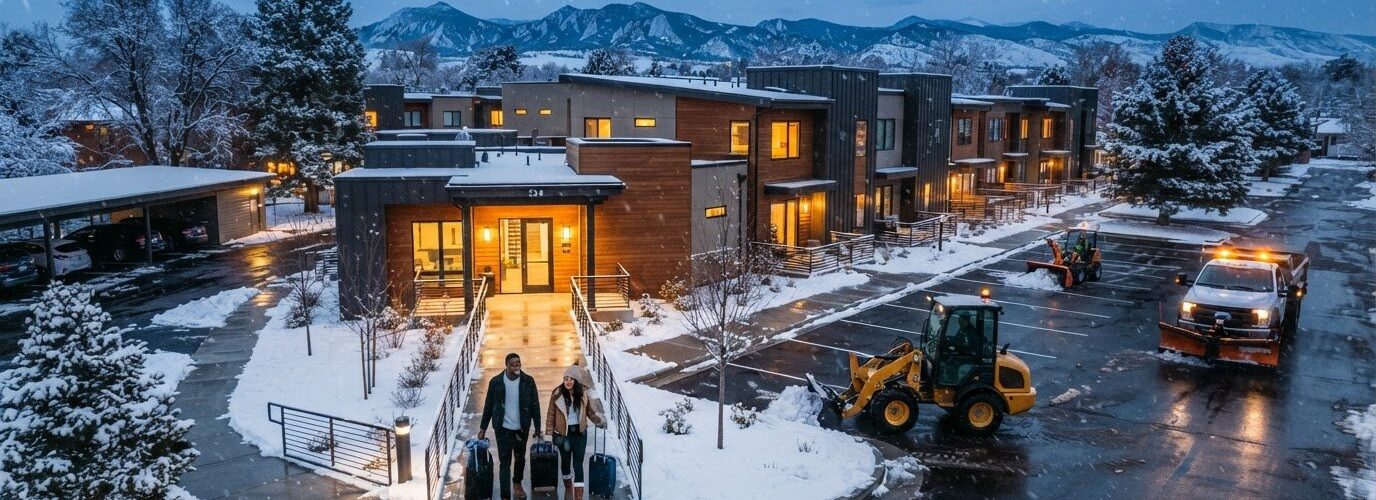

Denver’s winter weather doesn’t mess around. One day you’re enjoying 55 degrees and sunshine, and the next you’re staring at six inches of wet, heavy snow that has turned your parking lot into a liability minefield. If you manage a commercial property anywhere from LoDo to the Tech Center, you already know that the city’s municipal plows won’t touch your lot. Securing reliable commercial snow removal Denver CO is not just a line item on your budget: it’s the difference between a safe, open business and a day of lost revenue. By the end of this guide, you will know exactly what to look for in a vendor, what pricing to expect for the 2026 season, and how to keep your property safe and compliant.
Table of Contents
-
Understanding Commercial Snow Removal Pricing in Denver (2026 Rates)
-
DIY vs. Professional Commercial Snow Removal: What’s the Real Cost?
-
Frequently Asked Questions About Commercial Snow Removal in Denver
Why Denver Businesses Need a Dedicated Commercial Snow Plan
Denver’s Department of Transportation and Infrastructure does an admirable job clearing public roads, but its mission stops at the curb. The city maintains roughly 2,050 lane miles of main streets and another 1,260 center lane miles of residential streets using a fleet of 70 large plows and smaller pickup trucks. Your parking lot, loading dock, and private driveways are not on that list. Property owners bear full responsibility for keeping those surfaces clear.
That responsibility carries legal weight. Denver law requires property owners to clear snow and ice from all public sidewalks abutting their property within 24 hours after a snowfall ends. Miss that window and you risk fines, but the larger threat is civil liability. A single slip-and-fall lawsuit can easily exceed the cost of a full-season snow removal contract. Beyond legal exposure, a snowed-in lot means employees can’t park, delivery trucks can’t unload, and customers go elsewhere. A proactive commercial snow plan keeps your operation running and reduces the risk of injury claims. It’s not an expense: it’s protection.
Understanding Commercial Snow Removal Pricing in Denver (2026 Rates)
Snow removal pricing in Denver follows several models, and understanding them helps you evaluate quotes without getting caught off guard by hidden fees. The most common structure is per-inch pricing, which typically ranges from $10 to $30 per inch of accumulation. Rates often increase after the first six inches because heavier snow requires more equipment time and may demand larger loaders rather than standard plow trucks.
Per-push, or per-visit, pricing is another widely used model, especially for lots under 50,000 square feet. Under this arrangement, you pay a flat fee each time the crew arrives, regardless of whether two inches or eight inches fell. This gives you predictable costs per storm event and works well for properties that need frequent clearing during multi-day storms.
Hourly rates give you a window into the cost of labor and equipment. Expect to see charges between $25 and $100 per hour depending on what’s deployed. A pickup with a plow runs on the lower end, while a heavy-duty truck with a sander and a skid steer operator will push toward the top of that range. Some providers also quote by square footage, charging roughly $0.01 to $0.05 per square foot per season. This model is less common but worth discussing if you manage a large industrial site or multiple properties.
Seasonal contracts lock in your rate for the entire winter and typically include priority response during back-to-back storms. Per-visit service offers flexibility but usually costs 20 to 30 percent more per event. For most Denver businesses, a seasonal contract provides the best balance of cost predictability and guaranteed service.
What to Look for in a Commercial Snow Removal Provider
Equipment and Fleet Capabilities
A single truck with a plow cannot handle a major storm across multiple properties. Ask any provider how many trucks they can deploy simultaneously and whether they own their fleet or rely on subcontractors. Owned fleets mean consistent quality and faster response times. Subcontracted work often introduces variability you don’t want during a February blizzard.
De-icing materials matter just as much as plow blades. Denver’s own fleet uses Ice Slicer, a naturally mined solid deicer from Utah that contains over 90 percent chloride salts, along with liquid magnesium chloride in the downtown area to reduce airborne particulates. Your provider should use materials effective at the low temperatures common in Denver’s high-altitude winters and safe for the concrete and asphalt on your property. If your site includes protected bikeways or wide pedestrian walkways, confirm the company has smaller plows with brooms for precision clearing, not just full-size trucks built for open lots.
Insurance and Liability Coverage
Never sign a contract without verifying insurance. The industry standard is a minimum of $1 million in general liability coverage, and you should request a certificate of insurance that names your business as an additional insured. Worker’s compensation coverage is equally critical. If a plow operator gets injured on your property and the provider lacks proper coverage, you could be left holding the bill. Review the contract for an indemnification clause that holds your business harmless for damage caused during snow removal operations, such as cracked asphalt, gouged curbs, or damaged landscaping.
Contract Terms and Response Times
A solid contract defines what triggers a service visit. Most agreements specify a trigger threshold, often two inches of accumulation, after which the provider automatically dispatches crews. Response time guarantees matter. Look for language promising arrival within four hours of snowfall, backed by 24/7 monitoring and GPS-tracked trucks. Seasonal contracts are standard, but multi-year agreements sometimes come with discounted rates. Read the cancellation policy before committing to a long-term deal. You want the flexibility to switch providers if service quality declines.
The 2026 Denver Snow Removal Laws You Must Know
Denver’s sidewalk clearance ordinance applies to every property owner, commercial and residential alike. Snow and ice must be removed from all public sidewalks adjacent to your property within 24 hours after a storm ends. The city enforces this actively, and repeat violations can trigger escalating fines.
One common mistake is pushing snow into the street or bike lane. That’s illegal. All snow must be piled on your own property, whether that means landscaped islands, parking lot perimeters, or designated snow storage areas. If a fire hydrant sits on or near your property, you are required to maintain a three-foot clear path around it at all times. Fire departments do not have time to dig out hydrants during an emergency.
Colorado follows a comparative negligence standard, which means a plaintiff’s own carelessness can reduce their recovery in a slip-and-fall case. That does not eliminate your exposure. Courts still expect property owners to make reasonable efforts to clear ice and snow. Document every service visit with photos, time-stamped invoices, and a log of de-icing applications. Good records are your best defense if a claim arises.
How to Estimate Your Commercial Snow Removal Needs
Calculating Lot Size and Labor Hours
Start by measuring your lot. Multiply length by width to get total square footage, then divide by 43,560 to convert to acres. Most commercial providers quote per acre or per 1,000 square feet, so having an accurate number prevents overcharges. A standard one- to two-acre commercial lot typically requires two to four hours of labor with one plow truck and one skid steer. Add roughly 30 minutes per acre for de-icing application after the plowing is complete.
For a realistic example, take a two-acre lot with four inches of snow. You might estimate three hours of labor at $75 per hour for a truck and operator, plus $50 in de-icing materials, for a total of roughly $275 per visit. Actual costs vary by provider and storm severity, but this gives you a working baseline for budgeting.
Accounting for Variables
Not all snowstorms are equal. Denver’s spring storms often dump wet, heavy snow that requires slower passes and more fuel. Light, dry powder is faster to clear but can drift back onto cleared surfaces. Ice events demand pre-treatment with liquid de-icer before the storm arrives, which adds $20 to $50 per application. Parking lot layout also affects labor time. Lots with numerous islands, tight corners, and curbed planters take longer to clear than open rectangular lots where a plow can run straight lines without backing up.
DIY vs. Professional Commercial Snow Removal: What’s the Real Cost?
Some business owners consider handling snow removal in-house, especially if they already own a truck. The numbers rarely support that decision. A commercial-grade plow truck costs between $15,000 and $50,000, and that’s before annual maintenance, fuel, salt storage, and the overtime wages you’ll pay employees to plow at 4:00 a.m. For most businesses, outsourcing is significantly cheaper than owning and operating equipment.
The liability risk tilts the equation further. If a tenant or customer slips on ice you failed to clear adequately, legal fees and settlements can exceed $50,000. Professional providers carry insurance that shifts that risk off your balance sheet. There’s also the question of time. A professional crew clears a two-acre lot in two to three hours. An in-house team working with a single truck might need six to eight hours, pulling staff away from the work that actually generates revenue. DIY snow removal only makes sense for very small lots under 10,000 square feet with low traffic and an owner willing to plow personally at any hour of the night.
Frequently Asked Questions About Commercial Snow Removal in Denver
What is the going rate for commercial snow removal in Denver? Rates range from $25 to $100 per hour or $10 to $30 per inch of snow, with seasonal contracts typically offering the best overall value for properties that need consistent service all winter.
How do I estimate commercial snow removal costs? Use the formula: labor rate multiplied by estimated hours, plus de-icing materials, plus any equipment surcharge. Most reputable providers offer free on-site estimates that account for your property’s specific layout and exposure.
What are the snow removal laws in Colorado? Denver requires sidewalks to be cleared within 24 hours. Snow cannot be pushed into streets or bike lanes. Commercial properties also have ADA obligations to keep accessible parking spaces and curb ramps clear, which a professional provider should address as part of standard service.
Do I need a contract for commercial snow removal? Contracts are not legally required, but they guarantee priority service and locked-in pricing. Without a contract, your property may be deprioritized during back-to-back storms when crews are stretched thin and seasonal clients come first.
How often should a commercial lot be plowed? After every two to three inches of accumulation. During continuous storms, the lot should be cleared every four to six hours to prevent snow from compacting into ice that becomes far more difficult to remove later.
How to Choose the Right Provider for Your Denver Property
Start by checking local reviews on the Better Business Bureau and Yelp, focusing on feedback from other commercial clients rather than residential homeowners. A provider with a strong track record servicing office parks, retail centers, or industrial properties understands the demands that a residential-focused operator might miss.
Ask directly whether the company owns its fleet or subcontracts. Owned equipment means the provider controls maintenance, driver training, and dispatch timing.
Residential Snow Plowing in Denver →
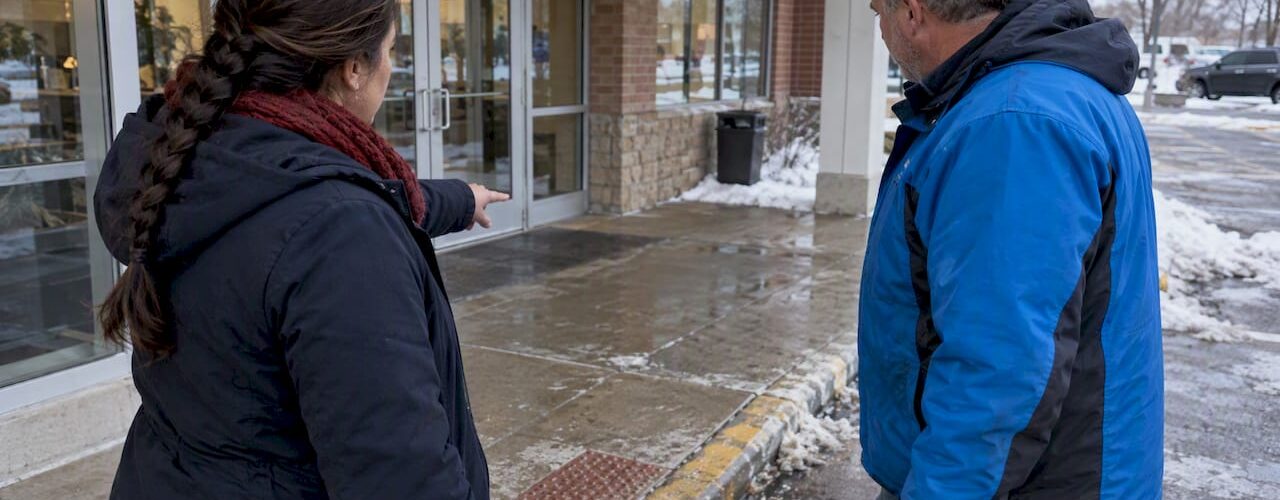
Subcontracted work can lead to inconsistent quality and slower response when multiple subcontractors are stretched across different clients. Request a site walk before signing anything. A reputable provider will visit your property to measure the lot, identify hazards like drains and curbs, and create a custom snow management plan rather than quoting a generic per-acre rate over the phone.
Get at least three quotes and be skeptical of any bid significantly below the market average. Low prices often signal corners cut on insurance, de-icing materials, or equipment maintenance. The best providers use GPS and weather tracking to dispatch trucks before snow starts accumulating, not after your lot is already buried. Confirm that 24/7 monitoring is part of the standard service package.
Ready to protect your property this winter? Contact us for a free, no-obligation site assessment and a customized quote for your Denver commercial property. We’ve served the Denver metro area since 2013 as an official BOSS equipment dealer and a BBB-accredited business, and we treat every lot like it’s our own.