
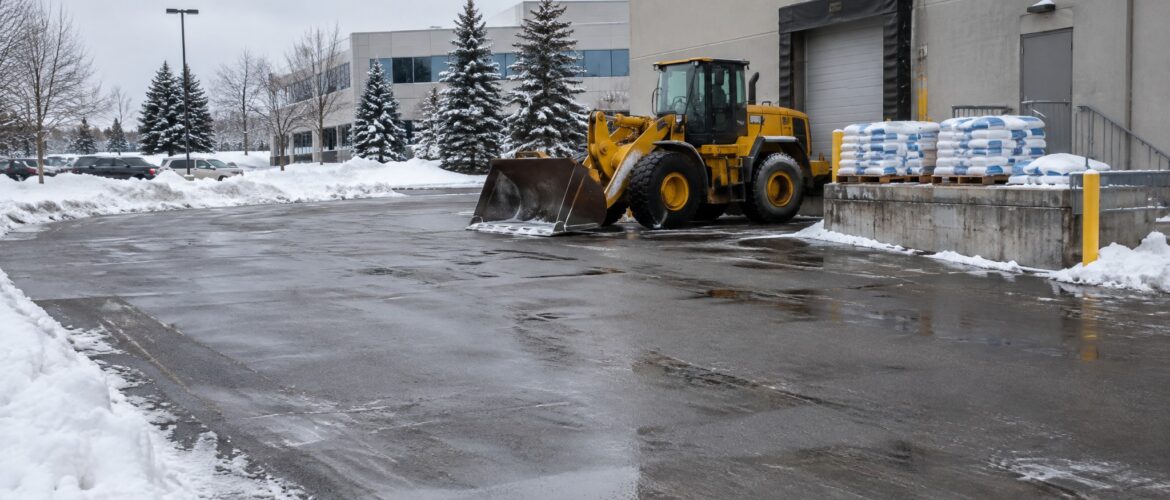
Search for snow removal Denver and most of what comes back is priced for a driveway. A homeowner pays a flat fee to get the slab in front of the garage cleared. That number tells you nothing about a three-acre office campus, a warehouse yard or an HOA community with shared drives and walks. When considering snow removal Denver options, it’s crucial to understand the broader implications.
In Denver, snow removal services vary greatly. From individual driveways to commercial properties, snow removal Denver is essential for maintaining safety and accessibility.
Key takeaways
- Commercial snow removal in Denver is priced by the property and the contract type, so per-driveway averages say nothing about a large lot.
- On a 3-acre campus, per-push billing climbs with every storm, and a heavy March storm can mean extra passes, ice melt and hauling on top.
- A seasonal contract fixes the price up front, but you must check whether snowfall totals are capped or unlimited.
- Before signing, get the trigger depth, what’s included, how de-icing and hauling are billed, and proof of insurance in writing.
- Insured work and service logs after each visit help limit slip-and-fall liability, but they don’t remove an owner’s sidewalk obligations.
We plow commercial lots. After 47+ years in Denver, we’ve seen what happens when a property manager budgets from the wrong number, and it never ends well in March.
Many businesses rely on snow removal Denver services to keep their lots clear and functional throughout the winter months. Understanding your needs will guide you in selecting the right service.
How Snow Removal Pricing Works in Denver: One Lot, Two Contract Types
Commercial snow removal in Denver is priced by the property and the contract structure, not by a city-wide average. The easiest way to see it is to take one lot and bill it two ways, ensuring that any snow removal Denver services provided are tailored to the specific needs of your property.
Per-push vs. seasonal billing
| Per push | Seasonal | |
|---|---|---|
| Price | Pay every visit | Fixed up front |
| Budget | Swings with storms | Known before first flake |
| Heavy March storm | Extra passes, ice melt | Handled on agreed triggers |
| Check the terms | – | Capped or unlimited totals |
Picture a 3-acre office campus in the Metro. It has a main lot, two side lots, a loading apron and sidewalks running from every parking row to the doors. The winter is a typical Front Range one: a few light snows, several moderate storms, and a heavy March storm that lands on top of piles already crowding the edges of the lot.
Billed per push, you pay every time a truck comes. In the light weeks the invoices are small. In the weeks when storms stack up, they grow with every visit. The heavy March storm usually means more than one pass, ice melt once the slush refreezes, and hauling once the piles start eating parking stalls. All of that arrives in the month your budget was already spent, so the line you set in September means little by April.
Per-push isn’t wrong for every property. If a lot can absorb a swing in cost and tolerate a later clear time, it can make sense. A campus that has to be open on time every morning usually can’t live with either.
Understanding the dynamics of snow removal Denver can help property owners make informed decisions about their winter maintenance plans.
Billed seasonally, we walk the lot first, write the scope, set the trigger depth and agree one season price up front. Then the same March storm gets plowed on the agreed triggers, de-iced on the written terms and hauled when piles reach the agreed point. The price doesn’t move. You know the number before the first flake, and your CFO or board knows it too.
A fixed price is only as good as the paper behind it, so read the terms on snowfall totals. Some seasonal contracts cap the number of storms or inches they cover. Others are unlimited. Ask which one you’re signing, because a cap can turn a “fixed” price into a per-push bill in February.
We cover the full comparison in our guide to the per-push versus seasonal contract decision.
The per-driveway quotes that dominate search results do not apply here. They price a single short slab cleared by a single truck or a person with a shovel. A large lot has different geometry, different liability and different deadlines. We don’t do residential driveways, and we won’t pretend a driveway price predicts what your lot costs. For lot-based numbers, see what commercial lot pricing looks like in Denver. If you manage an HOA, what HOA boards should look for in a contract covers the board-level questions.
What drives the price on a commercial lot
Six things move a commercial quote, and you can check every one of them against the proposal in front of you.
Lot size and layout come first. Acreage matters, but so do islands, dead-end corners, tight loading docks and anything a plow has to back out of. A lot full of obstacles takes longer than an open one of the same size.
When it comes to snow removal Denver, having a solid plan in place can make all the difference in ensuring your property is accessible and safe.
Sidewalk count comes next. Every walk from parking to entrance is hand or machine work on top of the plowing, and it’s the part that decides slip-and-fall exposure.
Trigger depth is the third driver. A contract that plows at an inch or two keeps the lot ahead of the storm. One that waits for more gives you a lower price and a lot that’s packed down by the time the truck arrives. Neither is a mistake, but you should choose it on purpose.
Ice melt is the fourth. Ask whether it’s included, how many applications are covered and what triggers one. Hauling is the fifth. When piles block parking, we move them with skid steers and trucks, and the contract should say when that starts and how it’s billed.
Response time is the sixth. “Cleared before opening hours” is a promise that costs real equipment and staffing, and a quote that doesn’t mention it isn’t promising it.
Equipment sits underneath all six. We run a newer Chevy 2500HD fleet with commercial Boss plows, skid steers and de-icing equipment. That’s commercial equipment, not pickup trucks hired by the hour. A hobby plow on an old pickup can’t move a heavy March pile, and a contractor who can’t move it can’t hold a price on it.
Before you sign anything, get these answers in writing: the trigger depth, exactly what’s included, how de-icing and hauling are billed, whether snowfall totals are capped or unlimited, how a heavy-snow season is handled, and proof of insurance. Any contractor who dodges one of them has told you something.
Where We Plow: Denver County and the Metro Service Area
We specialize in snow removal Denver, ensuring that every inch of your property is taken care of during winter storms.
We’re based in Denver County and serve the Denver Metro. Our dispatch is staffed 24/7 from September through May. That means a person answers, not a voicemail box that gets checked at sunrise.
We serve large lots: industrial parks, office campuses, warehouses, retail centers and HOA communities. We build routes by area, so trucks aren’t crossing the Metro between stops and response times hold when the storm is at its worst. If your property sits inside a route we already run, you get the benefit of trucks that are nearby, not trucks that are on their way from somewhere else.
When a storm hits at night, you should know in advance who’s coming. We wrote up who shows up at 2 AM for exactly that reason.
This isn’t a service for single-family driveways. If you’re a homeowner looking for a driveway quote, we aren’t the right call. If you manage a lot, a campus or a community, we are.
How a Seasonal Snow Contract Runs From Signing to the Last Storm
A seasonal contract for snow removal Denver is a sequence, and each step exists to remove a surprise later. Understanding this process is key for property managers.
It starts with a site walk-through. We walk the lot, count the sidewalks, find the places where snow will pile and note what a truck can and can’t reach. Then we put the scope in writing, including the trigger depth, the ice management terms and the point at which hauling begins. The season price is agreed up front, before the first storm, so nobody is negotiating in a blizzard.
From September to May, dispatch is staffed around the clock. After every visit you get a service log that records what we did and when. Ice management and hauling run as defined add-ons, so what’s included and what’s billed on top is never a guess.
Here’s what a heavy-storm night looks like after 47+ years of doing it. Snow starts to stick, dispatch is already staffed and trucks are staged by area. The trigger depth in each contract tells us which lots go first. Route order is set by what each contract promises, such as open before a certain hour, or sidewalks clear by a certain point. A lot with a tight opening deadline and a low trigger gets plowed early and again as the snow keeps falling. By morning, the lots that were promised to be open are open.
The documentation matters more than most managers expect. Property owners and HOAs carry sidewalk-clearing obligations, and Denver’s 24-hour sidewalk rule is the one to know. A fully insured contractor and a log of every visit help limit your slip-and-fall liability. They don’t remove it. You still own the property, and if a contract is vague or the contractor can’t show proof of insurance, the gap lands on you. This isn’t legal advice, so check your own obligations with counsel.
If you’re comparing contractors for 2027, bring your quote questions to us first. We’ll answer them in writing before you sign. Request a site walk-through and quote, or call us and tell dispatch which lot you manage.
For effective snow removal Denver, it’s crucial to know your options and get the best service for your property.
Frequently asked questions
How much is residential snow removal?
Understanding the cost associated with snow removal Denver can help you budget effectively for winter maintenance.
We don’t do residential driveways, so we can’t give you a driveway price. Per-driveway quotes also don’t carry over to large lots. Commercial pricing depends on lot size, trigger depth, ice melt, hauling and contract type.
Is a seasonal snow contract better than paying per push?
For a lot that has to be open on time every morning, usually yes. A seasonal contract gives you a fixed price and a defined scope, so a heavy March storm doesn’t blow up the budget. Per-push can suit a lot that can absorb cost swings and a later clear time.
What should I confirm before signing a snow removal contract?
Confirm the trigger depth, what’s included, and how de-icing and hauling are billed. Ask whether snowfall totals are capped or unlimited, and how a heavy-snow season is handled. Then ask for proof of insurance.
It’s important to confirm details regarding snow removal Denver services, including pricing and coverage, before signing a contract.
Does hiring a snow contractor protect me from slip-and-fall claims?
It helps, but it doesn’t remove your obligations. Property owners and HOAs still carry sidewalk-clearing duties. A fully insured contractor and documented service after each visit help limit your liability. This isn’t legal advice, so check your own situation with counsel.
Remember that hiring snow removal Denver professionals helps limit your liability but does not eliminate your obligations as a property owner.
When is your dispatch available?
Dispatch is staffed 24/7 from September through May. We serve Denver County and the wider Denver Metro. Routes are built by area so response times hold during a storm.
Our team is dedicated to providing exceptional snow removal Denver services, available around the clock during the winter months.