






What triggers emergency snow removal on your property?
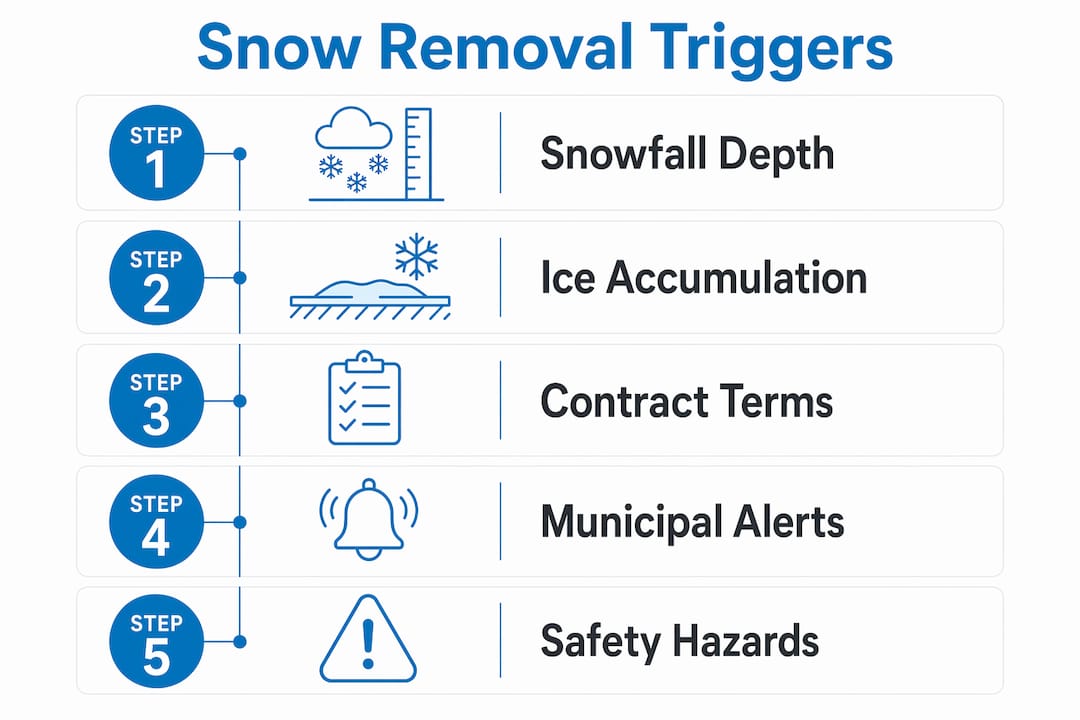
Emergency snow removal kicks in when snowfall or ice accumulation reaches a defined threshold that puts safety, access, or legal compliance at risk. For most properties and municipalities across the United States, that threshold sits at 2 inches of accumulation. Cross that line, and the clock starts ticking for crews to mobilize.
Triggers are not always just about depth, though. Several conditions can activate urgent clearing:
- Snowfall accumulation reaching 2 inches or more (the most common industry standard)
- Ice formation or freezing rain that makes surfaces hazardous regardless of depth
- Drifting snow that blocks travel lanes or access points
- Timing relative to peak traffic, school hours, or business operations
- A forecast showing additional accumulation on top of existing snow
- Contractually defined thresholds on private properties, which often start at 1 inch
Private property triggers are set in writing before the season starts, and they can differ significantly from what a municipality uses. A commercial parking lot serving a medical office may have a 1-inch trigger; a residential HOA might set theirs at 2 inches. The number matters less than having it clearly defined and agreed upon before the first storm arrives.
Table of Contents
- Why snowfall depth thresholds are the backbone of emergency criteria
- Safety and liability: what property owners are legally responsible for
- How to set effective snow removal triggers for your property
- How municipalities declare snow emergencies and prioritize routes
- Expert insights from 44+ years of snow removal operations
- Denversnowremovals: 24/7 emergency snow removal for Denver Metro properties
- Key Takeaways
- FAQ
Why snowfall depth thresholds are the backbone of emergency criteria
The 2-inch mark is the most widely used trigger in the United States, and it shows up in municipal policy after municipal policy for good reason. At that depth, uncleared snow begins to compress under traffic, forming a packed layer that is far harder to remove and far more dangerous to walk or drive on.
Key threshold reference: New Hope, MN and Madison, SD both use a 2-inch trigger for automatic snow emergency declarations and parking restrictions. Coon Rapids, MN sets its full plow operation threshold at 3 inches, with the Public Works Director retaining authority to act earlier if conditions warrant.
Bismarck, ND takes a tiered approach that illustrates how thresholds scale with route priority:
- Priority 1 (Emergency Routes): 2 inches triggers plowing
- Priority 2 (School Routes): 3 inches
- Priority 3 (Major Routes): 3 inches
- Priority 4 (Residential Routes): 4 inches
Ice accumulation operates differently. Even a thin glaze of freezing rain can trigger emergency clearing operations before a single inch of snow falls, because ice bonding to pavement creates slip hazards that depth-based rules alone do not capture. Drifting snow presents a similar problem: a 6-inch drift across a fire lane is an emergency even when the surrounding pavement shows only 1 inch of accumulation.
Pro Tip: When negotiating a snow removal contract, ask your vendor to define triggers for both accumulation depth and ice conditions separately. A contract that only addresses snowfall depth leaves you exposed during freezing rain events.

Safety and liability: what property owners are legally responsible for
Property owners face real legal exposure when they ignore known snow and ice hazards after a storm. Courts apply a reasonable and prudent person standard to evaluate whether an owner took appropriate steps to address dangerous conditions. Waiting too long, or having no clear plan at all, puts you on the wrong side of that standard.
The liability risks go beyond slip-and-fall claims:
- Failure to maintain fire lane access can result in citations from local fire marshals
- Blocked fire hydrants create both legal and life-safety problems; clearing hydrants is a property owner responsibility in most jurisdictions
- Delayed sidewalk clearing violates local ordinances in cities like Bismarck, ND, where property owners must clear sidewalks within 24 hours of snowfall
- Inadequate documentation of removal efforts weakens your defense if a claim is filed
Keeping a written log of when crews arrived, what was treated, and what conditions looked like at the time is one of the most practical steps you can take. Denversnowremovals recommends documenting every removal event with timestamps and photos as a baseline practice. That record becomes your evidence if a liability claim surfaces weeks after a storm.
Pro Tip: Ask your snow removal provider to send a service confirmation after each visit, including arrival time and conditions observed. That paper trail is worth more than any verbal assurance.
How to set effective snow removal triggers for your property
Getting the trigger right before winter arrives is the single most important thing a property manager can do. Commercial and HOA properties typically set contractual triggers commonly between 1 and 2 inches, with industry-standard turnaround times of 6 to 12 hours after a storm ends.
When building your snow removal agreement, address these points explicitly:
- Trigger depth: Specify the exact accumulation level (for example, many commercial sites use 1 inch, while most residential areas use 2 inches)
- Cumulative vs. single-event: Decide whether triggers reset after each storm or accumulate across multiple light snowfalls in a 24-hour period
- Response time: Define how quickly crews must arrive after the trigger is reached
- Ice provisions: Include separate language for freezing rain and black ice conditions
- Pre-treatment: Specify whether anti-icing applications before a storm are included or billed separately
- Communication: Require written or digital notification when service is dispatched
A clear scope of work prevents disputes and keeps service levels predictable all season. Finalizing these details in September or October, before the first forecast appears, gives you time to negotiate without pressure.
Winterizing your property’s entry points is also worth addressing before the season starts. Properly sealed doors and thresholds reduce the amount of moisture and cold air that enters during heavy snowfall events, which is a practical complement to any snow removal plan. Resources like door winterizing guides can help you close those gaps before the first storm.
How municipalities declare snow emergencies and prioritize routes
Local governments do not wait for a phone call to act. Snow emergency declarations by mayors, safety directors, or their designated officials activate parking bans, mobilize crews, and shift the entire city into emergency operations mode. In Bowling Green, OH, a snow emergency becomes automatic without any formal declaration once accumulation reaches 2 inches with additional snowfall expected.
Municipal priorities follow a consistent pattern across most U.S. cities:
- Emergency routes first: Police, fire, and medical access corridors get cleared before anything else
- School and arterial routes second: High-traffic roads connecting major sections of the city
- Residential streets third: Lower-volume roads cleared after primary routes are passable
- Parking lots and parks last: City-owned facilities receive attention only after streets are addressed
Albany, NY’s approach captures the logic well: the city’s first priority is maintaining drivability on emergency routes for fire, police, and medical vehicles. Side streets come only after those corridors are clear, which is why parking compliance during a declared emergency directly affects how quickly your street gets plowed.
Property owners also carry responsibilities during municipal emergencies. Most cities require sidewalk clearing within 24 hours of snowfall. Pushing snow from private driveways into the street is prohibited by ordinance in cities including Bismarck, ND, where violations carry fines. Keeping fire hydrants accessible is a shared civic responsibility that many cities formalize through “adopt a hydrant” programs.
Expert insights from 44+ years of snow removal operations
One distinction that separates experienced snow removal professionals from less seasoned crews is understanding the difference between an “open-up pass” and a full post-storm clearing. During active snowfall, open-up passes maintain minimal emergency access through a property without waiting for the storm to end. Full clearing, which addresses curb-to-curb removal and detail work, happens after accumulation stops.
Best practices from experienced operators include:
- Apply anti-icing treatments 24 hours before a storm to prevent ice bonding and reduce post-storm removal time
- Negotiate cumulative snowfall triggers in your contract, not just single-event thresholds, to avoid gaps when snow falls lightly across multiple days
- Confirm that your contract includes provisions for proactive pre-treatment alongside reactive plowing
- Finalize all trigger criteria and service expectations before November, not after the first storm
- Use real-time weather monitoring to pre-position crews before accumulation hits the trigger threshold
Pro Tip: Pre-treatment with liquid deicers before a storm is significantly more effective than applying granular salt after ice has bonded to pavement. Build it into your contract as a standard service, not an add-on.
Setting clear expectations for residents about when service will arrive and what triggers it reduces complaints and builds trust throughout the season.
Denversnowremovals: 24/7 emergency snow removal for Denver Metro properties
When a storm hits the Denver Metro area, property owners need a crew that is already ready, not one that needs to be called, briefed, and mobilized from scratch.
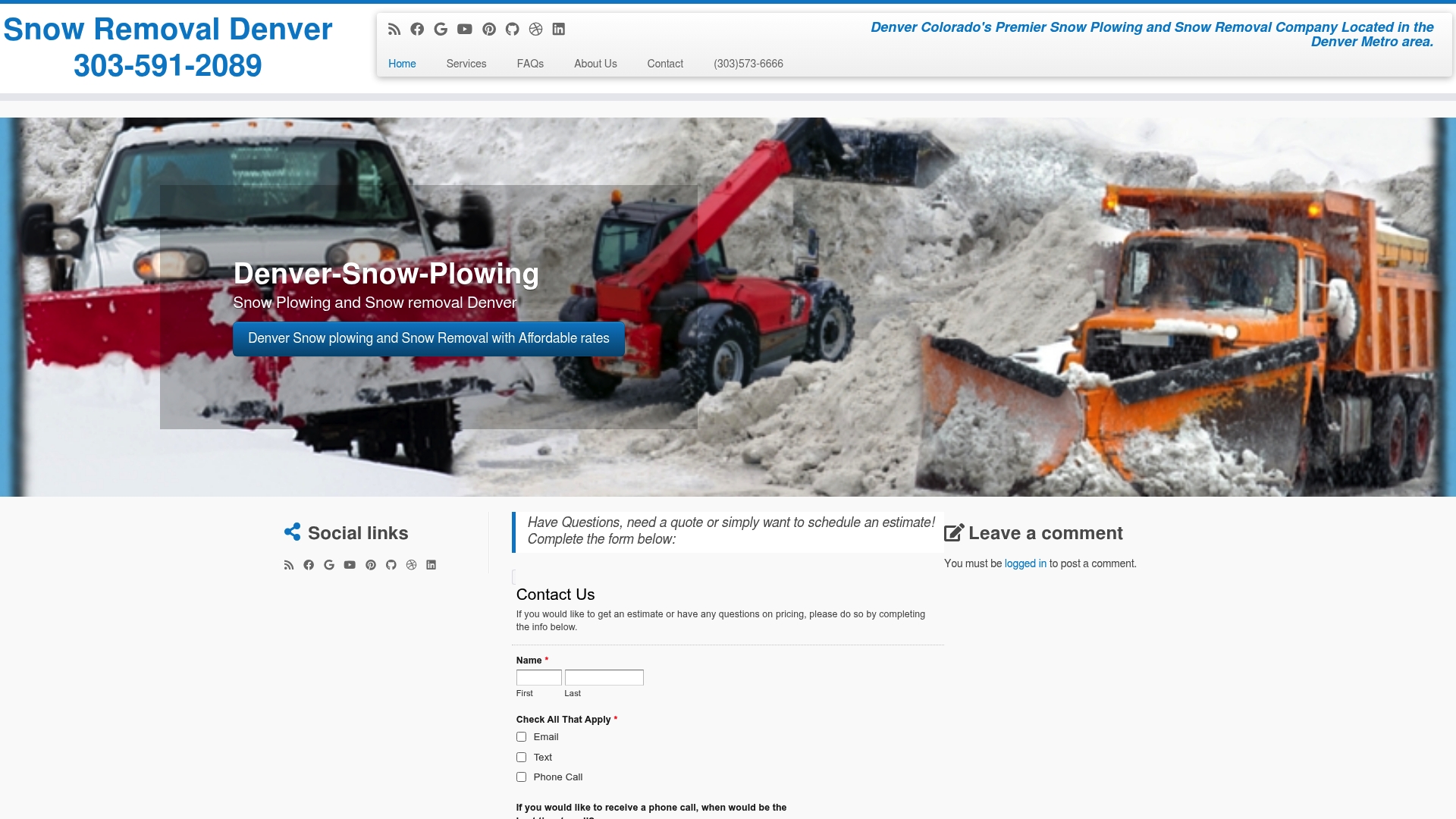
Denversnowremovals brings over 44 years of experience managing snow emergencies for both residential and commercial properties across the Denver Metro area. The team operates 24/7 with dedicated equipment, so when your trigger threshold is reached at 3:00 AM on a Tuesday, service dispatches without delay. Free estimates and flexible service plans mean you can define your own trigger criteria and response expectations before the season starts, not after the first storm catches you unprepared. Whether you need a 1-inch commercial trigger with a 4-hour response window or a standard 2-inch residential plan, Denversnowremovals builds the agreement around your property’s actual needs. Explore your snow removal options or review how the right equipment choices affect your removal costs before committing to a plan.
Key Takeaways
Emergency snow removal triggers combine measurable thresholds, hazard conditions, and contractual terms to protect safety, maintain access, and limit liability for property owners.
| Point | Details |
|---|---|
| Standard accumulation trigger | Most U.S. municipalities and commercial contracts activate snow removal at 2 inches of accumulation. |
| Ice and drift conditions | Freezing rain and drifting snow can trigger emergency clearing even when depth thresholds are not met. |
| Liability standard | Courts apply a reasonable and prudent person standard; timely removal and documentation reduce legal exposure. |
| Contract trigger terms | Commercial and HOA contracts typically set triggers between 1 and 2 inches, with 6–12 hour response windows. |
| Denversnowremovals | Provides 24/7 emergency snow removal in Denver Metro with customizable trigger thresholds and free estimates. |
FAQ
What depth of snow typically triggers an emergency removal response?
Most U.S. municipalities and commercial contracts set the trigger at 2 inches of accumulation, though some cities like Coon Rapids, MN use 3 inches for full plow operations. Private properties often negotiate triggers as low as 1 inch for high-traffic areas.
Who decides when a municipal snow emergency is declared?
Mayors, safety directors, or their designated officials make the call based on current conditions, forecasts, and existing snow on the ground. In some cities, a declaration becomes automatic once accumulation reaches a set depth, such as 2 inches in Bowling Green, OH.
Does ice trigger emergency snow removal even without significant snowfall?
Yes. Freezing rain and black ice conditions activate urgent clearing operations independently of accumulation depth, because even a thin glaze creates serious slip and vehicle-control hazards.
What is a cumulative snow trigger, and why does it matter?
A cumulative trigger counts total snowfall across multiple light events within a defined period rather than requiring a single continuous storm to hit the threshold. Without this provision in your contract, intermittent light snowfalls can accumulate to dangerous levels without activating service.
How can property owners reduce liability during snow emergencies?
Act promptly after a storm, keep fire lanes and hydrants clear, and document every removal effort with timestamps and photos. Courts evaluate whether a property owner met the reasonable and prudent person standard, and a written service record is the clearest evidence that standard was met.
Recommended
- Why Hire a Snow Removal Service: 2026 Guide – Snow Removal Denver 303-591-2089
- How to Set Snow Clearing Expectations for Residents – Snow Removal Denver 303-591-2089
- Document Snow Removal for Liability Protection – Snow Removal Denver 303-591-2089
- Seasonal Snow Preparation Step for Homeowner Denver Colorado