
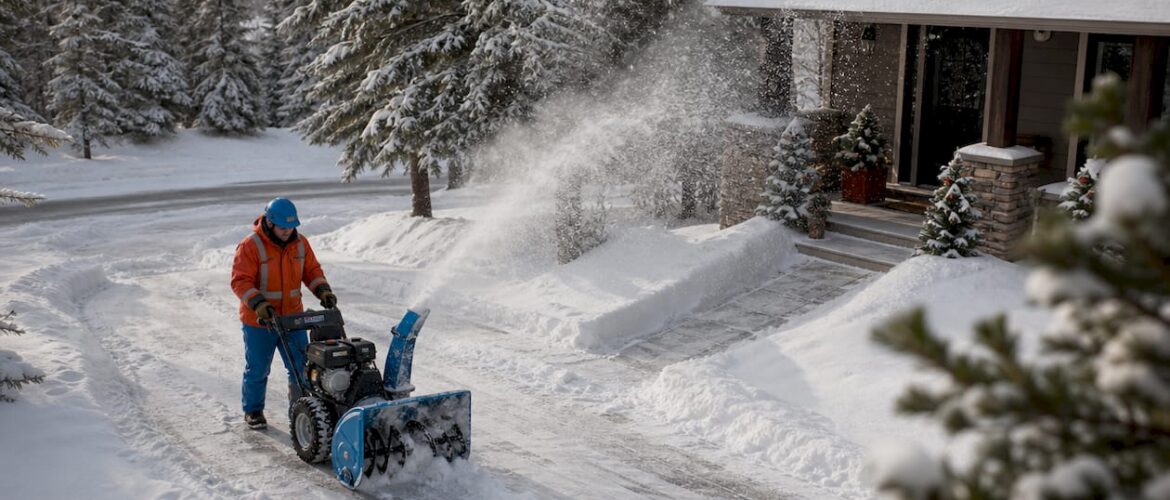
Professional snow removal service is defined as contracted winter maintenance that clears snow and ice from driveways, walkways, parking lots, and access points using trained crews and specialized equipment. Hiring a professional service protects property owners from three compounding risks: physical injury, legal liability, and property damage. For homeowners and business owners in Denver and across snowy regions, the decision to hire a snow removal service is not a comfort choice. It is a risk management decision backed by 2026 industry standards and municipal law. Denversnowremovals has served the Denver Metro area for over 44 years, and the patterns are consistent: owners who wait until the first major storm pay more and get less.
Why hire a snow removal service for safety and health protection
Snow removal is a physical task that carries real medical risk, especially for adults over 40. Cardiac risk from shoveling is well documented for this age group, as cold temperatures raise blood pressure and the exertion of lifting heavy, wet snow strains the cardiovascular system. A single storm can require moving hundreds of pounds of snow. That is not a reasonable ask for most property owners.
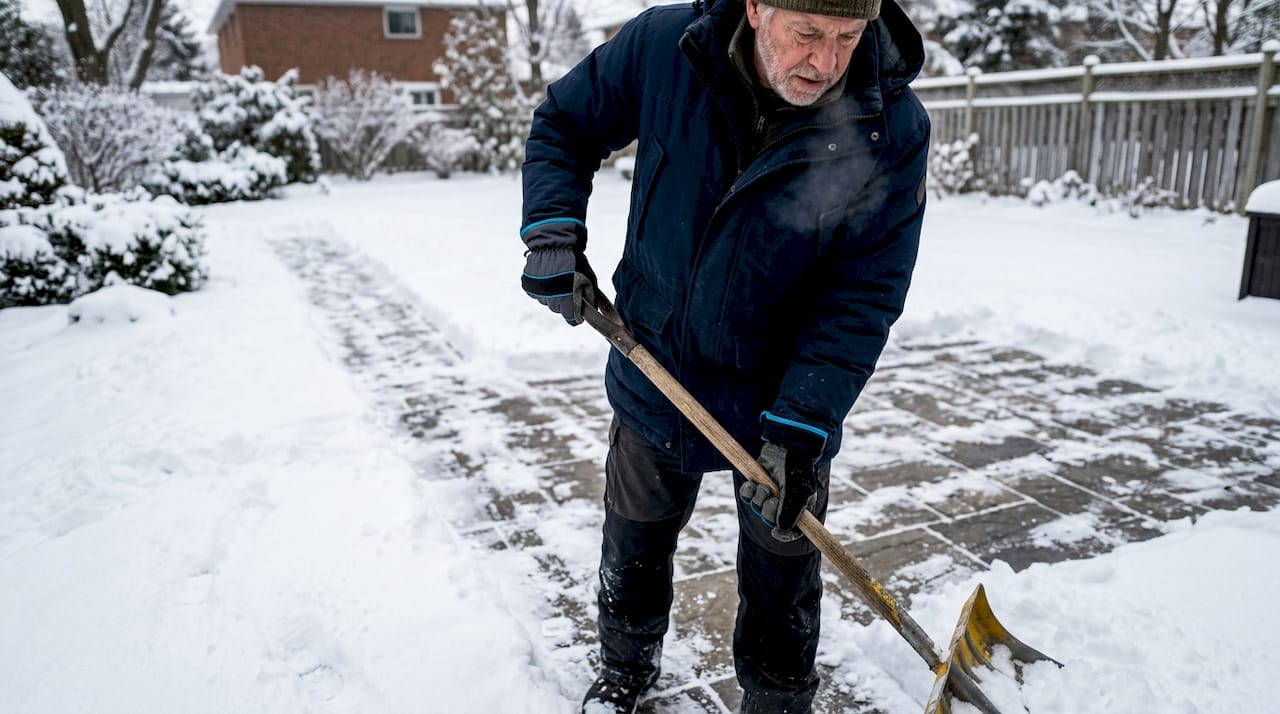
Beyond heart risk, slip-and-fall injuries on untreated walkways and driveways send thousands of people to emergency rooms each winter. Professional crews apply deicing agents and use ice remediation techniques before and after a storm to keep surfaces safe. They also know which areas to prioritize: front entries, ramps, fire lanes, and parking lot exits. Amateurs typically clear what is visible and miss the refreezing zones that form overnight.
Property owners also carry legal responsibility for maintaining safe access. If a visitor, delivery driver, or tenant slips on an icy walkway you own, you face potential liability. That exposure is real and costly.
- Cardiac risk rises sharply for adults over 40 during heavy shoveling
- Untreated walkways and steps are the most common slip-and-fall sites
- Fire lanes and emergency access points require clearance by law in most municipalities
- Deicing and ice remediation must be reapplied after temperature drops overnight
- Professional crews document their visits, which creates a legal record of care
Pro Tip: Ask your snow removal provider to prioritize your main entry, any ramp or step, and your vehicle exit before clearing the rest of the property. These three zones cause the most injuries and the most liability claims.
What are the financial and legal advantages of professional snow removal?
Municipal snow removal ordinances carry real financial penalties. Non-compliance fines for failing to clear snow by posted deadlines start at $250 and increase with each violation. The clock starts ticking the moment a storm ends, and most sidewalk clearing ordinances give property owners as little as 24 hours to comply. Missing that window costs money and creates a public record of non-compliance.
Written service contracts document timely and consistent snow clearing, which serves as legal defense in slip-and-fall liability cases. A contract that specifies service scope, trigger depths, and visit logs shows a court that you took reasonable care. Without that documentation, you are relying on memory and goodwill. Courts do not find either persuasive.
The financial case goes beyond fines and lawsuits. Consider the full cost comparison:
| Cost category | DIY approach | Professional service |
|---|---|---|
| Equipment purchase and maintenance | $300–$1,500+ upfront | Included in contract |
| Emergency labor after major storm | $150–$400 per event | Covered by seasonal rate |
| Municipal fine for late clearance | $250+ per violation | Avoided with scheduled service |
| Slip-and-fall liability claim | $10,000–$100,000+ | Reduced by documented care |
| Concrete or asphalt repair from over-salting | $500–$5,000 | Avoided with precise application |
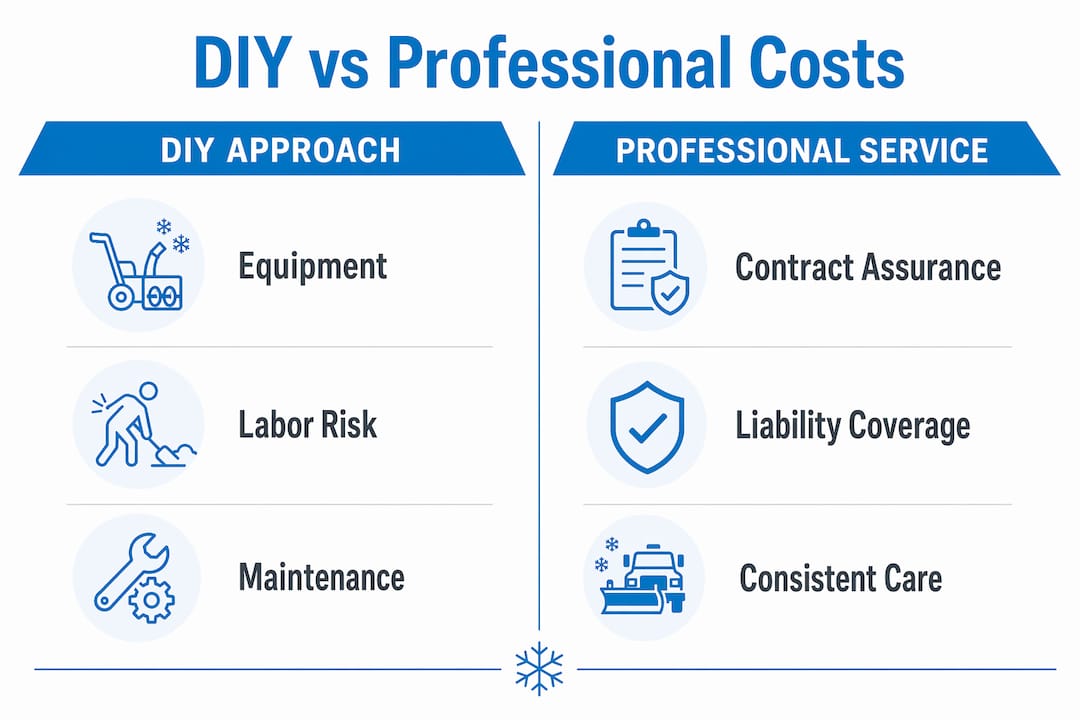
Professional snow removal delivers ROI through reduced emergency labor costs, fewer liability claims, and avoided infrastructure repairs. The seasonal contract cost looks different when you account for what it replaces.
Pro Tip: When reviewing a service contract, confirm it includes proof of insurance, a defined service scope, and a visit log. Those three elements are your legal protection if a claim is ever filed against your property.
How do professional snow removal services operate during a storm?
Professional snow removal operates on trigger point standards, not guesswork. Contracts typically specify a 2-inch snow depth trigger, meaning crews mobilize automatically once accumulation reaches that threshold. This removes the burden of calling for service during a storm and guarantees a response before conditions become dangerous.
Professional crews carry contingency plans and specialized equipment that allow them to respond regardless of storm severity. That means plow trucks, skid steers, snow blowers, and hand crews for tight spaces. A homeowner with a single shovel or a basic snow blower cannot match that capacity during a heavy Denver snowfall.
Operational discipline also covers snow pile placement. Poorly placed snow piles cause meltwater to refreeze in traffic zones and near building foundations, creating ice dams and structural water damage. Professionals place piles away from drainage paths, downspouts, and high-traffic areas.
- Trigger point contracts (commonly 2 inches) automate service without owner action
- Specialized equipment handles heavy accumulation that consumer tools cannot manage
- Snow pile placement follows drainage patterns to prevent refreezing and water intrusion
- Crews return after temperature drops to treat new ice formation overnight
- Visit documentation creates a timestamped record for each service event
Pro Tip: Negotiate your trigger depth before signing. A 1-inch trigger costs more but keeps commercial properties safer. A 3-inch trigger saves money for residential properties with lower foot traffic. Match the trigger to your actual risk level.
Does professional snow removal protect your property long-term?
Over-salting is one of the most common and costly mistakes in DIY snow management. Excessive salt application damages concrete, asphalt, and landscaping, accelerating surface deterioration and killing grass and plants along treated edges. Professionals apply deicing materials at calibrated rates, targeting ice without saturating surrounding surfaces.
Eco-friendly deicing alternatives are now standard practice among professional crews. Calcium magnesium acetate, sand-based traction agents, and brine pre-treatment reduce the volume of chloride-based salt needed per storm. These methods protect concrete and asphalt while lowering the environmental load on soil and groundwater near your property.
Proper snow removal also protects your landscaping investment across multiple winters. Knowing how to protect landscaping during snow plowing is a skill that takes experience. Professionals mark beds, irrigation heads, and curb edges before the season starts so plows do not damage them during clearance.
- Calibrated salt application prevents surface corrosion and plant damage
- Brine pre-treatment reduces total salt use per storm by coating surfaces before accumulation
- Snow pile placement away from beds and downspouts prevents spring flooding and root damage
- Seasonal marking of landscape features protects them from plow contact
- Consistent professional care extends the lifespan of driveways, walkways, and parking surfaces
Jesse’s take: snow removal is a property obligation, not a seasonal chore
After watching property owners manage winter the hard way for years, I’ve reached a clear conclusion: the owners who treat snow removal as a predictable obligation rather than a reactive chore spend less money and have fewer problems. The ones who wait until the first major storm to call for help are the ones paying emergency rates, dealing with fines, and filing insurance claims.
The health argument alone should settle the question for most homeowners over 40. Shoveling heavy, wet snow in freezing temperatures is genuinely dangerous. I’ve seen it treated as a minor inconvenience when it is actually a documented cardiac risk. That is not a reason to feel alarmed. It is a reason to plan ahead.
What I find most undervalued is the documentation that comes with a professional contract. A timestamped visit log is quiet protection that most owners never think about until they need it. If a slip-and-fall claim lands on your property, that log is the difference between a defensible case and an expensive settlement. The seasonal preparation steps that professionals follow before the first storm are what make that documentation possible.
My honest advice: sign a contract before late summer. Industry standards recommend contracting by early fall because professional crews reach capacity before winter arrives. Waiting until november means you may not get the provider you want, at the rate you want, with the trigger depth that fits your property.
— Jesse
Denversnowremovals: professional snow clearing for Denver properties
Denversnowremovals provides residential and commercial snow plowing and removal across the Denver Metro area, backed by over 44 years of experience and a team available 24/7. Whether you own a single-family home or manage a commercial property with high foot traffic, Denversnowremovals builds a service plan around your specific trigger depth, access points, and budget.
Early scheduling matters. Professional crews fill their seasonal capacity before winter arrives, and waiting until the first storm limits your options. Denversnowremovals offers free estimates and flexible contracts that include documented visit logs, proof of insurance, and defined service scopes. If you want to understand which clearing method fits your property best, the snow plowing vs snow blowing comparison is a practical starting point. Contact Denversnowremovals now to lock in your winter service before capacity fills.
Key takeaways
Professional snow removal is the most cost-effective way for property owners to manage winter safety, legal liability, and long-term property care in a single seasonal contract.
| Point | Details |
|---|---|
| Health risk is real | Adults over 40 face documented cardiac risk from manual snow shoveling in cold temperatures. |
| Fines start at $250 | Municipal ordinances penalize late snow clearance, and professional service prevents those violations. |
| Contracts provide legal defense | Written service logs and defined scopes protect property owners in slip-and-fall liability cases. |
| Trigger points control costs | A 2-inch trigger depth automates service and prevents over-spending on light accumulation events. |
| Salt precision protects property | Professional calibrated deicing prevents concrete, asphalt, and landscaping damage over multiple winters. |
FAQ
Why hire a snow removal service instead of doing it yourself?
Professional snow removal eliminates cardiac risk for adults over 40, prevents municipal fines, and provides documented legal protection that DIY clearing cannot offer. The total cost of professional service is lower than the combined cost of equipment, emergency labor, fines, and liability exposure.
When should I book a snow removal service?
Book by early fall because professional crews reach full seasonal capacity before winter begins. Waiting until the first storm limits your provider options and often means higher per-event rates.
What is a trigger depth in a snow removal contract?
A trigger depth is the snow accumulation level, commonly 2 inches, at which your provider automatically dispatches a crew. It removes the need to call during a storm and guarantees service before conditions become hazardous.
How does professional snow removal reduce liability risk?
Written contracts with visit logs document that you maintained reasonable care of your property. That documentation is the primary legal defense in slip-and-fall claims filed against property owners.
Does professional snow removal protect landscaping and pavement?
Yes. Professionals apply deicing agents at calibrated rates and mark landscape features before the season starts. That prevents the surface corrosion and plant damage caused by amateur over-salting.
Recommended
- Seasonal Snow Preparation Step for Homeowner Denver Colorado
- Snow Plowing vs Snow Blowing: Which Method Wins? – Snow Removal Denver 303-591-2089
- How Shared Driveways Get Cleared Safely in Winter – Snow Removal Denver 303-591-2089
- How to Protect Landscaping During Snow Plowing – Snow Removal Denver 303-591-2089