The role of equipment in affordable snow removal is the single biggest factor determining what you pay, how safe your property stays, and how fast snow gets cleared. Choose the wrong tools and you overspend on labor, risk injury, and still end up with icy walkways. Choose the right mix and you control costs without sacrificing safety. Denversnowremovals has operated in the Denver Metro area for over 44 years, and the pattern is consistent: homeowners who understand their equipment options make far better decisions about when to go DIY and when to call a professional.
What are the essential types of snow removal equipment?
Equipment selection is the foundation of cost-effective snow clearing. The industry groups snow removal tools into three broad categories: manual tools, mechanized equipment, and deicing products. Each category fills a specific role, and no single tool covers every scenario.
Manual tools include ergonomic shovels, snow pushers, and ice scrapers. Ergonomic shovels feature a bent shaft that reduces back strain during heavy lifting. Snow pushers move large volumes of light, fresh snow quickly without lifting. Ice scrapers and chippers handle the hard, bonded ice that forms after a freeze-thaw cycle.
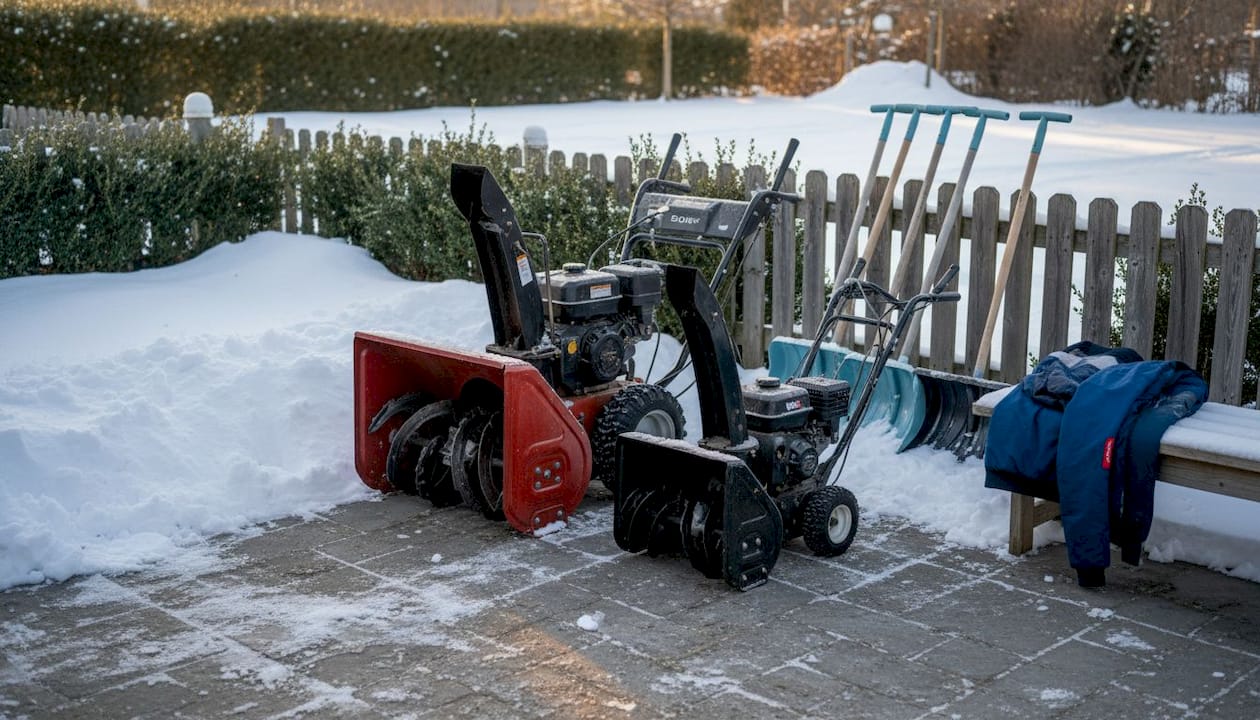
Mechanized equipment covers single-stage snow blowers, two-stage snow blowers, and truck-mounted or ATV-mounted plows. Single-stage blowers work well on paved surfaces with up to 8 inches of snow. Two-stage blowers handle heavier accumulation and can clear gravel driveways without throwing rocks. Plows with interchangeable attachments let property managers clear large lots efficiently without running a full fleet of dedicated vehicles.
Deicing products and equipment round out the kit. Calcium chloride, rock salt, and magnesium chloride each perform differently at different temperatures. Broadcast spreaders apply granular deicers evenly across wide surfaces. Liquid deicing systems, common in commercial operations, pre-treat pavement before a storm to prevent bonding.
Relying solely on snowblowers is inefficient. A combination of blowers, ergonomic shovels, roof rakes, and ice melt is necessary for complete snow management. That combination approach is what separates a property that stays accessible from one that becomes a liability.
| Equipment type | Best use | Approximate cost | Suitability |
|---|---|---|---|
| Ergonomic shovel | Light snow, tight spaces | $20–$115 | Residential, small lots |
| Single-stage snow blower | Paved driveways, up to 8 inches | $305–$800 | Residential |
| Two-stage snow blower | Heavy snow, gravel surfaces | $800–$1,800 | Residential, small commercial |
| Broadcast spreader | Deicer application | $30–$150 | All property types |
| Truck-mounted plow | Large lots, roads | $3,000+ | Commercial, professional |
Pro Tip: Buy an ergonomic shovel with a curved shaft even if you own a snow blower. Blowers cannot clear steps, tight corners, or areas near foundations. The shovel fills those gaps and costs under $50.
How do equipment costs and maintenance affect affordability?
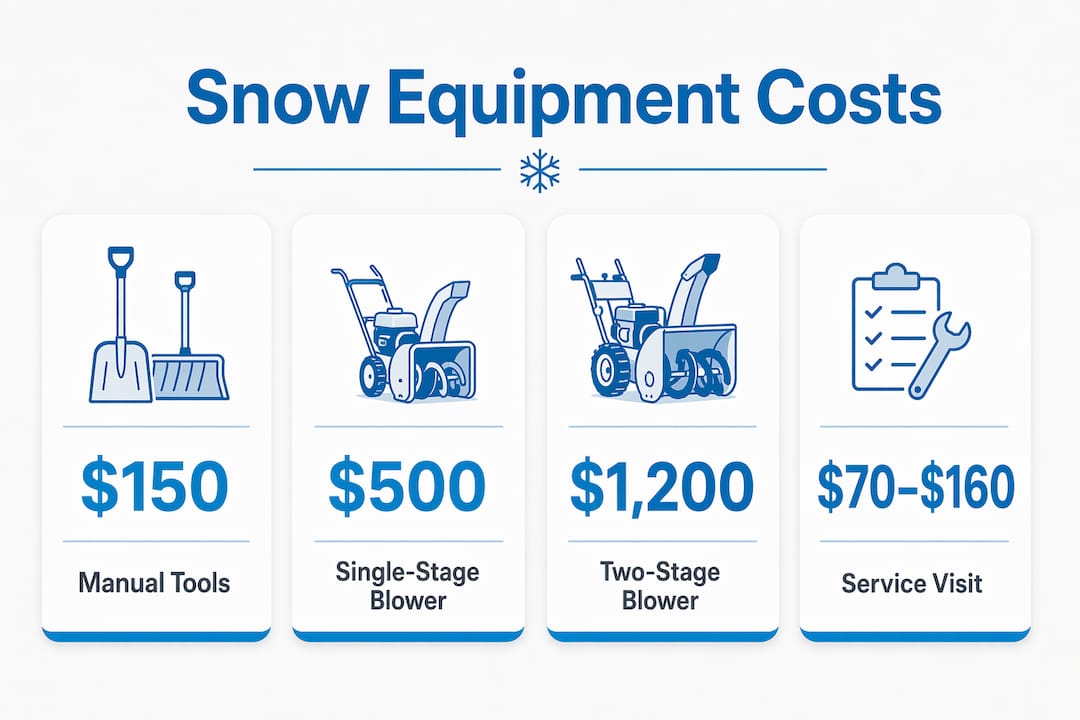
Equipment purchase price is only part of the story. The true cost of ownership includes fuel, annual tune-ups, replacement parts, and storage preparation. Maintenance hidden costs such as fuel, spark plugs, belts, and oil changes typically add $50–$100 annually. Neglecting that maintenance leads to premature equipment failure, often at the worst possible moment.
The break-even calculation matters for every homeowner considering a major equipment purchase. A high-quality two-stage snow blower requires two to three seasons of consistent use to break even compared to professional service costs. That math only works if your property gets enough snowfall to justify the machine every winter.
Professional snow removal services cost between $45 and $160 per visit, with seasonal contracts ranging from $300 to $700 depending on property size and regional snowfall. For a homeowner in a moderate-snowfall area who needs clearing six to eight times per season, a seasonal contract often costs less than buying and maintaining a two-stage blower over three years.
Physical injury is a cost that rarely appears in equipment budgets. Shoveling causes thousands of back injuries and cardiac events each year across the United States. DIY snow equipment carries real injury risk from both shoveling and snow blower use. A single emergency room visit erases years of savings from DIY clearing.
Pro Tip: Before buying any mechanized equipment, track how many times you clear snow in a full season. If the number is fewer than eight, a seasonal professional contract likely costs less than ownership over three years.
DIY versus professional services: which approach wins on equipment?
The right choice depends on four factors: property size, budget, physical health, and local snowfall frequency. Neither approach wins universally. The best decision comes from matching the approach to your specific situation.
Advantages of professional services:
- Professional fleets use interchangeable attachment vehicles that reduce fleet size and operating costs, savings that translate to competitive service pricing.
- Professionals carry liability insurance, which protects property managers from slip-and-fall claims.
- 24/7 availability means clearing happens after overnight storms before residents or employees arrive.
- No storage burden. Equipment does not sit in your garage consuming space for eight months.
Advantages of DIY equipment ownership:
- You clear on your own schedule without waiting for a service window.
- For high-snowfall properties with frequent clearing needs, ownership can pay off after two to three seasons.
- You control which deicing products touch your landscaping and hardscaping. This matters if you have sensitive plantings near driveways.
Hybrid approaches work well for many property managers. Municipalities and large property managers use hybrid fleets combining owned equipment for regular tasks and rented machines for extreme events. A residential property manager might own a broadcast spreader and ergonomic shovels for routine maintenance while contracting professionals for major storms.
Key decision factors to weigh before committing:
- Property size and linear feet of walkway and driveway
- Average annual snowfall in your specific location
- Physical ability to operate equipment safely
- Budget for upfront purchase versus recurring service fees
- Storage space available for off-season equipment
The APPA emphasizes that snow removal equipment is crucial not just for clearing snow, but for safety, access, and reducing liability. That framing shifts the conversation. Equipment is not just a convenience purchase. It is a risk management decision.
How can you optimize equipment use for safety and lower costs?
A kit approach beats a single-tool strategy every time. Efficient snow removal often fails when relying on a single tool. A thoughtfully assembled kit produces better results and fewer injuries.
Follow this sequence to build a cost-effective, safe equipment setup:
- Start with manual tools. Buy an ergonomic shovel and a snow pusher before anything else. These handle most residential clearing needs and cost under $150 combined.
- Add a snow blower matched to your climate. Single-stage blowers suit most residential driveways in moderate-snowfall regions. Two-stage blowers are worth the extra cost if you regularly see more than 10 inches per storm.
- Include a broadcast spreader and deicing product. Apply deicer after clearing to prevent refreeze. Match the product to your typical temperatures. Calcium chloride works at lower temperatures than rock salt.
- Add a roof rake for flat or low-pitch roof sections. Ice dams cause structural damage that costs far more than the rake itself.
- Invest in safety gear. Insulated, waterproof gloves, slip-resistant boots, and a back brace for shoveling reduce injury risk significantly.
Matching equipment to climate conditions and staff skills is essential. Advanced machines reduce labor but require more training and maintenance. A two-stage blower operated by someone unfamiliar with its controls creates safety risks and accelerates wear.
Proper cleaning after every use is critical to prevent corrosion and extend equipment life. Salt is corrosive to metal parts. Rinse metal components with fresh water after each use, dry them, and apply a light coat of lubricant before storage. This single habit can add years to equipment life.
Pro Tip: At the end of each season, run your snow blower until the fuel tank is empty, change the oil, and inspect belts for cracking. Off-season storage preparation prevents the most common spring startup failures.
For homeowners preparing their properties before winter arrives, a seasonal preparation checklist covers equipment inspection, supply stocking, and service scheduling in one place.
Key Takeaways
The right equipment mix, maintained properly and matched to your property’s needs, is the most direct path to affordable and safe snow removal.
| Point | Details |
|---|---|
| Equipment type determines cost | Manual tools cost under $150; two-stage blowers run $800–$1,800 before maintenance. |
| Maintenance adds real expense | Annual upkeep adds $50–$100 and prevents premature equipment failure. |
| Break-even takes time | A quality snow blower takes two to three seasons to pay off versus professional service. |
| Kit approach outperforms single tools | Combining shovels, blowers, and deicers covers every snow and ice scenario. |
| Professional services reduce liability | Insured professionals protect property managers from slip-and-fall claims. |
What I’ve learned after watching homeowners get equipment wrong
I’ve seen the same mistake repeat itself every winter. A homeowner buys a two-stage snow blower in october, uses it twice, and then pays for a professional service anyway because the machine sits broken in march. The break-even math only works when the equipment actually runs, gets maintained, and gets used consistently.
The other misconception I encounter constantly is that more expensive equipment automatically means lower total cost. A $1,800 commercial blower in the hands of someone who skips annual tune-ups and stores it with fuel in the tank will fail faster than a $500 single-stage unit that gets proper care. The equipment itself is only half the equation. The maintenance discipline is the other half.
What actually works is a layered approach. Keep manual tools for daily touch-ups and tight spaces. Use mechanized equipment for major storms. Call professionals when accumulation exceeds what your equipment or your body can handle safely. That balance is what why hiring a professional makes sense even for homeowners who own equipment. It is not either-or. It is knowing when each tool, including a professional service, is the right call.
— Jesse
Denversnowremovals: professional equipment, reliable results
Denversnowremovals operates truck-mounted plows, commercial-grade snow blowers, and broadcast deicing systems across the Denver Metro area. The team is available 24/7, which means your driveway and walkways get cleared before the morning rush, not hours after.
If you are weighing snow plowing versus snow blowing for your property, Denversnowremovals offers free estimates and flexible seasonal contracts. With over 44 years of experience deploying the right equipment for Denver’s specific snowfall patterns, the team removes the guesswork from winter property management. Contact Denversnowremovals to schedule a free estimate and get a plan built around your property’s actual needs.
FAQ
What equipment is most cost-effective for residential snow removal?
An ergonomic shovel combined with a single-stage snow blower and a broadcast spreader covers most residential needs at the lowest total cost. This kit handles light to moderate snowfall without the maintenance demands of commercial-grade equipment.
How much does professional snow removal cost per visit?
Professional snow removal costs between $45 and $160 per visit, with seasonal contracts ranging from $300 to $700. The national average runs approximately $138 per visit.
When does buying a snow blower make financial sense?
A two-stage snow blower makes financial sense when you clear snow eight or more times per season and can commit to annual maintenance. It typically takes two to three seasons of consistent use to break even against professional service costs.
How does equipment maintenance affect snow removal affordability?
Annual maintenance costs of $50–$100 are unavoidable for mechanized equipment. Skipping maintenance leads to early equipment failure, which eliminates any savings from DIY clearing and forces an unplanned equipment replacement.
What is the safest approach to snow removal for older homeowners?
Older homeowners should prioritize a broadcast spreader and deicing products for daily ice management, and contract professionals for major snow events. Shoveling carries significant cardiac and back injury risk, and professional services eliminate that exposure entirely.
Recommended
- Snow Plowing vs Snow Blowing: Which Method Wins? – Snow Removal Denver 303-591-2089
- Emergency Snow Removal Business Setup: 2026 Guide – Snow Removal Denver 303-591-2089
- How Shared Driveways Get Cleared Safely in Winter – Snow Removal Denver 303-591-2089
- Why Hire a Snow Removal Service: 2026 Guide – Snow Removal Denver 303-591-2089