

For most homeowners and property managers, professional snow removal is worth the cost once you factor in injury risk, liability exposure, equipment overhead, and the real value of your time. Per-visit pricing runs $51–$203 nationally, with a typical average around $126. Seasonal residential contracts generally land between $300 and $700. When you stack those numbers against the hidden costs of doing it yourself, the math often tips toward hiring a pro.
Here is the short version of when hiring almost always makes sense:
- You are over 45 or have a cardiovascular condition. Doctors advise that people in this group avoid heavy shoveling due to elevated cardiac and fall risk.
- Your property has a long driveway, multiple walkways, or a commercial parking area.
- Your area sees five or more storms per season, making per-visit costs stack up fast.
- Your time is worth more than the service costs, or you simply cannot afford to miss work because of a slow morning clearing snow.
The bottom line: Professional snow removal is often more cost-effective over a full season than DIY once you account for equipment, materials, time, and injury risk.
Denversnowremovals has served the Denver Metro area for over 44 years, with 24/7 crews and free estimates for both residential and commercial properties. The sections below walk through the exact numbers, contract types, and a decision checklist so you can make the call confidently.
Table of Contents
- Are snow removal services worth the cost? What the numbers actually show
- Why quotes vary: the cost drivers to check on every estimate
- Seasonal contracts vs. pay-per-visit: which model saves you more?
- A practical framework to decide whether hiring a pro is worth it for your property
- One checklist to hire safely and get real value from your provider
- If you decide not to hire full service: cheaper options and ways to lower your bill
- How Denversnowremovals delivers value: a real-world provider example
- Key Takeaways
- The cost conversation most homeowners are having too late
- Denversnowremovals: get a free estimate before the first storm hits
- Useful sources and further reading
- FAQ
Are snow removal services worth the cost? What the numbers actually show
According to Angi, snow removal costs average $126 per visit, ranging from $51 to $203 depending on driveway size, snowfall depth, and service type. Seasonal contracts for residential properties typically run $300–$700, covering unlimited visits all winter. Those two numbers alone give you a useful anchor for any quote you receive.
| Pricing Model | Typical U.S. Range | Best When |
|---|---|---|
| Per visit | — | Mild winters, infrequent storms |
| Per hour | — | Variable-size jobs, hourly labor |
| Per event (major storm) | $75–$200 | Unpredictable heavy snowfall |
| Per inch (above base) | — | Trigger-depth contracts |
| Seasonal contract | $300–$700 | Five or more storms per season |
| Commercial contract | $500–$2,000 | Parking lots, access roads |
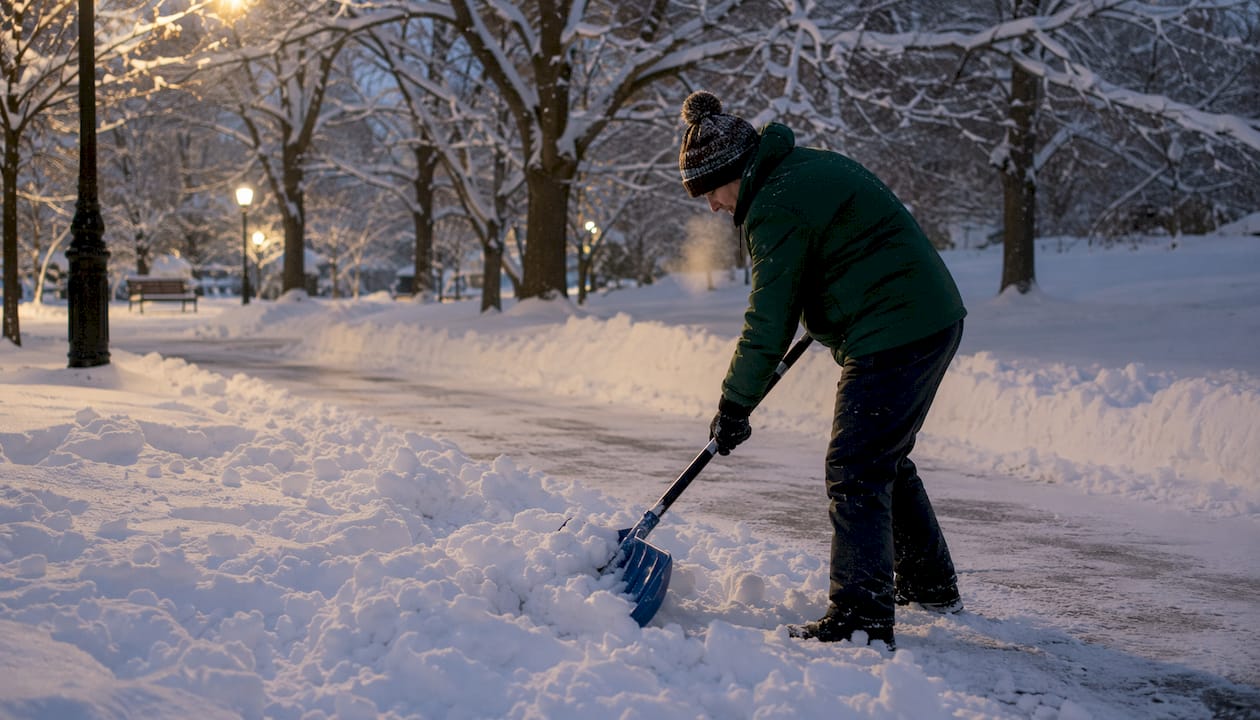
Two scenarios show how per-visit prices can add up quickly with multiple storms, often making seasonal contracts more cost-effective, especially as property size increases. Professional service is often more cost-effective in the long run once equipment and time are included in the DIY side of the ledger.
Why quotes vary: the cost drivers to check on every estimate
Price differences between quotes are rarely random. Specific property and operational variables move the number up or down, and knowing them helps you evaluate whether a quote is fair.
Property-specific drivers:
- Driveway length and width (a 60-foot, two-car-wide driveway averages $30–$50 to plow)
- Number of walkways, steps, and entry points
- Surface type: gravel or dirt driveways take longer to clear than paved ones and cost more
- Slopes, tight turns, and obstacles like pillars or low-hanging structures
Operational and timing drivers:
- Access and parking for the crew’s vehicle
- Overnight versus daytime clearing (overnight work often carries a premium)
- Emergency or same-day requests, which can push rates significantly higher
- Disposal of plow piles when space is limited
Weather and storm drivers:
- Snowfall depth: Bob Vila’s data shows clearing 6 inches or fewer averages $60–$95, while 18 inches or more can run $170 per hour
- Storm frequency during the season
- Ice remediation and de-icing material costs on top of clearing fees
Business and insurance drivers:
- Equipment type and crew size
- General liability and workers’ compensation coverage (a non-negotiable for reputable providers)
- Minimum service fees and trigger-depth thresholds
Pro Tip: Ask every provider to specify the trigger depth in writing before signing. Most professional contracts dispatch crews at 2–3 inches of accumulation. If your contract says 4 inches, you may be waiting longer than you expect after a moderate storm.
Seasonal contracts vs. pay-per-visit: which model saves you more?
The right pricing model depends almost entirely on how often it snows where you live and how much budget certainty you want.
Seasonal contracts work like insurance. You pay a flat fee upfront, and the provider clears your property after every qualifying storm, no matter how many times it snows. Seasonal pricing typically runs $300–$700 for residential properties. The advantage is predictability; the risk is paying for coverage during a mild winter with few storms.
Pay-per-visit pricing keeps costs low in light winters but can exceed a seasonal contract quickly when storms pile up. At $75 per visit, just eight storms cost $600, which matches the top of many seasonal contract ranges.
Per-inch or trigger-depth billing sits between the two. You pay a base rate plus a per-inch surcharge above the trigger. This model rewards you in light snow years but can produce unpredictable bills during heavy seasons.
| Model | Cost Shape | Best For | Key Contract Clause to Check |
|---|---|---|---|
| Seasonal contract | Fixed, upfront | Frequent-storm markets | Visit limits, trigger depth, scope of work |
| Pay-per-visit | Variable, per storm | Mild or unpredictable winters | Per-visit rate, emergency surcharge |
| Per-inch / trigger-depth | Variable, tiered | Budget-conscious, moderate markets | Base rate, per-inch rate, maximum cap |
Break-even example: A seasonal contract at $500 breaks even against $75-per-visit billing at just under seven storms. In Denver, where the National Weather Service tracks significant snowfall events across the season, seven storms is a realistic baseline, not a worst case. In a heavy winter, the seasonal contract wins clearly.
- Count your average annual storms from local weather records.
- Multiply by your quoted per-visit rate.
- Compare that total to the seasonal contract price.
- If the seasonal total is within 20% of the per-visit total, the seasonal contract is usually the better choice for the peace of mind alone.
A practical framework to decide whether hiring a pro is worth it for your property
The decision is not just about the service price. It is about the full cost of the alternative.
Step 1: Calculate your real DIY cost. Snow blowers range from roughly $300 for a single-stage unit to $2,000 or more for a three-stage model, with ongoing maintenance adding $100–$200 per year. Spread a $1,400 two-stage blower over seven years and you are paying $200 per year in amortization alone, before fuel, shear pins, belts, and storage.
| DIY Cost Item | Estimated Annual Cost |
|---|---|
| Snow blower amortization ($1,400 over 7 years) | $200 |
| Fuel and tune-ups | $100–$200 |
| De-icing materials (rock salt, calcium chloride) | $50–$150 |
| Pavement sealing and repair (ice damage) | $50–$200 |
| Total estimated DIY annual cost | $420–$790 |
That range overlaps directly with a residential seasonal contract. Once you add the value of your time, the gap often closes entirely.
Step 2: Value your time honestly. If clearing your driveway and walkways takes 45 minutes per storm and you average eight storms per season, that is six hours of physical labor in cold conditions. At a modest $30 per hour of personal time, that is $180 per season in time cost alone.
Step 3: Estimate non-financial risk. Every year in the U.S., more than 11,000 people are injured while clearing snow, and approximately 100 die while shoveling. A single emergency room visit easily costs thousands of dollars, far exceeding a full season’s professional service fees. For homeowners over 45 or with any cardiac history, this risk is not theoretical.
Step 4: Factor in liability. If a visitor slips on an uncleared walkway, you may be liable. Professional services carry general liability insurance that protects you. Documenting service delivery with timestamped records adds another layer of protection.
If your DIY annual cost (equipment + materials + time value) comes within $200 of a seasonal contract quote, hire the professional. The liability and injury risk coverage alone is worth that margin.
One checklist to hire safely and get real value from your provider
Getting a fair price is only half the job. Choosing the right provider protects you from poor service, property damage, and unresolved disputes.
Essential contract items to confirm in writing:
- Scope of work: exactly which areas are cleared (driveway, walkways, steps, parking pad)
- Trigger depth: the minimum accumulation that dispatches the crew
- Response time window: how many hours after the storm ends before your property is cleared
- Salting and de-icing policy: whether it is included or billed separately
- Post-storm cleanup: who handles plow ridges left by city plows
Service-level expectations to demand:
- Dispatch notification or ETA communication via app, text, or phone
- Photo confirmation of completed service
- Priority response during back-to-back storms or declared weather emergencies
- A clear escalation contact when service is delayed
Insurance and liability checks:
- Ask for a certificate of general liability insurance before signing.
- Confirm workers’ compensation coverage for the crew.
- Verify the provider’s policy on property damage (cracked curbs, damaged landscaping).
Red flags on any estimate:
- No written contract or scope of work
- Vague language like “we’ll come when needed” with no response-time commitment
- A price significantly below every other quote with no explanation
- No mention of insurance when you ask directly
Pro Tip: Request a scope-of-work checklist from your provider before the first storm. A reputable contractor will have one ready. If they hesitate, that tells you something.
If you decide not to hire full service: cheaper options and ways to lower your bill
Full-service seasonal contracts are not the only option. Several lower-cost approaches can work, depending on your property and risk tolerance.
Lower-cost alternatives:
- Single-visit hires: Platforms like TaskRabbit connect homeowners with on-demand help. Useful for one-off storms, though availability during major events is not guaranteed.
- Neighbor arrangements: Informal neighborhood rates typically fall between $20–$50 per visit for small jobs. Reliable for light snow on small driveways, but no insurance or SLA.
- Equipment rental: Renting a snow blower for a season costs less than purchasing, though availability during peak demand is limited.
- Community co-op: Some HOAs and neighborhoods pool resources to hire a single contractor at a group rate, lowering individual costs.
Cost-saving tactics for full-service contracts:
- Book before October 1. Many providers offer their best rates to early-season signers.
- Bundle with landscaping or lawn care services for a multi-service discount.
- Set a higher trigger depth (3–4 inches instead of 2) to reduce the number of dispatches for light dustings.
- Ask about discount programs for multi-year commitments or referrals.
DIY mitigation tips to reduce damage and risk:
- Use calcium chloride instead of rock salt near concrete edges and landscaping. It works at lower temperatures and causes less pavement damage.
- Clear snow in layers during heavy storms rather than waiting for full accumulation.
- Mark driveway edges with reflective stakes before the first snowfall so plows do not clip curbs or landscaping.
Pro Tip: Pre-treating your driveway with a liquid de-icer before a storm makes post-storm clearing faster and reduces the total amount of material you need. It is a small step that seasonal preparation guides consistently recommend.
How Denversnowremovals delivers value: a real-world provider example
Denversnowremovals has operated in the Denver Metro area for over 44 years, serving both residential and commercial properties with 24/7 crews and state-of-the-art equipment. That depth of experience matters in a market where snowfall can be heavy, fast, and unpredictable.
What sets the operation apart:
- 24/7 availability with crews dispatched as storms develop, not after they end
- Free estimates with no obligation, so you can compare accurately before committing
- Flexible plans: seasonal contracts, per-visit pricing, and emergency response options
- Equipment-driven efficiency that reduces per-service cost and improves scrape quality compared to manual clearing
- Competitive rates with seasonal booking discounts for early sign-ups
Consider a typical Denver homeowner with a two-car driveway and two walkways. At $75–$125 per visit and an average of eight to ten storms per season, the per-visit cost reaches $600–$1,250. A Denversnowremovals seasonal contract covers that same property with predictable pricing, priority dispatch, and no surprise bills after a heavy week. The time savings alone, roughly six to eight hours of physical labor per season, add real value on top of the financial comparison.
For property managers and commercial clients: 24/7 commercial snow service eliminates the capital cost of maintaining in-house equipment and reduces liability exposure from uncleared lots and walkways. Commercial ROI analyses consistently show that outsourcing snow management lowers total cost when equipment amortization and crew overhead are included.
Key Takeaways
Professional snow removal is worth the cost for most homeowners when DIY expenses, injury risk, and liability exposure are honestly included in the comparison.
| Point | Details |
|---|---|
| Per-visit pricing benchmark | National average is $126 per visit, ranging from $51 to $203 depending on property size and snowfall. |
| Seasonal contract value | Contracts at $300–$700 break even against per-visit billing at roughly seven storms per season. |
| DIY true annual cost | Equipment, maintenance, fuel, and de-icers add up to $420–$790 per year, overlapping with professional rates. |
| Health and liability risk | Over 11,000 Americans are injured shoveling annually; professionals carry liability insurance that protects you. |
| Denversnowremovals option | Denversnowremovals offers seasonal, per-visit, and emergency plans with 24/7 crews and free estimates in the Denver Metro area. |
The cost conversation most homeowners are having too late
Professional snow removal gets dismissed as a luxury until the moment it becomes obvious it was not. The homeowner who buys a $1,400 snow blower, spends $150 on salt, and then throws out their back in February has not saved money. They have spent more, in time, medical cost, and missed work, than a seasonal contract would have cost.
What most people miss is that the financial case for hiring a professional is not even close in moderate-to-heavy snow markets. The DIY cost, honestly calculated with equipment amortization, materials, and time, lands squarely in the same range as a seasonal contract. The professional option simply comes without the physical risk, the liability gap, or the 6 AM scramble before work.
The one situation where DIY genuinely wins: a small property, light and infrequent snowfall, a physically capable homeowner who already owns equipment, and no time pressure. That profile is narrower than most people assume when they are standing in the hardware store in October.
For everyone else, especially seniors, property managers, anyone with a cardiac history, and anyone managing a property larger than a single-car driveway, the math and the risk calculus both point the same direction.
Denversnowremovals: get a free estimate before the first storm hits
Waiting until snow is already falling to find a provider means paying emergency rates and competing with every other homeowner who waited. Denversnowremovals offers free estimates for residential and commercial properties across the Denver Metro area, with no obligation and no pressure to commit on the spot.
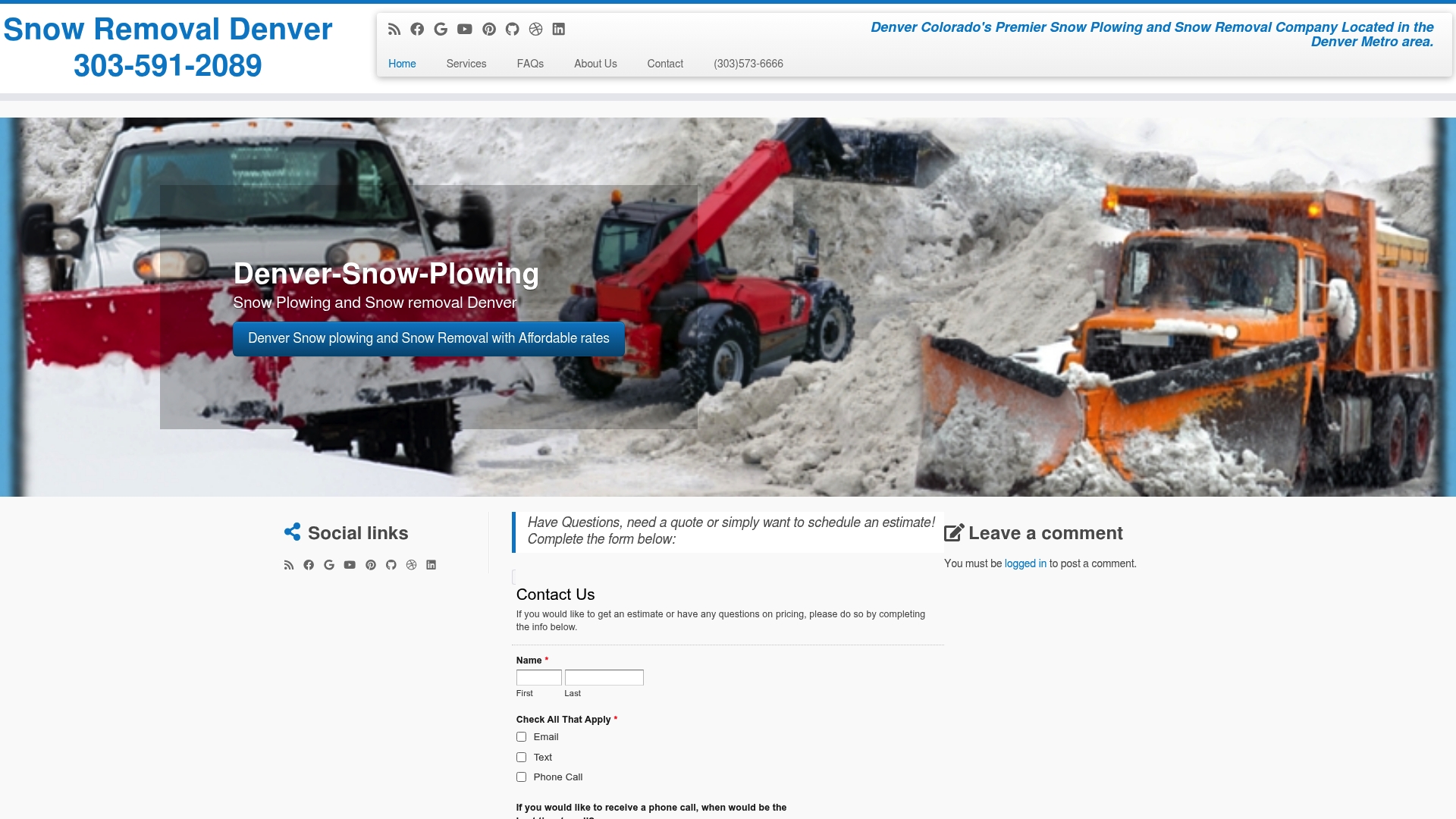
Available plans include seasonal contracts with priority dispatch, flexible per-visit pricing for lighter-use properties, and emergency response for unexpected heavy storms. Early-season bookings, before October 1, typically qualify for the best available rates. Bundling snow removal with other property services can reduce the per-service cost further.
To request your free estimate, have your driveway length, number of walkways, and preferred trigger depth ready. A quick property photo helps the team give you an accurate number without a site visit. Visit Denversnowremovals to get started, or explore seasonal pricing benefits to see which plan fits your property and budget before the season begins.
Useful sources and further reading
The figures and guidance in this article draw from the following authoritative sources. Pricing data, health risk statistics, and contract guidance each come from distinct source types, noted below.
| Source | What It Covers |
|---|---|
| Angi: Snow Removal Cost Guide | National per-visit, hourly, and seasonal pricing benchmarks; area-size cost tables |
| Bob Vila: Snow Removal Cost Breakdown | Per-depth pricing, injury statistics, DIY vs. professional comparison |
| Fox 2 Detroit: When to Stop Shoveling | Medical guidance on age and cardiac risk related to shoveling |
| Summit Snow Co.: Why Hiring a Pro Is Worth It | Industry perspective on long-run cost-effectiveness of professional service |
| ZipRecruiter: Neighbor Snow Removal Rates | Informal and neighborhood-rate benchmarks for single-visit comparisons |
| National Weather Service (weather.gov) | Regional snowfall frequency and climate data for storm-count estimates |
| Maedgen’s Lawn Care: DIY vs. Professional Cost | Annual DIY cost estimates including equipment amortization and materials |
| DD Home Services: When to Hire Snow Removal | Seasonal vs. per-visit model comparison and homeowner profile guidance |
| Classic Landscapes: ROI Analysis | Commercial ROI analysis comparing in-house vs. outsourced snow management |
FAQ
How much do people usually charge for snow removal?
Per-visit rates average $126 nationally, with a range of $51–$203 depending on property size and snowfall depth. Seasonal residential contracts typically run $300–$700.
Is doing snow removal yourself actually worth it?
DIY can make sense for small properties with light, infrequent snowfall, but the true annual cost of equipment, maintenance, fuel, and de-icers runs $420–$790, which overlaps with most professional seasonal contracts. For larger properties or anyone with health concerns, hiring a professional is usually the more cost-effective choice.
At what age should someone stop shoveling snow?
Medical guidance advises that people over 45, or anyone with a cardiac history, avoid heavy shoveling due to elevated risk of heart attack and falls. For this group, professional snow removal is a health decision as much as a financial one.
How much should I pay a neighbor for snow removal?
Informal neighborhood rates typically fall between $20–$50 per visit for small jobs, according to ZipRecruiter marketplace data. This works for light snow on small driveways but carries no insurance or service guarantee.
When does a seasonal contract make more financial sense than per-visit pricing?
A seasonal contract breaks even against per-visit billing at roughly seven storms per season. If your area regularly sees seven or more significant snowfall events, a seasonal contract almost always delivers better value, plus the added benefit of priority dispatch during heavy storms.
Recommended
- How Equipment Drives Affordable Snow Removal Costs – Snow Removal Denver 303-591-2089
- Why Hire a Snow Removal Service: 2026 Guide – Snow Removal Denver 303-591-2089
- Snow Removal Discount Programs: Save More This Winter – Snow Removal Denver 303-591-2089
- Snow Removal Scope of Work: A Denver Property Guide – Snow Removal Denver 303-591-2089