Snow Removal for Denver Nonprofits: A Buying Guide
What if a snowstorm doesn’t just delay your day, but keeps someone from reaching an essential service? For Denver nonprofits, commercial snow removal for non-profit organizations is about more than clearing snow. It’s about planning access for staff, clients, visitors, and volunteers when winter weather disrupts the usual routine.
It’s understandable to feel pressure from both sides: an unclear plan can leave entrances, parking areas, or walkways untreated, while a limited budget calls for careful spending. The right coverage starts with knowing which areas matter most, when they need attention, and how snow and ice management fits your property and operating schedule.
This guide will help you evaluate service scope, safety priorities, and provider readiness before making a decision. You’ll learn what to clarify when comparing proposals, how to weigh coverage against your nonprofit’s needs, and how to present a practical recommendation to leadership. With a clear plan, your organization can prepare for winter and keep access to its services in view.
Key Takeaways
- Map the parking areas, entrances, carports, and walkways your nonprofit relies on so proposals cover the full property.
- Use the same checklist to compare each provider’s site coverage, equipment, communication, documentation, and scope.
- Evaluate commercial snow removal for non-profit organizations against program schedules, visitor needs, and critical access routes.
- Prepare for proposals by identifying priority spaces and pedestrian routes, then ask providers to confirm service terms and procedures.
- Compare equivalent scopes before deciding, and consider relevant experience alongside how well each proposal fits your needs.
Why Commercial Snow Removal Matters to Denver Nonprofits
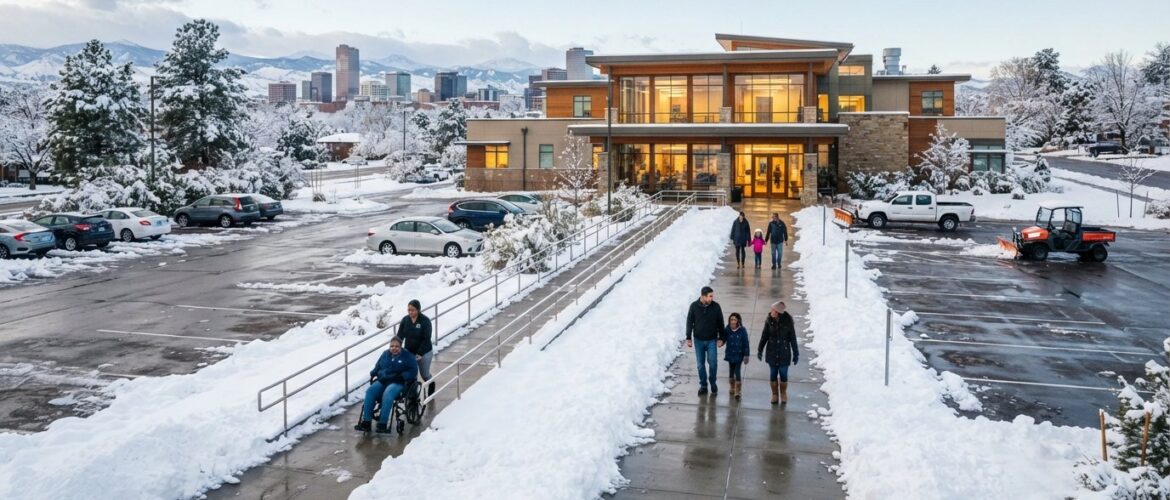
Snow and ice can affect whether people reach a nonprofit’s programs, services, and appointments. A clinic visitor may need a clear route from an accessible parking space, while a food pantry may have volunteers carrying supplies from a drop-off area. Parking lots, carports, entrances, and walkways serve different needs, so clearing only the largest area may leave an important route difficult to use.
Routine property upkeep and a planned commercial snow removal arrangement are not the same. A general upkeep plan may rely on staff or volunteers responding as conditions change, with responsibilities shifting from one storm to the next. Working with a provider gives the organization a chance to define which areas are in scope and discuss service triggers, timing, and communication in advance. Confirm those details with the provider rather than assuming they are included.
Snow removal methods and equipment vary by site and scale. As a starting point, general snow removal practices offers an overview of approaches, but a nonprofit still needs to assess its own property and visitor routes. A site-specific plan helps leadership weigh access needs against limited organizational resources, rather than treating snow removal as an unplanned task after a storm.
Which nonprofit properties need a snow removal plan?
Any property that welcomes people during winter can benefit from a clear plan. Community centers, food pantries, clinics, shelters, worship spaces, and administrative offices may have different arrival patterns and priorities. Map routes from parking areas and drop-off points to frequently used entrances. Then note operating hours, busy periods, and spaces that need priority attention. This gives providers a clearer picture of the property and helps your organization focus its request.
How can winter weather disrupt nonprofit services?
Accumulated snow or icy patches may contribute to delayed openings, missed appointments, or difficulty for volunteers trying to reach a site. These are possible disruptions, not guaranteed outcomes. Their likelihood and impact depend on conditions, property layout, and the organization’s schedule. Takeaway: Include site access in continuity planning so winter operations are considered before weather affects the day’s services.
What to Evaluate in a Nonprofit Snow Removal Service
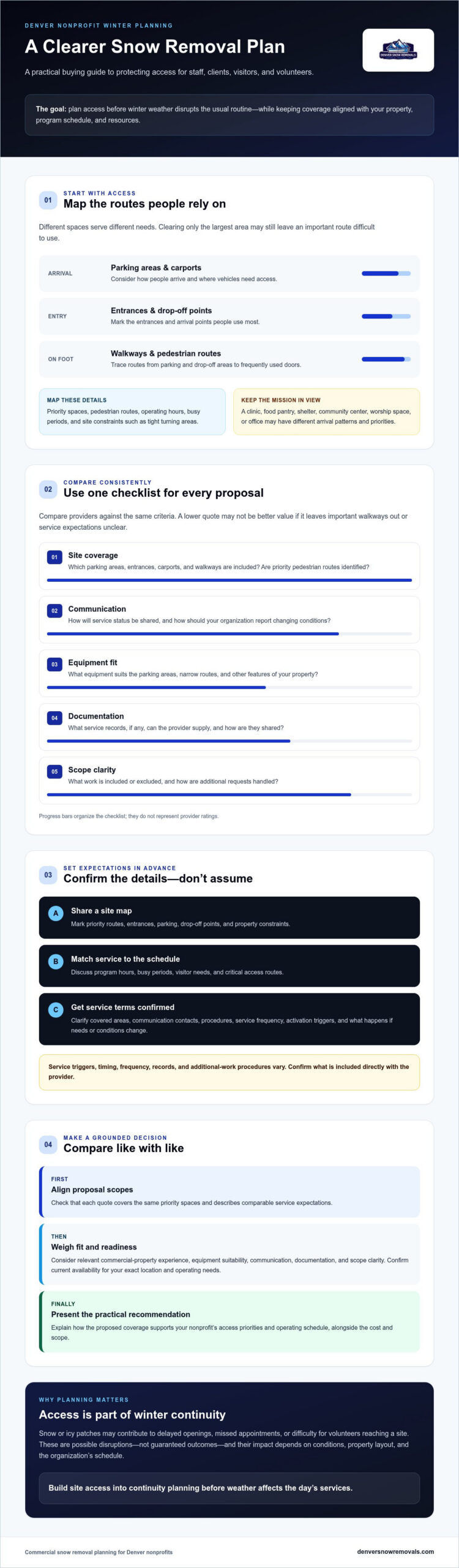
For commercial snow removal for non-profit organizations, a useful proposal explains what will be addressed, how the provider will communicate, and whether the plan fits your property’s daily use. Compare providers against the same criteria. A lower quote may not represent better value if it excludes important walkways or leaves service expectations unclear.
| What to compare | Questions to ask |
|---|---|
| Site coverage | Which parking areas, entrances, carports, and walkways are included? Are priority pedestrian routes identified? |
| Service communication | How will the provider share service status, and how should your organization report changing conditions? |
| Equipment | What equipment is appropriate for the site’s parking areas, narrow routes, and other property features? |
| Documentation | What service records, if any, can the provider supply, and how are they shared? |
| Scope clarity | What work is included, what is excluded, and how are additional requests handled? |
Which areas and service expectations should the scope define?
Provide a site map or marked-up property plan. Identify priority access routes, entrances, parking areas, drop-off points, and constraints such as tight turning areas. Ask the provider to confirm in writing which areas are covered and what happens if conditions or organizational needs change. Clarify communication contacts and procedures, along with any service frequency or activation triggers. These terms vary, so do not assume they are included unless the provider confirms them.
What should a nonprofit ask prospective providers?
Ask about experience with commercial properties similar to yours and the equipment the provider would use. Snow Removal Denver’s commercial service covers parking lots, carports, and walkways, with trucks, front-end loaders, and snow blowers. Discuss whether those capabilities suit your site, and confirm current availability for your exact location and operating needs. For another overview of service considerations, see this Denver commercial snow removal guide.
Worker safety deserves a place in the conversation, too. Ask providers how they approach hazards associated with snow clearing, and consult OSHA snow removal safety guidelines for information on risks such as falls and equipment hazards. A reference document does not verify a provider’s practices, so ask direct questions and clarify what the provider can document.
Review the answers together rather than ranking proposals by price alone. Clear coverage, practical equipment, communication, and a defined scope help your team judge fit and explain its decision. To review a local provider’s commercial service information, visit commercial snow removal information.
How to Compare Snow Removal Plans Without Losing Sight of Your Mission
A snow removal plan should support your nonprofit’s work, not create uncertainty about what happens during winter weather. Start by identifying the access areas that matter most, then assess each proposal against those priorities. When comparing commercial snow removal for non-profit organizations, review confirmed options and written terms rather than assuming every provider offers the same contract structure or service conditions.
How should nonprofits weigh budget against coverage?
First, rank the property’s needs. A clinic might prioritize a route from parking to its main entrance, while a food pantry may also need a clear approach to a volunteer drop-off point. Share those priorities with each provider and request proposals based on equivalent areas and service expectations.
If providers offer different plan structures, compare them only after confirming exactly what each option includes. Review the scope alongside your budget, program calendar, visitor volumes, and critical routes. Do not judge by a headline figure alone: an unclear proposal can leave your team unsure which areas are covered or how changing conditions are handled. Request property-specific proposals, and avoid relying on unverified savings estimates.
How can leadership explain the provider decision?
Give leadership a concise record of the decision, including the proposed scope, provider capabilities, communication arrangements, and unresolved questions. Note why certain areas were prioritized and which trade-offs the organization accepted. This makes the decision easier to review against both budget limits and operational needs. A broader nonprofit risk assessment can also help frame property access as one consideration in protecting ongoing programs and services.
A simple decision matrix can keep comparisons focused. Rate each proposal using the same criteria, then add notes rather than letting one score decide on its own:
- Priority areas: Are the organization’s critical routes included?
- Scope: Are included work, exclusions, and additional-service procedures clear?
- Schedule fit: Do the confirmed terms reflect program hours and busy periods?
- Communication: Are status updates and points of contact defined?
- Open questions: What still needs confirmation before approval?
Use the matrix to guide discussion, not replace it. A proposal that fits the mission should have a clear scope and realistic expectations, with remaining questions resolved before the organization commits. For additional selection considerations, review this Denver guide to choosing a snow removal company. You can also learn more about commercial snow plowing services as you prepare to compare providers.
A Practical Checklist for Preparing Your Nonprofit Property
A clear site plan helps providers understand the property and helps your team request comparable proposals. Before reaching out, gather information a facilities lead can verify and share. This preparation makes commercial snow removal for non-profit organizations easier to scope around actual access needs, rather than assumptions about how the site is used.
What information should you gather before requesting a proposal?
Use this checklist to create a practical briefing for prospective providers. A marked-up site plan is useful, but a clear written description can work too.
- Map the property. Mark entrances, pedestrian routes, parking areas, drop-off zones, carports, and spaces connected to priority programs.
- Identify priority routes. Note which paths visitors, staff, and volunteers use most, and explain which areas are important to keep accessible for planned activities.
- Record schedules and traffic patterns. List operating hours, appointment times, program days, and periods when visitor or volunteer activity is higher.
- Describe site constraints. Point out narrow access points, limited maneuvering space, or other features a provider should consider when reviewing the property.
- Name a site contact. Identify an authorized person who can answer questions, coordinate with the provider, and communicate changing access concerns.
- List open scope questions. Ask providers to clarify which areas and work are included, what is excluded, and how service frequency, activation triggers, and additional requests are handled.
How should the nonprofit review its winter plan?
Preparation should not stop once proposals arrive. Make sure staff know whom to contact if conditions change or an access concern arises, and set a regular time to review the agreed scope and communication process. Confirm service procedures directly with the provider. Keep the review practical: an updated site map or changed program schedule may affect which areas need attention.
Snow removal is one part of broader winter readiness. Review the organization’s continuity procedures alongside this Denver business storm preparedness plan. If your team needs to address local requirements or organizational policies, verify them with qualified sources rather than relying on assumptions.
With a property map, schedule, contact, and clear questions in hand, your facilities lead can make the proposal process more focused. Discuss commercial snow plowing for your property as one step in building a site-specific winter plan.
Choosing a Denver Snow Removal Partner for Your Nonprofit
The right provider should fit the property and the organization’s work. Define priority routes, compare proposals that cover equivalent areas, and clarify how service status and changing conditions will be communicated. These steps help a nonprofit assess commercial snow removal for non-profit organizations without treating a single proposal figure as the whole story.
What Snow Removal Denver brings to commercial properties
Snow Removal Denver is a family-owned provider serving the Denver Metro area, with over 44 years of experience. Its commercial snow plowing service covers properties such as parking lots, carports, and walkways. The fleet includes trucks, front-end loaders, and snow blowers. The provider also offers ice management.
Those details can help your team start a practical conversation, but they do not determine whether a particular arrangement fits your site. Confirm current service availability for your property’s location, which areas are included, and how the proposed scope and coordination procedures would work. Ask about any service frequency, activation triggers, and documentation you need. Get answers directly from the provider before deciding.
What to do before selecting a provider
Bring a marked site plan or written property description to the discussion. Identify entrances, pedestrian routes, parking, drop-off areas, and any spaces tied to essential programs. Share operating hours and periods of higher visitor activity. Then ask the provider to describe the proposed coverage in writing, including exclusions and how your organization should communicate changes in conditions or access needs.
Before approval, review the proposal against the nonprofit’s priorities and budget. Check whether the scope includes the routes your team identified, whether the communication process is clear, and whether open questions have been resolved. If an important area or procedure is unclear, ask for clarification rather than assuming it is covered. Confirm that commercial service is available for your exact property.
A clear conversation with a provider gives leadership a stronger basis for its decision and helps set practical expectations for winter. To discuss your nonprofit property’s requirements, contact Snow Removal Denver about commercial snow plowing.
Build a Winter Plan That Keeps Your Mission Moving
Reliable winter access starts with a clear picture of your property. Identify priority routes, entrances, parking areas, and operating needs before requesting proposals. Then compare providers on equivalent scopes, confirmed service terms, communication, and fit for your organization, not on headline price alone. A written plan helps your team understand what is covered and gives leadership a practical basis for its decision.
Choosing commercial snow removal for non-profit organizations is ultimately a decision about supporting access to programs and services while using resources responsibly. Snow Removal Denver is a family-owned provider serving the Denver Metro area, with over 44 years of experience. Its commercial snow removal covers parking lots, carports, and walkways, using trucks, front-end loaders, and snow blowers. Confirm current availability and proposed scope for your specific property.
Bring your site priorities and operating details to the conversation. Contact Snow Removal Denver to discuss your nonprofit property and clarify what coverage may fit your needs. With thoughtful preparation, your organization can approach winter with greater confidence and keep its focus on serving the community.
Frequently Asked Questions
Is commercial snow removal worth it for a nonprofit?
It can be a practical option when snow or ice may affect access to programs, staff, visitors, or essential deliveries. Whether commercial snow removal for non-profit organizations is right for your site depends on its layout, operating schedule, priority routes, and available budget. Compare written proposals with clearly defined coverage and terms. A community center with regular visitor traffic may have different needs from an office with limited winter operations.
What areas should a nonprofit include in a snow removal service scope?
Start with the routes people rely on most, including parking areas, drop-off points, walkways, and entrances to active programs. Add carports or other areas if they are part of how staff and visitors reach the building. Note operating hours and any locations that need special attention. Ask each provider to state in writing which areas are included, what is excluded, and how additional requests are handled.
How can a nonprofit compare snow removal providers?
Give each provider the same site information and compare proposals covering equivalent areas. Review commercial-property experience, equipment appropriate to the site, communication procedures, scope clarity, and fit with your operating schedule. Ask what is included, what is excluded, and how changing conditions or questions are handled. A side-by-side decision matrix can help staff and board members weigh operational fit and budget together, instead of focusing on the proposal’s headline figure alone.
Can a snow removal company help keep nonprofit services accessible?
A snow removal provider can clear areas included in an agreed scope, which may support access for staff, visitors, and program participants. Identify priority routes and confirm exactly what the provider will service. Snow removal alone does not guarantee accessibility or legal compliance. Check applicable requirements with qualified sources, and share site-specific needs before selecting a plan. For Denver nonprofits, clear expectations help connect the proposed work to the property’s actual use.
When should a nonprofit arrange commercial snow removal in Denver?
Start planning before your organization depends on winter service. Allow time to map the property, identify priority areas, compare proposals, and confirm communication procedures. The right timing depends on your needs and provider availability, so ask prospective contractors directly about current scheduling for your Denver location. Review the plan before winter operations begin, and revisit it if program hours, entrances, or patterns of site use change.
What should a nonprofit ask before signing a snow removal agreement?
Ask which areas are covered, what the proposal excludes, how service needs are communicated, and how the provider coordinates with your designated contact. Clarify the proposed scope and any conditions that affect service. Confirm the provider can serve your Denver property and operating needs. Have the appropriate organizational representative review the agreement. Direct legal, insurance, and policy questions to qualified sources, and make sure unresolved details are clarified before approval.