
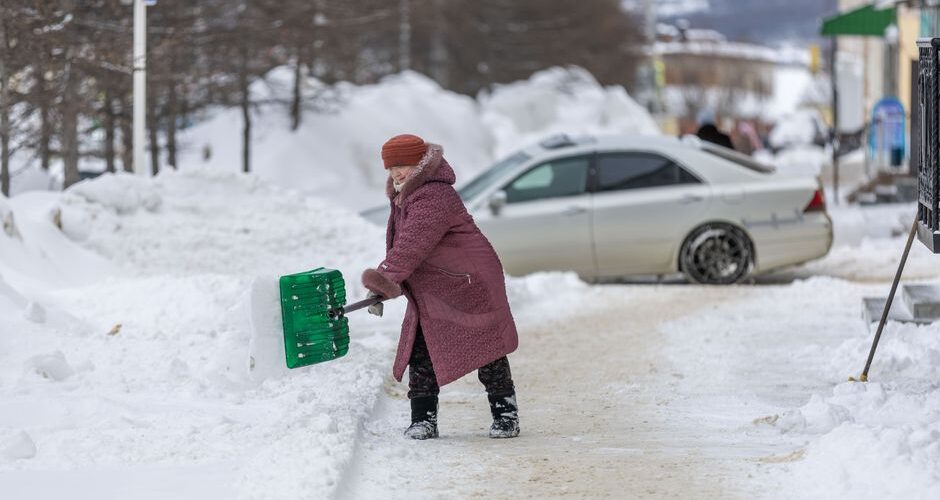
Denver snow does not stay where it lands. It gets pushed, walked on, packed down, and refrozen into the kind of slick, uneven surface that turns a normal morning commute across your property into a liability. For commercial property managers, the parking lot usually gets the first attention, but the sidewalk is where people actually enter your building, and it is the part of the property the city holds you responsible for.
Denver requires property owners to clear snow and ice from their sidewalks, and that responsibility extends to more than the strip of concrete in front of your door. Understanding the rules, the timing, and the practical work involved helps you plan a winter response that keeps your property open and accessible.
What Denver Requires From Property Owners
The City and County of Denver places sidewalk clearing on the property owner, not the city. That includes the sidewalks adjacent to your building along with the ADA ramps and bus stops that connect to them. In practice, this means a business on a corner with a curb ramp and a bus shelter pad has three separate surfaces to clear, not one.
The standard window is 24 hours. Public guidance from the city and from community organizations notes that snow should be addressed within 24 hours of the completion of a snow event under normal circumstances, and Denver businesses are expected to have sidewalks cleared on that timeline. Major blizzards can extend how long it takes to address snow community-wide, but the 24 hour expectation is the working benchmark most property managers plan around.
Enforcement runs through reporting. Anyone can report a snow-covered or icy sidewalk through Denver 311 or through pocketgov.org, and the guidance notes that 311 chat is often the quickest option when it is available. If a sidewalk is still unshoveled 24 hours after snow, a report can be filed with the address. Denver’s sidewalk rules are tied to fines, so verify current penalty amounts and enforcement details with the city rather than assuming a warning is the worst outcome.
ADA Ramps and Bus Stops Are Part of the Sidewalk
The ramps and transit pads attached to your sidewalk are covered by the same clearing requirement. These are also the surfaces most likely to be missed, because they sit slightly apart from the main walking path and often collect plowed snow from the street. A cleared sidewalk that ends in an ice-packed ramp is still an inaccessible entrance, and it is the first thing a pedestrian with a mobility device or a stroller will encounter.
Who Clears What in Denver
Responsibility in Denver is split among several parties, and knowing the boundaries prevents wasted calls and awkward conversations with the city. The table below reflects how sidewalk and street clearing responsibilities are generally divided.
| Area | Who handles it |
|---|---|
| Major roadways and arterials | Denver’s Department of Transportation and Infrastructure handles emergency snow response |
| Sidewalks adjacent to private property | The property owner, including adjacent ADA ramps and bus stops |
| Sidewalks inside MCA-managed parks | The MCA removes snow on sidewalks located in MCA-managed parks |
| Sidewalks inside city parks | Denver Parks and Recreation removes snow on those sidewalks |
For most commercial properties, only one row applies. The others matter when your building sits next to a park or a managed open space, because that is when a partially cleared block gets blamed on the nearest business.
Why Ice Management Matters More Than Snow Removal
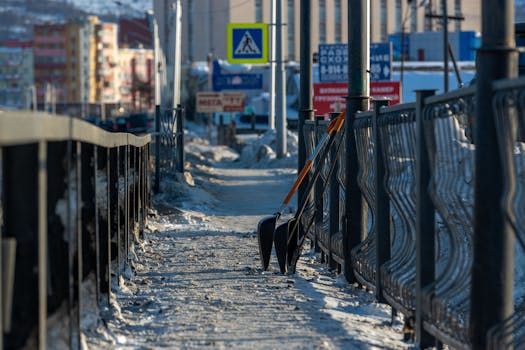
Snow on a sidewalk is visible. Ice is not. The dangerous stage of a Denver sidewalk is usually the thin refreeze that happens overnight after a daytime melt, when meltwater from a downspout, a plowed snow pile, or a low spot in the concrete turns to a sheet of clear ice before the morning arrivals.
Commercial snow and ice management in Denver is typically described as plowing, salting, and walkway clearing on a schedule built to keep a property open and accessible. The salting and treating portion is what separates a sidewalk service from a parking lot service. Snow removal without ice control leaves a clean surface that is still unsafe, and it will be unsafe again by the next morning.
For property managers, the practical takeaway is that sidewalk service should always include a treatment component, and the treatment should be reapplied after a melt-and-refreeze cycle rather than only during active snowfall.
Building a Sidewalk Plan for a Commercial Property
A sidewalk plan starts with an inventory. Walk your property before the first storm and map every surface a person can use, including entries, connector paths between buildings, ADA ramps, transit pads, loading walkways, and any path that employees use as a shortcut across a landscaped area.
From that inventory, decide which surfaces get cleared first. Entrances and ramps usually come before long perimeter runs, because those are the points where someone can slip within the first few steps onto the property. Connector paths that nobody uses in winter can often be closed and marked instead of cleared, which saves labor on every storm without reducing accessibility.
Hand Shoveling and Treatment Versus Plowing
Sidewalks are not parking lots, and the equipment has to match the surface. Many Denver snow providers describe walkway work as hand shoveling and treating rather than plowing, which reflects the reality of the surface. A plow blade on a sidewalk catches expansion joints, lifts turf edges, and leaves a hard-packed layer that treatment cannot penetrate.
Hand work is slower, which is why sidewalk crews need to be dispatched early enough to finish before your building opens. That timing has to be built into the contract, not improvised the morning of a storm.
Where Ice Concentrates on a Commercial Sidewalk
Certain spots refreeze faster than the rest of the walk. Knowing them helps you direct treatment and document your effort after a storm.
- Downspout outlets and roof drainage points that drip onto the walk
- Low spots and settled panels where meltwater pools and then freezes
- Shaded north-facing stretches that never see midday sun
- The base of plowed snow piles along the curb line, where melt drains across the sidewalk
- Ramps and transitions, which are angled and drain differently than flat panels
Contracts, Trigger Depths, and Storm Sequencing
Seasonal snow removal contracts are common for commercial properties in Denver, and many of them are written with trigger depth terms. A trigger depth is the snowfall amount that activates service. The value of a trigger is that it removes the phone call from the process: snow reaches the agreed depth, crews are dispatched, and the property gets serviced without anyone hoping a manager is awake to make the decision.
Two details deserve attention when reviewing a trigger. The first is whether sidewalk service follows the same trigger as the parking lot or has its own, since a light accumulation can still create a dangerous walk. The second is the order of operations. If the lot is plowed before the sidewalk is shoveled, the crew may push snow back onto the walk and undo the work, so the sequencing between lot and sidewalk matters as much as the timing of arrival.
A 24/7 dispatch arrangement also matters for Denver properties, because storms here do not confine themselves to business hours. Overnight accumulation needs to be handled before the first employee or customer arrives, not after.
HOA Communities and Multi-Building Campuses
HOA communities, apartment complexes, and office campuses have more sidewalk than a single commercial building, and much of it connects to areas the city may also touch. When a sidewalk borders a managed park or an open space, part of the walking route may belong to another entity, which can make a fully cleared property look only half done.
Mapping those boundaries once, before winter, prevents the recurring argument about who was supposed to clear a particular stretch. It also makes it clear which paths a community association is responsible for and which ones to report to the city.
What to Ask Before Signing a Sidewalk Contract
The quality of a sidewalk service shows up in the questions a provider can answer without hesitating. Use these as a checklist when evaluating proposals.
- Does the contract cover sidewalks, ADA ramps, and bus stops, or only the main walking paths?
- Is ice treatment included in every visit, or billed separately?
- What happens when snow arrives overnight or on a weekend?
- How is the sidewalk sequenced against parking lot plowing?
- Who documents conditions on site, and when?
- What is the trigger depth, and does the sidewalk have its own?
Providers who hand-shovel and treat walkways as a described part of their service, rather than an afterthought to plowing, tend to be built for this kind of work. Ask for that detail in writing.

Documenting Your Sidewalk Work After a Storm
Records matter in a way that is easy to underestimate. Time-stamped photos of cleared sidewalks, ramps, and transit pads, taken on arrival and again on completion, create a record of what your property looked like during and after the storm. If a report is filed with 311 or a claim arrives weeks later, that documentation is the difference between a description of what you did and proof of it.
Denver’s system works when each party handles their part of the sidewalk network. For a commercial property, that means a mapped sidewalk inventory, a contract that covers ramps and transit pads, treatment built into every visit, and documentation of the work. Plan it before the first storm, and the 24 hour clock stops being a source of anxiety.
Frequently Asked Questions
How long do Denver businesses have to clear their sidewalks?
The working standard is 24 hours. Denver businesses are required to clear sidewalks, and public guidance notes that snow should be addressed within 24 hours of the completion of a snow event under normal circumstances. If a sidewalk is still unshoveled 24 hours after snow, a report can be filed with the address through the city.
Who do I call to report a snow-covered or icy sidewalk in Denver?
Anyone can report a snow-covered or icy sidewalk through Denver 311 or through pocketgov.org. Guidance suggests that 311 chat is often the quickest option when it is available. Reporting is how the city identifies addresses that are out of compliance, so it is also the tool property managers use when a neighboring property leaves ice along a shared route.
Does the city clear sidewalks next to parks?
It depends on who manages the land. The MCA removes snow on sidewalks located in MCA-managed parks, and Denver Parks and Recreation removes snow on sidewalks located in city parks. Sidewalks adjacent to private property, including ADA ramps and bus stops, remain the property owner’s responsibility regardless of what is next door.
Should commercial sidewalks be plowed or hand shoveled?
Denver snow and ice providers typically describe walkway work as hand shoveling and treating, because plow blades on sidewalks catch joints and leave hard-packed snow behind. Commercial service generally combines plowing, salting, and walkway clearing on a schedule designed to keep the property open and accessible, with treatment included as a routine part of each visit.