

Snow removal in Denver, CO splits into two tracks. The City and County of Denver's Department of Transportation and Infrastructure (DOTI) crews handle main streets and residential side streets, while private contractors like denversnowremovals.com handle commercial parking lots and residential driveways. Property owners, not the city, are legally responsible for clearing their own sidewalks. Denver's city plows do not clear private lots or driveways, and residential streets get one center pass with no de-icing, so anyone who needs a usable lot, driveway, or walkway in 2026 has to hire a private provider.
Table of Contents
- What is the difference between commercial and residential snow removal in Denver County?
- What snow removal services do Denver properties actually need?
- Which Denver neighborhoods and areas get snow removal service?
- How much does snow removal cost in Denver, CO?
- Why does 24/7 snow response matter for Denver businesses and HOAs?
- How do you choose a snow removal company in Denver County?
- What should you expect from a Denver snow removal contract?
- Key Takeaways
- References
What is the difference between commercial and residential snow removal in Denver County?
Commercial snow removal covers parking lots, retail centers, HOA common areas, and sidewalks, usually under a seasonal contract with defined trigger depths and documented service logs. Residential work covers driveways, walkways, and private sidewalks, often on a per-visit or per-push basis. The two service types solve different problems.
Commercial clients carry liability exposure that residential clients do not. Slip-and-fall claims, ADA ramp and bus stop obligations, and tenant and customer safety all require proof of service and fast de-icing. According to the City and County of Denver, property owners must clear snow and ice from their sidewalks, including adjacent ADA ramps and bus stops. A commercial property manager needs service records to defend against claims.

Residential clients care most about timing and property protection. A driveway needs to be cleared before work and school. The plow must not damage the driveway surface or landscaping, and it must not leave a plow berm blocking the garage apron. A residential customer wants the job done cleanly and early.
denversnowremovals.com runs both sides of this split. The company handles commercial parking lot plowing and residential driveway plowing, so the same crew standard applies whether the job is a 200-stall lot or a two-car driveway. Commercial providers in the Denver market, including BrightView at its Denver location, advertise 24/7 storm monitoring as a standard commercial service feature.
What snow removal services do Denver properties actually need?
Denver properties need five core services: commercial parking lot plowing, residential driveway plowing, sidewalk and walkway clearing, de-icing and ice control, and HOA or retail lot service. Each service addresses a different failure point during a Front Range storm.
Commercial parking lot plowing includes stacking and hauling decisions when lot space runs out mid-season. Large lots need plows and skid steers to move snow into designated stacking areas. When those areas fill, snow must be hauled off site.
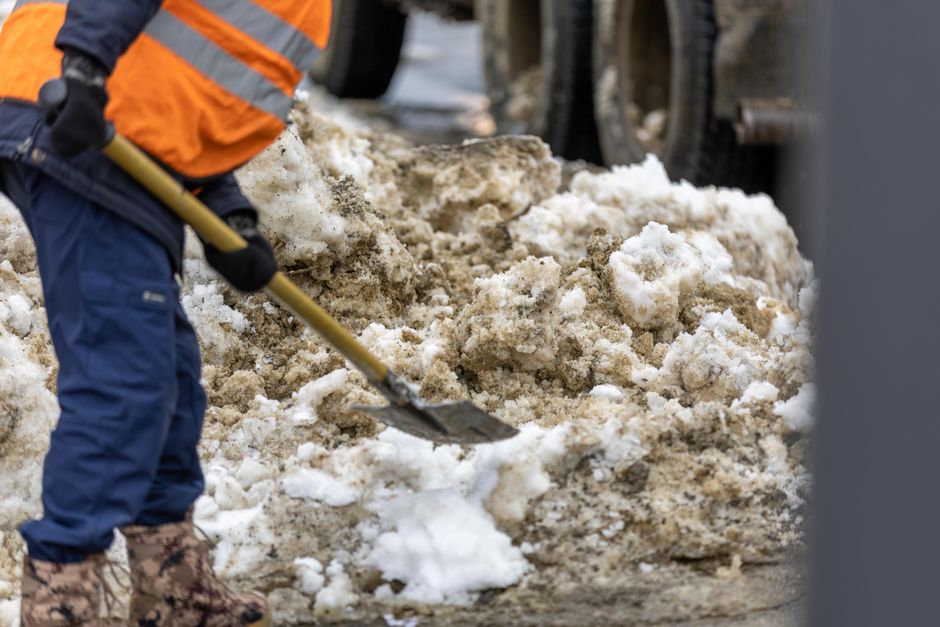
Residential driveway plowing requires attention to garage aprons, mailbox clearance, and not pushing snow into the street or a neighbor's property. A plow that leaves a berm across the apron creates a new problem for the homeowner.
Sidewalk and walkway clearing is the piece Denver actually regulates for property owners. According to the City and County of Denver, property owners must clear snow and ice from sidewalks, including adjacent ADA ramps and bus stops. This applies to homes and businesses alike.
De-icing and ice control matter because Denver itself uses specific materials. According to the City and County of Denver, Denver uses Ice Slicer, a naturally mined solid deicer from Utah that is more than 90 percent chloride salts, with its red color coming from 60 trace minerals. Downtown, the city uses liquid magnesium chloride.
HOA and retail lot service creates coordination problems a single-family job never has. Multiple owners, shared drive aisles, and customer parking all require a defined plan. Thumbtack notes that snow plowing prices typically range from $65 to $100, which reflects the base cost of a simple push rather than a full commercial contract.
Which Denver neighborhoods and areas get snow removal service?
Private snow removal service covers all of Denver County, including Downtown Denver, LoDo, Cherry Creek, Washington Park, Capitol Hill, Hilltop, the Highlands, Central Park / Stapleton, and Lowry. Each area has different site conditions that shape the work.
Downtown Denver and LoDo sit in the zone where the city uses liquid magnesium chloride rather than solid deicer, according to the City and County of Denver. Commercial lots and loading zones in these areas need fast turnaround because business activity never stops.
Cherry Creek, Washington Park, Capitol Hill, and Hilltop are dense residential blocks with heavy sidewalk foot traffic and tight driveway access. Plowing in these neighborhoods requires smaller equipment and careful berm placement.
The Highlands, Central Park / Stapleton, and Lowry mix larger residential lots with HOA common areas and retail centers. A single storm can require residential driveway service and commercial lot plowing in the same neighborhood.
Citywide context matters for understanding what private service fills. According to the City and County of Denver, DOTI covers roughly 2,050 lane miles of main streets with a fleet of 70 large plows. The Residential Snow Plow Program adds about 1,260 center lane miles of side streets. Because city plowing is split between those two programs, private service fills the gap on driveways, private lots, and walkways across all of these areas.
How much does snow removal cost in Denver, CO?
Snow removal in Denver is priced through two main models: per-push billing and seasonal contracts. Per-push means the customer is billed each time a plow is dispatched. A seasonal contract charges a flat fee for the winter with defined trigger depth and response terms.
Cost drivers include lot or driveway square footage, snowfall depth per event, whether de-icing material is included, and whether the contract includes emergency or after-hours response. A large commercial lot with ADA ramps costs more than a short residential driveway.
Published market reference points give a starting range. TaskRabbit lists Denver Taskers at an average of $44 an hour for snow removal. Thumbtack states snow plowing prices typically range from $65 to $100. These figures reflect simple residential jobs, not full commercial contracts.
Commercial quotes are usually custom because lot size, stacking space, and liability documentation requirements vary so widely. A retail lot with ADA ramps and bus stops is not priced like a driveway. The City and County of Denver requires property owners to clear sidewalks, ADA ramps, and bus stops, which adds scope to commercial work.
Seasonal contracts trade a higher total commitment for predictable budgeting and priority dispatch during back-to-back storms. A per-push customer may wait longer when every crew is busy. A seasonal customer has a defined place in the dispatch order.
Why does 24/7 snow response matter for Denver businesses and HOAs?
24/7 snow response matters because Denver storms do not respect business hours, and liability does not pause for weekends. An uncleared sidewalk or lot is a legal exposure, not just an inconvenience.
Denver's own response targets show how fast conditions change. According to the City and County of Denver, the city aims to address each protected bikeway at least once every 24 hours. Any accumulation over one inch on an off-street trail is plowed to the channel side within 12 hours after a snowfall ends.
Property owners are legally responsible for sidewalks, ADA ramps, and bus stops, according to the City and County of Denver. An uncleared walkway is a liability question. A business that opens at 7 a.m. needs its lot cleared before customers arrive.
Commercial snow and ice providers in the Denver market advertise 24/7 storm monitoring as a standard service feature. BrightView, which operates a Denver location at 12570 E. 39th Ave, lists 24/7 storm monitoring for commercial snow and ice services. That signals what commercial clients now expect.
Back-to-back Front Range storms mean a single missed push compounds. Ice bonds, berms harden, and the next event starts on top of the last one. Overnight and early-morning clearing is what keeps a lot open for business opening, tenant arrival, and HOA resident commute times.
How do you choose a snow removal company in Denver County?
Choosing a snow removal company in Denver County starts with confirming insurance and asking for a certificate. Commercial clients and HOAs typically require proof of coverage before a contract is signed. A contractor without insurance transfers liability risk to the property owner.
Ask what equipment the company runs and whether it fits your site. Large plows and skid steers work for open lots. Smaller equipment fits tight residential driveways and alleys. The wrong equipment damages surfaces and misses edges.
Get the response time and trigger depth in writing. Ask how many inches of snow trigger a dispatch, and how many hours to completion after the storm ends. A verbal promise is not a contract term.
Check reviews and local track record. Denver's market includes long-established operators. SaBell's states it has served the Denver metro since 1973 and has operated over 51 years. Longevity signals reliability, but current reviews show recent performance.
Ask how the company communicates during a storm. Text, app, or email updates matter when a storm hits overnight. Ask whether the company provides service documentation for liability purposes. Commercial and HOA clients need records to defend against slip-and-fall claims.
What should you expect from a Denver snow removal contract?
A Denver snow removal contract should define trigger depth, plow timing, communication, de-icing scope, and documentation. Each term determines what happens when snow falls.
Trigger depth is the snowfall amount that starts a dispatch. It is commonly set between one and three inches depending on the property. A lower trigger means more frequent service and higher cost. A higher trigger means snow sits longer.
Plow timing states when crews arrive relative to the storm. The contract should say whether service is completed before business opening or the morning commute. According to the City and County of Denver, residential city plowing happens between 3:00 a.m. and 3:00 p.m., but private contracts set their own timing.
Communication terms identify who you contact during an event, how fast they respond, and how you are notified that service is done. A good contract names a specific contact person or dispatch line.
De-icing scope states whether ice control is included in the base price or billed as an add-on. The contract should name the materials used. Denver uses Ice Slicer and liquid magnesium chloride on public streets, according to the City and County of Denver, but private contractors choose their own materials.
Documentation includes service logs and before/after records that support liability defense for commercial and HOA clients. A contract without documentation terms leaves the property owner without evidence if a claim arises.
Key Takeaways
- Denver's DOTI plows about 2,050 lane miles of main streets with 70 large plows, and its Residential Snow Plow Program covers roughly 1,260 center lane miles of side streets.
- Denver residential plowing happens between 3:00 a.m. and 3:00 p.m., makes one center pass per side street, does not expose bare pavement, and does not include de-icing materials.
- Denver requires property owners to clear snow and ice from their sidewalks, including adjacent ADA ramps and bus stops.
- Denver uses Ice Slicer, a solid deicer more than 90 percent chloride salts with 60 trace minerals giving it a red color, and liquid magnesium chloride in the downtown area.
- TaskRabbit lists Denver snow removal Taskers at an average of $44 an hour, and Thumbtack states snow plowing prices typically range from $65 to $100.
- Denver aims to address each protected bikeway at least once every 24 hours, and plows off-street trail accumulation over one inch to the channel side within 12 hours after a snowfall ends.
- SaBell's states it has provided snow removal and ice removal services to the Denver metro since 1973 and has operated over 51 years.
References
- Snow Removal – City and County of Denver — date unknown
- Snow Removal Denver — date unknown
- Denver, CO Commercial Snow & Ice Services – BrightView — date unknown
- Snow Removal Services Near Denver – TaskRabbit — date unknown
- Snow plowers near Denver, CO – Thumbtack — date unknown