
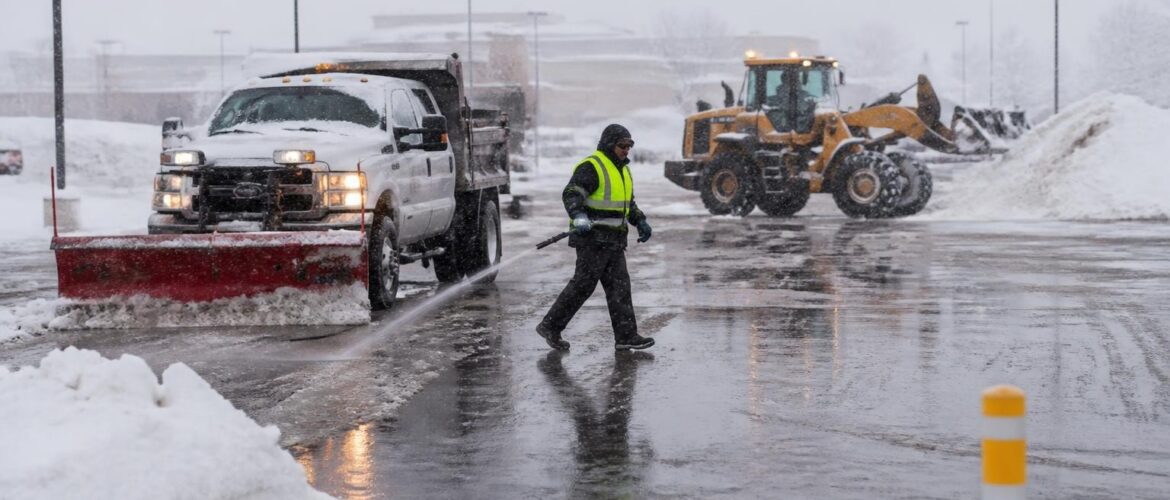
Winter storms bring significant operational challenges for commercial properties across the Denver Metro area and beyond. Effective snow ice removal requires careful planning, appropriate equipment selection, and a thorough understanding of current best practices to maintain safe, accessible surfaces throughout the season. Property managers, facility directors, and business owners must balance safety obligations with budget constraints while navigating environmental considerations and regulatory requirements. This comprehensive guide explores the essential elements of professional snow ice removal operations, from material selection to timing strategies, helping you develop a robust winter maintenance program.
Understanding Modern Snow Ice Removal Fundamentals
Professional snow ice removal has evolved significantly over the past decade, incorporating scientific research, environmental awareness, and technological advancements. The industry now recognizes that successful winter maintenance extends far beyond simply pushing snow off surfaces.
Pre-season planning forms the foundation of any effective program. This includes detailed site assessments, equipment inventories, material procurement, and staff training. Properties must identify critical areas requiring priority treatment, establish clear performance standards, and develop communication protocols for stakeholders.
The SIMA-10-2025 standard practice for snow and ice management services provides industry-recognized guidelines for procurement and operational planning. Following these standards helps ensure consistency, accountability, and professional service delivery.
Key Planning Components
Every comprehensive snow ice removal strategy should incorporate these essential elements:
- Site-specific action plans detailing trigger points, priority zones, and resource allocation
- Equipment maintenance schedules ensuring reliability during peak demand periods
- Material storage protocols protecting deicers from moisture and contamination
- Staff training programs covering safety procedures, application rates, and equipment operation
- Documentation systems tracking weather conditions, service times, and material usage
Weather monitoring capabilities have become increasingly sophisticated, allowing operators to anticipate storm systems and position resources strategically. Modern services utilize multiple forecasting sources, ground-level weather stations, and real-time precipitation tracking.

Deicing Materials: Selection and Application Strategies
Material selection represents one of the most critical decisions in snow ice removal operations. Each deicer possesses distinct performance characteristics, environmental impacts, and cost considerations that must align with property requirements and local conditions.
Traditional sodium chloride (rock salt) remains widely used due to its effectiveness and affordability. However, its limitations below 15°F and potential environmental impacts have driven increased interest in alternative products.
| Material Type | Effective Temperature | Relative Cost | Primary Advantages | Key Considerations |
|---|---|---|---|---|
| Sodium Chloride | 15°F to 32°F | Low | Widely available, economical | Corrosive, environmental concerns |
| Calcium Chloride | -25°F to 32°F | Medium | Works at lower temps, faster action | Higher cost, residue issues |
| Magnesium Chloride | 5°F to 32°F | Medium-High | Less corrosive, effective range | Can be slippery when over-applied |
| Potassium Acetate | -15°F to 32°F | High | Airport-approved, less corrosive | Premium pricing, specialty use |
| Sand/Abrasives | All temperatures | Low | Provides traction, non-chemical | Requires spring cleanup, no melting |
The EPA’s collection of resources on salt and deicers provides comprehensive guidance on environmental impacts and safer alternatives for municipalities and commercial operators concerned about chloride pollution.
Application Rate Optimization
Over-application wastes resources, increases costs, and amplifies environmental impacts. Professional snow ice removal services calibrate equipment to deliver precise amounts based on pavement temperature, storm intensity, and desired outcomes.
Anti-icing involves applying liquid deicers before precipitation begins, preventing ice from bonding to pavement. This proactive approach typically uses 30-50% less material than traditional reactive deicing while delivering superior results.
Deicing addresses existing ice accumulation, requiring higher application rates and mechanical removal. Timing proves critical, as early intervention prevents ice from hardening and bonding to surfaces.
Research from the Transportation Research Board’s NCHRP resources demonstrates that strategic anti-icing can reduce seasonal salt consumption by 20-40% while improving safety outcomes.
Equipment Systems for Comprehensive Winter Maintenance
Professional snow ice removal operations deploy varied equipment configurations tailored to specific property characteristics and service requirements. Large commercial facilities demand different approaches than smaller office complexes or residential communities.
Heavy Equipment Fleet Composition
- Loader plows for high-volume snow relocation in large parking areas
- Skid steers providing maneuverability in tight spaces and corners
- Pickup trucks with plow attachments handling perimeter routes and quick-response needs
- Salt spreaders delivering calibrated material application
- Liquid applicators for anti-icing and targeted spot treatment
Equipment sizing must match property dimensions and snow storage capacity. Undersized equipment extends service time, while oversized machinery increases operational costs without proportional benefits.
Backup equipment availability ensures service continuity during mechanical failures or multi-property operations. Established providers maintain redundant capabilities across their fleet, minimizing weather-related downtime.

Timing Protocols and Service Level Agreements
Response timing dramatically impacts both safety and operational efficiency in snow ice removal programs. Commercial properties typically establish specific service triggers based on accumulation thresholds and business hours.
Zero-tolerance policies require immediate response to any snow or ice accumulation, common for medical facilities, emergency services, and 24-hour operations. These demanding standards necessitate constant monitoring and premium resource availability.
Standard commercial protocols typically trigger service at 1-2 inch accumulation, with completion targets aligned to business opening times. Properties expecting morning access by 6:00 AM might specify completion by 5:30 AM for parking lots and 5:45 AM for walkways.
Service level agreements (SLAs) should clearly define:
- Trigger points for initial service deployment
- Completion timelines for each property zone
- Re-service intervals during ongoing precipitation
- Communication protocols for delays or complications
- Performance documentation and verification methods
Properties with emergency snow removal needs benefit from partnerships with established providers offering guaranteed response capabilities and 24/7 availability.
Environmental Considerations and Sustainable Practices
Growing environmental awareness has transformed snow ice removal approaches, with property managers increasingly seeking strategies that balance safety requirements with ecological responsibility. Chloride-based deicers contribute to waterway contamination, vegetation damage, and infrastructure corrosion when over-applied.
The Minnesota LTAP article on non-chloride deicers examines alternative products and their performance characteristics, helping operators make informed decisions about material selection based on environmental priorities and operational requirements.
Sustainable Material Management
Calibrated application represents the single most impactful sustainability improvement. Electronic spreader controls and ground speed sensors ensure consistent rates regardless of driving speed, eliminating the piles and gaps common with manual controls.
Strategic placement focuses materials on critical areas rather than blanket coverage. Walkways, building entrances, and loading zones receive priority treatment, while less critical areas might use sand for traction without chemical melting.
Liquid pre-wetting involves coating solid salt with liquid calcium or magnesium chloride before spreading. This technique improves material adhesion to pavement, reduces bounce and scatter, and accelerates the melting process, typically reducing total salt usage by 20-30%.
| Practice | Material Reduction | Implementation Cost | Operational Complexity |
|---|---|---|---|
| Calibrated spreaders | 15-25% | Medium | Low |
| Anti-icing programs | 30-40% | Low | Medium |
| Pre-wetted salt | 20-30% | Medium-High | Medium |
| Pavement sensors | 25-35% | High | Low |
| Alternative deicers | Variable | High | Medium |
Safety Standards and Liability Management
Snow ice removal operations carry inherent safety risks for both service providers and property occupants. Professional programs incorporate comprehensive safety protocols addressing equipment operation, personal protective equipment, and site-specific hazards.
Operator training must cover equipment-specific procedures, backing protocols, pedestrian awareness, and emergency response. Annual refresher courses ensure continued competency and familiarization with new equipment or procedures.
Site hazard identification during pre-season assessments documents potential complications including overhead clearances, underground utilities, landscape features, and drainage structures. This information guides operational approaches and prevents property damage.
Documentation and Record-Keeping
Thorough documentation protects both service providers and property owners in liability scenarios. Professional operations maintain detailed records including:
- Time-stamped service reports with arrival and completion times
- Weather condition observations and precipitation measurements
- Material application rates and locations
- Photographic documentation of site conditions
- Equipment deployment logs and operator assignments
Digital platforms increasingly automate documentation through GPS tracking, automated reporting, and real-time client portals. These systems provide transparency while reducing administrative burden.

Site-Specific Considerations for Different Property Types
Commercial snow ice removal strategies must adapt to varied property characteristics, operational patterns, and stakeholder expectations. Cookie-cutter approaches inevitably produce suboptimal results.
Large Parking Facilities
Industrial parks and office campuses with expansive parking areas prioritize efficient snow relocation and strategic stacking. These sites typically feature:
- Designated snow storage areas identified during site planning to accommodate seasonal accumulation
- Traffic flow management coordinating plowing patterns with vehicle movement and safety
- Phased clearing approaches addressing priority zones before secondary areas
- Loader-based operations moving large volumes quickly to maximize efficiency
Properties seeking reliable commercial snow removal services benefit from providers with appropriate heavy equipment and experience managing large-scale operations.
Multi-Tenant Retail Centers
Retail properties balance customer access requirements with tenant expectations and limited service windows. Key considerations include:
- Off-hours service minimizing disruption to business operations and customer traffic
- Detailed sidewalk treatment ensuring safe pedestrian access to all storefronts
- Loading zone maintenance supporting delivery operations throughout weather events
- Aesthetic standards maintaining professional appearance during business hours
HOA Communities
Residential communities managed by homeowners associations present unique challenges including street navigation, vehicle displacement, and resident communication. Effective programs incorporate:
- Resident notification systems alerting homeowners to parking restrictions and service schedules
- Street-by-street clearing sequences ensuring systematic coverage of all roadways
- Guest parking area prioritization maintaining access for visitors and service providers
- Mailbox and fire hydrant clearance meeting postal and fire safety requirements
- Pedestrian pathway networks connecting homes to amenities and common areas
Material Storage and Handling Best Practices
Proper storage protects deicing materials from moisture contamination while ensuring rapid deployment during storm events. Professional operations maintain dedicated storage facilities with appropriate environmental controls.
Covered storage prevents precipitation from dissolving salt stockpiles and creating environmental runoff concerns. Simple three-sided shelters with roof coverage provide adequate protection for most operations.
Moisture barriers beneath salt piles prevent ground contamination and material degradation. Concrete pads or heavy-duty tarps create effective separation from soil contact.
Inventory rotation ensures older materials receive priority deployment, preventing long-term storage that can lead to caking and reduced effectiveness. Material procurement should align with seasonal usage patterns, avoiding excessive pre-season stockpiling.
Liquid deicers require different handling, including freeze protection for storage tanks, calibrated pumping systems, and appropriate container materials resistant to corrosion. Brine solutions (23.3% salt concentration) resist freezing to approximately -6°F, providing operational advantages in extreme conditions.
Technology Integration in Modern Operations
Digital tools have revolutionized snow ice removal operations, enhancing efficiency, accountability, and customer communication. Leading service providers leverage technology across multiple operational dimensions.
GPS fleet tracking provides real-time visibility into equipment locations, service progress, and route optimization. These systems automatically generate service verification reports, reducing administrative overhead while documenting completion.
Weather monitoring platforms aggregate multiple forecast sources, providing probabilistic precipitation predictions and temperature trends. Advanced systems incorporate ground-level sensors measuring pavement temperature, moisture presence, and dew point.
Customer portals offer transparent communication channels where property managers access service reports, photographic documentation, and real-time status updates. This transparency reduces communication overhead while building confidence in service delivery.
Route optimization software analyzes property layouts, street networks, and traffic patterns to generate efficient clearing sequences. These tools minimize travel time between properties while ensuring systematic coverage.
Training and Certification Programs
Professional development elevates snow ice removal from commodity service to specialized expertise. Industry associations offer certification programs covering best practices, safety standards, and operational efficiency.
The Snow & Ice Management Association provides multiple certification levels addressing different operational roles and responsibilities. These programs cover topics including:
- Material science and application strategies
- Equipment operation and maintenance
- Contract management and procurement
- Environmental stewardship and sustainable practices
- Safety protocols and risk management
Certified operators demonstrate competency and commitment to professional standards, providing property managers confidence in service quality and operational knowledge.
Ongoing education keeps professionals current on emerging technologies, regulatory changes, and industry innovations. Annual conferences, webinars, and regional meetings facilitate knowledge sharing and professional networking.
Cost Structure and Budget Planning
Snow ice removal expenses vary significantly based on property size, service requirements, seasonal severity, and contract structure. Understanding cost drivers helps property managers develop realistic budgets and evaluate service proposals effectively.
Seasonal contracts provide predictable pricing regardless of actual snowfall amounts, transferring weather risk to the service provider. These agreements suit properties requiring budget certainty and unlimited service availability.
Per-occurrence pricing charges based on actual service deployments, with rates varying by accumulation amounts and services rendered. This model works well for properties in areas with inconsistent snowfall patterns.
Hourly rates apply equipment and labor charges based on actual time spent servicing properties. This transparent approach clearly links costs to services but creates budget uncertainty in variable weather conditions.
| Contract Type | Budget Predictability | Risk Distribution | Typical Applications |
|---|---|---|---|
| Seasonal flat rate | High | Provider assumes weather risk | Properties requiring certainty |
| Per-occurrence | Medium | Shared risk model | Average snowfall areas |
| Hourly billing | Low | Property assumes weather risk | Infrequent snow regions |
| Hybrid models | Medium-High | Negotiated risk sharing | Large portfolios |
Material costs represent significant expenses, with deicing products ranging from $50-$150 per ton depending on type and quantity. Efficient application practices directly impact seasonal material consumption and associated costs.
Effective snow ice removal requires comprehensive planning, appropriate resources, and professional expertise to maintain safe, accessible commercial properties throughout winter months. Property managers who invest in quality partnerships, appropriate materials, and documented procedures position their facilities for operational success regardless of weather severity. Denver Snow Removals brings over 47 years of commercial snow removal experience to the Denver Metro area, offering 24/7 emergency response capabilities and proven expertise managing large parking lots, industrial parks, office campuses, and HOA communities. Contact our team to discuss customized winter maintenance solutions tailored to your property's specific requirements and operational priorities.