
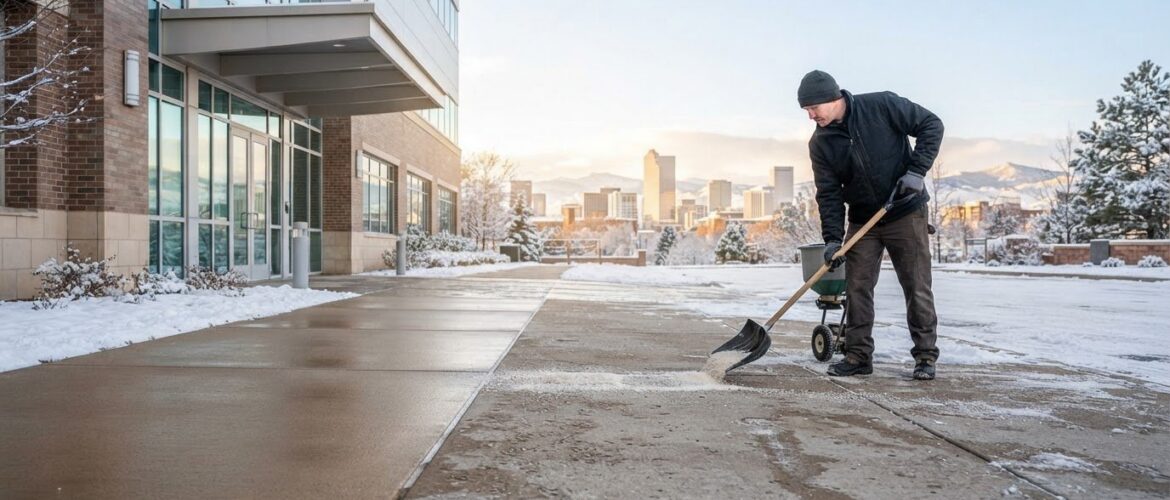
A stronger sealer alone won’t protect a Denver sidewalk if moisture and deicer exposure keep stressing the surface. For commercial property managers, protecting concrete from salt damage denver starts with understanding how local freeze-thaw cycles and common deicers affect concrete. The challenge is to maintain safe access while reducing avoidable exposure that can contribute to scaling, flaking, or costly repairs.
A practical plan combines snow clearing, thoughtful deicer use, and regular surface checks. This guide explains how deicers and repeated freezing and thawing can affect concrete, how to distinguish winter residue from signs of damage, and which prevention options may suit commercial surfaces. It also provides a routine for clearing snow, managing deicer, and monitoring walkways, entrances, and parking areas. Commercial snow and ice management can support safe access and keep winter work organized. Photos documenting each service visit also provide a record of activity.
Key Takeaways
- Learn why entrances, sidewalks, parking areas, and meltwater paths can face greater exposure to winter concrete damage.
- Understand how moisture, freeze-thaw cycles, and repeated deicer exposure can stress concrete surfaces.
- Compare practical ways of protecting concrete from salt damage denver, including residue removal, drainage improvements, and compatible sealers.
- Use a seasonal checklist to inspect and document surfaces, clear snow, manage deicer use, and note changes that may need attention.
- See how commercial sidewalk clearing and de-icing can support safe access as part of a broader concrete-care routine.
Why Denver commercial concrete faces salt damage each winter
Commercial property teams need to treat ice promptly while limiting unnecessary deicer exposure to concrete. Ice-control products may reach the same surfaces repeatedly throughout winter. At a retail property, for example, a busy entrance can receive meltwater and residue tracked in on footwear, while nearby sidewalks and parking areas may require their own ice-control treatment.
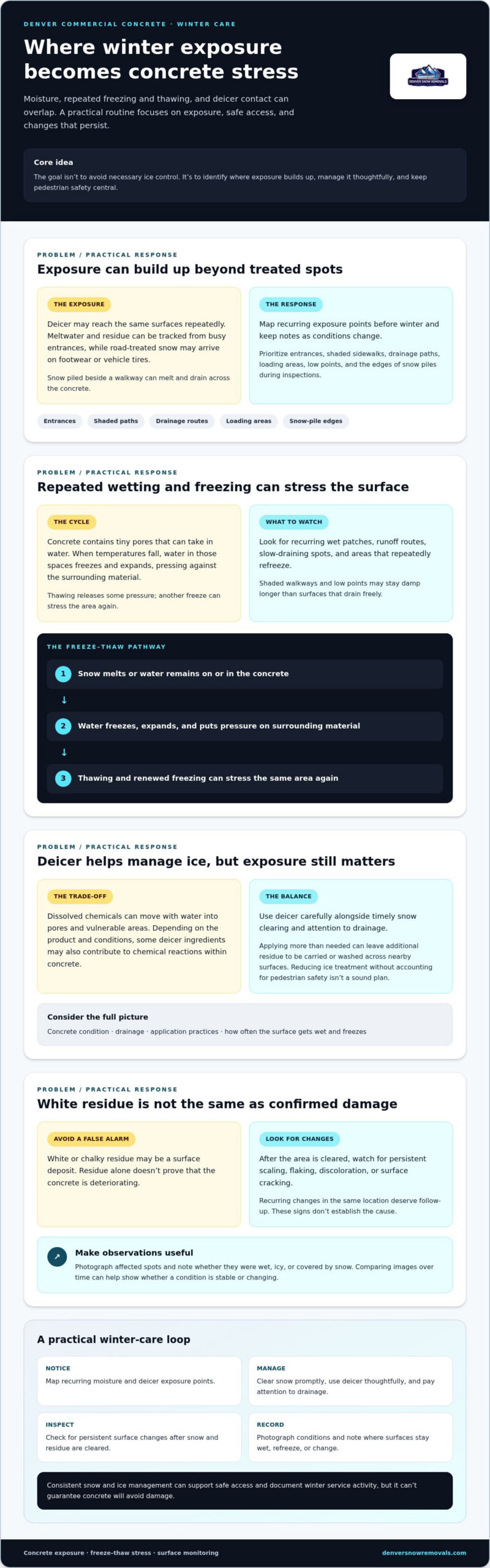
Exposure can reach beyond the places where deicer is applied. Snow cleared from a parking lot may be piled beside a walkway, then melt and drain across the concrete. Loading zones, shaded paths, building entrances, and low points where water collects are also worth monitoring. Road-treated snow carried in on vehicle tires or footwear can add to on-site applications, creating recurring contact even when deicer is used carefully.
For a general overview of the chemicals and approaches involved, see De-icing methods and their impact. The goal isn’t to avoid necessary ice control. It’s to identify where exposure builds up and monitor those locations throughout the season.
To see a visual explanation of how salt can affect concrete, watch this video:
Where commercial concrete encounters deicers in Denver
Denver’s winter temperature swings add another challenge. Snow can melt during a warmer or sunnier period, then water left on or in the concrete can freeze as temperatures drop. Repeated wetting and freezing can stress the surface, especially where water drains slowly or follows the same route. Prioritize entrances, shaded sidewalks, drainage paths, loading areas, and the edges of snow piles. These locations give property managers a practical starting point for inspections where moisture and deicer exposure may overlap.
Early signs that concrete needs attention
White or chalky residue may be a surface deposit, not proof that the concrete itself is damaged. Look for persistent changes after the area has been cleared, such as scaling, flaking, discoloration, or surface cracking. These signs don’t establish the cause, but recurring changes in the same location deserve follow-up. Photograph affected spots and note whether they were wet, icy, or covered by snow. Comparing images over time can help show whether a condition is stable or changing.
To start protecting concrete from salt damage denver, map recurring exposure points before winter and keep notes as conditions change. A record helps distinguish temporary residue from locations that may merit closer assessment, while keeping pedestrian safety central to ice-control decisions.
How deicers and Denver freeze-thaw cycles damage concrete
Concrete may look solid and sealed, but it contains tiny pores that can take in water. When temperatures fall, water in those spaces freezes and expands, putting pressure on the surrounding material. Thawing releases some of that pressure, but the next freeze can stress the same area again. Repeated wetting and freezing over a Denver winter can gradually weaken the surface.
Deicers can add to the exposure. They help manage ice, but dissolved chemicals may move with water into pores and vulnerable areas. Some deicer ingredients can also contribute to chemical reactions within concrete. Effects vary by product and conditions, so consider the full picture: the concrete’s condition, drainage, application practices, and how often the surface gets wet and freezes.
Salt residue is a deposit on the surface; freeze-thaw damage is stress within the concrete caused by water repeatedly freezing and expanding. Residue alone doesn’t prove the slab is deteriorating, and a damaged area may have more than one contributing factor. This distinction helps property managers avoid treating every white mark as damage while staying alert to changes that persist or spread.
What happens inside porous concrete
Water can enter pores and small surface defects, carrying dissolved salts with it. When the water freezes, it expands and presses against the surrounding concrete. Depending on the deicer and conditions, chemical reactions may also affect the cement paste. These processes can contribute to scaling, cracking, or flaking, but damage isn’t inevitable. Existing wear, water movement, and repeated exposure all influence what happens at a particular site.
Why repeated Denver winter cycles matter
Denver’s winter temperature swings can bring melting followed by renewed freezing. Each cycle can expose concrete to moisture again, especially where drainage is slow or water regularly collects. A shaded walkway or low point beside a building may stay damp longer than a surface that drains freely. That can increase the time water and dissolved deicer remain in contact with the concrete. Watch for recurring wet patches, runoff routes, and areas that repeatedly refreeze.
Application practices matter, too. Applying more deicer than needed can leave additional residue to be carried or washed across nearby surfaces. But reducing ice treatment without accounting for pedestrian safety isn’t a sound plan. Use deicer carefully alongside timely snow clearing and attention to drainage. That is the practical balance in protecting concrete from salt damage denver properties may face: manage exposure without neglecting safe access.
Keep notes on places that remain wet, refreeze, or show surface changes. If the same spot continues to deteriorate, a record can help guide closer assessment rather than relying on a single winter observation. Consistent commercial snow and ice management can support access and document winter service activity, but it can’t guarantee concrete will avoid damage.
Compare concrete protection options before choosing a winter routine
No single treatment makes commercial concrete immune to winter wear. A practical plan combines ice control with steps to limit unnecessary moisture and deicer exposure. When protecting concrete from salt damage denver properties face, compare what each measure can do, what it can’t do, and where it fits your site. Pedestrian safety remains essential, so reducing deicer use should never mean leaving an unsafe walkway untreated.
Start with the conditions at the property. An entrance with frequent foot traffic may need a different routine from a loading area where meltwater repeatedly collects. The options below can be combined, but their usefulness depends on the concrete’s condition and how the site is used.
| Approach | Purpose | Limitations | When to consider it |
|---|---|---|---|
| Controlled deicer use | Manage hazardous ice while avoiding unnecessary product application. | Doesn’t eliminate exposure from treated roads, footwear, or meltwater. | Use as part of the property’s safe-access plan, following product directions. |
| Residue removal | Clear remaining deicer and winter deposits from concrete. | Won’t reverse existing deterioration or prevent new exposure. | Consider after a treatment event or when residue accumulates. |
| Drainage management | Limit standing water and recurring runoff across concrete. | Possible changes depend on site layout and may not solve every moisture issue. | Review areas that stay damp or repeatedly collect meltwater. |
| Compatible concrete sealer | A suitable sealer may reduce water absorption into concrete. | Results depend on product, surface condition, preparation, and correct application; it isn’t salt-proofing. | Consider for sound concrete when the product is appropriate for the surface and exposure. |
Deicer use, residue removal, and drainage
Follow the deicer’s label directions and avoid applying more than needed for the conditions. Once it’s safe and practical, clear leftover residue so it doesn’t remain on the surface or move with meltwater. Observe where water travels after snow melts. If the same area stays wet, drainage may warrant a property-specific review. Changes to runoff patterns depend on the site and aren’t a guaranteed fix.
When a penetrating sealer may be considered
A penetrating sealer is designed to enter concrete rather than simply form a surface film, and some products are intended to reduce water absorption. Suitability still depends on the concrete’s condition, surface preparation, and the manufacturer’s instructions. Check that the product is appropriate for the surface and intended exposure. Follow its label for application and maintenance, and don’t treat sealing as a substitute for safe ice control or routine care.
Use the table as a decision aid, not a promise of a damage-free season. A sealer may be one part of a broader plan, while residue removal and attention to drainage can address exposure patterns at specific locations. Choose measures that suit the property and keep safe access central. Combining sensible ice treatment with surface care is more practical than relying on a single protective product.
A practical seasonal checklist for protecting Denver concrete
A repeatable winter routine helps commercial property managers make timely decisions without confusing everyday observations with repair or sealing work. Record a baseline, use the same inspection approach through the season, and use your observations to prioritize follow-up. This makes protecting concrete from salt damage denver properties face part of regular site care, with safe access at the center of snow and ice operations.
Before and during winter weather
Before winter conditions set in, record the visible state of sidewalks, entrances, parking areas, and loading zones. Note existing cracks, flaking, drainage concerns, and places that stay damp. Plan where cleared snow will be stored so repeated melting doesn’t direct water toward the same concrete area. During storms, prioritize safe passage and follow deicer manufacturer directions and the site’s pedestrian-safety requirements.
- Inspect: Walk key routes and note existing surface changes, cracks, and areas where water collects.
- Document: Photograph baseline conditions from consistent viewpoints. Record recurring wet spots and drainage concerns.
- Clear snow: Remove snow from access routes and place it where meltwater is less likely to repeatedly cross or collect on concrete.
- Manage deicer use: Apply products according to label directions and site safety needs. Don’t invent a dosage or assume that more product means better protection.
After a storm and at seasonal review
When conditions allow, check for remaining deposits and remove residue using a method appropriate for the surface and product instructions. Photograph new or changing areas, then compare them with your baseline images. At seasonal review, use those observations to decide whether sealing or repair merits further assessment. Don’t rely on a fixed calendar alone; the surface’s condition and the product manufacturer’s directions matter.
- Remove residue: Clear accumulated deposits when practical, following guidance suited to the surface and deicer used.
- Reassess: Compare current photos with the baseline. Note repeated or spreading changes and prioritize follow-up based on the observed condition.
Routine winter checks and planned concrete work are different tasks. A wet patch after a storm is an observation to record. A recurring surface change may deserve closer assessment. Sealer selection and application should follow the manufacturer’s instructions and account for the concrete’s condition, rather than being treated as an automatic seasonal step.
Winter plan summary: Inspect and photograph first; clear snow with meltwater paths in mind; use deicer as directed; remove residue when appropriate; then compare conditions and plan follow-up based on what changed.
For commercial sites where snow and ice management is part of the routine, request a commercial snow and ice estimate for service in Denver County and the surrounding Denver Metro area.
Coordinate concrete care with commercial snow and ice management in Denver
Commercial snow and ice management is one part of a property’s winter care plan. Clearing sidewalks and applying deicer supports safer access for employees, tenants, customers, and visitors. It doesn’t guarantee that concrete will avoid salt exposure or damage. Property managers can get more value from service by coordinating access priorities with surface inspections and keeping track of conditions that need follow-up.
Snow Removal Denver provides commercial sidewalk clearing and de-icing, including commercial ice melt application on sidewalks and entries. The company is fully insured. Its no slip-and-fall liability guarantee includes documenting each visit with photos and applying commercial ice melt to sidewalks and entries. Documentation records service activity and observed conditions; it isn’t a promise that concrete will remain damage-free.
What documented commercial de-icing contributes
Visit photos give property managers a record to review alongside their own concrete inspections. They can show which areas received attention and capture visible site conditions at the time of service. Sidewalk and entrance de-icing supports winter access, while surface care remains a separate responsibility. For a broader view of coordinated ice control, Denver property teams can also consult guidance on proactive ice management services in Denver.
Use service documentation as one part of the property record. If a walkway repeatedly holds water or an area changes condition, compare those observations with inspection photos and notes. That context can help managers identify recurring concerns and plan follow-up without assuming de-icing alone will resolve concrete issues.
Plan support for commercial properties in Denver
Commercial sites, industrial parks, office campuses, retail parking areas, and HOA communities each have distinct access routes and winter priorities. A clear plan identifies the sidewalks and entrances that need attention, along with areas where recurring service observations should be recorded. Snow Removal Denver serves commercial properties in Denver County and the surrounding Denver Metro area. Its 24/7 dispatch is staffed, crews operate around the clock during snow events, and on-call personnel are available seven days and nights a week.
For property managers, coordinating snow and ice work with concrete care means keeping two goals in view: maintain safe access and monitor surfaces through the season. Share priority routes and recurring site concerns as part of winter planning, then use visit photos alongside property inspections. This organized approach supports oversight without suggesting that any snow service can prevent all salt-related wear.
If your commercial property needs coordinated sidewalk clearing and de-icing, request a free on-site commercial estimate from Snow Removal Denver. Discuss your site’s winter access needs and how service documentation can fit into the broader property-care plan.
Make your next winter plan concrete-ready
Start protecting concrete from salt damage denver properties may face by including surface condition and recurring moisture concerns in your winter operations plan, alongside safe-access priorities. Assign responsibility for reviewing observations and service records so changes don’t get lost between storms. A steady process helps your team make informed decisions about follow-up instead of waiting for a small concern to become harder to manage.
Commercial snow and ice service can support that plan. Denver Snow Removals is fully insured, with 24/7 staffed dispatch and crews operating around the clock during snow events. Each visit is documented with photos, and commercial ice melt is applied to sidewalks and entries. These steps support access and record service activity, but they don’t guarantee concrete will avoid salt damage.
Take a practical next step for your property. Request a free on-site commercial estimate to discuss snow and ice management for your Denver-area commercial property. A coordinated plan helps your team approach winter with safety and concrete care in view.
Frequently Asked Questions
Can magnesium chloride damage concrete?
Yes, magnesium chloride can contribute to concrete deterioration, particularly with repeated moisture and freeze-thaw exposure. The effect depends on the concrete’s condition, drainage, product use, and exposure over time. A commercial walkway that remains damp after treatment may face different conditions from a surface that drains well. Don’t assume residue proves damage; watch for persistent scaling or flaking and record changes to help decide whether closer assessment is warranted.
Does concrete sealer make a surface completely salt-proof?
No, a concrete sealer doesn’t make a surface completely salt-proof. Some sealers are designed to reduce water absorption, but performance depends on the specific product, the concrete’s condition, and proper preparation and application. Deicer can still reach a surface through traffic, joints, or untreated areas. Follow the manufacturer’s instructions and treat sealing as one part of winter care, not a substitute for safe ice management or monitoring.
Should you use sand instead of salt on a concrete walkway?
Sand can provide traction, but it doesn’t melt ice, so it may not meet the access needs of a busy commercial walkway by itself. Consider the site’s pedestrian-safety plan and current conditions before choosing an approach. If you use sand, plan to remove it when it’s no longer needed, especially near entrances and drains where it can accumulate. Use any deicer according to its product directions.
How should you remove salt residue from commercial concrete?
Choose a cleaning method that suits the concrete surface and follows the deicer manufacturer’s guidance. For a small area, begin by removing loose material, then use water and a non-abrasive brush if appropriate for the surface. Don’t assume a strong chemical cleaner or aggressive equipment is safe for every finish. If residue returns after cleaning, document the location and conditions rather than repeatedly applying harsher treatments.
Can deicer tracked in from roads affect a parking garage floor?
Yes, vehicles can carry road-treatment residue into a parking garage, where it may dissolve as snow and ice melt from tires and undercarriages. Pay attention to entry ramps, drive lanes, and spaces where vehicles regularly stop and drip. A cleaning routine suited to the floor finish can help remove accumulated deposits. Track recurring wet areas and residue so your team can distinguish seasonal buildup from a surface change.
What should a Denver property manager document after winter concrete damage appears?
Record the location, date, and visible condition, then take clear photos from consistent angles. Note whether the area was dry, wet, icy, or snow-covered, and whether meltwater or deicer may have reached it. Include nearby drainage conditions and any recent cleaning or maintenance. For protecting concrete from salt damage denver properties may face, this record gives your team useful context when comparing changes and planning follow-up.
Is new concrete more vulnerable to deicer damage?
New concrete can be more vulnerable if it hasn’t developed the intended durability for winter exposure. For Denver-area installations, an air-entrained concrete mix is considered important because tiny air spaces provide room for freezing water to expand. Don’t assume a new surface is ready for deicer simply because it looks finished. Follow the concrete and deicer manufacturers’ care instructions, and include the surface in your site’s winter inspection plan.