
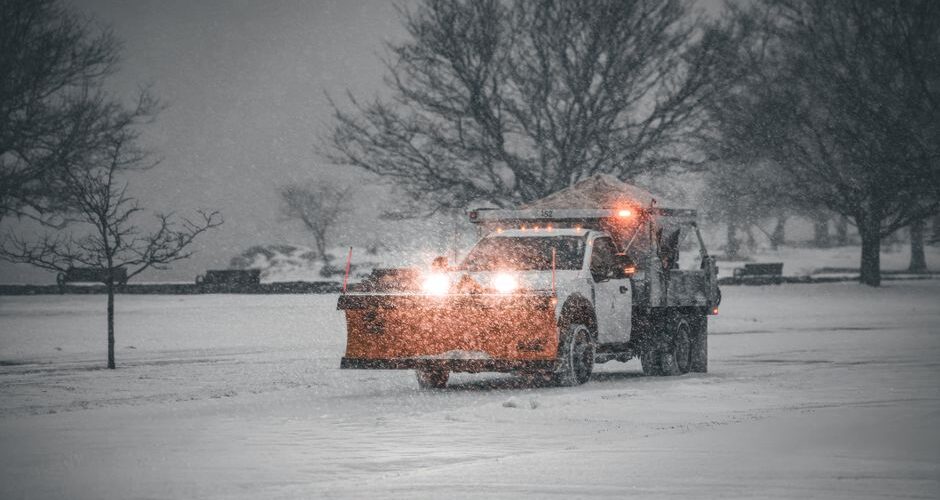
For a downtown Denver business, the parking lot is the first and last thing a customer touches on a snowy day. If the lot is a rutted mess at 8 a.m., it does not matter how good the coffee is or how fast the front desk moves. The schedule behind that lot is what decides whether the morning runs smoothly or turns into a complaint log.
Downtown lots are not suburban lots with different scenery. They are tighter, harder to access, often shared with alleys and side streets, and surrounded by city infrastructure that clears on its own timeline. A plowing schedule that works in a suburban office park will fall apart on a downtown block unless it is built for the constraints of the location. Here is how to think through the schedule, what to put in writing, and where the city’s own snow plan intersects with yours.
Why downtown Denver lots run on a different clock
Denver’s public snow effort is built around main arterials and emergency routes first. That has historically left side streets behind. Reporting in early 2023 covered Denver officials revisiting the long-standing policy of not plowing or treating side streets before, during, or after snow storms, which tells you something useful about expectations: a downtown lot can be perfectly cleared while the street that feeds it is still packed and slick.
That gap shapes your schedule. If the alley behind your building or the side street at your entrance is not passable, customers will circle, park illegally, or turn around. A well-planned schedule accounts for entrance approaches, not just the painted stalls. It also accounts for how snow arrives at the property. Drivers have noted for years that a parking garage can take on a light drift of blowing snow without ever losing the parking lines, while an exposed surface lot a block away needs full equipment work. Two properties on the same street can need completely different service levels.
The four phases every plowing schedule should cover
A schedule is not a single appointment. It is a sequence that should be defined in your contract and repeated for every event.
- Pre-treatment before accumulation. Anti-icing or pre-salting of driving lanes, ramps, and entrances slows bonding so the first plow pass does not scrape down to bare concrete.
- During-storm passes. Plows return at set accumulation intervals to keep lanes open rather than waiting for the storm to finish and pushing a foot of compacted snow.
- Post-storm cleanup. Full width clearing, stall edges, islands, cart corrals, walkway connections, and the areas equipment could not reach during the event.
- Hauling or stacking. Deciding where the snow goes once the lot has no more room to push it, and who arranges removal.
If any of those four phases is missing from the written schedule, it will be missing from the service on the night you need it most.
Building a schedule around trigger depths
Seasonal snow contracts are typically built around trigger-depth terms, meaning service starts when accumulation reaches an agreed measurement. The measurement itself is only half the agreement. The rest is the response window, the priority order of areas within the property, and what happens during a long-duration storm that crosses the trigger more than once.
Ask for those three items in writing. A schedule that says “we plow at two inches” without saying when crews arrive, which areas are cleared first, and whether return visits during the same storm are included leaves the property manager guessing at the worst possible moment. Downtown properties also benefit from a defined priority list, because not every square foot matters equally. Entrances, drop-off zones, handicap spaces, and the path from the lot to the front door usually outrank the far corner of a storage row.

A planning framework for a downtown lot schedule
The table below is a framework for organizing your own contract conversation. It is not a universal timetable, because the right timing depends on your trigger depth, your property layout, and the terms your contractor puts in writing.
| Phase | When it happens | What the crew handles | Who decides |
|---|---|---|---|
| Pre-treatment | Before accumulation begins | Lanes, ramps, entrances, walkway connections | Contractor, per contract terms |
| First pass | Once the trigger depth is reached | Primary lanes, entrances, drop-off zones | Contractor within the response window |
| Return passes | During a long storm | Repeat clearing to keep lanes open | Contractor, confirmed by contract |
| Cleanup | After snow stops | Stalls, islands, edges, corners | Contractor, verified by property manager |
| Hauling or stacking | When on-site space runs out | Removal or relocation of piled snow | Property manager and contractor together |
How city plowing affects your lot’s timing
Denver’s own schedule is worth knowing because it determines when your lot becomes reachable. When residential plowing is authorized, it takes place between 3 a.m. and 3 p.m., and crews have said they will not bring those streets to bare pavement. During a January 2023 event, the city pledged that over a 12-hour shift its plows would make one pass down the center of each side street. During a major March 2021 storm, city plows began running Saturday evening and continued clearing into Tuesday.
Read those details as a property manager would. A single center pass leaves snow along the parking lane and against curb lines, which is exactly where a plow truck needs room to push snow out of your lot. If your only access is a side street, your crew may arrive on time and still lose minutes working around snow that the city left behind. Build that into expectations, especially for early morning openings.
Denver residents and businesses can report street or public facility issues through 3-1-1, or (720) 913-1311 from outside Denver. Public parking lots and garages have a separate contact line at (720) 913-8479. Those channels are for public infrastructure. Your private lot is your own responsibility, which is why the contract matters.
Overnight clearing versus business hours
Most downtown properties want the heavy work done before the doors open, and that usually means overnight service while the lot is empty. A retail center, a hotel with round-the-clock arrivals, an office campus with early shift workers, and a distribution facility with fixed truck windows all have different tolerances for blocked lanes. The schedule should name the windows when equipment can be in the lot and when it cannot.
There is a trade-off to state plainly. Clearing a full lot in the middle of business hours takes longer, requires more spotting and cones, and puts pedestrians near moving equipment. Clearing before opening is faster and safer but leaves less margin if the storm runs long. Many properties solve this with a hybrid approach: overnight clearing as the default, with daytime touch-ups limited to entrances, walkways, and the highest-traffic lanes.

Where the snow goes once the lot is full
Downtown surface lots run out of stacking room quickly. Snow that gets pushed into the same corner for three storms turns into a frozen wall that steals stalls and blocks sight lines. That is when hauling moves from optional to necessary. Snow hauling and disposal should be addressed in the contract before the season starts, including who authorizes it, how it is billed, and where the snow is taken.
If hauling is not part of the base agreement, ask how it is triggered and who makes the call. A property manager should never learn about a hauling charge for the first time on an invoice.
Communication plan for tenants, staff, and customers
The best schedule fails quietly if nobody knows about it. A short communication plan keeps people from parking in the middle of a clearing zone or walking through an active work area.
- Post the plowing window in tenant spaces, elevator lobbies, and staff break rooms before the first forecasted storm.
- Send a storm notice when a significant event is forecast, including where cars should not be parked overnight.
- Use signage or cones at entrances during active clearing, and remove them as areas reopen.
- Give front desk and security staff a single point of contact for the contractor.
- Keep a shared log of issues so patterns show up across storms rather than being relitigated each time.
What to verify after every event
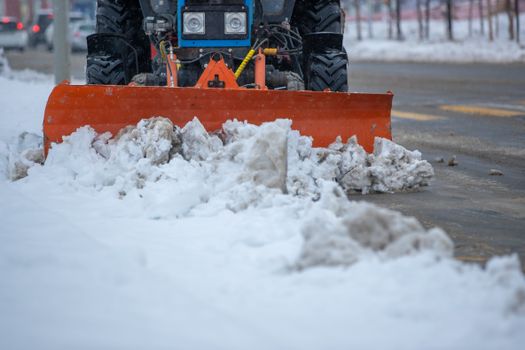
Verification is what turns a schedule into an accountable service. Timestamped photos of the lot before and after each pass, service tickets that record arrival and departure, and short notes on problem areas give a property manager real evidence when a tenant complains or an invoice is questioned. Over a season, that record also shows whether the trigger depth and response window you agreed to are actually being met, which is far more useful than a general impression that service felt slow.
Questions to ask before signing a seasonal contract
- What accumulation depth triggers service, and how is it measured on this property?
- What is the response window from trigger to arrival, and does it change overnight?
- Are return passes during a single long storm included, or billed separately?
- Which areas are cleared first, and which areas are explicitly excluded?
- Is de-icing material included, and what type is used near entrances and walkways?
- Who authorizes snow hauling, and how is it priced?
- What documentation is provided after each service visit?
- How are damaged curbs, landscaping, or equipment handled if something goes wrong?
Get the answers in writing and attach them to the agreement. A schedule that lives only in a phone conversation disappears the moment a storm stretches past midnight.
Frequently Asked Questions
Who is responsible for plowing a private parking lot in downtown Denver?
The property owner or manager is responsible for snow and ice on private parking areas. The city handles public streets and public parking facilities, which you can reach through 3-1-1 or (720) 913-1311 from outside Denver, with a separate line at (720) 913-8479 for public parking lots and garages. Your own lot needs its own contract and its own schedule.
How fast should a plow crew respond after snow starts?
There is no single standard, which is exactly why the response window belongs in your contract. What matters is that the window is defined in hours, states whether it changes for overnight events, and is measured from the moment your trigger depth is reached. Then track arrival times across the season to confirm the promise matches reality.
Does the city plow downtown Denver parking lots?
Denver’s public snow effort focuses on streets and public facilities. When residential plowing is authorized, it runs between 3 a.m. and 3 p.m., and crews have said they will not bring those streets to bare pavement. A single center pass down a side street is a different standard than a commercial lot cleared to the concrete across every stall.
What is a trigger depth in a snow removal contract?
A trigger depth is the accumulation measurement at which service begins. It is usually paired with a response window, a priority list of areas to clear first, and language about return visits during long storms. Confirm how the depth is measured on your specific property, since drifting and blowing snow can create different conditions across a single lot.
Why does my lot need clearing when the street is still snow-packed?
City plows and private crews operate on separate timelines. Denver has revisited its approach to side streets, and even when residential plowing is authorized, crews described making one pass down the center of each side street over a 12-hour shift. Your lot can be clear while the approach street still needs work, so plan entrances and customer communication accordingly.