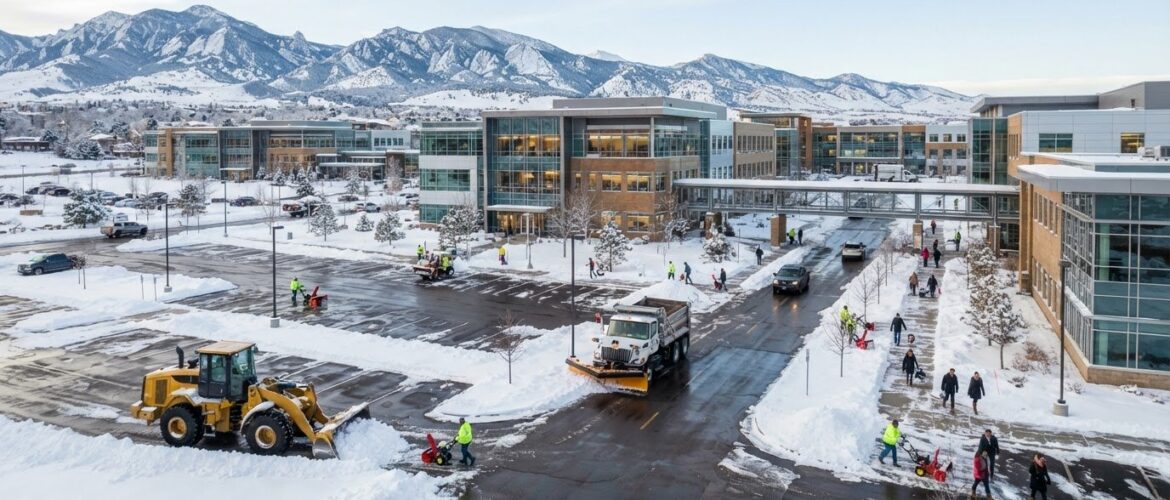
A business park can have plowed parking lots and still be difficult to access if an entrance, connecting walkway, or tenant route is missed. That’s why commercial snow removal for business parks needs to coordinate access across the property, not just address isolated plowing tasks. When employees, tenants, and visitors arrive during or after a storm, unclear coverage can leave important routes untreated.
Look beyond a provider’s promise to clear snow. A useful plan starts with a clear picture of the property and written expectations for which areas are covered and how storm response is handled. This guide explains how to compare providers, define the coverage your Denver business park needs, and prepare for winter operations.
We’ll cover how to map parking lots, walkways, carports, and entrances; what to clarify about service scope and communication; and how to assess a provider’s local experience and equipment. Snow Removal Denver is a family-owned company with more than 44 years of experience serving commercial properties across the Denver Metro area. Its fleet includes trucks, front-end loaders, and snow blowers for varied site needs.
Key Takeaways
- Build a site map showing the routes, entrances, parking areas, and pedestrian spaces your plan needs to address.
- Compare commercial snow removal for business parks providers by written coverage scope, site assessment, equipment, and relevant experience.
- Agree on priority areas and communication procedures before winter, then confirm service triggers and work sequencing directly with the contractor.
- Use a pre-season site walk-through to identify access needs, operating details, and areas that may be excluded from service.
- Review confirmed service terms before choosing a partner. Snow Removal Denver’s more than 44 years of experience is one factor to consider.
What commercial snow removal for Denver business parks needs to cover
Commercial snow removal for business parks coordinates snow and ice clearing to support access across a commercial property. It’s more than plowing separate parking lots. Employees, tenants, visitors, and delivery drivers may need to travel between buildings, entrances, walkways, and shared routes, so a plan should account for how these areas connect.
Denver-area winter conditions can change what a site needs from one storm to another. A written plan helps property teams and contractors agree on areas to address, routes to prioritize, and exclusions before winter weather arrives. For background on different commercial snow removal methods, see this overview of snow removal approaches and equipment.
For a visual look at a commercial snow event, watch this video:
Which business park areas should a snow plan include?
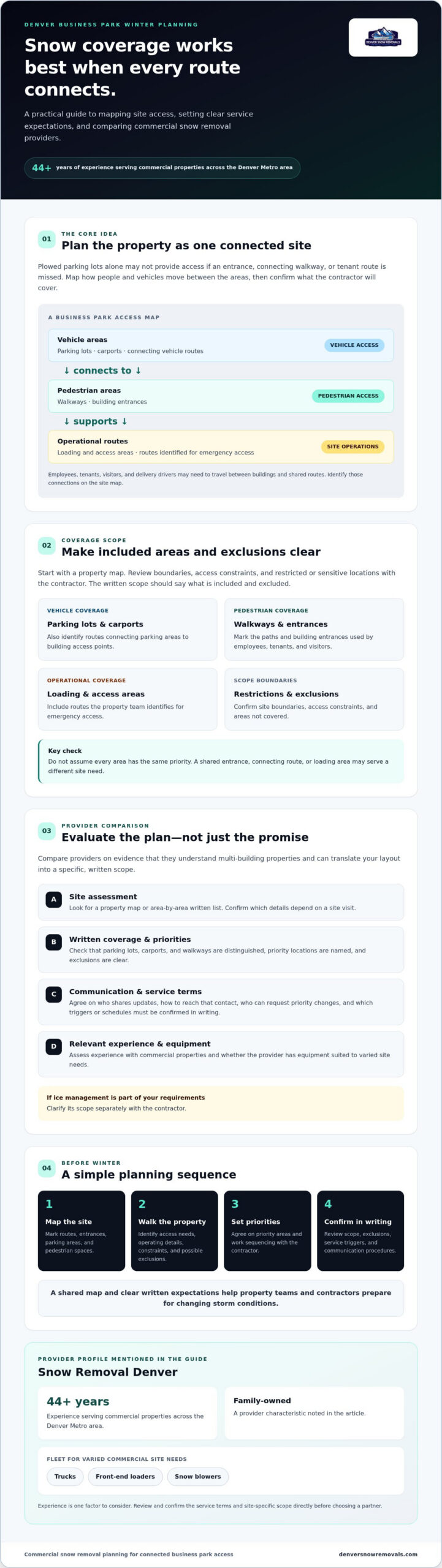
Start with a site map. Mark the areas that need review, then confirm boundaries, access constraints, and restricted or sensitive locations with the contractor. The written commercial service scope should state what is included and excluded.
- Vehicle areas: Parking lots, carports, and routes connecting parking areas to building access points.
- Pedestrian areas: Walkways and building entrances used by employees, tenants, and visitors.
- Operational routes: Loading and access areas, plus routes the property team identifies for emergency access.
Set priorities according to how the site operates. A main entrance or shared route may serve several buildings, while a loading area may have different access needs. Note these distinctions rather than assuming every area has the same priority.
Why coordinated coverage matters across a multi-building site
A cleared lot won’t provide useful access if the connecting walkway or entrance remains untreated. Vehicle routes and pedestrian paths should also be identified separately because equipment and work sequencing may differ by area. Snow Removal Denver’s commercial snow service includes parking lots, carports, and walkways, with trucks, front-end loaders, and snow blowers used for varied commercial site needs.
A business park snow plan is a written map of coordinated site coverage: it identifies included areas, priority routes, and exclusions so property teams and the contractor share the same expectations. Confirm the final scope directly before service begins.
How to evaluate a Denver business park snow removal provider
Choosing a provider for commercial snow removal for business parks takes more than comparing general service descriptions. Look for evidence that the company understands multi-building sites and can turn your property layout into a clear, written scope. A site assessment, specific coverage details, suitable equipment, a communication plan, and relevant commercial experience make proposals easier to compare.
Review proposals area by area. They should distinguish parking lots, carports, and walkways rather than treating the property as one undifferentiated space. Ask which details depend on a site visit or written agreement, and confirm exclusions before accepting the scope. For additional selection criteria, read this Denver property manager’s snow removal company guide.
What should a commercial snow removal proposal specify?
A strong proposal gives your property team a practical way to check what’s covered. Look for a property map or written list of service areas, clear priority locations, and named exclusions. Confirm who will communicate updates and how your team can reach that contact. Ask which service terms, schedules, or triggers need to be confirmed in writing rather than left to assumption.
Communication matters because site conditions and access needs can vary. Agree on how priority changes will be relayed and who on your team is authorized to discuss them. If ice management is part of your requirements, clarify its scope separately. The Federal Highway Administration’s guidance on an effective anti-icing program offers background for discussing preventive ice management with a prospective contractor. Confirm what the provider actually includes. Don’t assume a particular treatment or schedule.
How to assess equipment and experience for a large property
Ask how the provider would match equipment to your layout. Trucks may suit open parking areas, while front-end loaders and snow blowers may be relevant to different access routes and pedestrian spaces. The contractor should explain how its available fleet fits your site, not just name the machines. Snow Removal Denver serves commercial properties across the Denver Metro area and uses trucks, front-end loaders, and snow blowers for varied property needs.
Ask for examples of comparable commercial work and how the company approaches sites with multiple buildings, shared routes, and distinct pedestrian areas. If references or examples aren’t available, focus on the provider’s explanation and how well it addresses your site map. Snow Removal Denver is family-owned and has over 44 years of snow plowing and removal experience, a relevant background to consider, not a promise of specific results.
Once you’ve outlined the property’s areas and priorities, you can request a commercial snow removal estimate based on those requirements.
How to plan storm coverage, priorities, and ice management
A storm plan is most useful when everyone knows which areas come first and how changes will be communicated. Before winter weather begins, bring property management, facilities staff, and tenant representatives together to rank site priorities. A clear sequence helps the contractor understand how the property operates, while written expectations reduce uncertainty during a storm.
For commercial snow removal for business parks, priorities should reflect how the site is used, not just its layout on a map. Consider which entrances and vehicle routes serve the most buildings, where employees and visitors walk, and whether tenant schedules or loading activity affect access. Record the agreed priorities and identify who can contact the contractor if conditions or site needs change.
Set site priorities before the first storm
Walk the property with the people who know its daily operations. Rank main entrances, vehicle routes, parking areas, and pedestrian paths. Note operating hours, tenant schedules, and locations that need special coordination. Then confirm who will send updates, which contact method to use, and how revised instructions will reach the contractor. Review the process before the season so everyone involved understands it.
Ask the contractor to explain any service triggers and the expected work sequence. These details can depend on the provider’s agreement and your site plan, so confirm them directly and put confirmed terms in writing. For additional context on provider planning and industry practices, consult SIMA industry standards.
Coordinate snow removal with ice management
Snow clearing moves accumulated snow from designated areas, while ice management addresses icy surface conditions. They’re related needs, but one shouldn’t be assumed to include the other. Ask what ice management work is included in the proposed scope and what requires separate confirmation. Treatment needs can vary with site layout and conditions, so clarify the provider’s approach rather than assuming a particular material, timing, or result.
Give the contractor a way to flag areas where conditions may need further attention, and agree on who reviews that information and communicates next steps. Keep the discussion tied to specific parts of the property, such as pedestrian access or shared routes. The Denver ice management services guide offers a focused discussion of ice risks and planning considerations.
Once your priorities and questions are documented, share them when you request a commercial snow removal estimate. A clear outline gives the provider a better basis for discussing site coverage and confirmed service terms.
A business park snow removal checklist for comparing service plans
Before choosing a plan, give each provider the same site information and compare what each proposal actually includes. A short checklist can reveal gaps early, especially when a business park has shared routes, multiple buildings, and different operating needs. Arrange a site walk-through so providers can review access, layout, and operating details rather than relying on assumptions from a basic property description.
Use these points to prepare for the walk-through and review proposals for commercial snow removal for business parks:
- Site map: Mark property boundaries, buildings, parking areas, carports, pedestrian routes, entrances, and loading or access points.
- Included areas: Check that each proposal identifies covered locations and clearly lists exclusions.
- Priorities: Confirm how service areas are ranked and who can approve changes to those priorities.
- Communication: Identify who handles storm updates, access issues, and service questions, and how your team should reach them.
- Equipment: Ask what equipment the provider expects to use and how it fits the site’s different areas.
- Written terms: Confirm which schedules, service triggers, and sequencing details need to be agreed in writing.
For wider operational planning beyond snow service, review the Denver business winter storm preparedness guide. It can help property teams consider how winter weather planning fits into broader business continuity preparations.
Questions to ask before selecting a service plan
Ask providers to walk you through their proposed coverage using your site map. Which areas are included? How are priorities set, and who approves changes? How will your team receive storm updates or report access problems? Finally, ask which schedule or trigger details require written agreement. Record the answers so you can compare proposals consistently.
How to compare proposals without focusing only on price
Compare each proposal against the same site needs. A plan may appear to cover the property but leave out a walkway, carport, or shared route. Review stated coverage, service assumptions, equipment, communication procedures, and exclusions side by side. If a proposal is unclear, ask for clarification rather than assuming an unmentioned area or service is included.
Keep a list of unresolved questions and ask each provider to address them before you decide. Once your site requirements are organized, request a commercial snow removal estimate from Snow Removal Denver based on the areas and priorities you’ve identified.
Choose a Denver commercial snow removal partner and prepare your site
The right partner for commercial snow removal for business parks should be able to discuss your whole property, not just one lot or entrance. Before deciding, compare proposed site coverage, agreed priorities, communication procedures, equipment, and confirmed service terms. Make sure the written scope matches the routes and work areas your property team identified, and ask about unresolved details before winter weather arrives.
Snow Removal Denver is a family-owned company with over 44 years of snow plowing and removal experience, serving commercial properties across the Denver Metro area. That history is a relevant trust signal, not a guarantee of response time or specific results. Confirm service details directly with the provider and document agreed coverage and expectations.
What to prepare before requesting a commercial estimate
Organize the details a provider needs to understand your site and discuss an appropriate scope. Bring a property map and a list of areas to consider. Note operating hours and known access constraints, then mark priority entrances, parking sections, walkways, and loading areas. Prepare questions about storm communication, service scope, service triggers, and ice management. Clear information keeps the estimate discussion focused on your property’s needs.
A site walk-through lets the provider review access and operating details in context. Point out connections between buildings and explain which routes serve employees, tenants, visitors, or deliveries. Ask the provider to identify areas that need clarification before the scope is finalized.
Discuss a business park’s snow removal needs with Snow Removal Denver
Snow Removal Denver’s commercial service covers parking lots, carports, and walkways. Its fleet includes trucks, front-end loaders, and snow blowers. Share your site map and priorities to discuss how the service scope and available equipment relate to the areas you need addressed. Confirm which locations are included, what is excluded, and how communication and any ice management needs will be handled.
Prepare your property details and discuss the coverage you need. You can request an estimate for your commercial property.
Prepare your business park for a more reliable winter
A strong winter plan starts with coordinated coverage. Map the areas that need service, set priorities for essential routes, and make sure the written scope identifies what’s included and excluded. Confirm communication procedures and service terms with the provider before winter weather begins, including any triggers or work sequencing that haven’t yet been agreed.
Choosing commercial snow removal for business parks means finding a provider equipped to address the needs of the whole site. Snow Removal Denver is a family-owned company with over 44 years of experience serving commercial properties across the Denver Metro area. Its fleet includes trucks, front-end loaders, and snow blowers for varied property requirements.
Bring your site map, access needs, and priority areas into the conversation to help define a suitable scope. Request an estimate for your Denver business park and discuss the service details your property needs. Clear expectations can help your team approach winter with greater confidence.
Frequently Asked Questions
What should commercial snow removal for a business park include?
It should clearly define which areas are covered and how they connect to support access across the property. A plan may identify parking lots, carports, walkways, building entrances, and loading or access routes. For commercial snow removal for business parks in Denver, document priority areas, property boundaries, and exclusions with the provider. Ask separately whether ice management is included, since snow clearing and ice management are related but distinct service needs.
How do I choose a snow removal company for a business park?
Choose a provider that assesses your site and gives you a written, area-specific scope. Compare stated coverage, priorities, communication procedures, equipment, exclusions, and relevant commercial experience. Ask how trucks, front-end loaders, or snow blowers may suit different areas, and request examples of comparable work if available. Confirm service triggers, schedules, and sequencing directly with the contractor instead of assuming they’re included. Check that the provider serves your Denver-area property.
When should a business park arrange commercial snow removal?
Start planning before winter weather begins, so property teams have time to map the site, identify critical routes, and compare written scopes. A pre-season discussion can also clarify how storm updates will be handled and which service triggers or work sequences need to be agreed in writing. Don’t wait until a storm is underway to identify entrances, parking areas, walkways, or access constraints. Confirm the provider’s schedule and terms directly.
Can one snow removal contractor handle multiple buildings and parking lots?
One contractor may be able to cover multiple buildings and parking areas, but confirm the capacity and scope for your specific site. Provide a map showing shared routes, entrances, carports, walkways, and loading areas. Ask how the contractor’s equipment fits different parts of the property and whether each area is included in the written plan. Snow Removal Denver serves commercial properties across the Denver Metro area, with trucks, front-end loaders, and snow blowers.
How should a business park prioritize snow removal areas?
Rank areas according to how people and vehicles use the property. Property teams might place shared entrances and main vehicle routes high on the list, then prioritize parking sections, pedestrian paths, and loading areas according to operating needs. Consider employee, tenant, and visitor schedules, along with any routes requiring special coordination. Agree on priorities with stakeholders, document them, and confirm who can communicate changes to the contractor if site conditions shift.
Does commercial snow removal include ice management?
Not automatically. Snow removal addresses accumulated snow in the areas defined by the service scope, while ice management addresses icy surface conditions. Ask the contractor what ice management work is offered, which locations it covers, and what needs separate confirmation. The appropriate approach can depend on the property and conditions, so clarify the agreed service terms in writing. Don’t assume a snow plowing plan includes a particular ice treatment, timing, or outcome.
What information should I provide when requesting a business park snow removal estimate?
Share a property map and a list of areas you want considered, such as parking lots, carports, walkways, entrances, and loading routes. Identify priority locations, operating hours, tenant or visitor access needs, and known restrictions. Include questions about equipment, storm communication, service triggers, exclusions, and ice management. Clear site information helps the provider understand your requirements and discuss a suitable scope. Snow Removal Denver offers commercial snow removal across the Denver Metro area.