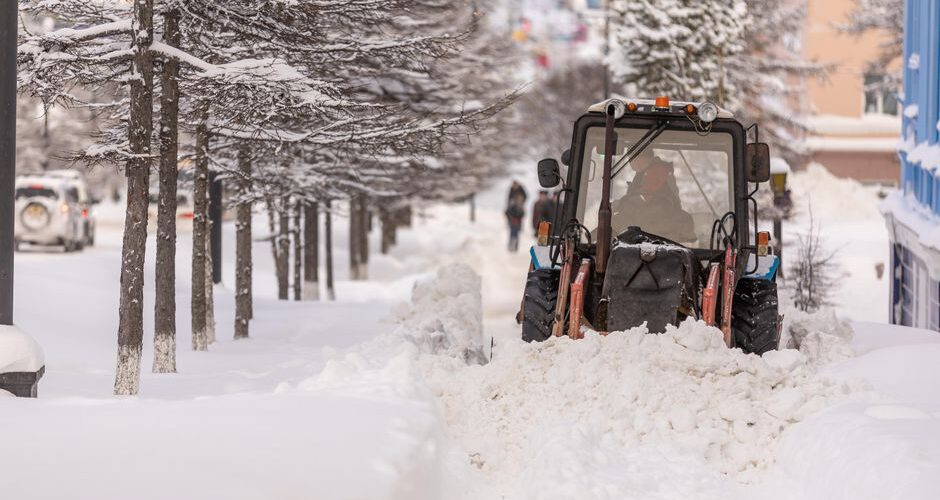
Sidewalks are where a snow contract gets judged. A property manager can explain away a parking lot that gets cleared second, but a tenant who steps onto an unshoveled walk outside the front door remembers it all winter. That is why the equipment list for sidewalk work looks almost nothing like the equipment list for lots, and why a Denver property usually needs both on the same site.
Walkways are narrow, bordered by curbs, landscaping, handrails, storefront glass, and pedestrian traffic that does not stop for a storm. Full-size trucks and loaders simply cannot get to most of that surface without damaging something. The machines that can are a distinct category, and knowing the categories helps property managers ask better questions before signing a seasonal agreement.
Why Sidewalks Are the Hardest Part of a Denver Snow Event
A parking lot gives a plow operator room to build speed and push snow into a pile. A sidewalk gives an operator inches of clearance, tight turns, and a long list of things that cannot be hit. Add a thaw that turns packed snow into slush and a refreeze that turns that slush into ice, and the work changes from pushing snow to managing a bonded surface.
Snow removal contractors describe sidewalk work as a cleaning job rather than a hauling job. The goal is to clear down to the concrete so sun and de-icing material can finish the job, rather than leaving a thin layer that packs down under foot traffic and stays until spring. That standard is what drives the choice of machines.
The Main Classes of Commercial Sidewalk Equipment
Most commercial sidewalk fleets are built from a handful of machine types. Each one solves a different problem, and most established contractors run more than one of them.
Compact Tractors With Multiple Attachments
Ventrac tractors are built for exactly this work. They are sized for adept maneuvering on sidewalks while still being powerful enough to move heavy snowfalls, and they can clear snow down to concrete. The Ventrac SSV, a sidewalk snow vehicle, uses an industry-first 34 inch machine width, which lets it reach the tightest areas of a property and makes sidewalk snow management practical on Colorado sidewalks specifically. Published specifications for the SSV list a Vanguard engine at 23 horsepower, a 3.3 gallon gas fuel capacity.
The attachment system is what makes this class flexible. One tractor can run a broom, a blade, or a blower, then switch to sweeping or de-icing duty when the storm ends. That multi-tasking ability is why compact tractors show up on office campuses, HOA common areas, and mixed-use properties where the sidewalk network is longer than a single building frontage.
Ride-On Sidewalk Machines
The BOSS Snowrator is a patented, right-size solution designed to make quick work of snow and ice covered sidewalks, and it is built to be maneuverable and to multi-task. A common configuration pairs a 4 foot straight blade with a 20 gallon brine tank and a 429 Kohler motor. The blade handles the snow, and the tank lets the operator put down liquid de-icer on the same pass, which matters on refreeze nights.
Operator opinions on ride-on units vary. In a plowsite forum thread on the best sidewalk ride-on machines, one operator described the Snowrator as slow, ugly, and jerky, then called the BOSS SR MAG nice, with all the attachments you would need. That is the nature of this category: a machine that is perfect for a shopping center sidewalk loop may be miserable on a long straight industrial walkway. Fleet choice depends on the property.
Municipal-Style Sidewalk Tractors
Trackless municipal tractors such as the MT7 are built rugged and ready for the most severe conditions. Manufacturers list sidewalk snow removal alongside mowing, sweeping, de-icing, and landscaping as core tasks. These machines tend to appear on larger accounts with year-round grounds contracts, where one power unit justifies its cost across four seasons of attachments.
Power Brooms, Blowers, and Walk-Behind Units
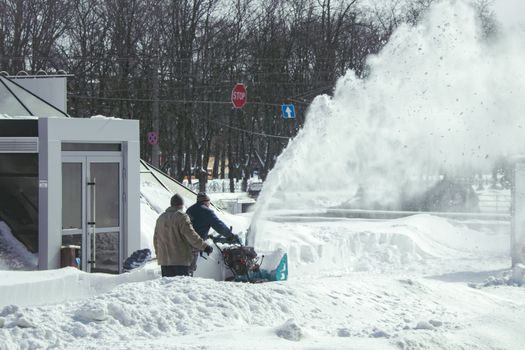
Toro builds commercial snow removal equipment across a wide range, from professional power brooms to two-stage snow blowers. This is the layer of the fleet that handles the leftovers: entryways, matted areas against a wall, routes between bollards, and any spot where a ride-on machine physically will not fit. Power brooms are also the tool of choice for clearing a light dusting without leaving a blade edge mark on decorative concrete.
Skid Steers and Compact Loaders
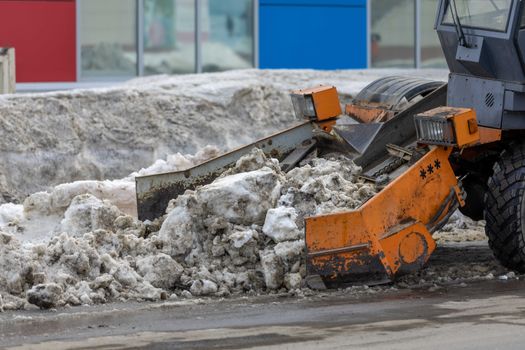
Bobcat positions snow removal equipment for the full property, noting that whether the job is sprawling parking lots or narrow sidewalks, the right machine paired with the right attachment tells the snow where to go. In practice, skid steers and compact loaders are the bridge between the two worlds. They move bulk snow in lots, clear the ramps and connections where a sidewalk meets a drive aisle, and handle the heavy end of snow hauling. Sidewalk crews then follow with machines narrow enough to finish the walk without chewing up edges.
Matching Machine Width to Property Layout
Width is the single most useful specification a property manager can ask about, because it determines which surfaces a machine can actually reach.
| Machine class | Reference from equipment makers | Where it earns its place |
|---|---|---|
| Compact tractor (SSV style) | 34 inch machine width, 23 hp, 3.3 gal gas | Long sidewalk networks, tight interior walkways, multi-season attachment use |
| Ride-on sidewalk machine | 4 foot straight blade with a 20 gallon brine tank | Sidewalk loops with refreeze risk where liquid de-icer saves a second pass |
| Municipal sidewalk tractor | Built for severe conditions; snow, sweeping, de-icing, landscaping | Large sites with year-round grounds work |
| Power broom or two-stage blower | Commercial grade range from power brooms to two-stage blowers | Entryways, light snow, delicate surfaces, spaces no ride-on can reach |
| Skid steer or compact loader | Attachments configured to the space | Lot work, transitions, ramps, and snow hauling |
Attachments Do More Work Than the Machine
A tractor without attachments is a lawn mower in a snowstorm. The attachment inventory is what determines how fast a crew can clear a site and how well the result holds up overnight. The most common lineup on commercial sidewalk work includes straight blades, snow blowers, rotary brooms, and brine or de-icing tanks.
- Straight blades for bulk pushing on wide walks and building aprons.
- Two-stage blowers for moving snow away from walls and planting beds instead of piling it against them.
- Power brooms for light accumulations, matted areas, and surfaces where a steel edge is not welcome.
- Brine tanks for pre-treating and for attacking the refreeze that follows a Denver afternoon melt.
Property managers evaluating a seasonal contract can ask for the attachment list by location. A contractor who can describe which machine and which attachment handles the north-facing entryway and which one clears the walk along the loading dock is a contractor who has planned the site rather than promised it.

Pre-Treating and Ice Control on Walkways
Liquid brine has become a standard part of sidewalk programs because it can go down before snow starts and again after clearing. The 20 gallon brine tank configuration on a ride-on unit is a good illustration of the idea: the de-icing tool travels with the snow tool, so the operator does not need a separate trip to address a walkway that is already glazing over.
Solid materials still have a role on stubborn ice, and rotary brooms remain the safest way to break a bond without scarring concrete. The exact material and application rate for a given property should be confirmed with the contractor and, where the property is subject to local rules, verified against the applicable municipal requirements.
What Denver Property Managers Should Ask Before Signing
Equipment questions are a practical filter for evaluating any commercial snow removal proposal in the Denver metro area. The answers reveal whether the contractor has the fleet to serve the property or plans to rely on the same trucks used on parking lots.
- What is the machine width used on our sidewalks, and which walkways can it physically reach?
- Which attachments are assigned to our site, and do they change based on storm type?
- Do you pre-treat walkways, and with what equipment?
- How many sidewalk units are committed to our property during a metro-wide event?
- How is the trigger depth defined in the seasonal contract, and who decides when it has been met?
Pricing for sidewalk snow removal, licensing requirements for snow contractors, and equipment purchase costs are not standardized and vary by market. Any property manager weighing bids should confirm those details directly with the contractor and with the relevant local authority rather than relying on a general number.
Seasonal Contracts, Trigger Depth, and Fleet Planning
Sidewalk equipment sits idle most of the year, which is why so many commercial contracts are seasonal and structured around a trigger depth. A trigger depth defines the accumulation at which the contractor deploys. Contractors who commit to a low trigger need more sidewalk-capable machines and more operators on standby, and that commitment is what a property manager is really buying.
For a Denver property with a large walkway network, the most useful planning conversation happens in late summer or early fall, before the first measurable event. That is when machine assignments, attachment configurations, staging locations, and pre-treatment plans can be set without a storm forcing the decision. A fleet that is already matched to the property beats a fleet that arrives and improvises.
Frequently Asked Questions
What is the best machine for clearing narrow commercial sidewalks?
A compact sidewalk tractor is usually the answer. The Ventrac SSV runs a 34 inch machine width, described as an industry-first, which lets it reach the tightest areas of a property and manage snow on Colorado sidewalks. Walk-behind blowers and power brooms cover the remaining spots that even a narrow ride-on machine cannot physically access.
Do sidewalk machines handle ice as well as snow?
They can when they carry the right attachments. The BOSS Snowrator pairs a 4 foot straight blade with a 20 gallon brine tank, so liquid de-icer travels with the plow. Trackless municipal tractors list de-icing among their core tasks. Rotary brooms and blowers also help break ice bonds without damaging concrete.
Can one machine clear both parking lots and sidewalks?
Bobcat markets snow equipment for sprawling parking lots and narrow sidewalks alike, with attachments matched to the space. In practice most commercial contractors separate the two jobs, because a machine narrow enough to finish a walkway cleanly is rarely fast enough to clear a large lot efficiently before tenants arrive.
What should I ask a contractor about their sidewalk fleet?
Ask for machine width, attachment assignments by walkway, pre-treatment equipment, and how many sidewalk units are committed to your property during a metro-wide storm. Also confirm the trigger depth written into the seasonal contract. Those four answers tell you more about winter performance than a low bid does.
Does pre-treating sidewalks really reduce ice problems?
Pre-treating puts de-icing material down before snow bonds to the concrete, which makes the first clearing pass faster and reduces the refreeze that follows a melt. Equipment with an onboard brine tank lets the operator treat and clear on the same trip. Confirm the specific material and application approach with your contractor.