

What if the most important part of a garden’s snow plan isn’t where to plow, but where snow can safely go? Commercial snow removal for botanical gardens must keep priority routes open without sending plows or piled snow into sensitive beds, trees, and garden features.
Snow and ice can interrupt visitor access and daily operations. A practical plan identifies which entrances and walkways need attention first, how visitors move through the site, and which landscape boundaries crews need to protect.
This guide explains how to plan snow and ice removal around a botanical garden’s access needs and layout. You’ll learn how to set route priorities, coordinate snow placement, and account for Denver’s freeze-thaw conditions. Snow Removal Denver brings more than 44 years of experience in commercial snow and ice removal across the Denver Metro area, with trucks, front-end loaders, and snow blowers to support site-specific plans.
Key Takeaways
- Build commercial snow removal for botanical gardens around a site map that separates visitor routes, service areas, and planted zones.
- Rank entrances, crossings, and narrow paths by access needs so crews can focus on the routes that matter most during a storm.
- Consider the space when planning equipment use: broad drives, paved lots, and confined walkways have different requirements.
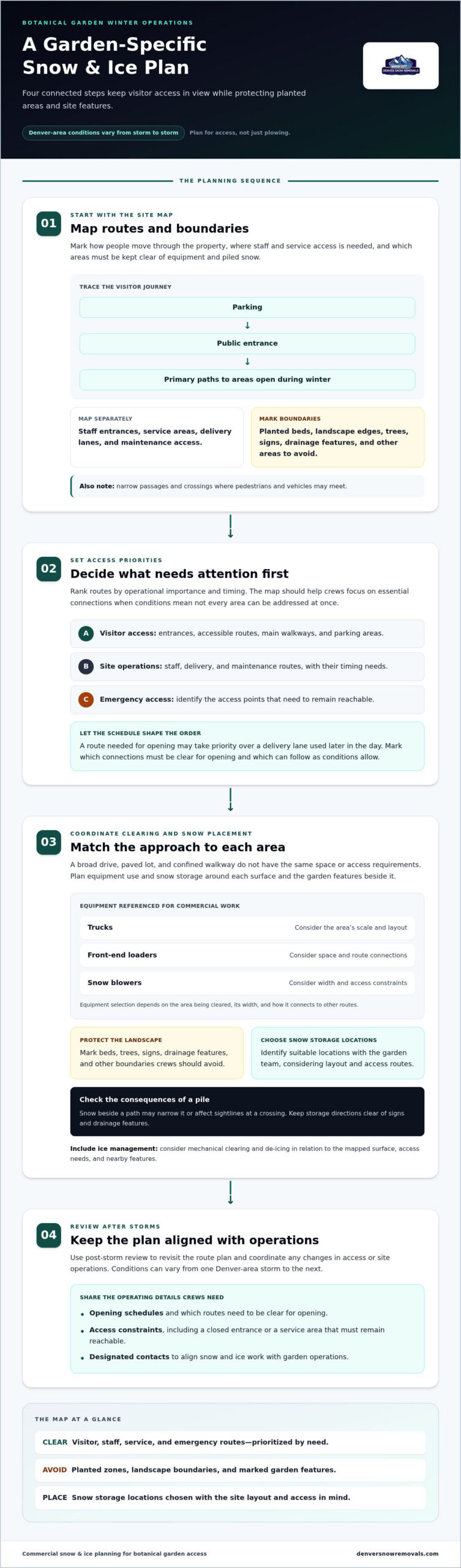
- Use a four-step winter plan: map routes, set priorities, coordinate operations, and review the plan after storms.
- Share opening schedules, access constraints, and designated contacts to align commercial snow and ice removal with garden operations.
Why commercial snow removal for botanical gardens needs a property-specific plan
Winter weather can make visitor routes difficult to use just as staff need to open the site, reach facilities, and keep daily operations moving. A single plow route may work for a simple lot, but botanical gardens often combine paved entrances, winding paths, service lanes, and parking areas beside planted zones and other site features.
Commercial snow removal for botanical gardens is access planning across distinct site areas, with route priorities and snow placement considered before a storm. A site map helps separate surfaces to clear from landscape boundaries to avoid. It also shows how visitor circulation, staff access, and opening hours shape the plan.
This video offers a general look at commercial snow removal work:
Which garden areas should a snow plan prioritize?
List the entrances, accessible routes, main walkways, parking areas, and emergency access points. Then distinguish public routes from staff, delivery, and maintenance access. These routes serve different purposes and may have different timing needs. Rank them by operational importance, then use that order to guide clearing priorities when conditions require crews to focus on particular areas first.
Opening hours matter. A route visitors need at opening may take priority over a delivery lane used later in the day. Mapping visitor circulation and staff movement helps prevent a clear entrance from leading to a blocked path or inaccessible work area.
Why do planted areas change the planning conversation?
Beds, landscape edges, signs, trees, and other garden features affect where equipment travels and where cleared snow can go. Mark these boundaries on the route map so crews can distinguish paved surfaces from planted areas. Identify snow storage locations as part of the plan, taking the garden’s layout and access routes into account.
The snow removal methods overview describes approaches including mechanical clearing and de-icing. For a garden, the practical question is how each approach fits the mapped surface, its access needs, and nearby features. Snow Removal Denver provides commercial snow plowing and ice management planned around the property’s identified priorities.
How Denver commercial snow removal plans account for paths, visitors, and landscapes
A garden’s winter access plan should reflect how people and vehicles move through the property. A site walk helps the garden team identify route connections, narrow passages, and areas where snow clearing could affect visitor flow. A route map turns those observations into practical guidance instead of assuming one plow path will suit every surface.
Denver-area winter conditions can vary from one storm to the next. The plan should give crews clear priorities while allowing the property team to communicate changes, such as a closed entrance or a service area that must remain reachable.
How should visitor routes and service access be mapped?
Map the full visitor journey, from parking to the public entrance and along primary paths to areas open during winter. Mark staff entrances and service areas separately. Note pinch points where pedestrians and vehicles may cross paths, such as a delivery lane beside a walkway or an entrance used by both visitors and staff.
A priority map helps crews focus on essential routes first. Show which connections need to be clear for opening, which support staff or deliveries, and which can follow as conditions allow. This gives the garden team a practical way to coordinate access needs instead of treating every paved surface as equally urgent.
How can snow placement account for garden features?
Plan snow placement before a storm. Mark planting beds, drainage features, signs, and other areas the property team wants crews to avoid. Then identify suitable snow storage locations with the team. The right placement depends on the garden’s layout and how cleared routes connect.
Clear notes help crews avoid creating operational problems. A mound beside a path may narrow the route or affect sightlines at a crossing. A pile near a sign or drainage feature may also create an issue. The plan should distinguish paved areas for clearing from planted zones and other site features, and give crews clear directions for snow storage.
These details connect access priorities with the property’s boundaries. Snow Removal Denver provides commercial snow plowing and ice management in the Denver Metro area. A site-specific discussion can turn the garden’s map and operating needs into a practical service plan. Learn more about Denver commercial snow removal.
How to evaluate commercial snow removal for a botanical garden
Evaluate a snow removal plan by how well it matches the garden’s surfaces, access priorities, and winter conditions. Commercial snow removal for botanical gardens involves more than clearing a parking lot: the approach for a broad drive may not suit a narrow pedestrian path, and ice management needs its own place in the plan.
Snow Removal Denver uses trucks, front-end loaders, and snow blowers for commercial work. Equipment considerations depend on the area being cleared, its width, and how it connects to other routes. Use this framework to assess how a plan addresses the property:
| Evaluation area | What to consider |
|---|---|
| Property coverage | Does the plan address parking, broad drives, entrances, walkways, and relevant service areas? |
| Equipment fit | Are equipment choices considered in relation to each area’s scale, width, and layout? |
| Route priorities | Does the plan identify which routes support visitors, staff, and essential site access? |
| Ice management | Is attention to slippery entrances and walkways considered alongside snow clearing? |
What equipment considerations matter across garden surfaces?
Consider equipment in context, not as a one-size-fits-all checklist. Trucks and front-end loaders may suit larger paved areas, while snow blowers may be useful for other clearing needs. A garden’s site map can show where route width, turns, nearby features, and connections between surfaces matter. Avoid assuming that one machine is appropriate for every path or choosing equipment based on size alone.
For a broader overview of commercial coverage, see the commercial snow removal guide.
How should ice management fit the evaluation?
Snow clearing and ice management address different access concerns. A route may look open while slippery conditions at an entrance or crossing still affect visitors and staff. Include these locations in the winter access plan, especially where people move between parking areas, paths, and building entrances. Learn more in the Denver ice management guide.
Compare plans by how they fit the garden’s layout and operating needs. Snow Removal Denver provides commercial snow plowing and ice management in the Denver Metro area, using trucks, front-end loaders, and snow blowers for different commercial property areas.
A practical Denver winter plan for botanical garden snow removal
A useful winter plan gives garden staff and snow crews a shared sequence to follow when conditions change. For commercial snow removal for botanical gardens, preparation means turning access needs into clear instructions, then using storm experience to improve the plan for next time.
What information should the garden organize before winter?
Gather the information crews need to understand the property and its operating priorities. Keep it concise and easy to update:
- Site map: Mark entrances, parking, main paths, service areas, and relevant landscape boundaries.
- Priority routes: Identify which paths and access points matter most for visitors, staff, and deliveries.
- Access constraints: Note restricted areas, narrow routes, vehicle entry points, and places requiring special attention.
- Operating schedule: Share opening hours and important changes to access during winter operations.
- Contact roles: Designate a garden contact and clarify who communicates route or schedule updates.
Keep these details together so the garden team and snow removal crew can work from the same plan. Clear access instructions reduce uncertainty if a storm affects the usual entrance or a service area.
How can the plan be reviewed after a storm?
Once conditions allow, review how the plan worked in practice. Note which priority routes stayed accessible, where pedestrian or vehicle movement became congested, and whether snow placement affected access. Staff feedback can reveal issues that are easy to miss on a map, such as a path that becomes difficult to navigate when visitors gather near a crossing.
Use those observations to adjust route rankings, site notes, or contact details before the next winter weather event. A brief review makes the plan more useful over time instead of treating it as a document to file away after autumn preparation.
A garden’s snow plan also fits into broader business storm preparation. Staff communication, operating decisions, and access priorities can support continuity alongside snow and ice removal. For wider planning considerations, see the Denver business winter preparedness guide.
Snow Removal Denver provides commercial snow plowing and ice management for Denver Metro properties. Plan commercial snow removal for your garden around its routes, schedule, and operating needs.
Working with Snow Removal Denver for commercial garden snow removal
A botanical garden’s winter service plan should connect mapped access priorities with commercial snow plowing and ice management. Make the property’s layout, operating needs, and important visitor and staff routes central to the plan. Clear priorities help crews focus on access while giving garden operators a practical way to communicate site constraints.
Snow Removal Denver is a family-owned commercial snow removal business serving the Denver Metro area, with over 44 years of experience. Its equipment includes trucks, front-end loaders, and snow blowers. These resources support work across different commercial property areas, while the garden’s route map helps identify which spaces need attention and how they connect.
What should the service plan clarify for garden operators?
A useful plan makes responsibilities and access needs clear. Garden operators can organize the key details into a concise site brief:
- Priority areas: Identify entrances, primary visitor routes, parking, and essential staff or service access.
- Access constraints: Mark narrow paths, restricted zones, landscape boundaries, and locations where vehicle and pedestrian movement may meet.
- Property contacts: Name the person who can communicate site updates and the appropriate contact for service coordination.
- Ice management needs: Include entrances and walkways where slippery conditions could affect visitor and staff movement.
This project-specific information gives commercial snow removal a clear operational focus. It also keeps the central goal in view: maintaining access through the areas the garden has prioritized. For related operational context, read the professional snow plowing techniques guide.
What is the next step for a Denver botanical garden?
Bring the site map, winter access priorities, operating schedule, and known constraints into a planning discussion. That gives the service plan a practical starting point, grounded in how the garden functions rather than in a generic route. Snow Removal Denver works with commercial properties across the Denver Metro area, aligning commercial snow removal and ice management with each property’s access needs.
Discuss your garden’s layout and winter access priorities with Snow Removal Denver. Discuss commercial snow removal for your Denver property.
Plan Ahead for Safer Winter Access
Reliable commercial snow removal for botanical gardens starts with a site-specific plan. Map priority entrances and visitor routes, distinguish them from staff and service access, and account for landscape boundaries when planning snow placement. Clear priorities help crews focus on the routes that support garden operations, while ice management addresses slippery areas that can affect visitors and staff.
Snow Removal Denver is a family-owned commercial snow and ice removal provider serving the Denver Metro area, with over 44 years of experience. Its fleet includes trucks, front-end loaders, and snow blowers to support work across different commercial property areas. A shared site map, access constraints, operating schedule, and designated contacts give the service plan a practical foundation.
Ready to align winter service with your garden’s layout and access needs? Discuss commercial snow removal for your Denver property. With clear priorities and experienced support, your team can approach winter weather with greater confidence.
Frequently Asked Questions
What makes snow removal for a botanical garden different?
A botanical garden needs a snow plan that accounts for visitor routes, service access, parking, and planted areas. Commercial snow removal for botanical gardens should distinguish paved surfaces for clearing from landscape boundaries and features that shape equipment movement or snow placement. Mapping entrances, paths, and service lanes helps crews understand access priorities. Coordinate landscape-specific requirements with the garden’s grounds team and include relevant directions in the site plan.
How can a botanical garden protect planted areas during snow removal?
Map planting beds, landscape edges, signs, drainage features, and other areas that need consideration before winter weather arrives. Share these boundaries alongside priority entrances and paths so they inform route planning and snow placement. Clearly distinguish paved surfaces designated for clearing from planted zones, and mark suitable snow storage locations on the site plan.
Which areas should commercial snow removal prioritize at a botanical garden?
Priorities depend on the garden’s layout and daily operations. Assess entrances, accessible routes, main visitor paths, parking, staff access, and service lanes. Then rank routes according to their importance for access and keeping the property functioning. For example, a path connecting visitor parking to an open entrance may take priority over a less-used route. A clear property map helps communicate those priorities to the snow removal team.
Can snow plows be used on every botanical garden path?
No, equipment suitability depends on each route’s width, layout, and nearby features. A broad drive differs from a narrow pedestrian path bordered by planting beds or signs, so the plan should identify these distinctions before clearing begins. Snow Removal Denver uses trucks, front-end loaders, and snow blowers for commercial snow removal work. The site map helps align equipment considerations with the areas and access needs of a Denver property.
When should a botanical garden plan commercial snow removal?
Plan before winter weather arrives, while there’s time to map routes, rank priorities, share operating hours, and identify property contacts. Include how visitor access and staff movement may change during winter operations. Preparing these details gives the garden and snow removal team a shared reference when snow or ice affects access. Reviewing the plan ahead of storms also helps staff communicate route needs clearly.
How does ice management support botanical garden access?
Ice management addresses slippery conditions that snow clearing alone may not resolve. Include entrances, walkways, crossings, and other areas with regular pedestrian movement in the winter access plan. Identify where ice concerns could affect visitors or staff, then coordinate those locations with the garden’s operating priorities. Snow Removal Denver provides commercial ice management in the Denver Metro area. Treatment choices should account for the property’s surfaces and specific site needs.
What information should a garden provide when arranging commercial snow removal?
Share a site map, priority entrances and routes, parking and service access, restricted areas, operating hours, and the property contact responsible for coordination. Mark landscape boundaries and features that affect vehicle movement or snow placement. This information gives the snow removal team a clearer understanding of the garden’s layout and winter access priorities. For Denver-area properties, keeping these details together makes it easier to coordinate commercial snow and ice removal around daily operations.