
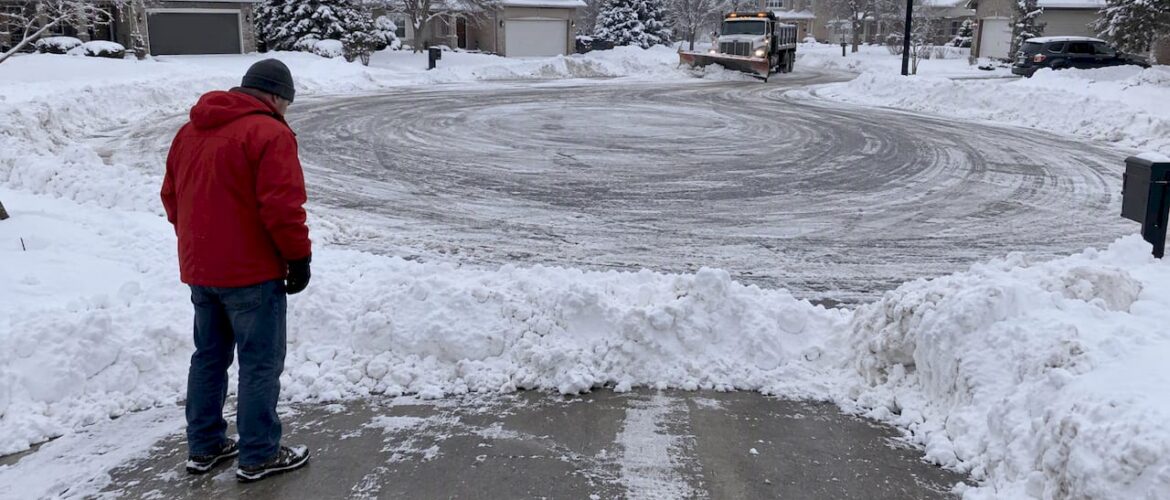
Expect a berm across your driveway apron after most plow passes. Cul-de-sacs get plowed differently than straight streets, and the snow has to go somewhere. The single most effective homeowner action is to shovel or snowblow your cleared snow to the right side of your driveway as you face the street, leaving an open channel the plow can use as an off-ramp instead of a wall it has to push through.
TL;DR:
- Using the off-ramp technique by shoveling snow to the right side of your driveway can significantly reduce berm buildup after plow passes.
- Most cul-de-sac plowing involves either circular or narrow lane methods, with heavy snow often requiring hauling out rather than redistribution.
- Berm formation in cul-de-sacs is due to geometric constraints, where the shorter curb length concentrates snow around driveways more than on straight streets.
- Homeowners should pile cleared snow on permeable surfaces away from storm drains and consider haul-out services for persistent berm problems.
- Professional snow removal is recommended if driveway berms repeatedly rebuild after storms, with seasonal contracts offering best value for continuous winter clearance.
Table of Contents
- How municipal crews typically plow cul-de-sacs
- Why cul-de-sacs get bermed more than straight streets
- Reducing berms: what to do before, during, and after the storm
- What municipal priority rules mean for your street
- Field-tested tactics from Denver Snow Removal
- Where cleared snow should actually go
- What homeowners get wrong about cul-de-sac snow
- When it makes sense to call in a professional crew
- FAQ
- Sources
How municipal crews typically plow cul-de-sacs
Most public works departments choose between two basic methods for a cul-de-sac bulb, and which one your street gets often depends on its width, the number of driveways, and the storm’s severity. County guidance on plowing a cul-de-sac lays out both options with diagrams, and the same two approaches show up across most municipal winter operations plans.
- Circular pass: the truck drives the full bulb in one direction, clockwise or counterclockwise, pushing snow outward toward the curb and driveway aprons in a continuous ring.
- 20-foot lane alternative: instead of circling the full bulb, the truck plows a narrower lane through the center, used on tighter cul-de-sacs or when a full circle risks hitting parked cars or curbs.
- Loader or skid steer follow-up: on cul-de-sacs with heavy accumulation or little open storage, crews or contracted operators return with a loader to scoop and haul snow away rather than just redistribute it.
- Haul-out after major storms: when a bulb has no more room to push snow, the only lasting fix is loading it into trucks and removing it from the site entirely.
A standard plow truck cannot pivot sharply enough to deposit snow into the center island of a cul-de-sac, and most are not built to try. Driver safety, curb clearance, and the risk of damaging landscaping or mailboxes all factor into which method a crew uses on a given street, and that choice is usually made block by block, not citywide.
Why cul-de-sacs get bermed more than straight streets
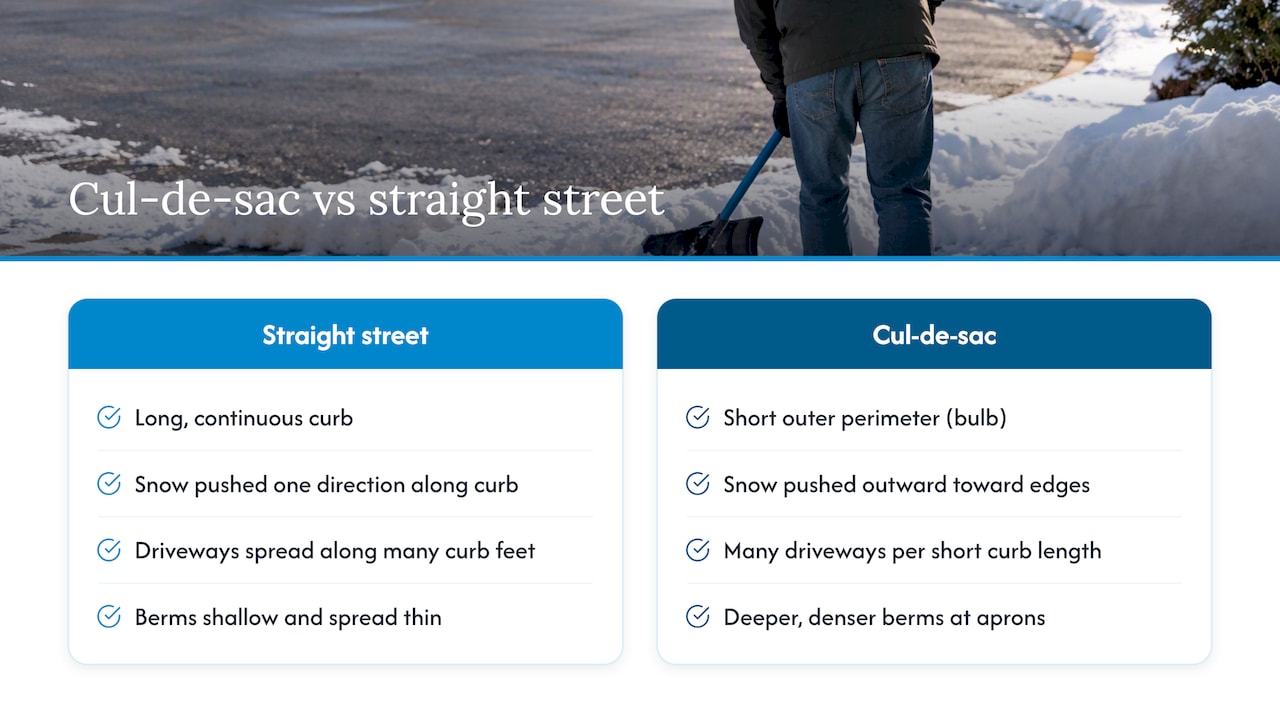
The geometry is the problem, not the crew. On a straight street, a plow pushes snow in one direction along a long, continuous path, and there is plenty of curb and shoulder space to absorb it. A cul-de-sac is a tight circle with a fixed radius, so the same volume of snow gets concentrated into a much smaller perimeter. Guidance from public works departments, including the city’s snow removal page, explains that centrifugal force and the angle of the plow’s moldboard push snow outward and toward the edges of the circle as the truck turns, which means driveway aprons on the outer radius absorb more snow than they would on a straight block.
Fewer curb feet, more driveways: a typical cul-de-sac bulb has a fraction of the curb length of an equivalent straight block but often serves just as many driveways. That mismatch concentrates snow into a few short stretches of curb instead of spreading it thin along a long street, so each driveway apron ends up with a deeper, denser berm than a house on a straight road would see after the same storm.
Public works departments weigh safety and emergency access ahead of full bulb clearing, which is why a cul-de-sac can look only partially plowed even after the street crew has already come and gone.
Reducing berms: what to do before, during, and after the storm
Timing and placement matter more than effort here. A few deliberate steps, done in the right order, cut down how much snow a plow pushes back onto your driveway and how long it takes to dig out.
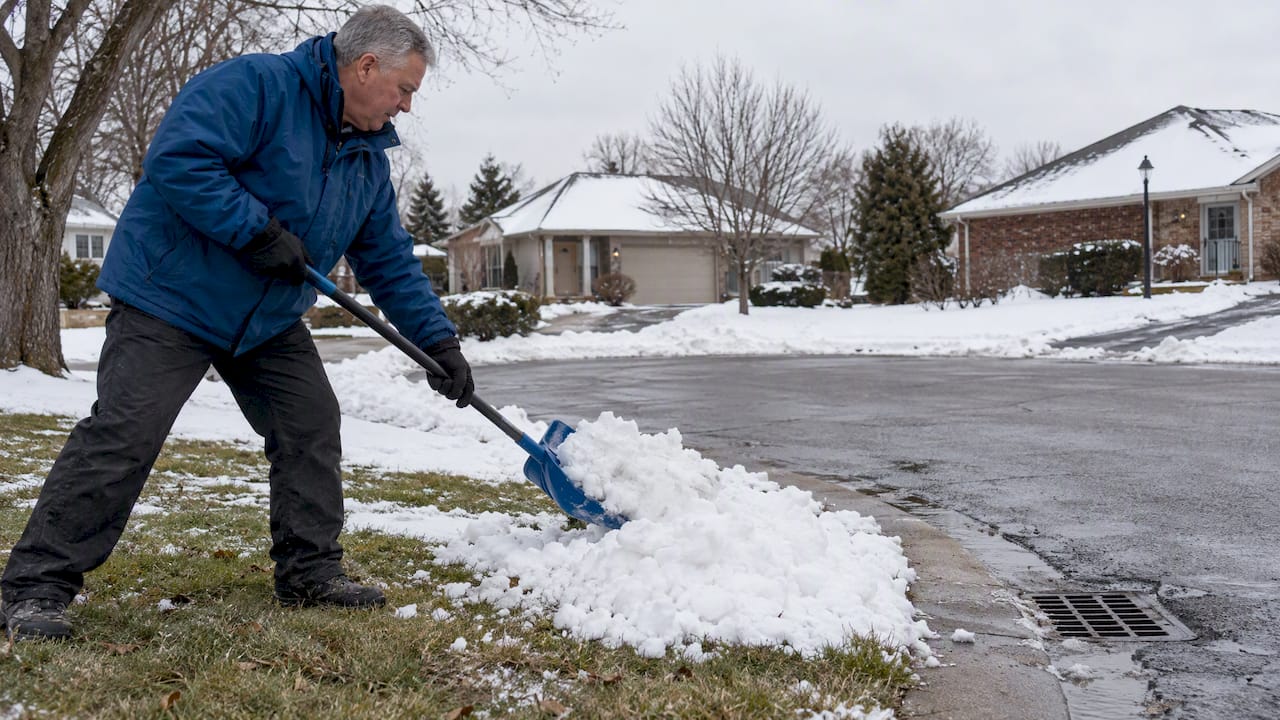
- Before the storm, pile any snow you clear from your walkway or steps to the right side of your driveway as you face the street, since that is the side the plow’s moldboard typically discharges toward.
- Install reflective driveway stakes along your apron edges so plow operators can see exactly where your driveway ends, reducing accidental scraping of grass, mulch beds, or sprinkler heads.
- During and right after the plow pass, clear a narrow channel alongside your garage apron rather than the full width, giving the truck an obvious “off-ramp” so the next pass does not pile snow as deep.
- Never shovel or blow snow into the street or storm drain, since most municipalities and state transportation departments, including Colorado’s snow removal guidance, treat depositing private snow on a public roadway as a violation that can carry real penalties.
- If berms keep rebuilding after every storm, ask a contractor for haul-out service rather than repeated push-backs, since moving the same snow around a tight bulb only postpones the blockage.
Pro Tip: Keep a lightweight shovel and a bag of ice melt by the door so you can clear the first inch or two before it compacts under a plow blade, which makes the whole job faster later.
For households with older residents or anyone with limited mobility, a seasonal contract that includes guaranteed clearing windows is usually safer than relying on a single shoveling session after a storm, and it removes the physical strain of lifting wet, heavy snow entirely.
What municipal priority rules mean for your street
Most cities sort streets into priority tiers, and cul-de-sacs rarely sit at the top of that list. According to Rochester’s snow and ice control guidance, cul-de-sacs and dead-end streets are commonly classified as Priority 3, behind main arterials and emergency routes, which means they get attention only after the roads that carry ambulances, fire trucks, and school buses are clear.
- Priority 1 routes (hospitals, main arterials) are cleared first and continuously during a storm.
- Priority 2 streets (collector roads, bus routes) follow once Priority 1 routes are passable.
- Priority 3 streets, which typically include cul-de-sacs, get a single pass or a partial clearing until snowfall exceeds a set threshold, at which point crews return for full bulb clearing or haul-out.
- Ordinances in most jurisdictions prohibit pushing or blowing private snow into the street, and many also set a window, often 24 to 48 hours after snowfall stops, for clearing sidewalks.
If your bulb stays blocked well after a storm has ended, your local public works department is usually the right place to request haul-out or report an access problem, especially for emergency vehicle routes.
Field-tested tactics from Denver Snow Removal
Contractors who work tight residential bulbs every winter rely on a handful of repeatable habits that homeowners can borrow or request in a service agreement.
- Reflective stakes at every apron corner mark driveway boundaries before the season starts, cutting down on accidental edge damage.
- Compact snow blowers for sidewalks and narrow walkways, which clear faster and with less wear than a full-size plow blade on tight residential paths.
- Staged pile placement, where cleared snow is pushed to pre-agreed spots on a property rather than wherever is most convenient in the moment, keeping driveways and walkways open all season.
- Loaders and skid steers brought in once accumulation exceeds what a plow truck can manage, rather than waiting until the bulb is fully blocked.
A solid service agreement should spell out clearance widths, a haul-out schedule for heavy snow years, and liability coverage for slip-and-fall incidents on cleared walkways, and a contractor who coordinates directly with municipal crews can often time a visit right after the city’s pass instead of before it, which cuts down on wasted effort for both sides.
Where cleared snow should actually go
Snow pushed off a cul-de-sac has to land somewhere, and that choice carries real environmental weight. Meltwater from plowed snow picks up road salt, sand, oil residue, and de-icing chemicals along the way, and all of that eventually drains into storm sewers, creeks, or groundwater if it is not managed carefully.
The safest option for homeowners is piling cleared snow on a pervious surface like a lawn or landscaped bed rather than directly over a storm drain, giving contaminants more distance and time to filter before reaching waterways. Avoid piling snow near wellheads or septic fields if your property uses either. For larger volumes removed by loader or skid steer, haul-out to a designated municipal snow dump site is standard practice, since those sites are chosen specifically to limit runoff into sensitive waterways. Avoid dumping hauled snow onto frozen ponds, creek banks, or wetlands, since concentrated salt and sediment loads can harm aquatic life as the pile melts through spring. Choosing a contractor who already has an approved disposal site saves you from guessing where a truckload of snow should legally end up.
What homeowners get wrong about cul-de-sac snow
The common complaint is that the plow “made it worse,” but that framing misses what is actually happening. Crews are not targeting your driveway. They are managing a fixed amount of snow in a small circle with safety rules that rank your access below emergency routes, and no amount of complaining to a driver changes that physics.
The bigger mistake is treating every storm as a one-time shoveling job instead of a seasonal problem with a seasonal fix. A driveway that berms badly after every storm is telling you something about its position on the bulb, not about bad luck. Homeowners who adjust pile placement early in the season and set up a standing arrangement for haul-out before the first big storm spend far less time digging out than those who wait and react each time. The off-ramp technique matters, but it only buys you a few extra hours before the next pass. For chronic problem driveways, the real fix is removal, not redistribution.
— Jesse
When it makes sense to call in a professional crew
If your cul-de-sac rebuilds a berm after every storm, a professional crew with the right equipment solves a problem that shoveling alone cannot. Denver Snow Removal offers residential driveway and walkway clearing starting at $41.25 per visit, along with skid-steer pile placement and haul-out for properties where snow has nowhere left to go.
A seasonal contract makes sense for households that see repeated blockages all winter, while a one-time visit covers a single bad storm. Either way, ask about clearance widths, pile placement, and liability coverage before you sign. Request a free estimate from Denver Snow Removal and get a plan in place before the next storm hits.
FAQ
What is the average cost for snow removal?
Pricing depends on property size, service type, and whether it is a one-time visit or a seasonal contract. Denver Snow Removal’s residential driveway and walkway clearing starts at $41.25 per visit, with seasonal contracts priced individually based on property details.
What are the rules around removing snow from a driveway?
Most states and municipalities, including Colorado, prohibit placing private snow on or next to a public roadway, which can carry civil penalties under state transportation guidance. Cities also commonly set windows for clearing sidewalks after snowfall stops, so check your local ordinance for specific timing.
What is the best snow removal option for elderly residents?
A seasonal contract with a guaranteed clearing schedule is generally safer than relying on manual shoveling, since it removes the physical strain and fall risk tied to lifting wet snow. Many contractors, including Denver Snow Removal, offer seasonal service plans built around consistent access rather than one-off visits.
Can I pay someone to shovel my snow?
Yes, hiring a professional for driveway and walkway clearing is common and often more practical than DIY shoveling, especially for cul-de-sac properties that berm repeatedly. Services range from single-visit shoveling to full seasonal contracts that include plowing, de-icing, and haul-out.
Sources
- Snow & Ice Control | City of Rochester
- Snow removal | Colorado Department of Transportation
- Snow Removal | Creve Coeur, MO
- Plowing snow in a culdesac (AA County PDF)