
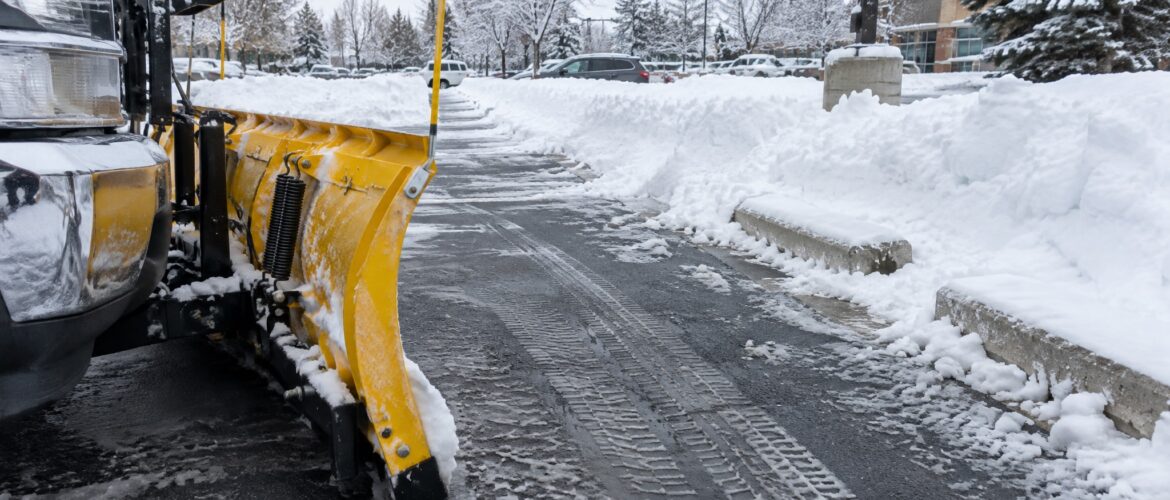
Denver snow does not follow a budget. One winter brings a dozen light dustings, and the next drops a few heavy upslope storms on the same lots. The contract you sign decides who carries that swing: you or the contractor.
We plow large Denver Metro lots for a living, so we see both models every season. Here is how a per-push vs seasonal snow removal contract actually plays out on the Front Range.
How Per-Push and Seasonal Snow Removal Contracts Differ
Start with the side-by-side. Everything else in this article hangs on these four differences.
| Per-push (per-event) | Seasonal | |
|---|---|---|
| Billing | An invoice for every plow event, sized to the storm | One agreed fee for a defined season and scope, often billed in installments |
| Budget predictability | Follows the number and size of storms, so it is unknown until spring | Known before the first flake |
| Storm-response priority | Set by contract. Confirm in writing how per-event accounts rank when storms stack | Written into the agreement, with response terms you can hold the contractor to |
| Exit terms | Usually easy to leave, since there is no season-long commitment | A season-long commitment, so read renewal and termination language first |
Per-event pricing is simple. We plow, we bill that storm. Eight events means eight invoices. Twenty events means twenty.
A seasonal snow plowing contract is also simple. You and the contractor agree on a season, a scope and one fee. The storms can come as often as they like, within the terms you wrote down.
Neither model is a trick. Each one moves risk to a different side of the table, and the rest of this article shows you where.
Denver Snowfall Averages and Why Heavy vs Light Winters Change the Math
Denver’s official climate normals put annual snowfall at roughly the mid-50s to about 60 inches, depending on the station and the averaging period. You can check the current figures with the National Weather Service Boulder office. That number is a fine answer to a trivia question and a weak number to build a budget on.
Why an Average Snowfall Number Misleads Your Budget
Front Range snow does not arrive in tidy portions. You get frequent light events, an occasional upslope storm that stacks up fast, and chinook winds that melt a lot off in a day. Then the freeze-thaw cycle turns that meltwater into ice in your drive lanes overnight.
The season is long, too. It runs from fall into spring, so a lot can see plow-worthy snow in October and again in April.
Individual winters often land well above or below the midpoint. Your cost under a per-push contract follows event count and storm size, not the annual inch total, so a winter with 55 inches in many small events can cost you differently than one with 55 inches in a few big ones.
Heavy Years vs Light Years Under Each Contract Model
Run the same lot through two winters. In a light winter, fewer events trigger a plow, so per-event billing can come in under the seasonal fee. You paid for exactly what fell, and you may well save money.
In a heavy winter, every extra storm adds another invoice. A per-event rate multiplied by a heavy winter’s storm count can climb well past what a flat seasonal fee would have cost. The seasonal fee stays where it was on the day you signed.
That is why one winter proves nothing. Pull the event counts from several prior winters and run both models against each of them before you decide.
Seasonal pricing does not make light winters cheaper. If a mild year is what you get, you will have paid the full fee for less work, and that is the price of certainty.
Snow Contract Budget Planning for Property Managers
Property managers and HOA boards budget on an annual cycle. A seasonal fee, often billed in installments, drops into that calendar cleanly, while per-event invoices arrive on the schedule of storms nobody can forecast. If you have ever explained a surprise February overrun to a board, you already know which one is easier to defend.
Per-Event Snow Removal Pricing and Budget Exposure
Per-event snow removal pricing can work, but you have to plan for the bad winter, not the average one. Take event counts from several prior winters at your property and price the high end. Then add a contingency line to the budget so a heavy season does not force a special assessment or a mid-year scramble.
Your exposure is uncapped by design. The rate is known, but the number of times you pay it is not.
Fixed Price Snow Contracts: Predictable Cost, Defined Scope
A fixed price snow contract lets you write one number into the annual budget and leave it there. The catch is that the fee is only fixed if the paperwork says so. Scope, trigger depth and overage rules all have to be written down, because a vague contract can turn a flat fee into a variable one the first time a storm runs long.
Some contractors offer a middle path: a seasonal base fee with per-event overage once the season passes an agreed limit. That hybrid is a reasonable compromise when you want a floor on certainty without paying for a worst-case winter up front.
To estimate your own numbers lot by lot, use our guide to commercial snow removal contract pricing in Denver.
Contract Terms to Watch Before You Sign
A seasonal or “unlimited” agreement keeps its predictability only if the written terms back it up. So compare bids on the terms, not the headline fee. Two quotes that look $2,000 apart can be a gap in scope, not a gap in price.
Unlimited Snow Removal Contract: What “Unlimited” Covers
An unlimited snow removal contract sounds like the whole problem solved. Sometimes it is. But “unlimited” can mean unlimited plow visits and still exclude salting, hauling or sidewalks. Ask every bidder, us included, to spell out what sits inside the fee and what gets billed on top.
Trigger Depth, Overage Rates, and Exit Clauses
These are the terms that change your real cost. Get every one of them in writing from every bidder:
- ✓ Trigger depth: how much snow must fall before the crew plows
- ✓ Salting and de-icing: included, or billed per application
- ✓ Hauling: included, capped, or extra when piles outgrow the lot
- ✓ Sidewalks and entrances: who clears them, and to what standard
- ✓ Season start and end dates: and what happens to a storm outside them
- ✓ Overage rates: what you pay once the contract’s limit is passed
- ✓ Renewal and termination language: auto-renewal, notice periods, and exit rights
Lower the trigger depth and you get cleaner lots but more visits. Raise it and you save on visits but accept more snow underfoot before anyone shows up. Neither is wrong, but the number has to be one you chose on purpose.
Which Property Types Fit Each Model
Large lots, office campuses, industrial parks, HOA common areas and apartment communities usually carry tight timing needs and heavier liability. Tenants and residents expect clear drive lanes before the first shift or the morning commute. That favors a seasonal contract, because the fee is set and the response terms are written down.
For a full picture of what we cover on these sites, see our snow removal services for commercial properties.
Large Commercial Sites vs Small, Low-Traffic Lots
A small, low-traffic site with light exposure can still make per-event pricing work. If few people cross the lot and an unplowed morning costs you little, paying only when it snows is a sensible bet.
Here is the plain rule. Choose seasonal when budget certainty matters more than light-year savings. Choose per-event only when your budget can absorb a heavy winter.
If you manage a large lot and the second half of that rule makes you nervous, you have your answer. This comparison is not aimed at single-family driveways, and we do not plow them.
Slip-and-Fall Liability: Why Documentation Belongs in the Contract
Either model only reduces your exposure if the lot is cleared quickly and you can prove it. A fast crew with no records leaves you defending a claim from memory. So put the response expectations in the contract itself.
Response Windows, De-Icing Scope, and Service Records
Write three things into the agreement:
- Response windows: how soon after the trigger depth is reached the crew arrives
- De-icing scope: which areas get treated, and when
- Service logs: a record of each visit that you can pull up if a claim ever lands
Ask every bidder how per-event accounts are prioritized when several storms stack up. That answer tells you where you stand when the third storm in a week hits.
Then confirm that your property or association is named on the current certificate of insurance. We are fully insured, and we expect clients to ask for the paperwork. This is not legal advice, so run the contract language past your attorney or insurer.
Seasonal Snow Plowing Contract Signup: What to Have Ready
Quotes move faster when you hand us the facts. Gather these before you call:
- Lot size and the layout of entrances and sidewalks
- Your operating hours, so we know when the lot must be clear
- Event counts from prior winters, if you have them
It is already November 2026, so ask whether a mid-season start for 2026–27 is prorated. Don’t assume it is. Get the answer in writing with the rest of the terms.
Here is why Denver managers choose us:
- 47+ years of experience in commercial snow plowing and removal, based in Denver County.
- Commercial gear: a newer fleet of Chevy 2500HD trucks with commercial Boss plows, plus skid steers and de-icing equipment.
- Staffed 24/7 dispatch from September to May. We are actually 24/7.
- Up-front pricing, so the number you approve is the number you budget.
- Fully insured, with documentation you can request.
Call dispatch any hour of the storm season, or request an up-front seasonal quote through our Contact page. For a large Denver site, a fixed seasonal contract is the option that lets you set the budget once and keep it.
Frequently asked questions
Is a seasonal snow removal contract always cheaper than per-push pricing?
No. In a light winter, per-event billing can come in under the seasonal fee because you only pay for the storms that happen. In a heavy winter, per-event invoices can pass what the flat fee would have cost. Seasonal pricing buys certainty, not guaranteed savings.
Does an unlimited snow removal contract include salting and sidewalks?
Not automatically. “Unlimited” often refers to plow visits only, while salting, de-icing, hauling and sidewalk work may be billed separately. Ask each bidder to list exactly what is included before you compare prices.
What is trigger depth in a snow contract?
Trigger depth is the amount of snowfall that must accumulate before the crew plows your lot. It directly affects how often you are plowed and how much a per-event or overage-based contract costs you, so it should be a written number in the agreement.
Can I start a seasonal contract in the middle of winter?
Often you can, but whether the fee is prorated depends on the contractor. Ask for the answer in writing before you sign, especially for a 2026–27 start after the season has begun.
How does a snow contract help with slip-and-fall liability?
It does when response windows, de-icing scope and service records are written into it. Those records let you show when the lot was cleared and treated. Also confirm your property or association is named on the contractor’s current certificate of insurance.