

Denver snowstorms do not arrive politely. Forecasts in the region have called for 10 to 20 inches across the metro, with some areas bracing for up to 2 feet. When that much snow lands on a commercial parking lot, the problem stops being weather and becomes an obligation. There is a clock running, there are people walking to their cars, and there is a documented set of city rules that apply to the surface you own or manage.
This guide walks through what Denver expects from property owners, where liability exposure actually builds during and after a storm, and how to structure a snow plan that holds up on the worst mornings of the year.
What Denver Requires of Property Owners After Snow
Denver requires property owners to clear snow and ice from their sidewalks. For businesses, that window is four hours. For residences, it is 24 hours. Parking lots carry their own expectation: property owners are required to clear snow from parking lots within 24 hours after snowfall ends, a standard tied to both fines and on-site safety.
The rule set is enforced by the City and County of Denver, and the details are managed through the Department of Transportation and Infrastructure. If a property sits on a boundary or has unusual access conditions, confirm your specific obligations directly with the city rather than assuming a general timeline covers your site.
How the Timelines Compare
| Surface | Requirement | Timeline |
|---|---|---|
| Sidewalks at businesses | Clear snow and ice | 4 hours |
| Sidewalks at residences | Clear snow and ice | 24 hours |
| Parking lots | Clear snow | 24 hours after snowfall ends |
The gap between four hours and 24 hours is where a lot of confusion lives. A property manager who treats the sidewalk deadline and the parking lot deadline as the same thing will either over-deploy or fall behind. They are separate obligations with separate clocks.
Why 24 Hours Is Shorter Than It Sounds
The 24-hour clock starts when snowfall ends, not when the storm begins. A long-duration event can run for 10 or 12 hours before it stops, which means crews may be working for most of a day before the official window even opens. Then the real work begins, because a first pass through a lot is not a finished job. Drive lanes need to be re-plowed, corners need to be hand-cleaned, piles need to be relocated, and ice that formed overnight needs to be broken up.
Denver drivers know the difference between a cleared lot and a safe one. After snow fell across the metro on January 9, 2025, commuters dealt with slick roads and major backups through the morning, with one description comparing conditions to a parking lot. That is the gap between plowed and passable.
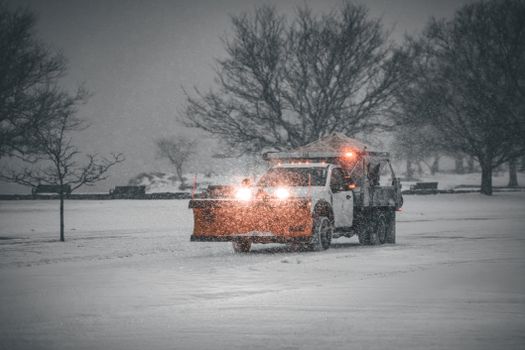
Where Liability Actually Builds in a Parking Lot
Slip and fall exposure is the most familiar risk, but it is rarely the only one. A commercial lot creates several overlapping problems during a snow event, and each one gets worse the longer it sits.
- Boot-packed and refrozen surfaces at building entrances and pedestrian crossings
- Snow piled in accessible parking stalls or blocking an accessible route
- Fire lanes and emergency access paths narrowed or buried by pushed snow
- Blind corners caused by piles that block a driver’s view of pedestrians
- Stored snow that melts during the day and refreezes into sheet ice overnight
Each of those items has a cost attached, and none of them are solved by a single plow pass at midnight. They are solved by a plan that assigns responsibility for edges, corners, and pedestrian areas from the start.
Snow Piles Are the Part Most Owners Underestimate
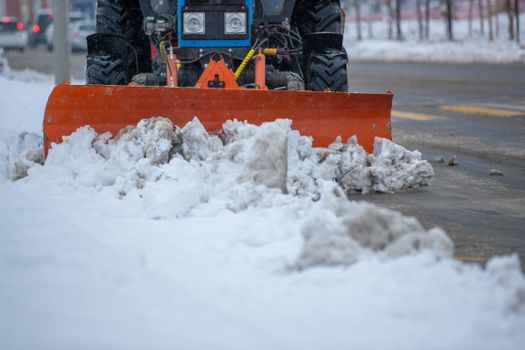
Pushing snow out of the way is only half the job. Where it goes next determines whether the lot functions the following morning. Commuter lots around the region have run into exactly this problem, with snow piled into Park-N-Ride spaces and leaving drivers circling for somewhere to park.
Denver’s rules also address placement. Owners must place snow from their sidewalks onto their front yard or another part of their own property, not into the street. That principle extends to commercial sites: snow that gets pushed into the public right of way or onto a neighboring parcel creates a second problem on top of the first one. Designated snow storage areas, identified before the season starts, keep that from happening.
What a Snow Removal Contract Should Cover
A seasonal agreement with clear terms removes most of the guesswork. The details matter more than the marketing on the invoice, so read the scope line by line.
Trigger Depth
Trigger depth is the snowfall amount that activates service. Some contracts call for mobilization at a set accumulation, others at a set time, and others on a per-event basis. Know your number and know what happens when a storm lands just under it, because that is the storm where a lot ends up unplowed.
Snow Hauling and Disposal
On tight sites with no room to stack, hauling is not optional. Lots with landscaped islands, limited setbacks, or tenant parking against a building may need snow loaded and removed entirely rather than pushed. Confirm in advance whether hauling is included or billed separately.
Response and Dispatch
Winter storms do not respect business hours. A partner with 24/7 dispatch can mobilize overnight, which is when most commercial lots are empty and easiest to clear efficiently. Response expectations should be written into the agreement rather than assumed.

The Order of Clearing Inside a Parking Lot
Sequence is not arbitrary. A sensible clearing order moves from the areas that carry the most risk to the areas that carry the least.
- Primary entrances and the connection to the public street
- Fire lanes and emergency vehicle access routes
- Accessible stalls and accessible routes to building entrances
- Main drive aisles and turnarounds
- Parking stalls and less traveled perimeter areas
- Snow relocation, hauling, and final clean-up of corners and islands
Following that order keeps the site functional even if the storm outlasts the first round of equipment. A lot with open drive lanes and blocked stalls is far more usable than the reverse.
Pre-Season Planning Checklist
Most of the difficulty in a snow event is decided before the first flake falls. Work through these items in the fall, while the calendar is still forgiving.
- Walk the lot and mark obstructions: curbs, islands, drains, speed bumps, wheel stops
- Identify where snow can be stored on site without blocking stalls or sightlines
- Confirm who handles sidewalks, and on what timeline
- Review your contract’s trigger depth, response window, and hauling terms
- Set up a communication channel for tenants, employees, and residents
- Document pre-season lot conditions so post-storm damage claims are easier to resolve
- Arrange ice management for entries, stairs, and pedestrian paths
Why Local Experience Matters on Denver Lots
Denver’s storms vary widely in duration and accumulation, and a lot that takes 3 inches well can still become unmanageable at 12. The scale of the problem is easy to underestimate. Denver International Airport alone maintains 30 acres of parking lots with more than 44,255 parking spots for its snow crews to clear, an area larger than 23 football fields. Most commercial sites are smaller, but the mechanics are the same: equipment count, staging, and timing determine the outcome.
Property managers across the Denver metro can request a free estimate and reach a snow removal team at (720) 419-1479 to talk through coverage for parking lots, industrial parks, HOA communities, and office campuses. Planning before the season starts is what makes the difference when a storm hits.
Frequently Asked Questions
How long do Denver property owners have to clear snow from a parking lot?
Denver requires property owners to clear snow from parking lots within 24 hours after snowfall ends. That deadline is separate from the sidewalk rule, which gives businesses four hours and residences 24 hours. Because the parking lot clock starts when the snow stops rather than when it starts, long storms can leave a much shorter practical window than the number suggests.
Can I push snow from my lot into the street?
No. Denver rules state that owners must place snow from their sidewalks onto their front yard or another part of their own property, rather than into the street. Pushing snow into the public right of way or onto a neighboring property creates an additional problem, so plan snow storage areas on site before the season begins.
What does trigger depth mean in a snow contract?
Trigger depth is the snowfall amount that activates service under your agreement. Some contracts mobilize at a set accumulation, while others respond on a per-event basis or on a schedule. Confirm your specific trigger in writing so you know what happens during a storm that lands just below the threshold.
Do I need snow hauling for my parking lot?
It depends on how much space the site has. Lots with landscaped islands, tight setbacks, or tenant parking against a building often run out of room to stack snow and need it loaded and removed instead. Ask whether hauling is included in your contract or billed as a separate line item.
How do I get a snow removal quote for a Denver property?
Start with a walkthrough or a site plan so the contractor can see lot size, access points, and storage areas. A Denver snow removal provider can give a free estimate and confirm response times, contract structure, and ice management coverage. Verify current city snow requirements with the City and County of Denver before finalizing your plan.