

Stack snow on hard, impervious pavement away from catch basins and sightlines, apply anti-icing brine before storms hit and write a hauling trigger into every seasonal contract before the first flake falls. That single combination cuts pavement damage, keeps drive lanes visible, and prevents the panic call for emergency hauling when a pile finally swallows a row of parking stalls.
TL;DR:
- Proper placement of snow piles on hard, impervious surfaces away from catch basins and slopes prevents damage, runoff contamination, and high spring cleanup costs.
- Pre-storm site assessments and marked zones help maintain sightlines, protect infrastructure, and ensure ADA compliance by preventing piles from blocking key areas.
- Applying anti-icing brine before storms and prioritizing plow sequencing of fire lanes and ADA stalls reduces compacted snow, sticking in-place ice, and drainage issues.
- Hauling triggers should be set seasonally based on storage capacity, storm frequency, and sightline or drainage blockages to avoid costly emergency dispatches.
- Protecting storage on impermeable pads, using secondary containment, and sweeping residues before spring limits regulatory exposure and runoff-related damages.
Table of Contents
- Why Snow Piles Damage Parking Lots and What to Watch For
- Where and How to Place Snow Piles: A Site Checklist
- Anti-Icing, Plow Sequencing, and Hauling Triggers
- Environmental, Drainage, and Material-Storage Precautions
- Practical Examples from Denver Snow Removal’s Field Experience
- Balancing Hauling Cost Against Risk: An Editorial Take
- Get a Winter Operations Plan Built for Your Property
- Sources
- FAQ
Why Snow Piles Damage Parking Lots and What to Watch For
A pile that sits in the wrong place for weeks does more than block a few stalls. Repeated freeze-thaw cycles push water into pavement cracks, and the chloride runoff from melting salt accelerates asphalt breakdown, showing up later as potholes and crumbling edges along curb lines. Compaction from plow blades and loader traffic packs snow into ice that outlasts warmer days, so a pile placed on soft ground or near a slope keeps causing problems long after the storm ends.
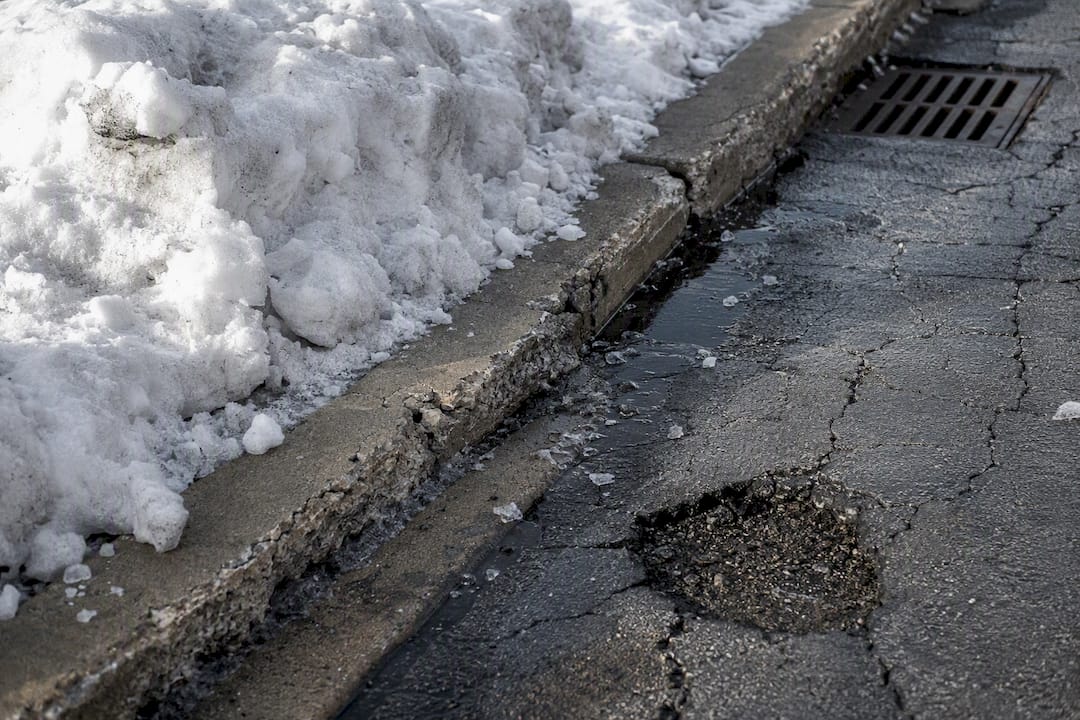
Piles also grow. A stack that looked reasonable in December can expand sideways by February, eating into sightlines at exits and swallowing stalls that were fine the week before.
Watch for these signs that a pile is actively hurting the property:
- Pooled meltwater that refreezes instead of draining
- Catch basins or grates buried under packed snow
- Dead or matted grass and shrubs once the pile finally melts
- Cracked or heaving pavement directly under a pile’s footprint
- Sightline gaps at intersections or exits caused by pile height
Keeping piles off catch basins and locating them on stable, hard surfaces limits contaminated runoff and reduces spring cleanup costs, which matters as much to a facilities budget as it does to pavement condition.
Where and How to Place Snow Piles: A Site Checklist
Placement decisions made in November save headaches in January. Best-practice guidance recommends checking sightlines from driver eye height at every proposed stacking zone before the first storm, not after a pile has already grown tall enough to hide oncoming traffic.
Build your pre-storm walk-through around this order:
- Identify hard, impervious pads away from drains, wetlands, or sloped runoff paths.
- Mark every catch basin, fire hydrant, and fire lane with reflective stakes so crews never bury them.
- Confirm ADA-accessible stalls and access routes stay clear at every storage volume, not just at the first plow pass.
- Designate overflow or low-traffic employee parking as backup storage only, with room left for a pile to grow.
- Walk exits and internal intersections at driver eye height to check for new blind spots.
- Photograph and log each stacking zone so seasonal crews and subcontractors follow the same map.
- Reconfirm building setbacks so piles never sit against siding, HVAC intakes, or loading dock doors.
Denver Snow Removal’s own parking lot snow management guidance walks through this same mapping process property by property, since no two lots have identical drainage or sightline constraints.
Pro Tip: Laminate your stacking-zone map and hand a copy to every plow operator before the season starts. A verbal instruction gets forgotten by the third storm; a marked map does not.
Anti-Icing, Plow Sequencing, and Hauling Triggers
Anti-icing pretreatment, applying brine or granular product before snow bonds to pavement, is markedly more efficient than reactive deicing and typically lowers total chemical and labor costs across a season. Liquid brine works best above roughly 15°F pavement temperature; below that, granular deicers paired with pre-wetting perform more reliably, a distinction crews should confirm before every treatment run.
Plow sequencing matters as much as the chemical choice:
- Clear fire lanes and ADA stalls first, every pass, no exceptions.
- Backdrag near building entrances and loading docks to keep snow from packing against structures, which also limits later drainage problems.
- Windrow toward the pre-mapped stacking zones rather than improvising a new pile each storm.
For hauling, set numeric triggers before the season, not during a storm:
- A percent-of-storage-used threshold, commonly 75 to 80 percent of a designated pile’s footprint.
- A consecutive-storm count, since three storms in five days behave differently than one big event.
- A pre-agreed emergency-hauling window and rate, so a 2 a.m. call does not become a negotiation.
Contracts should require documented trigger levels, defined hauling windows, refreeze checks after major clearing, and transparent, itemized invoicing. Standing meltwater can refreeze into black ice within a few hours, so crews should reinspect problem areas after major clearing passes rather than assuming the job ends when the plow leaves.
Environmental, Drainage, and Material-Storage Precautions
Piles placed on a slope toward a pond, stream, or storm drain send chloride-heavy runoff straight into local waterways, so follow environmental risk mitigation tips for construction sites to protect these areas effectively. Locating storage on impervious pads and keeping it away from catch basins protects both the pavement and the drainage system from a spring cleanup that costs more than the season’s plowing.
Material storage needs the same discipline as the piles themselves:
- Cover salt and sand piles and keep them on an impervious pad, never uphill or downhill from active snow piles.
- Use secondary containment for any liquid brine storage.
- Calibrate spreaders and pre-wet salt to cut the volume applied without losing traction performance.
- Sweep excess sand and salt residue every spring before it washes into storm drains or gets tracked indoors.
Properties that skip these steps risk more than a messy lot come April. Regulatory exposure and cleanup costs both climb when chloride runoff or buried inlets go unaddressed for an entire winter, and those costs rarely show up until the bill for the damage arrives.
Practical Examples from Denver Snow Removal’s Field Experience
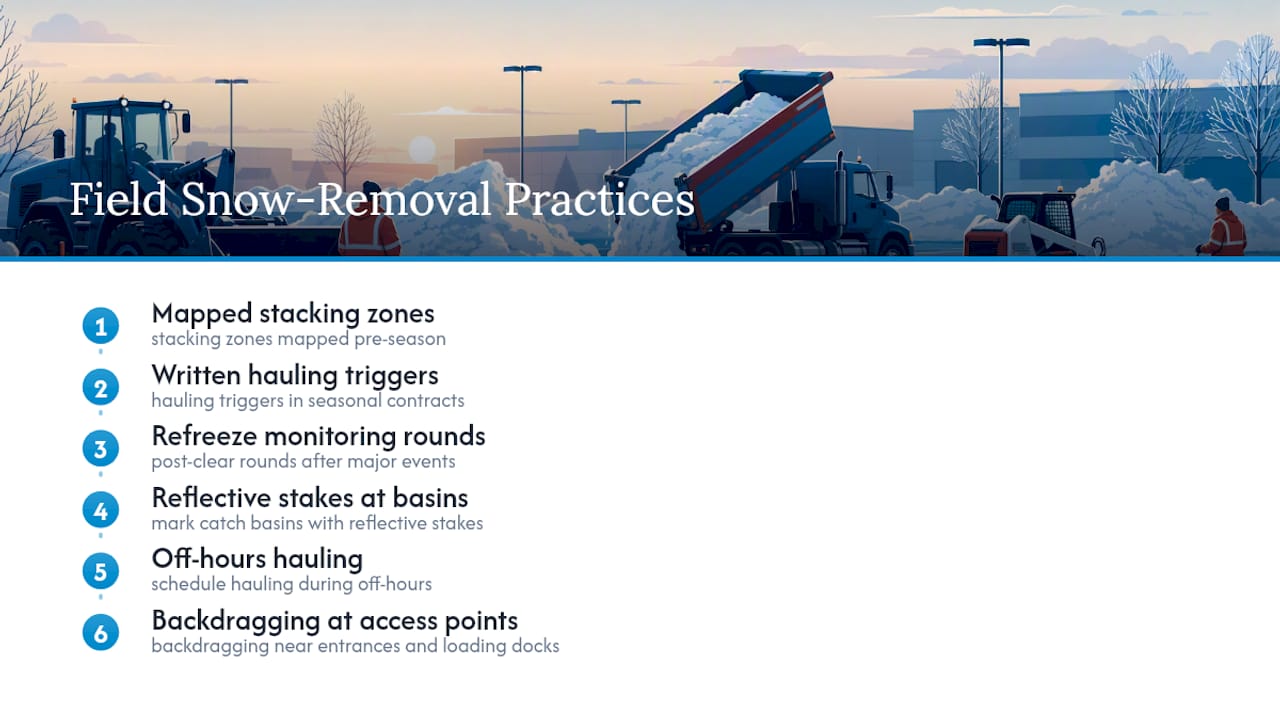
Denver Snow Removal has mapped stacking zones and negotiated hauling triggers into seasonal contracts for over 44 years across the Denver Metro area, and the pattern holds property after property: the lots that avoid March headaches are the ones with a written plan in October. Crews run refreeze-monitoring rounds after major clearing events, mark catch basins with reflective stakes before the first snowfall, and schedule hauling during off-hours so loaders and open trailers clear space without disrupting business traffic. Backdragging near entrances and loading docks stays standard practice on every commercial route, not an upsell.
Balancing Hauling Cost Against Risk: An Editorial Take
Most property managers treat hauling as a last resort because it costs money. That math is backwards. A pile that eats six stalls for eight weeks costs more in lost parking revenue and slip-and-fall exposure than a scheduled haul ever will. Set your trigger points, walk the site before the season, and adjust those triggers the following year based on what actually happened this winter.
— Jesse
Get a Winter Operations Plan Built for Your Property
A written plan beats reactive plowing every time, and mapping stacking zones with storm trigger levels before the season cuts both deicer overuse and emergency hauling costs. Some snow removal companies build that plan directly into seasonal contracts: site assessments that mark stacking zones and catch basins, trigger clauses for hauling, anti-icing pretreatment, and refreeze-monitoring rounds after major storms.
Experienced snow removal providers serving metro areas with crews ready for emergency hauling handle operational details that a printed checklist can only outline. Commercial properties looking for site-specific mapping and contract language can review commercial snow removal services covering everything from sidewalks to loading docks, or request a free estimate for parking lot plowing to get trigger clauses and stacking zones mapped before the first storm of the season.
Sources
- CTI UConn: Winter best practices for parking lots and sidewalks (BMP) 2023
- Minnesota Pollution Control Agency: Background information for winter parking lot and sidewalk maintenance
- Lake County parking lot manual: snow piles and material storage guidance
- Solved: how parking lot snow piles disappear — University of Michigan Parking Maintenance
FAQ
How Do You Prevent Snow From Piling Up in Critical Spots?
Pre-map stacking zones on impervious pavement away from catch basins, fire lanes, and ADA stalls, then apply anti-icing brine before storms so snow never bonds to those surfaces in the first place.
How Long Do Snow Piles Typically Last?
Melt time depends on pile size, sun exposure, and temperature, but a large, compacted pile in a shaded corner can persist for weeks after smaller piles nearby have disappeared, especially once plow traffic packs it into ice.
What Drives the Cost of Parking Lot Snow Removal?
Storm frequency, lot size, plowing versus hauling needs, and whether removal happens on a seasonal contract or an emergency call all factor into cost; contracts with pre-set hauling triggers typically avoid the higher rates tied to last-minute emergency dispatch.
What Is a Large Pile of Snow Called?
Property managers and contractors generally call it a windrow when it is formed by plow blades pushing snow into a line, or simply a stacking pile once snow is collected at a designated storage zone.
When Should a Property Haul Snow Off-Site Instead of Just Plowing?
Haul once a designated pile reaches its contract’s percent-of-storage trigger, after a set number of consecutive storms, or when a pile blocks required sightlines, drainage, or accessible parking that plowing alone cannot fix.