
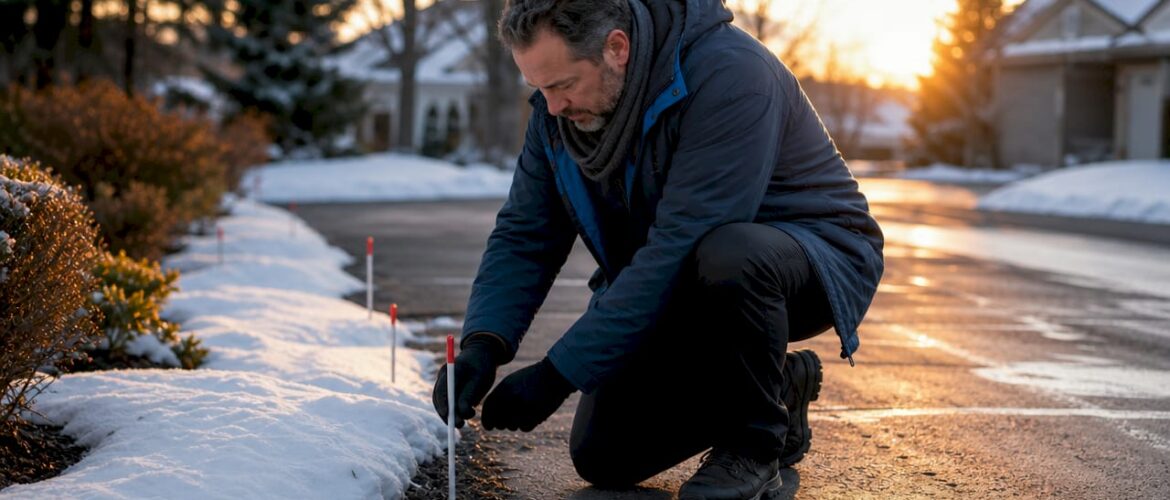
Protecting landscaping during snow plowing means defending your plants, lawn, and hardscape from mechanical, chemical, and environmental harm throughout winter maintenance. Plow blades scrape turf edges, salt burns root systems, and repeated snow piling compacts soil until roots suffocate. The good news is that a combination of pre-season preparation, careful operational practices, and post-storm recovery can prevent most of this damage. Homeowners and property managers who act before the first snowfall save significantly on spring repairs and keep their outdoor investments looking strong year after year.
What tools and materials do you need to protect landscaping during snow plowing?
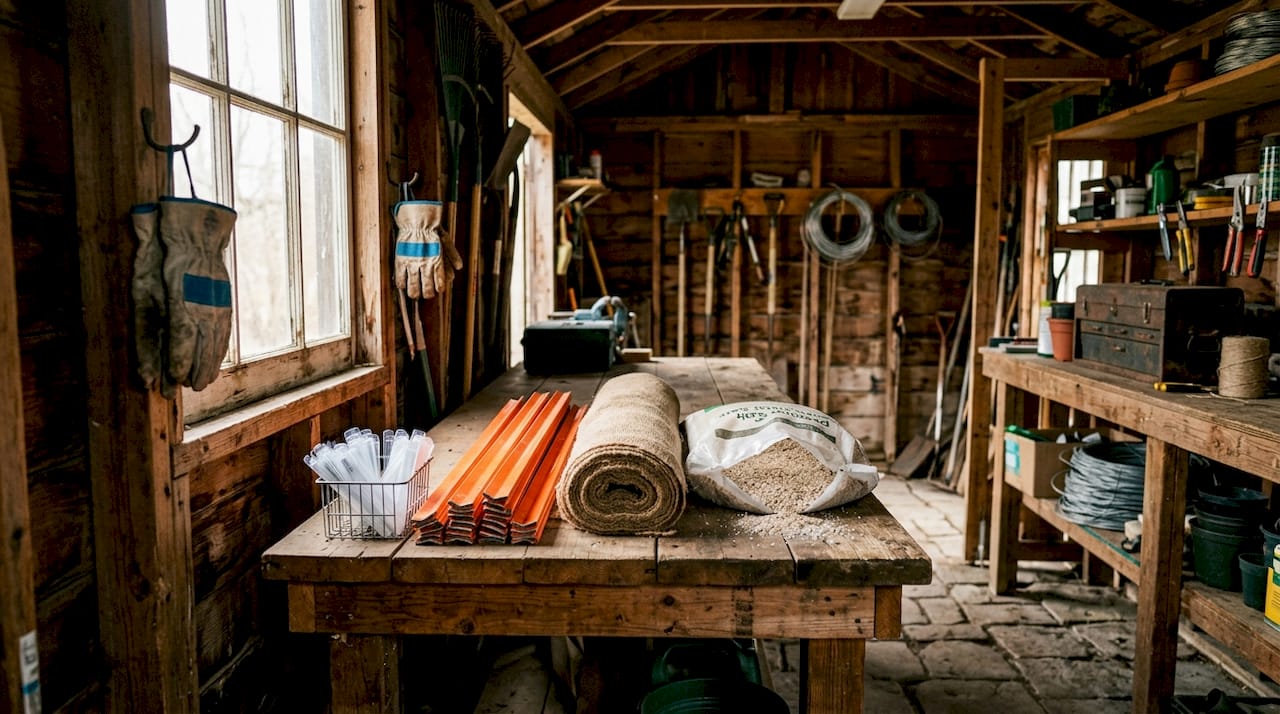
The right materials, placed before the season starts, give plow operators clear guidance and give your plants a physical barrier against harm. Skipping this step is the single most common reason landscaping gets damaged.
| Material | Purpose | Placement |
|---|---|---|
| Reflective stakes or markers | Define plow boundaries for operators | Every 1.5–2 meters along vulnerable edges |
| Breathable frost cloth or burlap | Protect sensitive shrubs and perennials | Draped loosely over plants before cold snaps |
| Mulch (3–4 inches deep) | Insulate roots and stabilize soil temperature | Applied over root zones before freeze |
| Gravel or stone border strips | Create a sacrificial plow buffer zone | Set at least 50 cm back from pavement edges |
| Snow fencing | Redirect drifting snow away from beds | Installed upwind of vulnerable plantings |
Reduced-rate deicing materials matter just as much as physical barriers. The Snowfighters Institute recommends reducing sodium chloride by 30–50% within 10 feet of ornamental plantings. That reduction directly lowers the risk of chemical burn and long-term soil imbalance.
Pro Tip: Avoid plastic sheeting as a plant cover. UC Agriculture research confirms that plastic traps moisture against foliage, which causes more damage than the cold itself. Use breathable frost cloth instead.
How should you prepare your yard before snow season starts?
Pre-season preparation is the highest-return activity in winter landscaping care. One afternoon of work in late october or early november prevents weeks of spring repair.
- Remove lightweight decorative items. Planters, solar lights, and garden ornaments become plow debris when left outside. Store them before the first storm.
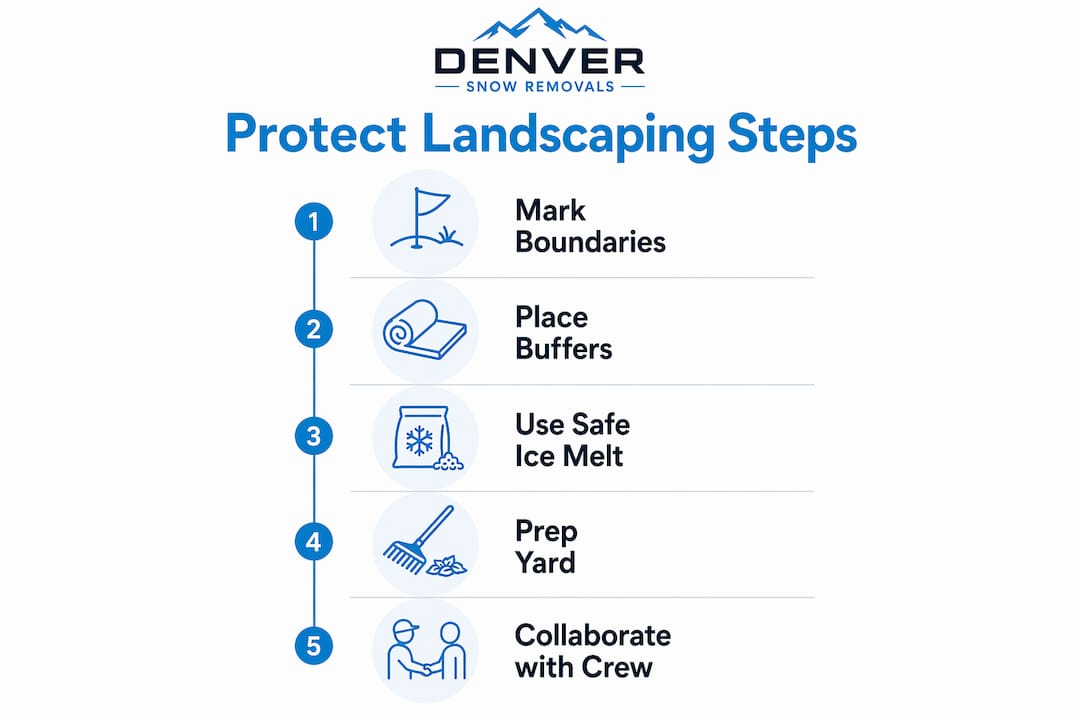
- Mark all vulnerable edges with reflective stakes. Place stakes every 1.5–2 meters along garden beds, lawn borders, and driveway edges. Use closer spacing in areas that have suffered plow damage before.
- Install gravel or stone buffer strips. A border set at least 50 cm back from the pavement edge gives operators a clear visual and physical guide. It absorbs minor blade contact without harming plant roots.
- Apply anti-desiccant spray to sensitive evergreens. Anti-desiccant products coat foliage and reduce moisture loss during dry, cold winters. Apply in late fall before temperatures drop below freezing.
- Tie up delicate evergreen branches loosely. Use soft twine to bundle branches upward. This reduces the surface area that catches snow weight and lowers the risk of splitting.
- Apply a 3–4 inch mulch layer over root zones. Mulch acts as a thermal blanket. It slows freeze-thaw cycles that crack soil and stress roots throughout the winter.
Pro Tip: Walk your property with your plow operator before the first storm. Point out every marked bed, fragile shrub, and drainage area. Operators who know your yard cause far less accidental damage than those working from memory.
What are the best practices for plow operators near landscaping?
Plow operators carry most of the responsibility for landscape preservation in winter. The right technique makes the difference between a clean season and a yard full of spring repairs.
- Raise the blade height near turf and ornamental beds. Running a blade too low scrapes away topsoil and tears grass crowns. Even a small blade adjustment prevents this.
- Avoid piling snow directly onto garden beds or tree trunks. Snow piles carry road salt, debris, and compaction pressure. Repeated piling in one spot restricts air and water movement to roots and weakens plants over a full season.
- Hand shovel within at least 18 inches of plant material. A plow blade cannot be controlled precisely enough at close range. Manual shoveling near beds protects both the plants and the soil structure.
- Alternate snow storage zones across the property. Rotating where snow gets piled prevents soil compaction from building up in one area. Soil compaction is a leading cause of poor lawn health after winter.
- Apply deicers at reduced rates near plant beds. Calibrating spreaders to apply minimal effective dosages near ornamental areas balances ice control with chemical stress reduction.
- Brief operators on marked zones before every storm. Conditions change, and new crew members may not know your property. A quick walkthrough or a simple site map prevents most avoidable damage.
Pro Tip: Effective snow removal planning considers plant sensitivity, soil health, and the longevity of landscaping investments. Treat your site map as a living document and update it each fall as your plantings mature.
How do you recover your landscaping after a snow plowing event?
Post-storm recovery is where most homeowners make costly mistakes. The instinct to fix damage immediately often makes things worse.
- Inspect for mechanical damage and salt stress before touching anything. Look for broken branches, displaced mulch, and brown foliage edges. Document what you see before deciding on a course of action.
- Avoid immediate pruning or aggressive ground work. Rushing repairs after snow events often worsens damage. Wait for stable temperatures and thawed ground before cutting or digging.
- Irrigate root zones when temperatures allow. Cornell Cooperative Extension identifies that salt accumulation over 1,000 ppm in soil harms most ornamental species. Post-storm irrigation flushes accumulated chloride ions from root zones and restores soil chemistry.
- Allow the ground to thaw before repairing compacted soil or damaged turf. Surface repairs made on frozen ground are ineffective and can cause long-term structural issues. Patience here pays off in spring.
- Rake and replace displaced mulch. Extended snow cover shifts mulch out of position. Restoring the layer after each major storm keeps root insulation consistent.
- Monitor regrowth through spring. Some chemical or mechanical damage does not show until new growth emerges. If the same areas suffer repeated damage each year, consult a landscape professional for a structural solution.
What mistakes most often damage landscaping during snow removal?
Most landscape damage during winter is preventable. These are the errors that show up repeatedly, season after season.
- Neglecting to mark edges. Unmarked garden beds and lawn borders are the leading cause of plow blade damage. Operators cannot avoid what they cannot see.
- Overusing salt near plants. Chronic salt application near ornamental beds causes cumulative chemical injury. Soil imbalance builds across multiple winters and eventually kills established plants.
- Shaking snow off evergreen branches. Wood becomes brittle in cold temperatures. The Morton Arboretum confirms that shaking snow off evergreens causes structural breakage. Leave the snow and let branches recover naturally as temperatures rise.
- Piling snow in the same spot every storm. Repeated compaction in one area suffocates roots and creates dead zones in lawns. Rotating storage zones costs nothing and prevents serious damage.
- Rushing post-storm repairs. Cutting back damaged growth or raking compacted soil before the ground thaws makes recovery harder, not easier.
Landscaping within 45 cm of the sidewalk edge may affect your eligibility for municipal repair claims if city plows cause damage. Local setback rules vary by municipality, so check your local ordinances before planting near public walkways.
Key Takeaways
Protecting landscaping during snow plowing requires pre-season marking, physical buffers, reduced chemical use, careful operational technique, and patient post-storm recovery.
| Point | Details |
|---|---|
| Mark boundaries before winter | Place reflective stakes every 1.5–2 meters along all vulnerable landscape edges. |
| Use physical buffers | Install gravel or stone strips at least 50 cm back from pavement to absorb blade contact. |
| Reduce salt near plants | Cut sodium chloride application by 30–50% within 10 feet of ornamental beds. |
| Alternate snow storage zones | Rotating pile locations prevents soil compaction and root suffocation over the season. |
| Wait before repairing damage | Allow ground to thaw fully before pruning, digging, or restoring turf after storms. |
What years of Denver winters taught me about landscape protection
The part most homeowners miss is not the preparation. It is the cumulative effect. One winter of heavy salt use near a mature shrub looks harmless. By the third winter, that shrub is dead, and the replacement cost is real money.
I have seen property managers invest in beautiful landscaping and then hand snow removal to whoever shows up cheapest with a plow. No site briefing, no marked edges, no salt protocol. By march, the lawn edges look like they lost a fight with a grinder. The plants that survived did so by luck, not design.
The most effective approach I have observed combines two things: clear communication before the season and a written site plan that travels with the plow crew. When operators know where the beds are and what the salt limits are, damage drops sharply. That is not theory. That is what happens when preparation is treated as part of the job, not an afterthought.
Healthy snow cover actually insulates roots from freeze-thaw stress, which means not every inch of snow needs to be removed aggressively. The goal is safe access, not bare ground at any cost. The properties that come through winter looking strong are the ones where the owner and the operator worked from the same plan.
— Jesse
Professional snow removal that works with your landscaping
Protecting your yard through a Denver winter takes more than good intentions. It takes trained crews who know how to read a property, calibrate their equipment, and follow a site-specific plan on every visit.
Denversnowremovals has served residential and commercial properties across the Denver Metro area for over 44 years. The team plans snow placement, manages deicing material application near sensitive plantings, and works around your landscape rather than through it. If you want professional snow removal that protects your outdoor investment from the first storm to the last, Denversnowremovals offers free estimates and flexible service plans built around your property’s specific needs. Call 303-591-2089 to get started before the season hits.
FAQ
How far apart should I place landscape markers for snow plowing?
Place reflective stakes every 1.5–2 meters along vulnerable edges. Use closer spacing in areas that have experienced plow damage in previous seasons.
What is the safest deicing material to use near plants?
Reduced-rate sodium chloride, applied at 30–50% lower quantities within 10 feet of ornamental beds, causes the least chemical stress. Calcium chloride and magnesium chloride are generally less harmful to plants than standard rock salt.
Should I remove snow from my shrubs after a storm?
Leave snow on most shrubs and let it melt naturally. Shaking branches in cold temperatures causes breakage because wood becomes brittle. Only remove heavy ice accumulation that is visibly bending branches toward the breaking point.
How do I flush salt from my soil after winter?
Water root zones thoroughly when temperatures stay above freezing. Deep irrigation flushes chloride ions downward and away from root zones. Repeat watering over several days for beds that received heavy salt exposure.
Can I prune damaged plants right after a snowstorm?
Wait until the ground thaws and temperatures stabilize before pruning. Cutting damaged growth too early stresses plants further and makes accurate damage assessment harder. Spring regrowth often reveals which branches are truly dead versus dormant.