
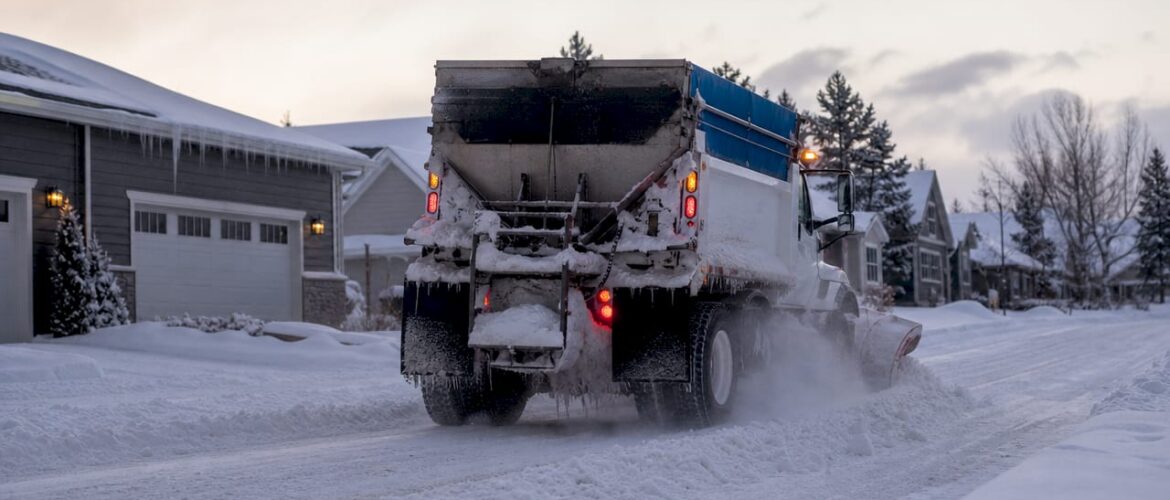
The snow plowing vs snow blowing difference comes down to one fundamental distinction: plowing pushes snow aside with a vehicle-mounted blade, while snow blowing collects and propels snow away using rotating augers. These two approaches to snow removal are not interchangeable. Each one suits specific property sizes, snow depths, and clearing goals. Choosing the wrong method costs you time, money, and potentially your safety. Understanding how each works gives you the clarity to make the right call before the next Denver snowstorm hits.
What is the difference between snow plowing and snow blowing?
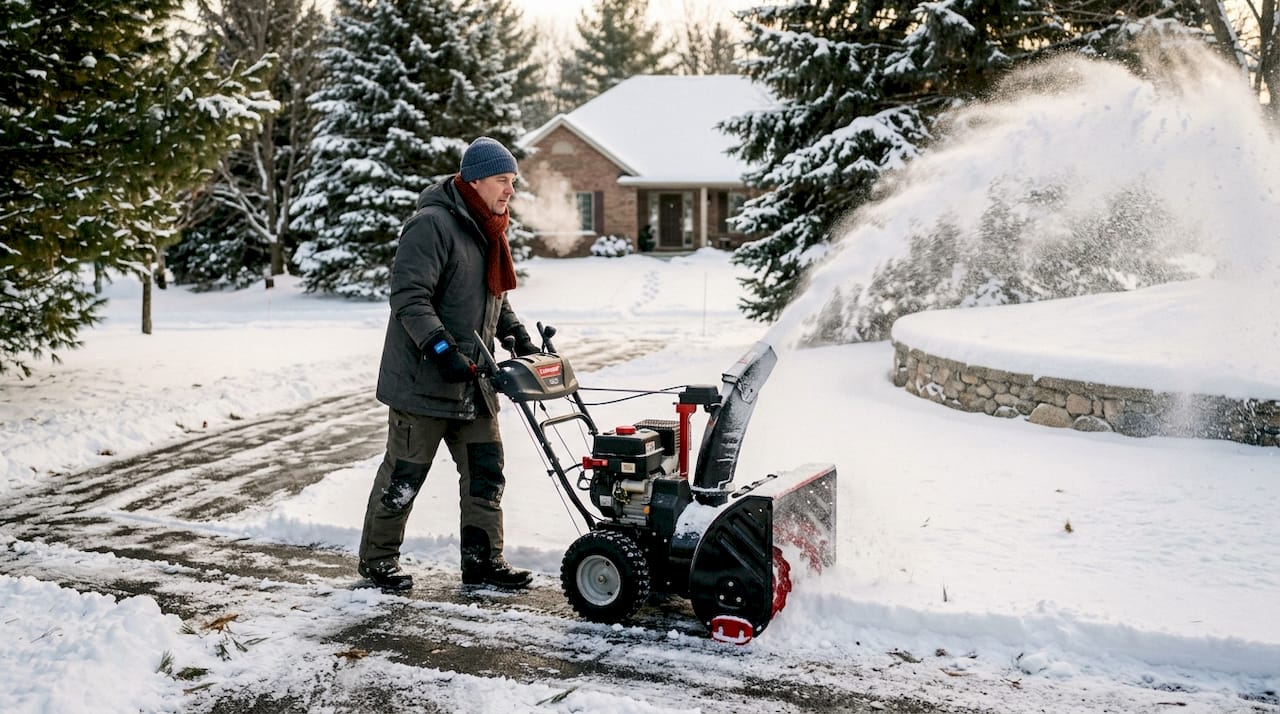
Snow plowing is a displacement method. A blade mounted to a truck or ATV pushes snow to the side or end of a surface, creating a pile. Snow blowers relocate snow by throwing it 40–50 feet away from the cleared path using a rotating auger and discharge chute. That distinction shapes everything from how long clearing takes to where the snow ends up.
Plowing works fast across large, open surfaces like parking lots, long driveways, and commercial access roads. Snow blowing works better in tight spaces, around parked cars, and along walkways where precision matters. The method you choose affects snowbank size, surface finish, and how accessible your property stays after clearing.
How do snow plow and snow blower equipment types compare?
Plow blade types and vehicle requirements
Plow blades come in several configurations. Straight blades push snow in one direction and work well for basic residential driveways. V-blades and power V-plows break through crusted snow and allow operators to angle the blade for more precise placement. Inverse V blades scoop snow efficiently and reduce spillback. All plow setups require a compatible vehicle, typically a pickup truck, ATV, or skid steer, with a mounting frame and hydraulic controls.
Detaching and reattaching plow equipment takes time and mechanical skill. If you use your truck daily, that adds friction to every storm response. Plows also require the vehicle to be available and operational whenever snow falls, which limits flexibility for some homeowners.
Snow blower stages and power sources
Single-stage snow blowers handle light snow up to 6–9 inches deep and work best on paved surfaces. Two-stage and three-stage models handle up to 16–18 inches and throw snow over 40 feet, making them the right choice for heavy Denver snowfall. Battery-powered models tested in 2026 run up to 135 minutes per charge. Gas models still outperform battery units in the heaviest snow conditions.
| Feature | Snow Plow | Snow Blower |
|---|---|---|
| Snow depth handled | 6+ inches, no upper limit with right blade | Up to 6–9 in. (single-stage), 16–18 in. (two/three-stage) |
| Clearing speed | Fast on large open areas | Moderate; precise on narrow paths |
| Throw distance | N/A (pushes snow) | 40–50 feet |
| Power source | Vehicle engine | Gas, electric, or battery |
| Surface suitability | Paved, gravel, large lots | Paved surfaces preferred |
| Debris risk | Low | Higher (projectile hazard) |
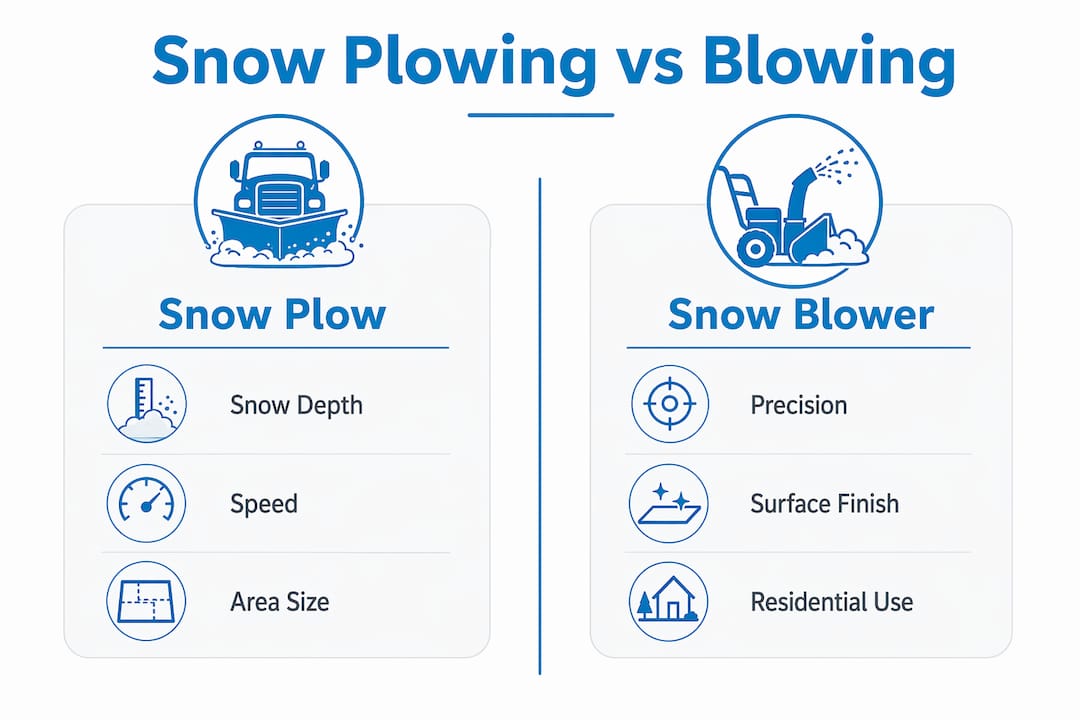
Pro Tip: If your property has a gravel driveway, raise your plow blade slightly or use a two-stage blower with skid shoes adjusted high. Both methods can scatter gravel if set too low.
How does efficiency differ based on property size and snow conditions?
Plowing’s biggest advantage is speed. A truck-mounted plow can clear a large commercial parking lot in a fraction of the time a snow blower would need. Plows excel on large, open areas where the goal is moving high volumes of snow quickly. For a 200-foot driveway or a retail lot, plowing is the clear choice.
Snow blowing efficiency shines in residential settings. Narrow driveways, sidewalks, and spaces between buildings all favor a blower’s precision. Blowers clear down to the pavement surface, which reduces ice buildup on high-foot-traffic areas like front walks and building entrances. That surface finish matters when safety is the priority.
Snow type also drives the decision. Wet, heavy snow is hard on single-stage blowers and can clog the auger. Dry, powdery snow moves easily with either method. Icy surfaces stop snow blowers entirely. Snow blowers are ineffective on ice, and de-icing must happen before any blower can operate safely.
Scenarios where plowing wins:
- Driveways longer than 100 feet
- Commercial parking lots and loading docks
- Open areas with no obstacles or landscaping
- Heavy snowfall exceeding 12 inches
- Properties requiring fast turnaround after a storm
Scenarios where snow blowing wins:
- Residential sidewalks and short driveways
- Areas near gardens, fences, or parked vehicles
- Spaces where snow cannot be pushed to the side
- Surfaces requiring a clean, pavement-level finish
- Properties with frequent light-to-moderate snowfall
Pro Tip: For Denver properties that get both heavy dumps and frequent light snowfalls, a two-stage blower handles the regular events while a professional plow service covers the major storms.
What are the costs, effort, and safety factors to consider?
Cost comparison
Plowing requires a vehicle and mounting equipment, making the initial investment higher than a standalone snow blower. A quality plow setup for a pickup truck runs significantly more than a residential two-stage blower. Snow blowers offer lower entry costs and plug-and-play convenience. However, gas models require seasonal maintenance including oil changes, spark plug replacement, and fuel stabilizer treatment.
Hiring a professional snow removal service removes equipment costs entirely. For homeowners and businesses that do not want to own or maintain equipment, a service contract with a provider like Denversnowremovals delivers predictable costs and guaranteed results.
Physical effort and operator demands
Operating a walk-behind snow blower still requires physical effort, especially on long driveways or in deep snow. Two-stage and three-stage models are self-propelled, which reduces strain. Plow operators sit in a vehicle, but maneuvering in tight spaces and managing blade controls requires focus and practice.
New plow operators should practice in open lots before attempting confined residential driveways. Blade control and vehicle response take time to learn, and speed must never come before safety. Property damage from a misaligned blade is both costly and avoidable.
Safety risks unique to each method
- Snow blower projectile hazard. Snow blowers can propel gravel and debris at high speed, creating a real risk to people, vehicles, and windows nearby. Never direct the discharge chute toward people or structures.
- Plow maneuvering risk. Plows reduce forward visibility and add vehicle length. Backing up without a spotter or camera system increases the chance of hitting obstacles.
- Legal snow disposal rules. Many municipalities prohibit blowing or plowing snow into public streets. Violating these rules can result in fines. Always direct snow onto your own property.
- Ice surface hazard. Running a snow blower on ice risks equipment damage and operator slips. Pre-treat icy surfaces with a de-icer before clearing.
What techniques maximize snow plowing and snow blowing results?
Snow plowing techniques that work
Backdragging is the standard technique for clearing snow away from garage doors and building entrances. The operator backs the plow blade up to the door, then drags snow away before pushing it to the side. Route planning matters on large lots. Start from the center and push snow outward to avoid creating impassable piles at the lot’s edge.
V-plow blade angles require adjustment based on snow texture and depth. Wet, heavy snow needs a more aggressive angle. Light, dry snow moves easily at a shallower angle. Operators who skip this adjustment work harder and clear less efficiently.
Snow blowing approaches that protect your property
Always throw snow with the wind, not against it. Blowing into the wind sends snow back onto the cleared surface and into the operator’s face. Aim the chute away from windows, vehicles, and neighboring properties. Clear frequently during a storm rather than waiting for accumulation to reach maximum depth. Lighter passes protect the auger and motor.
| Method | Typical clearing speed | Surface finish quality |
|---|---|---|
| Snow plow (truck-mounted) | Fast on large areas | Leaves thin snow layer |
| Single-stage snow blower | Moderate on short paths | Clean to pavement |
| Two-stage snow blower | Moderate to fast | Clean to pavement |
| Three-stage snow blower | Fast for residential | Very clean finish |
Pro Tip: Clear snow in two passes on deep accumulations. The first pass removes the top half; the second clears down to the surface. This protects equipment and produces a cleaner result.
- Mark your driveway edges with driveway markers before the first snowfall so plow blades and blower skids do not damage grass or landscaping.
- Keep a bag of ice melt near the garage door to treat any thin ice layer left after clearing.
- Inspect equipment before each storm season, not during it.
Key Takeaways
Snow plowing suits large, fast-clearing needs while snow blowing delivers precision and a cleaner surface finish for residential and high-foot-traffic areas.
| Point | Details |
|---|---|
| Core method difference | Plowing pushes snow aside; blowing throws it 40–50 feet away with an auger. |
| Best use by property size | Plow for large lots and long driveways; blow for short driveways and walkways. |
| Snow type matters | Blowers fail on ice; plows handle heavy, wet snow better than single-stage blowers. |
| Safety priorities | Blowers risk debris projectiles; plows require careful maneuvering in tight spaces. |
| Cost and effort | Plows cost more upfront; blowers need less equipment but more operator effort. |
What I’ve learned after watching both methods work and fail
After seeing both methods applied across hundreds of Denver properties, the most common mistake is choosing based on equipment availability rather than property fit. A homeowner buys a single-stage blower because it was on sale, then struggles through a 14-inch wet snow event that the machine simply cannot handle. A business owner hires a plow service for a narrow walkway-heavy property, then spends the next morning chipping ice because the plow left a thin layer the blade could not scrape clean.
The honest truth is that most residential properties in Denver benefit from a two-stage blower for routine storms and a professional plow service for the heavy events. That combination covers both precision and volume without asking one method to do a job it was not built for.
The other mistake I see constantly is ignoring surface finish. Plowing is fast, but it rarely clears down to bare pavement. That thin residual layer freezes overnight and creates a slip hazard by morning. Blowers clear to the surface, which is why high-foot-traffic areas like building entrances and sidewalks almost always benefit from blowing over plowing, regardless of property size.
My advice: match the method to the surface and the storm, not to what you already own. If you are managing a commercial property in the Denver Metro area, do not rely on a single approach. The best snow removal plans use both methods where each one performs best.
— Jesse
Professional snow removal in Denver for every property type
Choosing between plowing and blowing gets easier when you have an experienced team handling the decision for you. Denversnowremovals has served Denver Metro homeowners and businesses for over 44 years, applying both plowing and blowing methods based on what each property actually needs.
Whether your property is a residential driveway or a commercial parking lot, Denversnowremovals builds a plan around your specific conditions. The team is available 24/7 and responds to heavy snowfall events as they happen. Free estimates and flexible service plans mean you get the right coverage without paying for what you do not need. Contact Denversnowremovals to get a quote before the next storm arrives.
FAQ
What is the main difference between snow plowing and snow blowing?
Snow plowing pushes snow to the side using a vehicle-mounted blade, while snow blowing uses rotating augers to throw snow 40–50 feet away. Plowing is faster on large areas; blowing is more precise in tight spaces.
When should you choose snow blowing over plowing?
Snow blowing is the better choice for short residential driveways, sidewalks, and areas near landscaping or parked vehicles where snow cannot simply be pushed aside. It also clears down to bare pavement, reducing ice formation.
Can snow blowers handle ice?
No. Snow blowers are ineffective on icy surfaces and can suffer equipment damage if forced to operate on ice. Apply a de-icer to the surface before using a blower after a freeze-thaw cycle.
How deep can a snow blower handle compared to a plow?
Single-stage blowers handle up to 6–9 inches of snow. Two-stage and three-stage models manage up to 16–18 inches. Truck-mounted plows handle virtually any depth, making them the preferred tool for major Denver snowstorms.
Is professional snow removal worth it for homeowners?
Professional snow removal eliminates equipment costs, physical effort, and the risk of improper technique causing property damage. For homeowners in high-snowfall areas like Denver, a service contract with a provider like Denversnowremovals delivers consistent, reliable clearing without the overhead of owning and maintaining equipment.