

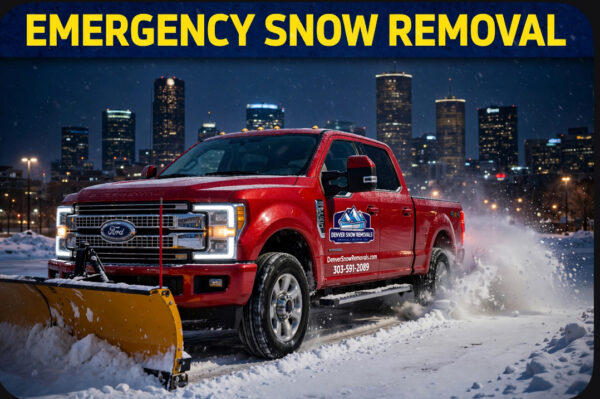
Snow plowing parking lots Denver, Colorado
When a winter storm barrels down from the Rockies and buries the Front Range overnight, the difference between a minor inconvenience and a full-blown operational shutdown often comes down to a single phone call. Emergency snow plowing in Denver, Colorado, is not a luxury reserved for sprawling corporate campuses. It is a practical necessity for property managers who need their parking lots open by 6:00 AM, for HOA boards responsible for dozens of homes, and for individual residents whose driveways have been sealed shut by a four-foot berm of city-plowed ice. This guide walks through exactly what triggers a true snow emergency in Denver, how the city's public response differs from private on-demand services, what you can expect to pay, and the steps you can take right now to protect your property and your budget before the next storm hits.
Table of Contents
- Why Denver’s Snow Requires a Proactive Emergency Plan
- The City vs. Private Emergency Response: What You Need to Know
- What to Expect from Emergency Snow Plowing in Denver, Colorado
- Protecting Your Property and Wallet: Liability and Contracts
- Why Denver Snow Removals Is Your Go-To for Emergency Plowing
- Frequently Asked Questions About Emergency Snow Plowing in Denver
- Protect Your Property Before the Next Storm
Why Denver’s Snow Requires a Proactive Emergency Plan
Denver averages 56 inches of snow each year, but the raw total tells only a fraction of the story. The city's location at the base of the mountains creates a volatile freeze-thaw cycle that transforms a fluffy overnight dusting into a sheet of hard-packed ice by morning commute. Spring storms in particular deliver what locals call "heart attack snow," a heavy, wet accumulation that is notoriously difficult to shovel and even harder to plow once it compacts.
The city's Department of Transportation and Infrastructure operates a fleet of 70 large plows covering roughly 2,050 lane miles of main streets. That leaves the vast majority of residential side streets and every private parking lot in the city waiting for a pass that may never come. Colorado law adds another layer of urgency: property owners and private operators are strictly prohibited from depositing snow onto public roads or adjacent sidewalks. A well-intentioned DIY effort that pushes snow into the street can result in fines and legal liability. When a storm hits and the snow starts piling up, a delayed response does not just mean inconvenience. It means ice bonding to asphalt, concrete spalling from repeated freeze cycles, and a cleanup bill that climbs with every hour of inaction.
See the Best Snow Plows of 2026 ❄️
The City vs. Private Emergency Response: What You Need to Know
How Denver DOTI Handles a Major Storm
Denver's public snow response follows a carefully tiered system that prioritizes main arteries over residential streets. Before a storm even arrives, city crews pre-treat major roadways with a solid deicer called Ice Slicer, a naturally mined product from Utah that derives its red color from over 60 trace minerals and contains more than 90 percent chloride salts. In the downtown core, crews switch to liquid magnesium chloride, a choice driven by air quality considerations rather than ice-melting performance.
Once accumulation begins, the city's large plows work the main streets continuously. Residential neighborhoods fall under a separate program that deploys 4×4 pickup trucks with plows between 3:00 AM and 3:00 PM, making a single pass down the center of each side street.
Residential Snow Plowing in Denver →
That center pass is critical to understand: it does not clear driveways, it does not clear parking spots, and it almost always leaves a dense berm of snow and ice at the end of every driveway apron. The city's own website includes an apology section acknowledging that plowing operations routinely push snow onto sidewalks and calling it an "unfortunate consequence." The acknowledgment is honest, but it does not solve the problem for the homeowner or business owner staring at a wall of ice blocking their access.
When You Need a Private Emergency Plow: The 24/7 Trigger
The decision to call a private emergency plowing service hinges on two distinct triggers, one commercial and one residential. For commercial properties, the trigger is straightforward: if a parking lot is impassable for delivery trucks, employees, or emergency vehicles, or if ice accumulation creates a verifiable slip-and-fall risk, you need a plow immediately. Waiting for the city is not an option because the city does not plow private lots.
For residential properties, the trigger is often the berm. After the city's center-street plow passes, a compacted ridge of snow and ice can block a driveway entirely. For most homeowners, that is a frustration. For anyone with a medical condition, a mobility limitation, or an urgent need to leave the house, that berm is a hazard. Private services staff dispatch during every active storm and operate around the clock, unlike the city's residential plowing program that shuts down at 3:00 PM. If a storm intensifies in the late afternoon or overnight, a private crew is the only option for clearing a driveway or lot before the next morning.
What to Expect from Emergency Snow Plowing in Denver, Colorado
Response Time and Equipment
Emergency snow removal services in Denver prioritize commercial lots first during an active storm. The reasoning is practical: high-traffic properties carry the greatest liability exposure, and keeping loading docks and employee parking open keeps businesses running. Residential driveways follow, typically once the storm begins to taper and crews can break away from their commercial routes.
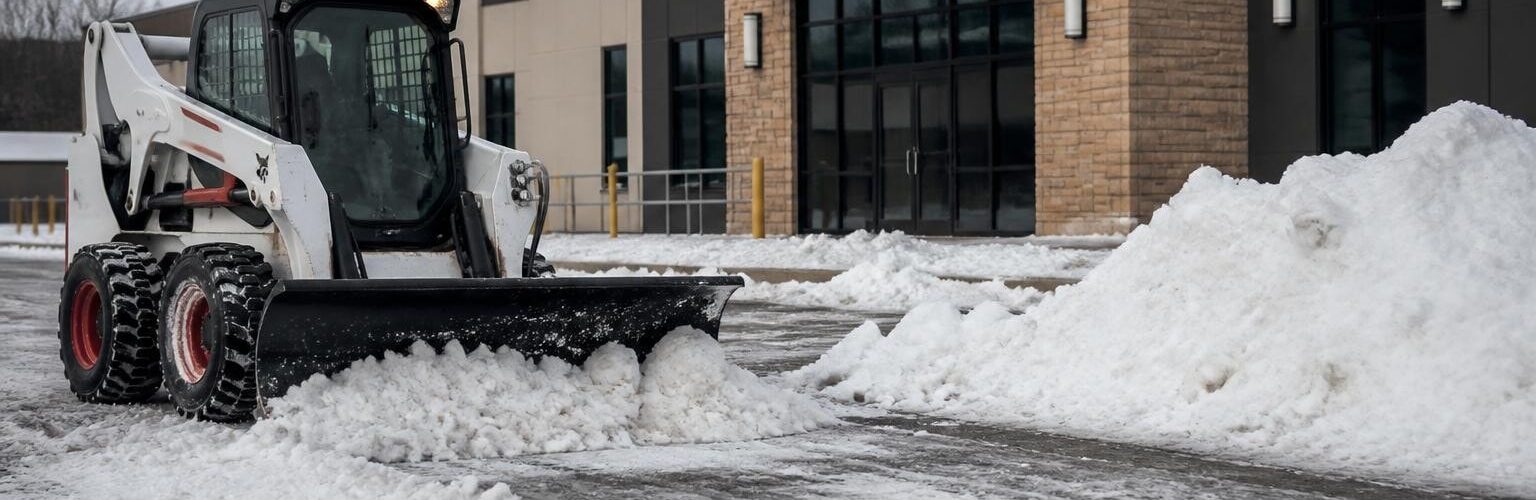
Equipment quality separates a professional emergency response from a neighbor with a plow bolted to a half-ton pickup. Reputable commercial providers run heavy-duty trucks such as Chevy 2500HD models equipped with commercial-grade Boss plows, machines built to cut through dense berms and scrape down to bare asphalt without damaging the surface. For larger commercial lots, fleets include skid steers and front-end loaders capable of stacking snow into designated storage areas on-site. Residential calls are typically handled by 4×4 pickups with plows, but the same commercial-grade standards apply. A light-duty plow on a small truck will struggle with the compacted ice the city leaves behind. The right equipment clears it in one pass.
Cost Factors for Emergency Snow Removal
One of the most common questions Denver property owners ask is what emergency snow removal actually costs, and the answer is rarely a flat number. Pricing depends on three primary variables: acreage, frequency, and de-icing needs.
For residential driveways, emergency per-push pricing typically falls between $50 and $150 depending on driveway length, slope, and the severity of the storm. A standard two-car driveway in a Denver suburb might land at the lower end of that range, while a long, steep driveway in a foothills community will push toward the upper end. Commercial lots are priced by the acre, with per-storm rates generally ranging from $200 to over $500 per acre depending on the complexity of the lot, the number of obstructions, and whether de-icing application is included.
Frequency shapes the final cost significantly. A one-time emergency call during a blizzard will always command a premium, both because demand spikes and because the crew must work a single property into an already packed route. Seasonal contracts flip that equation. Businesses and HOAs that sign contracts before October 1st lock in lower per-push rates and receive priority dispatch over one-time callers. De-icing adds another layer: granular Ice Slicer application is typically priced per pound or per application zone, while liquid magnesium chloride treatments cost more but cause less damage to concrete and landscaping over time. For property managers weighing a seasonal contract against a reactive approach, the math almost always favors the contract, both in cost predictability and in response speed.
Protecting Your Property and Wallet: Liability and Contracts
The "Ice Slicer" Effect on Concrete and Landscaping
Denver's go-to deicer, Ice Slicer, carries a "natural" label because it is mined rather than chemically synthesized. That label can be misleading. The product is over 90 percent chloride salts, and chloride salts are aggressive. Repeated heavy application eats away at concrete surfaces, kills turf and ornamental plants along driveway edges, and accelerates corrosion on metal handrails, door frames, and vehicle undercarriages.
Professional snow removal operators manage this risk through controlled application rates. They know how much product a given surface needs to break the ice bond without over-saturating the concrete. Many also document every visit with time-stamped photos, creating a record that protects commercial clients from slip-and-fall liability claims. If a tenant or customer alleges an injury, the property manager can produce photographic proof that the lot was cleared and treated on schedule. For properties with newly poured concrete, expensive hardscaping, or sensitive landscaping, it is worth asking about liquid magnesium chloride as an alternative deicer. It costs more per application but is significantly gentler on surfaces and vegetation.
Avoiding Neighbor Disputes and Legal Fines
Snow disposal in Denver is regulated, and the rules catch people off guard every winter. Colorado law explicitly prohibits property owners, renters, and private snow removal operators from depositing snow on or next to a public highway. Denver municipal codes reinforce this: pushing snow from a driveway or parking lot into the street is a fineable offense, and pushing it onto a neighbor's property without permission constitutes a nuisance or trespass.
If a neighbor repeatedly shoves snow onto your driveway or lawn, document the incidents with photos and contact 311, Denver's non-emergency line, for guidance on next steps. For commercial properties, the stakes are higher. Every commercial lot must have a designated on-site snow storage area large enough to hold accumulated snow through the season. Operators who dump snow in the street or on adjacent properties expose the property owner to fines and legal claims. A professional service that knows Denver's regulations will stack snow where it belongs and keep the property in compliance.
Why Denver Snow Removals Is Your Go-To for Emergency Plowing
Denver Snow Removals has been navigating the city's specific snow patterns and municipal regulations for over 47 years, a tenure that spans every type of storm the Front Range can produce. That experience translates into practical advantages for clients: crews know which lots drain where, which corners ice first, and how to stage equipment so that no property waits longer than necessary during a multi-day storm cycle.
The company runs a fleet of Chevy 2500HD trucks equipped with commercial-grade Boss plows, machines built to handle the heavy, wet snow and dense berms that lighter equipment cannot touch. Every visit to a commercial property is documented with photographs, creating a liability shield that property managers and HOA boards can rely on if a slip-and-fall claim ever arises. Dispatch operates 24/7 during active storms, so a call placed at 2:00 AM during a blizzard reaches a person who can route a truck, not a voicemail box.
For residential clients, the service addresses the single most frustrating consequence of city plowing: the berm. After a DOTI truck makes its center-street pass and leaves a compacted wall of ice at the end of a driveway, a Denver Snow Removals crew can clear it before it freezes solid. Commercial clients benefit from the same attention to detail applied across parking lots, loading zones, and pedestrian walkways, with de-icing treatments calibrated to the specific surface and conditions.
Frequently Asked Questions About Emergency Snow Plowing in Denver
Is 311 a non-emergency for Denver snow issues?
Yes. Denver's 311 line is the correct number to call for non-emergency snow concerns such as reporting a missed street plow, a hazardous intersection, or a city tree limb downed by snow. For private property, including your driveway, parking lot, or sidewalk, you need a private contractor. 311 does not dispatch plows to private property.
What is the longest Denver has gone without snow?
Denver once went 235 consecutive days without measurable snowfall, a record set during the winter of 1888-1889. A mild stretch early in the season can lull property owners into skipping a seasonal contract, but the city's snowiest months are historically March and April. A quiet November does not predict a quiet spring.
Do you offer free estimates?
Yes. Denver Snow Removals provides free, no-obligation quotes for both commercial and residential properties. An on-site assessment allows the team to measure acreage accurately, identify drainage and ice-prone areas, and recommend a service plan that fits the property's specific needs.
Protect Your Property Before the Next Storm
Denver's city plows handle the main streets. Your parking lot, your driveway, and your liability exposure are your responsibility. Waiting until a blizzard is in the forecast to find a plow service means competing with every other property owner for a limited number of trucks, and it almost always means paying a premium for reactive service. Signing a seasonal contract before October 1st locks in your rates and guarantees priority dispatch when the snow starts falling. Call Denver Snow Removals today for a free estimate on emergency snow plowing in Denver, Colorado, and head into winter with a plan already in place.