
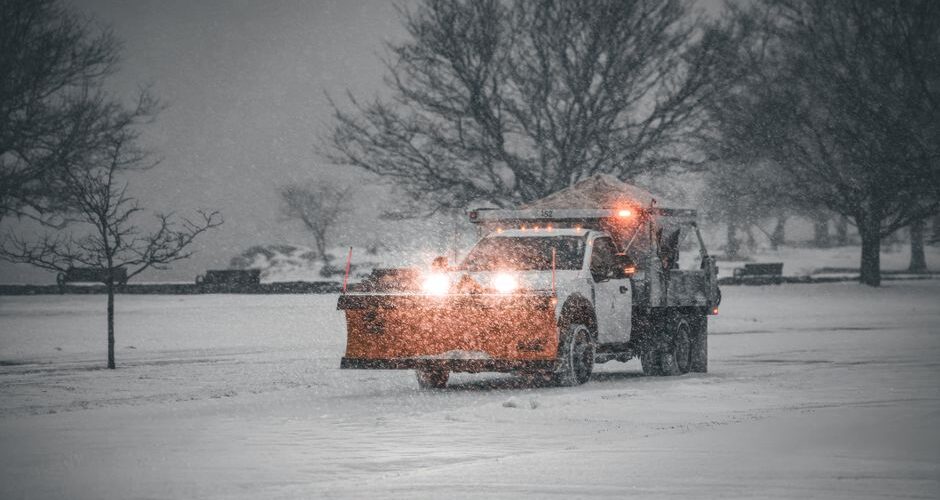
By the time your opening crew unlocks the front door, the alley behind your building has either been plowed or it has not. There is no middle ground downtown. Denver’s Department of Transportation and Infrastructure handles the streets during a storm, and the city clears snow from sidewalks in some city parks. Everything else, meaning the sidewalk fronting your storefront, the loading dock, the garage ramp, and the alley your deliveries come down, belongs to the property. That single fact is why downtown Denver snow removal is a different job from plowing a suburban lot. It runs overnight, it runs tight, and it runs on a schedule set by your opening time rather than by the storm.
We are a Denver-only commercial snow crew with more than 47 years in the metro. Dispatch is staffed 24/7, routes stay inside the City and County of Denver, and contracts are written for property managers, hotel general managers, restaurant operators, and retail managers who cannot absorb a late start.
What Downtown Denver Commercial Snow Removal Has to Handle Before You Open
A downtown property is not one surface. It is a stack of small surfaces that all have to be clear at the same time, and each one has a different failure mode if it is missed. The overnight window between 2:00 a.m. and 6:00 a.m. is when most of it has to happen, because that is when the streets are quiet and the plows can actually work without fighting parked cars and pedestrians.
- Overnight plowing and stacking between 2:00 a.m. and 6:00 a.m. so the lot, drive aisle, or dock apron is clear before staff arrive.
- Pre-open sidewalk clearing by hand and machine along the full frontage, including corners and bus stop approaches.
- De-icing and ice melt on entries, steps, ramps, thresholds, and any surface with pedestrian traffic.
- Loading dock clearing so early freight does not back up onto the street and hold up the rest of the block.
- Parking garage entrance and ramp clearing, including the apron where the garage meets the alley or street.
- Alley pickup and snow hauling when stacked piles block trash service, delivery access, or fire lanes.
Miss one of those and the whole property reads as unmanaged, even if the rest of it is spotless. A cleared lot with an icy entry step is still a liability claim waiting to happen.
Downtown Denver Zones We Cover
Our routes are built around the core of the City and County of Denver. We do not run Aurora, we do not run the suburbs, and we do not run the Denver Tech Center. That focus is deliberate. A crew that spends its night on E-470 is not a crew that is going to be in your alley at 3:00 a.m.
LoDo and Ballpark
LoDo and the Ballpark district are the tightest commercial footprint in the city. Service alleys are narrow, dumpsters take up half the lane, and there may be exactly one path in and out. Plowing here is as much about where the snow goes as it is about pushing it. Stacking against a wall that blocks a grease pickup or a beer delivery defeats the purpose. We clear the alley throat first, then the dock, then the walk, and we coordinate stack locations so the next morning’s service truck can still get through.
Union Station and the Central Business District
Union Station and the CBD bring a different set of constraints. Loading dock hours are scheduled, transit runs on its own clock, and hotel entrances need to be dry and safe from the first guest check-out onward. Office towers want their plaza and garage ramps clear before the commuter wave, which means the work happens hours earlier than most people realize. Garage ramp clearing matters here for a practical reason: a ramp that is packed with snow and ice stops traffic completely, and a queue on a downtown ramp backs onto the street fast.
16th Street Mall, Capitol Hill, and RiNo
The 16th Street Mall corridor and Capitol Hill carry heavy pedestrian volume, so sidewalk condition is the entire job. Snow gets packed into ice by foot traffic within minutes, which is why de-icing has to follow the shovel rather than wait for a second pass. RiNo is a mix of newer buildings and older industrial lots, and on the Denver side it means trucks, tight turnarounds, and patios that need to be cleared as carefully as the public walk. Each block has its own quirks, and knowing them ahead of a storm is worth more than an extra truck.
Cherry Creek North and Cherry Creek
Cherry Creek North is retail and boutique office space with high-spec finishes, planters, and storefront glass close to the walk. Equipment choice matters as much as speed. Cherry Creek itself adds parking structures and residential mixed-use buildings where garage entrances and pedestrian paths need to be handled together. Shoppers arrive early on weekends, so the pre-open window here is shorter than most operators assume.
Zero-Tolerance Contracts vs. Per-Push Billing
A zero-tolerance contract means we treat any accumulation as a trigger, including a trace. The crew rolls at the start of precipitation, not after the storm crosses a depth threshold. Per-push billing works the other way. You pay when a plow is dispatched, and dispatch usually waits until snow depth hits an agreed trigger, often two inches.
For a downtown bar, restaurant, hotel, or retail storefront, that two-inch trigger is a problem for a simple reason. Two inches of snow on a downtown sidewalk during a busy evening becomes packed ice long before a plow ever shows up. Add a Saturday night crowd and you have a walking surface that is dangerous by midnight and a claim against the property by Monday.
- Zero-tolerance: dispatch at onset, repeated passes through the event, de-icing included in the rhythm of service, no waiting for depth.
- Per-push: dispatch after a trigger depth is measured, billed per visit, and dependent on someone deciding the storm has earned a callout.
- Zero-tolerance costs more on paper per season and far less in surprises, because the labor, material, and hauling are already scoped.
- Per-push is a reasonable fit for a low-traffic lot with no sidewalk frontage and no early opening time.

What the City of Denver Plows and What You Still Own
City crews focus on the streets. Denver’s residential plowing program runs between 3:00 a.m. and 3:00 p.m., and when residential plows are deployed they take one pass down the street. That is a street-level operation with a citywide mandate, and it does not extend to your sidewalk, your private lot, your dock, or your alley apron. The city also clears snow on sidewalks in certain city parks, and the management of some park sidewalks falls to other entities entirely.
The practical takeaway for a downtown property manager is that municipal plowing is not a substitute for a private contract. When a storm ends, the street in front of your building may be passable while the sidewalk, garage ramp, and loading zone are still buried. Those are the surfaces your customers, tenants, and employees actually touch, and those are the surfaces your contract has to cover.
Sidewalk Rules and Slip-and-Fall Exposure Downtown
Denver businesses are required to clear snow from the sidewalks adjoining their property, and enforcement is reported to be strictest in the downtown core. Timing windows and fine schedules can change, so confirm the current requirement with the City and County of Denver before you write your contract terms. The bigger exposure is not the citation. It is the slip-and-fall claim.
Sidewalk liability cases generally turn on what the property did, when it did it, and what evidence exists. Service logs, dispatch timestamps, material application records, and photos from the end of each event are the difference between a defensible file and an expensive one. Our crews document as they work, because a downtown property with heavy foot traffic needs a record, not a memory.
Downtown Denver Commercial Snow Removal Pricing for 2026
Pricing downtown reflects overnight labor, specialized equipment, insurance, and hauling rather than simple shoveling. For context, consumer-facing quotes for residential driveways in the Denver metro have been advertised starting around $35, and some Denver homeowners have reported paying $150 or more per visit. Downtown commercial work sits in a different category entirely, because a single missed dock can shut down a building’s morning.
| Contract type | Typical 2026 downtown range | Best fit |
|---|---|---|
| Per-push, small lot or single dock | $125 to $300 per push | Narrow LoDo or Ballpark footprints with one access point |
| Seasonal contract, small to mid-size property | $2,500 to $6,000 per season | Restaurants, retail, boutique offices, and mixed-use entries |
| Sidewalk crew, per night | Quoted per site | Blocks with heavy foot traffic where hand work is required |
| Emergency dispatch | Additional fee | Properties calling mid-storm without a contract in place |
Final numbers depend on square footage, frontage length, trigger depth, hauling requirements, material type, and how many surfaces need separate equipment. Treat the ranges above as planning figures and confirm a written quote for your specific address before budgeting. Every downtown property is a different puzzle, and a quote built from an aerial photo is not a quote.
Loading Docks, Garage Ramps, and Alleys Are Where Downtown Jobs Are Won
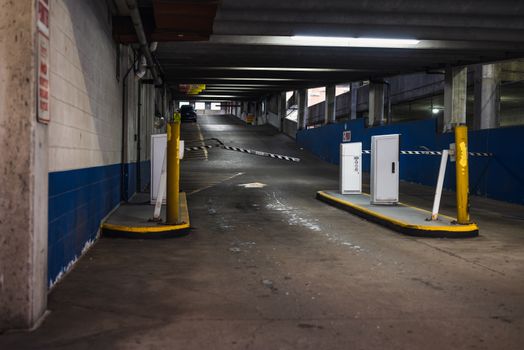
Anyone can plow an open parking lot. Downtown properties are decided by the awkward parts. A dock that is cleared on time keeps a restaurant’s deliveries on schedule and keeps the freight truck from idling in a travel lane. A garage ramp that is cleared and salted keeps tenant traffic moving and avoids the backup that spills onto the street. An alley that is cleared and hauled keeps trash service, grease pickup, and fire access working the morning after a storm.
Hauling deserves its own mention. When stacking space runs out, snow has to leave the property. On a downtown block, a pile left in a fire lane or blocking a service entrance is not a cosmetic issue. It is a violation and, in some cases, a safety problem that has to be fixed the same day.
Why a Denver-Only Crew Matters During a Storm
Response time in a snowstorm is a function of distance and local knowledge. A crew staged in Denver moves on Denver streets. A crew staged outside the county spends the first hour of a snow event on a highway that is also snow-covered, alongside everyone else who waited too long to leave.
Local knowledge matters just as much as proximity. Downtown blocks close, events shift traffic patterns, and access points that are open on a Tuesday can be blocked during a game or a street closure. A crew that works these blocks every winter knows which alley to enter from, where equipment can stage, and which dock needs to be cleared first. That is not something a regional operator can learn mid-storm from a map.
How a Snow Event Runs on 24/7 Dispatch
- Monitoring begins before the first flake, with dispatch tracking forecast timing and accumulation for the metro core.
- Crews are staged and routed by property priority so overnight routes begin when precipitation starts, not when a depth threshold is crossed.
- Overnight plowing and stacking runs through the 2:00 a.m. to 6:00 a.m. window for lots, docks, alleys, and garage approaches.
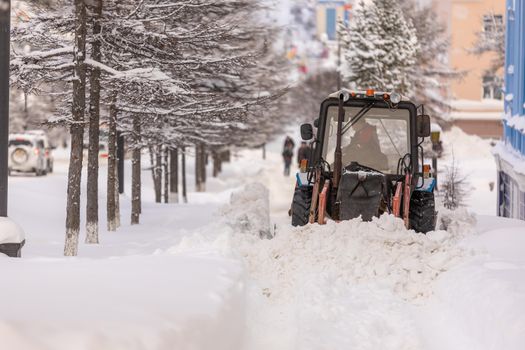
- Sidewalk crews follow the plows with clearing, scraping, and ice melt on entries and pedestrian paths.
- Pre-open verification confirms the property is ready before your first employee or customer arrives.
- Daytime touch-ups and hauling handle refreeze, drifting, and stacked snow that has to leave the site.
Each property gets a documented service record, which is the file you want on hand if a claim or a city inquiry ever lands on your desk.
Book a Downtown Zero-Tolerance Contract Before October
Downtown routes fill first because downtown properties have the shortest tolerance for a late start. Once a route is full, adding a building on the same block means pulling capacity from somewhere else, and we would rather not do that to an existing client in February.
If your property sits in LoDo, Union Station, the Central Business District, the 16th Street Mall corridor, Ballpark, RiNo on the Denver side, Capitol Hill, or Cherry Creek North, get a downtown zero-tolerance quote before October. Overnight service, pre-open sidewalks, de-icing, dock and garage clearing, and 24/7 dispatch, all scoped to your address. Book at denversnowremovals.com.
Frequently Asked Questions
Does the City of Denver plow the sidewalk in front of my business?
No. Denver crews focus on streets, and the city clears sidewalks in certain city parks, with other park sidewalks managed separately. The sidewalk adjoining a private downtown property is the property’s responsibility under Denver’s clearing requirements. Confirm the current timing and enforcement details with the City and County of Denver, then make sure your snow contract covers that frontage explicitly.
What does a zero-tolerance snow contract actually mean?
It means the trigger is precipitation, not depth. We dispatch when the snow starts and continue through the event rather than waiting for an agreed accumulation such as two inches. For a downtown bar, restaurant, hotel, or retail property with early opening hours and heavy foot traffic, that removes the gap where snow packs into ice before anyone arrives.
How early does overnight plowing start in downtown Denver?
Most downtown routes work the 2:00 a.m. to 6:00 a.m. window, which clears lots, docks, alleys, and garage approaches before staff and deliveries arrive. Sidewalk crews follow the plows so entries and pedestrian paths are finished before opening. Exact timing is set per property based on your opening hour and delivery schedule, and it is written into the contract scope.
Should my downtown property choose seasonal billing or per-push?
Seasonal works better when the property cannot tolerate a delayed start, which describes most downtown bars, restaurants, hotels, and retail storefronts. Per-push can make sense for a low-traffic lot with no sidewalk frontage and no early opening requirement. Seasonal pricing, typically in the $2,500 to $6,000 range for smaller downtown properties, spreads the cost of overnight labor across the winter instead of concentrating it into storm weeks.
Do you serve Aurora, the suburbs, or the Denver Tech Center?
No. We run routes inside the City and County of Denver, and downtown is our core. That focus is what keeps response times short during a storm, since crews are not spending the first hours of an event fighting highway traffic to reach a site. It also means our crews already know downtown access points, closures, and dock layouts.