
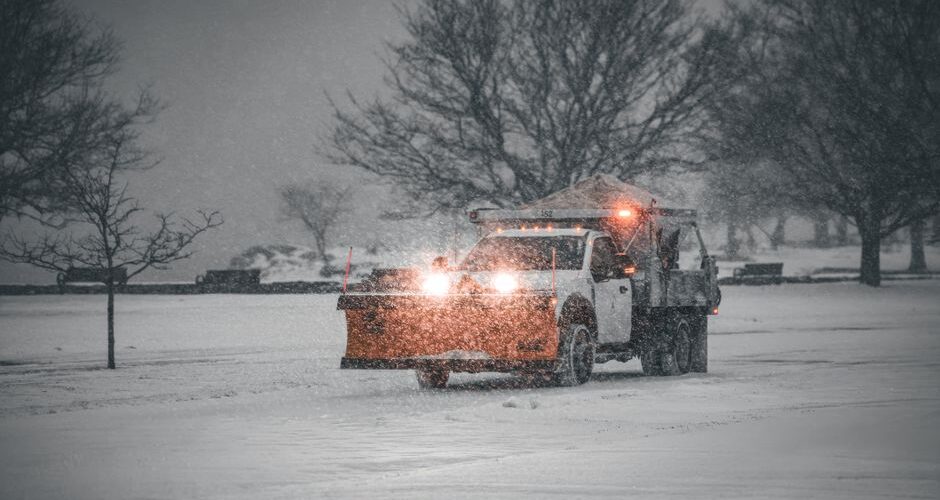
A snowstorm in the Denver metro area does not just slow down a commute. On a commercial property, it starts a countdown. Tenants begin arriving, delivery trucks line up at the loading dock, and emergency vehicles may need a clear path through the lot long before the snow stops falling. How fast those lanes open depends almost entirely on the plan that was set before the first flake landed.
Denver averages about 56 inches of snow a year, and a single storm can carry a large share of that total. Properties with a signed agreement that includes a defined trigger depth and around-the-clock dispatch get service before, during, and after the event. Properties that wait to make a phone call once the lot is already buried end up in line behind everyone else.
What Emergency Plowing Actually Covers on a Commercial Site
Emergency plowing is not one pass after the storm ends. It is a sequence of services that runs from the forecast through the final cleanup. A commercial contractor handling a Denver snowstorm typically delivers:
- Pre-treatment and equipment staging before accumulation begins
- Continuous plowing of drive lanes and parking rows while snow is still falling
- Hand work on walkways, building entrances, and accessible routes
- Ice removal and de-icing on areas prone to refreezing
- Snow hauling when on-site storage runs out
- Documentation of each visit for the property file
The difference between this and a one-time plow pass shows up the next morning. A lot can look clear from the street while entrances, curbs, and pedestrian paths stay packed with ice that meltwater created overnight.
City Plows and Private Plows Handle Different Ground
Denver’s public crews and your private contractor are working two separate jobs. City and state plows focus on clearing main roads first, and neighborhood streets are often left for last. Denver’s official policy ties residential plow deployment to storms that require full deployment of the city fleet, and residential plowing has been reported to run between 3:00 a.m. and 3:00 p.m. In other words, the street outside your entrance may be cleared on the city’s schedule, not yours.
Inside the property line, the responsibility shifts. In Denver, property owners rather than renters are responsible for snow removal, and the city has used inspectors to check compliance. That makes the parking lot, drive lanes, and walkways a private obligation.
| Area | Who clears it | Typical priority |
|---|---|---|
| Highways and main arterials | State and city plows | First |
| Neighborhood streets | City residential plows when the full fleet is deployed | Last |
| Parking lots, drive lanes, walkways | Property owner or their hired contractor | Owner’s responsibility |

How a Response Unfolds From Forecast to Cleanup
Before the storm
Forecasts are tracked in the days leading up to an event, and equipment is staged so crews are already close to their assigned properties. Pre-treatment goes down on high-traffic entries, ramps, and shaded sections where ice forms first. Property managers who have a standing agreement do not need to do anything at this stage, which is the point of the arrangement.
During the storm
Crews work in shifts so equipment keeps moving. Denver plow drivers, both city and residential, have worked 12-hour shifts with a new shift starting at 3 p.m., and private contractors run comparable schedules during heavy events. Plowing happens continuously rather than waiting for the snow to stop, because a lot that is cleared at the halfway point stays usable instead of becoming a solid sheet that has to be broken up later.
After the storm
The final phase covers cleanup and access. That means pushing back snow stacks, hauling snow off site when storage is exhausted, clearing walkways and entry mats, and applying ice control where meltwater will refreeze overnight. Many contractors also provide service documentation that shows when each visit happened, which is useful for liability records and for answering tenant questions.
How Crews Decide What to Clear First
No crew clears every square foot at once. Sites are worked in priority order based on risk and access, and that order should be written into the contract rather than decided on the fly at 4 a.m.
- Emergency vehicle access lanes and fire lanes
- Main entrances and primary drive lanes
- Loading docks and service areas
- Accessible routes, ramps, and building entries
- Customer and tenant parking rows
- Overflow, storage, and secondary areas
First responders do not get snow days, and police, fire, and medical crews still answer calls during the worst weather. A lot that is blocked keeps an ambulance from reaching a building, which is the strongest reason access lanes come before customer parking.

Denver Snow Realities That Shape Your Timeline
A metro-wide storm strains everything at once: public fleets, private contractors, drivers, and de-icing materials. The Colorado Department of Transportation spent $3.2 million on chemicals, plowing, and preparation for a single March storm, which gives a sense of the scale involved when the whole Front Range gets hit.
That strain is why contracted properties get served ahead of call-in customers. Crews know their route assignments before the storm starts, so they are already deployed when the snow begins. A property manager calling for the first time mid-storm is asking a busy company to fit an unknown site into an established route, and that request usually lands at the back of the line.
What to Have Ready Before the First Storm
- A signed agreement that states the trigger depth in inches
- A site map marking priority zones, fire lanes, and snow storage areas
- Current contact numbers for the property manager and after-hours decision maker
- A list of areas that must never be blocked, such as dumpster pads and generator access
- Confirmation that the contractor carries insurance and any licensing the city or state requires
It is worth confirming local licensing, permitting, and any rules about where snow can be pushed or piled with the City and County of Denver and your contractor directly, since requirements can change.
Contract Terms That Determine How Fast You Get Served
Response speed is largely decided by paperwork, not by weather. Trigger depth sets the accumulation level that starts service. Dispatch terms determine whether crews roll automatically or wait for your call. Priority tier decides where your property sits against the rest of the route. Scope defines whether walkways, hauling, and ice control are included or billed separately.
Seasonal contracts with defined triggers are the most common arrangement for parking lots, industrial parks, office campuses, and HOA communities, because the property gets a fixed plan and the contractor gets predictable routing. Per-event service costs less on paper but leaves your site competing for attention during the busiest hours of a storm.
Frequently Asked Questions
How fast can a crew reach my property after a snowstorm starts?
Timing depends on your agreement. A trigger-depth contract with around-the-clock dispatch places your property in the queue as soon as accumulation hits the agreed mark. Per-event service waits for your call and can sit behind other sites. The contractor you hire, storm severity, and your assigned priority tier all affect how quickly a plow arrives.
Does the City of Denver plow my parking lot?
No. City and state crews clear main roads first, and neighborhood streets are often handled last. Residential plows deploy when a storm requires the full city fleet. Parking lots, drive lanes, and walkways on private property fall to the owner, and city inspectors have been used to check that snow removal is happening.
Who is responsible for snow removal, the property owner or the renter?
In Denver, property owners carry the responsibility rather than renters. That makes snow removal a budget and liability item for the owner or HOA board, not something to hand off to tenants. Commercial property managers should confirm current local requirements with the city and keep records of every service visit.
What is trigger depth in a snow removal contract?
Trigger depth is the accumulation threshold that starts service. Once snow reaches that agreed depth, the contractor dispatches crews without waiting for a phone call. It removes the delay built into call-first arrangements, which is why many commercial properties and HOA communities use seasonal contracts with defined triggers instead of paying per visit.
Does my property need ice removal as well as plowing?
Usually yes. Plowing clears snow, but meltwater refreezes overnight and turns entrances, walkways, and shaded sections of a lot into ice. Ice removal and de-icing treatments keep pedestrian routes and drive lanes usable between storms, and they are typically bundled into the same winter service agreement as plowing and hauling.