
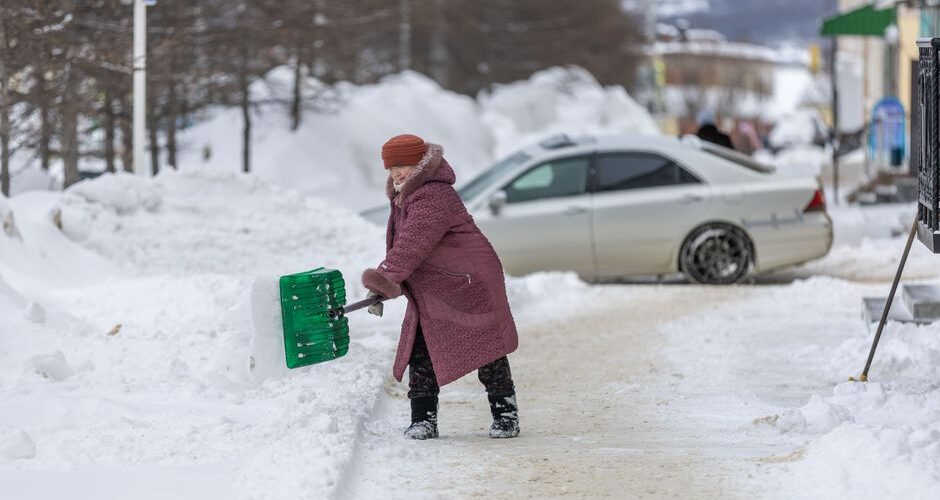
Denver’s sidewalk rules place the duty for clearing snow and ice on the property owner, and that duty covers the sidewalk next to a commercial building, the adjacent ADA and mobility device ramps, and nearby bus stops. For a downtown office tower, a retail center, or a warehouse along a busy arterial, the job is not finished when the parking lot is plowed. The pedestrian route still has to be cleared and de-iced, and it has to happen on the city’s timeline rather than whenever a crew gets back around to it.
Property managers and facility teams rarely question whether the ordinance applies. The real question is how to build a process that keeps walkways passable through a Colorado winter, satisfies the city, and protects people walking to and from the property. That means understanding what the rule covers, how timing works across the metro, and how to fold sidewalk work into an existing snow contract.
What the Denver sidewalk snow removal ordinance requires
The core rule is simple. In Denver, property owners are responsible for clearing snow and ice from the sidewalks adjacent to their property. The obligation also extends to adjacent mobility device ramps and bus stops, so that everyone has safe access to the pedestrian network. The purpose is accessibility: a sidewalk that is technically plowed but blocked at the corner or at a bus boarding area still fails the person using it.
Denver publishes its snow guidance through the Department of Transportation and Infrastructure, which runs the city’s snow program. For a commercial asset, that page and the current municipal code are the primary references for the exact language of the requirement and for any changes in how it is enforced.
What adjacent property means for a commercial site
Adjacent generally means the sidewalk running along your frontage, plus the pedestrian infrastructure connected to it. On a commercial parcel, that can include the full width of the sidewalk rather than a narrow path cut down the middle, corner sections where your property meets an intersection, ADA and mobility device ramps linking the walk to the street, bus stops and boarding areas along the frontage, and sidewalk segments that cross driveways or loading entrances. Because those pieces sit in different places, the most frequent failure is partial clearing: the main walk is open, but the corner ramp is buried under snow pushed out of the lot.
Timing expectations for commercial properties
Timing is where commercial sites get into trouble. Many local laws in Colorado require sidewalks to be cleared within 24 hours after a snowstorm so pedestrians can use them safely. Aurora publishes a 24-hour standard after a snowfall ends, with up to 48 hours after a snow emergency. Castle Rock requires snow and ice removal from sidewalks within 48 hours after a qualifying event. Commercial properties in Denver should plan tighter than any of those windows. Reporting on Colorado snow removal law notes that Denver businesses need to begin clearing their sidewalks immediately after snowfall stops, while residences have until the next day.
The safest operating assumption for a commercial asset is to be substantially clear once the snow ends, not the following afternoon. Confirm current Denver timelines and enforcement practice with the city before finalizing a contract, since procedures can be updated.
| Jurisdiction or source | Reported timeline | Notes |
|---|---|---|
| Denver (businesses) | Begin clearing immediately after snowfall stops | Reported in a Colorado snow law and liability summary; verify with the city |
| Denver (residences) | By the next day | Same source; the commercial standard is tighter |
| Many Colorado local laws | Within 24 hours after a snowstorm | Common baseline for safe pedestrian use |
| Aurora | 24 hours after snowfall ends; 48 hours after a snow emergency | Published city guidance |
| Castle Rock | 48 hours after a qualifying snow event | Published local requirement |
These figures describe different cities, not a single statewide rule. If your portfolio spans the metro, treat the strictest applicable deadline as the target for every property.
Snow pushing and the right of way rule
A second rule catches commercial properties more often than expected. Colorado law and many local ordinances prohibit plowing, blowing, shoveling, or otherwise placing snow onto public roadways, including the ditch and right of way area along the roadside. The statute is Colorado Revised Statute 43-5-301, which addresses obstructing a highway and the associated penalty.
In practice, this means a plow operator cannot push a lot’s snow into the street, over a curb, into a bike lane, or across a crosswalk to get it out of the way. Pushing snow onto a roadway increases hazards with each pass and moves the problem from private property onto public property. Snow hauling and designated on-site storage are the compliant options for sites that run out of room during a heavy winter.

Why compliance matters beyond a citation
The ordinance exists because blocked sidewalks cut people off from the street network. One reported example makes that concrete: after a late December storm left roughly seven inches of snow in Denver, a resident who uses a wheelchair spent nearly two weeks rolling down the middle of busy streets because sidewalks were impassable, then had to station herself in the roadway to flag down a bus. That account, published by Collective Colorado, shows the real cost when snow is left in place.
For a commercial property, exposure runs in two directions. The city can enforce the sidewalk requirement, and a pedestrian injured on an icy frontage can pursue a liability claim. Clear sidewalks and a documented service record are among the more affordable risk controls available to a property manager, and both cost far less than defending a claim or answering repeat complaints.
Building a sidewalk plan before the first storm
Compliance is mostly decided before snow starts falling. Properties that struggle usually do so because responsibility was never assigned, equipment was never staged, and nobody mapped which corners and ramps belong to the site.
- Map the obligation. Walk the frontage in fall and mark every sidewalk segment, ramp, corner, and bus stop your property touches.
- Assign the work in writing. Decide whether in-house staff, a contractor, or a combination handles sidewalks, and name the person accountable for checking the result.
- Set a trigger depth. Define the accumulation that starts service so crews arrive before snow packs down into ice.
- Plan snow storage. Identify where plowed snow will go so nobody is tempted to push it toward the street.
- Document every event. Photos and service logs hold up well when a complaint or claim arrives weeks later.
Ice control is part of the sidewalk obligation
The Denver requirement covers ice as well as snow, and ice is the part that lingers. Meltwater from a plowed pile refreezes overnight on a shaded walk, a ramp, or a bus stop pad, and the sidewalk becomes dangerous again even though it was cleared after the storm. A workable plan includes de-icing applications on pedestrian surfaces, not just the parking lot, and a return visit when temperatures drop after a melt. Tracking overnight lows alongside the snow forecast helps a property manager decide when a second pass is needed.
Working with a commercial snow removal contractor
For most commercial properties, sidewalk clearing is folded into a broader snow contract that also covers parking lots, drives, and building entries. Two contract details matter most for ordinance compliance: the trigger depth that starts service, and whether sidewalks, ramps, and bus stops are explicitly listed as included work rather than assumed.
Ask whether the contractor performs hand work, since clearing a long frontage is labor intensive and usually requires different equipment than lot plowing. Confirm the response window for 24/7 dispatch, ask how ice control is handled after a refreeze, and request proof of insurance before signing. Seasonal contracts with defined trigger terms give a property manager a defensible record if the city asks how the site was maintained through a storm.
Our crews have handled commercial snow plowing, ice removal, and snow hauling across the Denver metro area for more than 47 years, working with parking lots, industrial parks, HOA communities, and office campuses. Longevity matters less than process, but a contractor who has run decades of Colorado winters has seen most of the ways a sidewalk plan can break.
Common compliance gaps on commercial properties
- The bus stop nobody claims. Boarding areas along a frontage are easy to overlook because they serve riders, not tenants.
- Ramps buried by lot plowing. Snow pushed from a drive aisle onto a corner or ramp blocks the exact feature the ordinance calls out.
- Partial width clearing. A narrow path through a wide sidewalk leaves the rest of the walk icy and still counts as a blocked route for someone using a mobility device.
- Tenant confusion in multi-tenant properties. When several businesses share a frontage, each may assume a neighbor is handling it.
- Night and weekend gaps. Storms rarely arrive during business hours, and a plan that depends on office staff being present will fail.
What to do when a complaint arrives
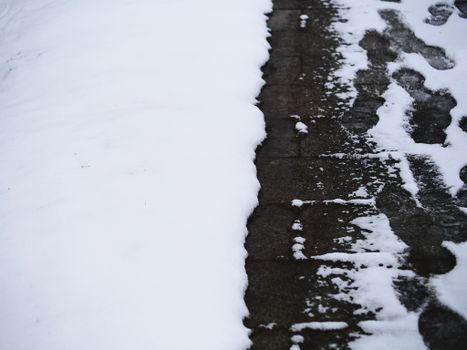
If the city contacts you about an unclear sidewalk, respond quickly. Send a crew, clear and de-ice the full frontage including ramps and bus stops, and photograph the finished work. Then check the service log to find out why the segment was missed: unclear responsibility, a routing gap, or a trigger that started too late. Repeat complaints on the same block usually point to a contract detail that should change before the next storm rather than a one-time oversight.
Frequently Asked Questions
Who is responsible for clearing sidewalks in Denver?
Denver property owners are responsible for clearing snow and ice from the sidewalks adjacent to their property, and that duty includes adjacent mobility device ramps and bus stops. On a commercial site, the responsibility sits with the owner or with whoever the owner has assigned through a lease or service contract. Confirm in writing who clears which segments before winter arrives.
How quickly must a Denver business clear its sidewalk?
Reporting on Colorado snow law states that Denver businesses need to begin clearing their sidewalks immediately after snowfall stops, while residences have until the next day. Many Colorado local laws use a 24-hour standard after a storm. Because enforcement practice can change, verify the current timeline with the City and County of Denver before setting your service trigger.
Can a plow push snow into the street?
No. Colorado law and many local ordinances prohibit plowing, blowing, shoveling, or otherwise placing snow onto public roadways, including the ditch and right of way area along the roadside. Colorado Revised Statute 43-5-301 addresses obstructing a highway and its penalty. Plan on-site snow storage or hauling instead of pushing snow toward the curb line.
Do commercial sidewalks include bus stops and ramps?
Yes. Denver’s guidance specifically covers adjacent mobility device ramps and bus stops along with the sidewalk itself, so everyone has safe access. On a commercial frontage, corner ramps, boarding areas, and driveway crossings are all part of the obligation. Snow piled onto a ramp by lot plowing still leaves a blocked sidewalk behind.
What happens if a commercial property does not clear its sidewalk?
The city can enforce the sidewalk requirement, and local reporting on Denver sidewalk rules covers the fine process along with assistance resources. Beyond a citation, a blocked or icy frontage creates liability exposure if a pedestrian is injured. Documenting service after every event gives a property manager a record of reasonable care. Verify current penalty details with the city.