Keeping sidewalks clear during winter storms is not just about customer convenience-it's a legal obligation and a matter of public safety. Property managers, business owners, and facility directors face mounting pressure to maintain accessible pathways regardless of weather conditions. The right sidewalk snow removal equipment transforms this seasonal challenge from a liability risk into a manageable operation. With technology advancing rapidly and regulatory requirements tightening, selecting appropriate tools for your specific property type has never been more critical.
Understanding Sidewalk Clearance Requirements
Commercial properties face strict compliance obligations that dictate both timing and thoroughness of snow removal. Most municipalities require sidewalks cleared within 12 to 24 hours after snowfall ends, with some jurisdictions imposing even shorter deadlines. The ADA (U.S. Dept. of Justice/ADA.gov) mandates accessible routes remain passable, placing particular emphasis on curb ramps, crosswalks, and building entrances.
Property owners who fail to maintain clear pathways risk substantial fines alongside potential litigation from slip-and-fall incidents. These legal pressures drive the need for reliable sidewalk snow removal equipment capable of delivering consistent results regardless of storm intensity or frequency. Beyond compliance, businesses recognize that well-maintained walkways directly impact customer traffic, employee safety, and brand reputation throughout winter months.
Storm Response Timelines
Different property types demand different response capabilities:
- Office campuses: Require complete clearance before morning business hours
- Retail centers: Need continuous clearing during operating hours to maintain customer access
- Industrial parks: Must coordinate with shift changes and delivery schedules
- HOA communities: Balance resident access with cost-effective service windows
Each scenario demands equipment matched to both the physical characteristics of the sidewalks and the operational timeline required.
Equipment Categories for Professional Operations
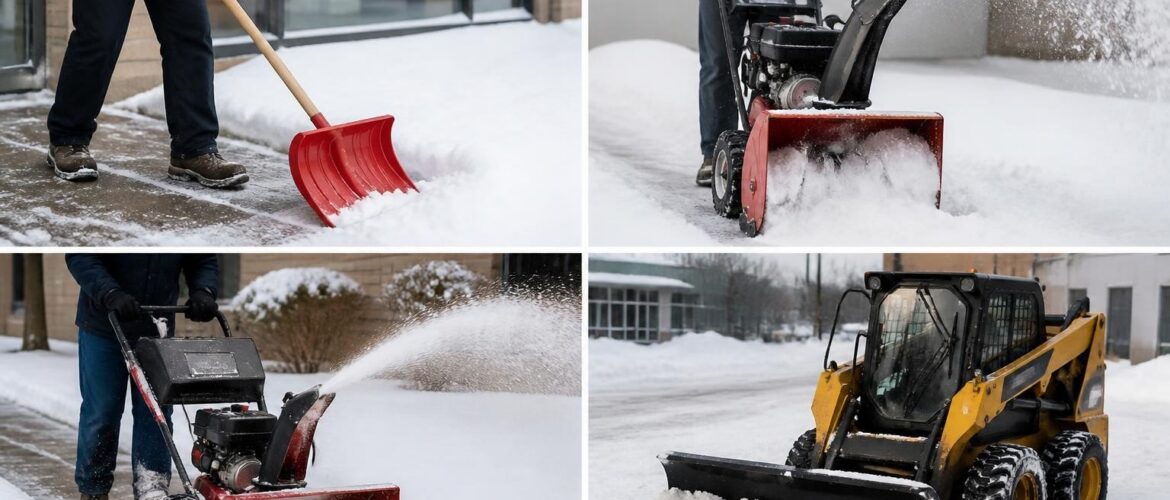
Sidewalk snow removal equipment spans a broad spectrum from basic hand tools to sophisticated powered machinery. Understanding where each category fits ensures optimal deployment across your property portfolio.
Manual Tools and Ergonomic Designs
Traditional snow shovels remain relevant for spot clearing, narrow passages, and detail work around obstacles. Modern ergonomic designs reduce physical strain, though the American Heart Association warns that manual shoveling poses significant cardiovascular risks, particularly during prolonged exertion in cold temperatures.
Pusher shovels with wide blades excel at moving light, fluffy snow across expansive flat surfaces. Scoop shovels handle deeper accumulations and loading tasks. Combination tools with adjustable angles provide versatility for crews managing multiple property types.
| Tool Type | Ideal Conditions | Width Range | Physical Demand |
|---|---|---|---|
| Push shovel | Light, dry snow | 24-36 inches | Moderate |
| Scoop shovel | Deep, wet snow | 18-24 inches | High |
| Ergonomic bent-handle | All conditions | 18-22 inches | Reduced |
| Wheeled pusher | Flat, smooth surfaces | 24-48 inches | Low |
Single-Stage Snow Throwers
Electric and gas-powered single-stage throwers bridge the gap between manual labor and heavy machinery. These units gather and expel snow in one motion using a rubber-edged auger that contacts the pavement surface. Compact dimensions allow navigation through gates, around planters, and along building facades where larger equipment cannot operate.
Battery-powered models have gained significant market share since 2024, driven partly by California Air Resources Board (CARB) regulations targeting small gasoline engines. Lithium-ion technology now delivers runtime sufficient for most commercial sidewalk circuits while eliminating cold-start issues and reducing maintenance overhead.
Key specifications to evaluate:
- Clearing width (18 to 22 inches typical)
- Intake height (8 to 12 inches for most models)
- Throwing distance (15 to 30 feet depending on snow conditions)
- Power source and runtime (battery capacity vs. fuel tank size)
- Weight and maneuverability (critical for operator fatigue)
Walk-Behind Two-Stage Units
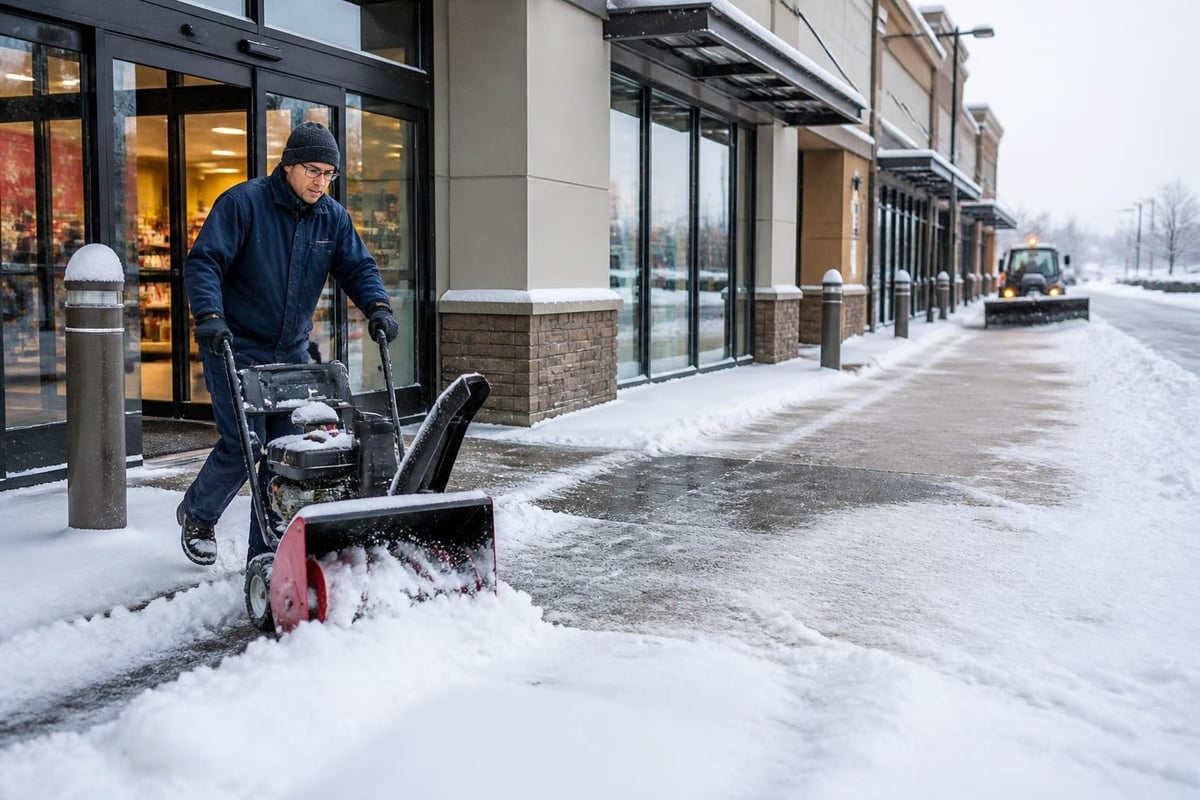
Two-stage sidewalk snow removal equipment separates collection from discharge, using a metal auger to gather snow and an impeller fan to throw it through a chute. This design handles heavier, wetter snow more effectively than single-stage alternatives and clears wider paths in fewer passes.
Professional-grade models feature differential steering, heated hand grips, LED work lights, and trigger-controlled chute rotation. Track drive systems outperform wheeled versions on ice and slopes, though they demand higher initial investment and more sophisticated maintenance protocols.
Compact Utility Vehicles and Attachments
Small tractors, UTVs, and specialized carriers transform sidewalk clearing from a labor-intensive task into a mechanized operation. Front-mounted plows, angle brooms, and blower attachments convert these platforms into versatile year-round assets.
Attachment options include:
- Straight blades: 48 to 72 inches wide for pushing snow to designated areas
- V-plows: Improved cutting performance in heavy, drifted conditions
- Rotary brooms: Dual-purpose debris sweeping and light snow removal
- Blower units: High-volume displacement for loading into trucks or designated piles
Matching Equipment to Property Characteristics
Effective specification starts with accurate property assessment. Sidewalk width, surface material, obstacle density, and drainage patterns all influence equipment selection.
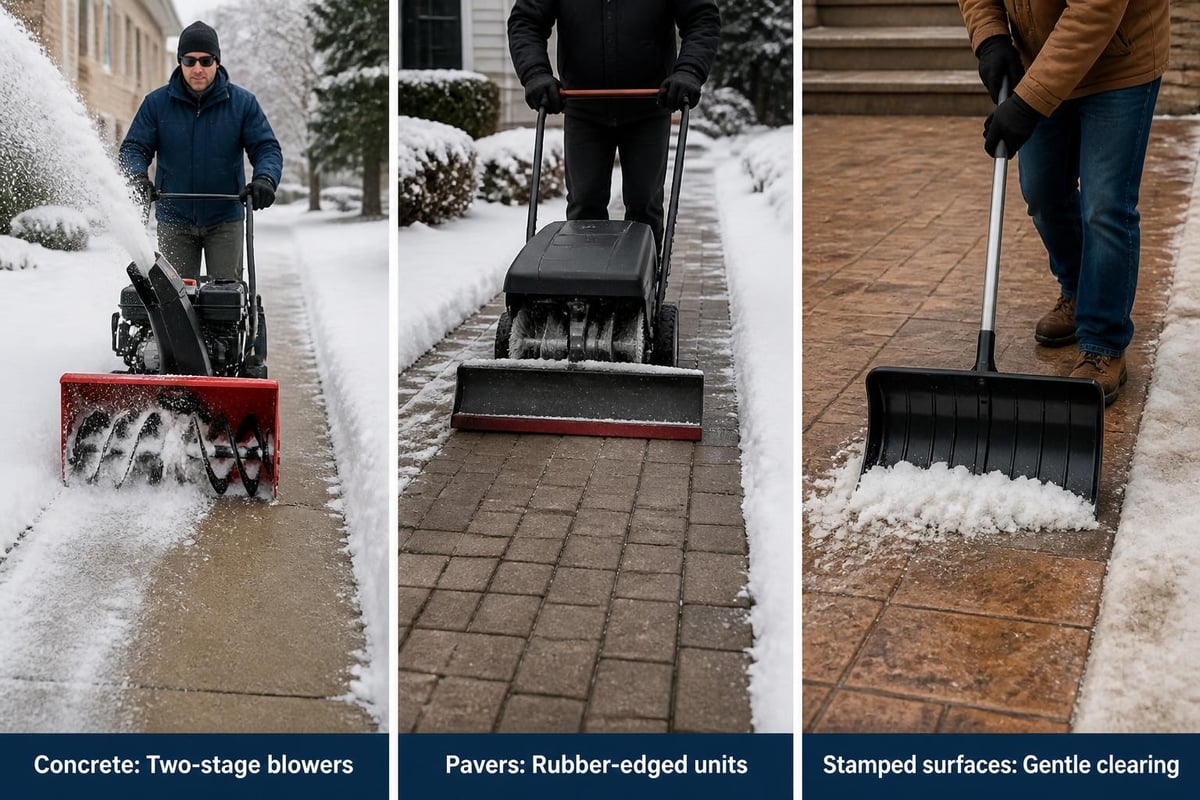
Properties with extensive concrete walkways 6 feet or wider accommodate walk-behind units efficiently. Narrower paths, brick pavers, or surfaces with significant expansion joints may require smaller machines or manual methods to prevent damage. Minnesota LTAP research highlights how sidewalk design directly impacts maintainability and equipment compatibility.
Surface Protection Considerations
Different sidewalk materials tolerate varying levels of mechanical stress:
| Surface Type | Compatible Equipment | Special Considerations |
|---|---|---|
| Poured concrete | All equipment types | Watch for salt damage on decorative finishes |
| Asphalt | All equipment types | Avoid aggressive scraping on fresh surfaces |
| Brick/paver | Manual, rubber-edged units | Risk of displacement with metal edges |
| Stamped concrete | Rubber-edged equipment preferred | Protect sealers and colorants |
Environmental and Regulatory Considerations
Snow removal operations generate environmental impacts extending beyond immediate property boundaries. Deicing material choices, equipment emissions, and snow disposal practices all carry regulatory and ecological implications.
The U.S. EPA documents widespread aquatic impacts from road salt application, with many watersheds experiencing elevated chloride concentrations lasting well into spring. Recent USGS research quantifies how application rates directly correlate with downstream water quality impacts, emphasizing precision in material distribution.
Equipment Features That Reduce Environmental Footprint
Modern sidewalk snow removal equipment increasingly incorporates environmental protection features:
- Ground-speed-calibrated spreaders prevent over-application of deicing materials
- Zero-emission battery platforms eliminate direct exhaust while reducing noise pollution
- Containment edge guards minimize material scatter into landscaping and storm drains
- Low-temperature formulations remain effective while reducing total salt volume
Commercial operations adopting these technologies demonstrate environmental stewardship while often achieving cost savings through reduced material consumption. Many clients now specifically request low-impact approaches as part of their corporate sustainability commitments.
Operational Integration and Fleet Planning
Strategic equipment deployment requires coordination with broader snow management protocols. No single machine handles every condition effectively, making fleet diversity essential for reliable service delivery.
A balanced commercial fleet typically includes:
- Primary clearing units (walk-behind throwers or compact vehicles) for main pathways
- Detail equipment (shovels, small electric throwers) for entryways and obstacles
- Backup systems ensuring continuity when primary equipment requires service
- Specialty tools for stairs, loading docks, and architectural features
The Snow & Ice Management Association (SIMA) publishes comprehensive equipment selection guides and operational best practices, helping contractors optimize fleet composition for their specific service territories.
Maintenance Protocol Development
Reliable winter operations demand proactive maintenance schedules initiated well before first snowfall. Critical pre-season tasks include:
- Engine servicing: Oil changes, spark plug replacement, carburetor cleaning
- Drive system inspection: Belt tension, chain lubrication, tire/track condition
- Safety equipment verification: Lights, guards, emergency shutoffs
- Electrical system testing: Battery health, charging systems, starter function
Mid-season maintenance windows between storms prevent minor issues from escalating into equipment failures during critical response periods.
Technology Integration and Connected Equipment
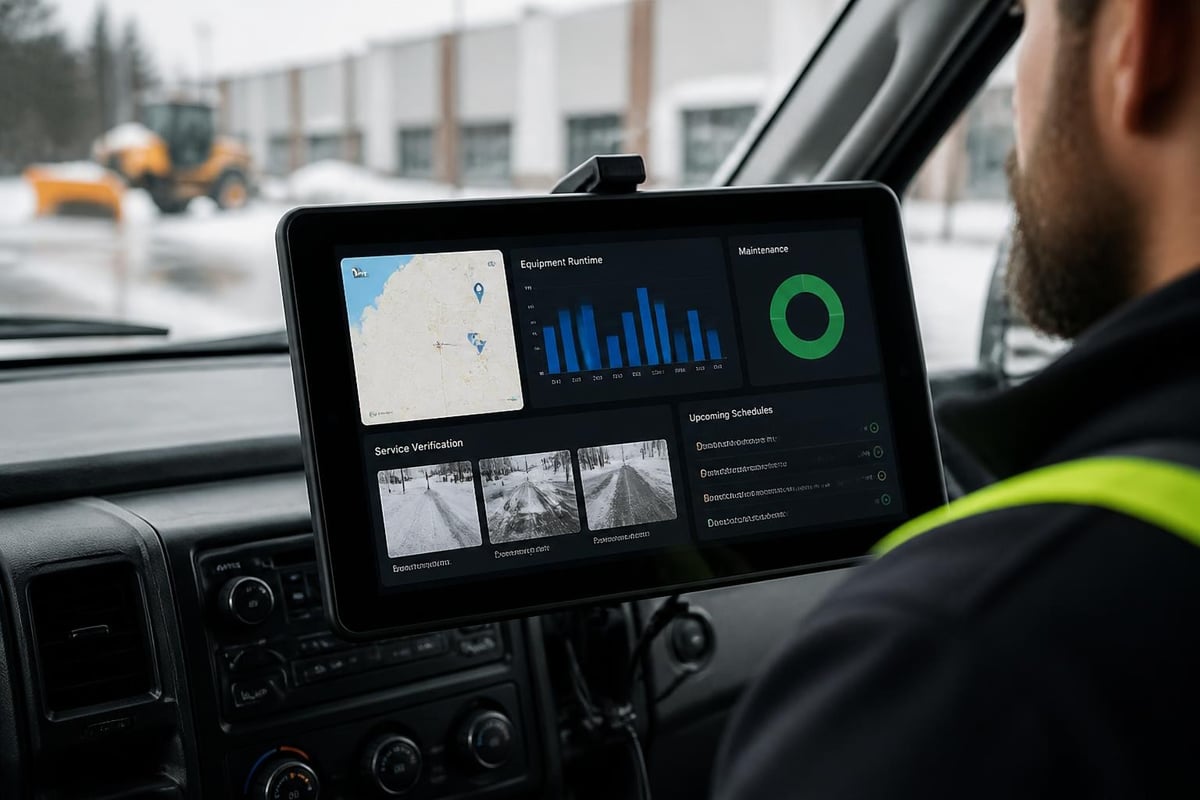
Recent equipment generations incorporate digital controls, GPS tracking, and performance monitoring that align with broader fleet management systems. These connected capabilities provide operational visibility previously impossible with standalone machines.
Benefits of technology-enabled sidewalk snow removal equipment:
- Real-time location tracking ensuring complete property coverage
- Automated service documentation for compliance verification
- Runtime and fuel consumption data informing efficiency improvements
- Predictive maintenance alerts reducing unexpected failures
- Client portal integration providing transparency and service confirmation
As commercial property management becomes increasingly data-driven, equipment selection increasingly factors connectivity and integration capabilities alongside traditional performance specifications.
Training and Operator Proficiency
Equipment capability means little without skilled operators who understand proper technique, safety protocols, and surface protection. Comprehensive training programs address:
Core Competencies for Equipment Operators
- Machine-specific operation: Controls, adjustments, and optimal settings for conditions
- Surface reading: Identifying ice, compacted snow, and fragile pavement requiring adjusted approach
- Efficient pattern execution: Maximizing productivity while ensuring complete coverage
- Safety awareness: Personal protection, public interaction, and hazard recognition
- Material application: Proper spreader calibration and strategic placement
Properties managed under monthly seasonal snow removal contracts benefit from dedicated crews whose familiarity with specific sites improves efficiency and reduces damage risk season over season.
Cost Analysis and Return on Investment
Sidewalk snow removal equipment represents significant capital investment requiring careful financial analysis. Purchase decisions must account for total lifecycle costs including acquisition, operation, maintenance, and eventual replacement.
Equipment Ownership Economics
| Cost Category | Manual Methods | Single-Stage Electric | Walk-Behind Gas | Compact Tractor + Attachments |
|---|---|---|---|---|
| Initial investment | $50-$200 | $400-$1,200 | $800-$3,000 | $15,000-$35,000 |
| Annual maintenance | Minimal | $50-$150 | $200-$500 | $800-$2,000 |
| Labor hours/acre | 8-12 hours | 3-5 hours | 2-3 hours | 0.5-1.5 hours |
| Useful lifespan | 2-5 years | 5-8 years | 8-12 years | 15-25 years |
For contractors serving multiple properties, mechanized equipment typically achieves payback within two to three seasons through reduced labor costs and expanded service capacity. Property owners managing single locations face longer payback periods but gain service reliability independent of contractor availability during severe weather events.
Municipal Standards and Enforcement Trends
Cities increasingly prioritize pedestrian safety through aggressive sidewalk clearance enforcement. New York City’s Department of Sanitation exemplifies this trend, requiring property owners to clear sidewalks within four hours after snowfall ends and imposing fines starting at $100 for non-compliance.
Denver and surrounding municipalities follow similar enforcement approaches, with citation frequency increasing annually. This regulatory environment pushes property managers toward professional-grade sidewalk snow removal equipment capable of meeting tight deadlines regardless of storm severity or timing.
Compliance Documentation Systems
Modern operations maintain detailed service records demonstrating due diligence:
- Timestamped photos documenting pre-storm conditions and post-clearance results
- GPS track logs proving complete property coverage
- Material application records showing responsible deicing practices
- Weather data correlating service timing with storm conditions
These documentation practices protect against liability claims while demonstrating professionalism to current and prospective clients.
Emerging Equipment Innovations
The sidewalk clearing industry continues evolving with innovations addressing longstanding operational challenges. Recent developments include:
Autonomous and semi-autonomous systems currently in commercial testing promise hands-free operation along predetermined routes. While not yet mainstream, these technologies could reshape labor economics within five years.
Heated mat systems embedded in high-priority walkways eliminate snow accumulation entirely through radiant heating. Though installation costs remain prohibitive for most applications, strategic deployment at building entrances and accessibility ramps reduces slip hazards where they pose greatest risk.
Hybrid power systems combine batteries for quiet operation in noise-sensitive areas with small generators extending runtime for large properties. This flexibility suits mixed-use developments requiring different operational profiles across zones.
Application-specific formulations in liquid and solid deicers now target specific temperature ranges and surface types, allowing precision matching previously impossible with commodity rock salt.
Professional sidewalk maintenance demands equipment matched to your specific property characteristics, climate conditions, and operational requirements. From basic hand tools to sophisticated powered systems, the right combination delivers safe, compliant pathways while controlling costs and environmental impact. Denver Snow Removals brings 47 years of commercial snow clearing expertise to office campuses, industrial parks, and HOA communities throughout the Denver Metro area, with 24/7 emergency response ensuring your sidewalks remain accessible regardless of when storms arrive.