

Snow does not fall evenly across an apartment property. It lands on the entry stoop first, then the walk leading to the sidewalk, then the parking lot and every drive aisle feeding it. Each surface carries a different level of risk and sits under a different set of rules. Treating them all as one “plow the lot” job is where apartment communities get into trouble.
A workable plan sorts the property into zones, assigns a clear owner to each zone, and sets a trigger point for dispatch before the first flake lands.
Snow Removal at a Denver Apartment Community Is a Liability Question First
For a single-family home, an unshoveled walk is an inconvenience. At a multi-family property it is a claim waiting to happen. Residents, delivery drivers, mail carriers, and guests all use the same paths, often before sunrise, often in the dark, and often on surfaces that thawed during the day and refroze overnight.
Denver’s winter pattern makes this worse. A storm may drop wet snow that packs down under foot traffic, the sun comes out and melts the top layer, then the temperature drops and the whole path turns to ice. A single plow pass leaves a property with a sheet of ice a blade cannot fix. Ice control is a separate step and belongs in the same contract as the plowing.
Who Is Responsible for Snow and Ice at a Denver Apartment Property
Responsibility splits between the city and the property. Denver’s Department of Transportation and Infrastructure (DOTI) handles emergency snow response on city streets, and the department describes that work as being performed in an efficient, effective, and fiscally responsible manner under a defined response plan. That covers the roads residents drive on to reach the property.
It does not cover the sidewalk next to the building. Under Denver law, the property owner is responsible for clearing snow and ice from sidewalks adjacent to their property. Code Compliance inspectors enforce those rules and can hire contractors to clear the snow at the property owner’s expense. A neglected walk can cost money twice: once for the citation and again for the cleanup.
What the Sidewalk Rule Means for Apartment Owners
The sidewalk obligation follows the property line, not the fence line. A community on a corner usually has two frontages instead of one. Shared walks between buildings, the path from the sidewalk to the leasing office, and the route to the mail area all sit on the owner’s side of the line.
Deadlines and fine amounts are set by the city and can change, so confirm current requirements with the City and County of Denver before a season starts. Neighboring Boulder, for example, uses ordinance 8-2-13 to require landlords and tenants to clear snow and ice from sidewalks within 24 hours after snow stops, which shows how much the details vary from one city to the next.
What Tenants and Residents Should Check
Residents sometimes assume snow removal is included in rent and sometimes assume it is their job. The answer depends on the lease. A Denver renter in a community with a snow contract described the service this way: a team would plow, shovel, and salt, usually within a couple of hours. Anyone unsure about their own building should read the lease and ask the property manager.
The Three Zones of an Apartment Property
Every apartment community has the same three working zones, plus the city streets that bracket them.
| Zone | What gets cleared | Who handles it |
|---|---|---|
| Building entrances and interior walks | Stoops, stairs, landings, entry paths, paths between buildings | Property’s snow contractor |
| Public sidewalks | Walks adjacent to the property line | Property owner, per Denver law |
| Parking lots and drive aisles | Stalls, drive lanes, fire lanes, dumpster pads, garage aprons | Property’s snow contractor |
| City streets | Public roads and emergency routes | City and County of Denver DOTI |
Zone 1: Entrances, Stairs, and Walkways
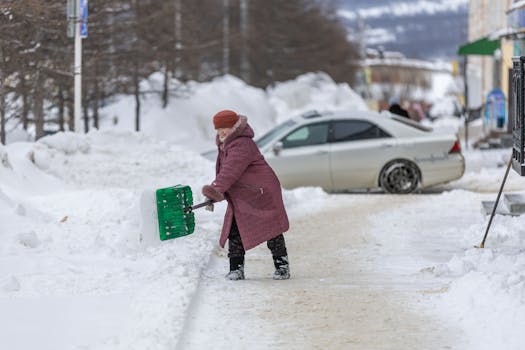
This is the highest-risk surface on the property and the one most often missed. Lot snow removal is done with a truck or a skid steer, and neither machine fits on a stair landing or a covered entry. Those areas need hand work: shoveling, scraping, and a controlled application of ice melt.
Entry areas also refreeze fastest. Meltwater from a roof drip line runs across an entry walk and turns to ice overnight, and shaded north-facing stairs may never see enough sun to clear on their own. Treating entrances as a separate line item with its own crew and timeline keeps the front door usable all winter.
Zone 2: Sidewalks and Public Frontage
Sidewalk clearing is the part of the job with a legal deadline attached, and it is also what residents notice first, because it is where they walk to a bus stop or around the block. Plan on clearing the full width of the walk rather than a narrow footpath, and on returning after the storm to break up the packed layer left by foot traffic.
Where the property has a long frontage, that walk can take as long to clear by hand as the parking lot takes by machine. Build it into the contract rather than treating it as a favor the crew does when there is time.
Zone 3: Parking Lots and Drive Aisles
Lots are where the equipment does most of its work, and where planning pays off. A full lot cannot be cleared in one pass. Cars sit in stalls, snow has to be pushed somewhere, and every push changes where the next push can go. Communities that ask residents to move vehicles during a declared storm give the crew a cleaner lot and get fewer complaints about blocked stalls later.
Drive aisles and fire lanes need to stay open through the event, not just after it. Dumpster pads matter too. If a hauler cannot reach the bins, trash stacks up and the property trades one complaint for another.
Trigger Depth, Timing, and Seasonal Contracts
Seasonal snow contracts in Denver usually work on a trigger depth, which is the amount of accumulation that starts the clock on a response. A two-inch trigger dispatches crews earlier in a storm than a four-inch trigger, which matters on a property with steep drives or a lot that fills up fast. The trigger should match the property, not a generic template.
Timing should be written in hours, not adjectives. A contract that promises “prompt” service is not enforceable. A contract that says crews are on site within a set number of hours after the trigger depth is reached, and that entrances are cleared before lots, gives a property manager something to hold the vendor to.
Where the Snow Goes
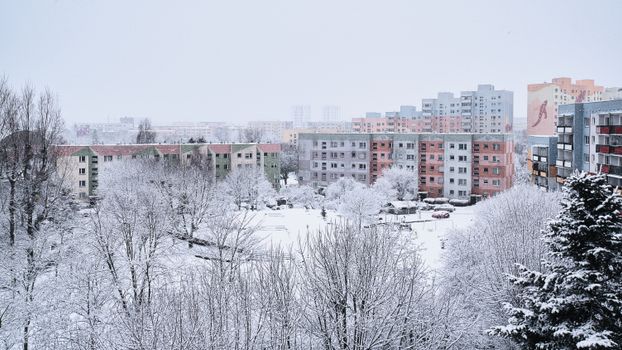
Plowing only moves snow; it does not remove it. On a small lot, pushed snow piles up along curbs, in corners, and over landscape beds, and each pile steals parking spaces and blocks sight lines at driveways. When piles start eating stalls or blocking visibility, snow hauling is the fix: loading the snow and trucking it off site for disposal.
Deciding where snow will be stacked before the season starts avoids disputes in January. Mark acceptable piling areas, keep piles clear of hydrants and reserved stalls, and know which storms will require hauling rather than pushing.
Choosing a Snow Removal Partner for a Denver Apartment Community
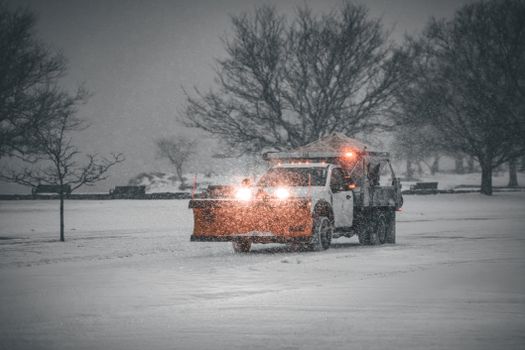
Denver winters vary widely from year to year, so a vendor’s track record across multiple seasons tells you more than any single storm performance. Ask a prospective contractor these questions before signing:
- What is the trigger depth, and can it be adjusted for this property?
- How many hours after the trigger does the crew arrive?
- Which zones are included: entrances, sidewalks, lot, or all three?
- Who handles hand work on stairs and landings, and when?
- What ice melt product is used, and is it safe for the concrete and landscaping on site?
- Is snow hauling available if piles get too large, and what documentation comes after each event?
Pricing for commercial snow removal is quoted per property, because lot size, surface area, trigger depth, and hauling needs all change the labor and equipment required. Get written quotes based on an actual site walk rather than a per-hour figure, and ask what happens during a multi-day storm when crews are stretched across the metro. Photos and service logs after each event give a property manager a record to fall back on if a claim ever arrives.
Apartment snow removal in Denver works best when it is planned in the fall. Zones get mapped, the trigger gets set, residents get told where to park during a storm, and the first snowfall becomes a routine event instead of an emergency.
Frequently Asked Questions
Does Denver require apartment owners to clear sidewalks?
Yes. Denver law places sidewalk snow and ice clearing on the owner of the adjacent property. Code Compliance inspectors enforce the rule and can bring in contractors to clear the snow, then bill the property owner for that work. Confirm current deadlines and fine amounts with the City and County of Denver, since those details are set by the city.
How fast should a contractor clear an apartment lot after snow stops?
Timing depends on the trigger depth in the contract. A Denver resident in a community with a snow contract described crews plowing, shoveling, and salting usually within a couple of hours. Written contracts should specify a response window in hours after the trigger depth is reached, with entrances cleared before parking areas.
Is snow removal the landlord’s job or the tenant’s job?
It depends on the lease and the property. Denver law puts the sidewalk obligation on the property owner, while entrances, interior walks, and lots are typically covered by the community’s snow contract. In other cities, such as Boulder under ordinance 8-2-13, landlords and tenants share part of the duty. Renters should read their lease and ask the manager.
What happens if a Denver property does not clear snow and ice?
The city can issue a citation, and Code Compliance inspectors can hire contractors to remove the snow at the property owner’s expense. Beyond the fine, an uncleared walk or lot creates slip-and-fall exposure. The property manager guide published on this site notes that a single missed sidewalk after a heavy storm can invite a $150 city citation.
Can snow be hauled away instead of piled in the lot?
Yes. Hauling is typically used when piles start taking parking stalls, blocking sight lines, or crowding fire lanes. It means loading snow and trucking it off site for disposal, so it costs more than plowing and is usually reserved for larger storms or problem areas. Ask a contractor which piles on a specific property would trigger hauling.