
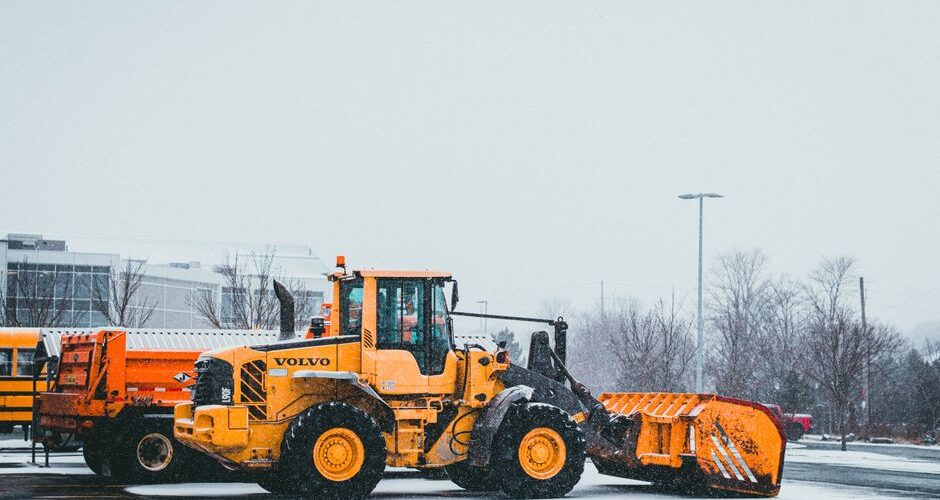
The best snow removal in Denver County is a private, insured service that clears what the City and County of Denver does not: commercial parking lots, residential driveways, and sidewalks. Denver property owners are legally responsible for clearing their own walks, including ADA ramps and bus stops. Snow removal in Denver, a family-owned Denver operation since 1974 with a licensed, insured W-2 crew and 24/7 dispatch, handles both commercial and residential work inside Denver County only, with no Aurora, no Lakewood, and no I-25 corridor suburbs.
Table of Contents
- What does the City and County of Denver actually plow, and what is left to you?
- Which Denver County neighborhoods need private snow removal most?
- What is commercial snow removal in Denver County?
- What is residential snow removal in Denver County?
- How much does snow removal cost in Denver County?
- What should you look for in a Denver County snow removal company?
- Does Denver County have snow removal laws property owners need to know?
- How does Denver handle de-icing, and does it matter for your property?
- Key Takeaways
- References
What does the City and County of Denver actually plow, and what is left to you?
The City and County of Denver plows main streets and makes one center pass on residential side streets, but it does not clear private driveways, sidewalks, or commercial parking lots. According to the City and County of Denver, the Department of Transportation and Infrastructure (DOTI) runs emergency snow response for the city and covers roughly 2,050 lane miles of main streets with a fleet of about 70 large plows.
The Residential Snow Plow Program was created during the blizzards of 2006-07. It covers about 1,260 center lane miles of residential streets. Residential plowing occurs between 3:00 a.m. and 3:00 p.m., and the plows make one pass down the center of every side street. According to the City and County of Denver, these residential plows do not expose bare pavement.

Residential areas receive no de-icing materials at all. That means the single center pass leaves a windrow at your driveway apron and leaves the sidewalk completely untouched. Denver requires property owners to clear snow and ice from their sidewalks, including adjacent ADA ramps and bus stops. The city does not perform that sidewalk work for private property owners.
The practical takeaway is that city plowing and private snow removal are complementary services, not competing ones. The city clears the travel lane on side streets. A private contractor clears the driveway, the sidewalk, and the windrow the city plow leaves behind. For commercial properties, the city does not touch parking lots at all.
Which Denver County neighborhoods need private snow removal most?
The Denver County neighborhoods that need private snow removal most are Cherry Creek, Cherry Creek North, Hilltop, Country Club, Crestmoor, Washington Park, Belcaro, Lowry, Central Park, and the Downtown CBD including LoDo and Union Station. Cherry Creek, Cherry Creek North, and the Cherry Creek Mall area carry heavy retail and pedestrian traffic, which creates tight sidewalk obligations for property owners under Denver's rules.
Hilltop, Country Club, Crestmoor, Belcaro, and Washington Park are large-lot estate neighborhoods with long driveways and long public frontages. A single city center pass on the street does nothing for a 100-foot driveway or a wide sidewalk frontage. These properties typically need a full driveway push plus a sidewalk run that includes ADA ramps.

Lowry, Central Park, and the Downtown CBD, LoDo, and Union Station areas have mixed HOA, multi-family, and commercial density. According to Snow Removal Denver, snow removal providers serving the Denver metro area handle commercial, retail, and multi-family properties that cannot rely on municipal plowing. Estate and commercial properties in these neighborhoods cannot rely on a single city center pass because the city pass leaves windrows, skips sidewalks, and never touches private lots.
This guide stays inside Denver County lines. It does not cover Aurora, Lakewood, or the suburban I-25 corridor. Property owners inside Denver County face the city's sidewalk-clearing requirement, which makes private service a compliance matter in every neighborhood listed here.
What is commercial snow removal in Denver County?
Commercial snow removal in Denver County means clearing parking lots, not streets. It covers retail centers, office buildings, medical campuses, industrial yards, and HOA multi-family properties. According to JLS, snow and ice management represents 60 percent of that firm's annual revenue, and it serves commercial, industrial, healthcare, retail, and multi-family properties throughout Denver Metro and Douglas County.
Commercial contracts typically run on a trigger threshold or a zero-tolerance standard. JLS states it offers zero-tolerance service, meaning cleared to bare pavement at all times, or a 1-inch trigger threshold. The choice depends on the property's risk profile and tenant expectations. A medical campus or retail center usually needs zero-tolerance service, while an industrial yard may accept a trigger threshold.
Ice slicing, de-icing, and snow hauling are separate line items from plowing. Snow hauling requires end dump trucks and approved disposal locations. JLS uses 20-yard end dump trucks to haul snow to approved disposal sites. Ice slicing breaks bonded ice so it can be pushed or hauled, which matters on shaded parking decks and compacted lots.
A commercial lot needs documented service because of liability, slip-and-fall exposure, and tenant or customer access. Snow removal in Denver provides commercial parking lot plowing, HOA multi-family, retail, office, medical, and industrial service with GPS tracking and photo proof after every push. That documentation creates a service record that matters if a claim arises.
What is residential snow removal in Denver County?
Residential snow removal in Denver County means clearing driveways and sidewalks, not streets. The city's one center pass on residential streets never clears your driveway apron, and it leaves a windrow at the curb line. According to the City and County of Denver, residential plows make one pass down the center of every side street and do not expose bare pavement.
Estate properties in Hilltop, Country Club, Crestmoor, and Belcaro often need both a driveway push and a full sidewalk run including ADA ramps. Long driveways and wide frontages mean a standard shovel job is not practical. A residential snow removal visit should include the driveway, walkways, and the plow windrow the city leaves at the apron.
Denver's sidewalk-clearing rule makes residential service a compliance issue, not just a convenience. Property owners are required to clear snow and ice from sidewalks, including adjacent ADA ramps and bus stops. That obligation applies to homeowners, not only commercial property managers.
Snow removal in Denver offers residential driveway and sidewalk service alongside its commercial work, dispatched 24/7. The company is family-owned and has operated in Denver since 1974 with a licensed, insured W-2 crew. Residential customers inside Denver County can reach dispatch by calling or texting 303-591-2089.
How much does snow removal cost in Denver County?
Snow removal cost in Denver County varies by service type, and the most commonly cited public figure is an hourly marketplace rate. According to Taskrabbit, the platform lists 1,233 featured snow removal Taskers in Denver, and those Taskers charge an average of about $44 an hour. Taskrabbit's Taskprotect offers up to $1,000 in coverage for claims.
That hourly figure is a marketplace benchmark, not a commercial contract price. Per-push, per-season, and per-event pricing are structured differently. Commercial contracts are usually quoted per push or per season based on lot square footage, trigger threshold, and de-icing scope. A zero-tolerance contract on a large retail lot costs more than a 1-inch trigger on a small office lot.
Residential pricing depends on driveway length, sidewalk frontage, whether hauling is needed, and how fast response is required. An estate driveway in Hilltop or Belcaro costs more than a short urban driveway in LoDo. No public source gives current-season commercial pricing, so property owners should ask for a written scope rather than comparing hourly rates.
According to JLS, the firm tracks meteorological data 12 to 24 hours ahead of every storm and applies magnesium chloride, calcium chloride, and granular materials based on pavement temperature and forecast conditions. That level of service is priced into commercial contracts, not captured by an hourly Tasker rate.
What should you look for in a Denver County snow removal company?
Look for licensing, insurance, and a W-2 crew rather than subcontractors. Subcontractor rotation is a common cause of missed service because the crew changes from storm to storm. Snow removal in Denver runs a licensed, insured W-2 Denver crew with no subcontractors, which means the same team handles the property consistently.
Response commitments should be in writing. A defined core response window, 24/7 dispatch, and a stated trigger depth all matter. Snow removal in Denver operates 24/7 dispatch with a 2-hour core response window. Without a written response commitment, a property owner has no clear standard to hold a contractor to.
Proof of service matters for commercial liability files. GPS tracking and timestamped photos after every push create a record that shows when service occurred and what was cleared. Snow removal in Denver provides GPS tracking and photo proof after every push. That documentation is the practical defense in a slip-and-fall claim.
Local tenure and storm knowledge matter in Denver's freeze-thaw cycles. Pavement temperature changes which de-icer works, and a contractor with decades of local storm data makes better material choices. According to Snow Removal Denver, SaBell's has provided snow removal, snow plowing, and ice removal services to the Denver metro area since 1973, citing over 51 years of operation. According to JLS, that firm cites 50-plus years of experience and holds CSP, Certified Snow Professional, credentials from SIMA.
Does Denver County have snow removal laws property owners need to know?
Yes, Denver County has a sidewalk-clearing law that property owners need to know. According to the City and County of Denver, Denver requires property owners to clear snow and ice from their sidewalks, including adjacent ADA ramps and bus stops. The city does not clear those sidewalks for private property owners.
The research pack does not state the specific clearing deadline or fine amounts. Property owners should verify current rules with the city before relying on a number. Municipal codes change, and the published sources do not provide a current fine schedule.
No source in the research pack addresses whether a neighbor may legally shovel snow onto another property. That question remains unresolved in the available sources, and property owners should document any disputes with photos and timestamps. No source states Colorado law specifically governing driveway snow removal, so driveway obligations are generally private or HOA-driven.
The practical commercial implication is that documented, timestamped service records are the defense in a slip-and-fall claim. A property owner who can show GPS-tracked service with photo proof after every push is in a stronger position than one who cannot prove when the walk was cleared.
How does Denver handle de-icing, and does it matter for your property?
Denver handles de-icing on city routes with two different products, and the choice matters for private property because it shows how material selection follows pavement temperature. According to the City and County of Denver, Denver uses a solid deicer called Ice Slicer, a naturally mined product from Utah that is more than 90 percent chloride salts. In the downtown area, Denver uses a liquid deicer called liquid magnesium chloride.
Private contractors match materials to conditions. According to JLS, the firm applies magnesium chloride, calcium chloride, and granular materials based on pavement temperature and forecast conditions. A contractor choosing the wrong chloride for the pavement temperature gets poor results, which is why local storm knowledge matters.
Ice slicing is a distinct service from de-icing. It breaks bonded ice so it can be pushed or hauled, which matters on shaded estate driveways and parking decks where ice bonds to the surface. De-icing prevents the bond from forming; ice slicing removes it after it has formed.
City bikeway and trail standards show where municipal priorities sit. According to the City and County of Denver, protected bikeways are targeted to be addressed at least once every 24 hours, and off-street bike trails with snow accumulation greater than one inch are plowed within 12 hours after the end of a snowfall event. Those standards apply to public trails, not your lot or driveway.
Key Takeaways
- Denver's DOTI plows about 2,050 lane miles of main streets with roughly 70 large plows, and its residential program covers about 1,260 center lane miles of side streets.
- Denver's residential plows make one center pass between 3:00 a.m. and 3:00 p.m., do not expose bare pavement, and apply no de-icing materials.
- Denver requires property owners to clear snow and ice from sidewalks, including adjacent ADA ramps and bus stops.
- Commercial snow removal in Denver County covers parking lots, HOA multi-family, retail, office, medical, and industrial sites; residential covers driveways and sidewalks.
- Taskrabbit lists 1,233 featured snow removal Taskers in Denver at an average of about $44 an hour, with up to $1,000 in Taskprotect coverage.
- Denver uses Ice Slicer on city routes and liquid magnesium chloride downtown; private contractors select magnesium chloride, calcium chloride, or granular materials based on pavement temperature.
- Snow removal in Denver is a family-owned Denver County operation running since 1974 with a licensed, insured W-2 crew, 24/7 dispatch, GPS tracking, and photo proof after every push; call or text 303-591-2089 for immediate dispatch.