


Emergency snow removal and plowing in Denver, Colorado
A contract for snow removal services represents far more than a simple agreement between a property owner and a contractor. This legally binding document protects both parties, establishes clear expectations, and ensures that commercial properties remain safe and accessible throughout Denver's harsh winter months. Whether you manage an office campus, industrial park, or HOA community, understanding the components of a comprehensive snow removal contract can mean the difference between smooth winter operations and costly disputes.
Critical Components Every Snow Removal Agreement Must Include
The foundation of any effective contract for snow removal services rests on clearly defined terms that leave no room for misinterpretation. Property managers who invest time in developing comprehensive agreements save themselves headaches when winter storms arrive.
Service Scope Definition stands as the most crucial element. This section must specify exactly which areas receive snow removal services, including parking lots, sidewalks, loading docks, fire lanes, and pedestrian pathways. Ambiguity in service areas creates conflicts when contractors believe they've fulfilled obligations while property managers expect additional coverage.
Snow Accumulation Triggers and Response Times
Every contract for snow removal services must establish precise snowfall triggers that activate service delivery. These thresholds typically range from one to three inches of accumulation, depending on property type and client needs.
Response time guarantees protect property owners by ensuring timely service delivery. Commercial properties often require:
- Two-hour maximum response times for emergency situations
- Four-hour responses for standard snowfall events
- Priority service scheduling for 24/7 operational facilities
- Specific arrival windows for recurring maintenance visits
The key elements of professional snow removal contracts include these timing provisions to ensure properties remain accessible during business hours.

| Trigger Level | Accumulation | Response Time | Service Type |
|---|---|---|---|
| Level 1 | 1-2 inches | 4 hours | Plowing only |
| Level 2 | 2-4 inches | 2 hours | Plowing + salting |
| Level 3 | 4-6 inches | 1 hour | Full service |
| Level 4 | 6+ inches | Immediate | Emergency response |
Pricing Structures and Payment Terms
Financial clarity prevents disputes and establishes mutual understanding between contractors and clients. A well-crafted contract for snow removal services outlines pricing with mathematical precision.
Common Pricing Models
Per-push pricing charges clients each time the contractor clears snow, regardless of accumulation amount. This model benefits properties in areas with unpredictable snowfall patterns but can become expensive during heavy snow years.
Seasonal contracts spread costs across fixed monthly payments from November through March. Property managers gain budget predictability while contractors secure guaranteed income. For businesses seeking commercial snow removal services in Denver, seasonal agreements often provide the best value.
Per-inch pricing calculates fees based on actual accumulation, creating a middle ground between per-push and seasonal models. This structure rewards efficiency while protecting clients from overpaying during light snow years.
Additional services require separate pricing considerations:
- De-icing and salt application rates per ton
- Hauling and snow relocation fees for storage-limited properties
- Emergency service premiums for off-hours calls
- Equipment rental charges for specialized machinery
Payment terms should specify due dates, accepted payment methods, late fees, and deposit requirements. Understanding snow removal contract pricing and liability considerations helps property managers negotiate fair terms.
Liability Protection and Insurance Requirements
Risk mitigation stands as a primary function of any contract for snow removal services. Both parties face potential liability from slip-and-fall accidents, property damage, and service failures.
Contractor Insurance Obligations
Professional snow removal companies must carry comprehensive insurance coverage that protects clients from financial exposure. Standard requirements include:
General liability insurance covering bodily injury and property damage claims, with minimum coverage amounts typically ranging from one to two million dollars per occurrence. This protection becomes critical when emergency snow removal situations arise unexpectedly.
Workers compensation insurance covers contractor employees injured while performing services on client property, protecting property owners from employee injury claims.
Commercial auto insurance protects against vehicle-related incidents involving plows, salt trucks, and other equipment operating on commercial properties.
Indemnification Clauses
These provisions determine who bears responsibility when accidents occur despite proper snow removal. Well-drafted indemnification language protects contractors from claims arising from circumstances beyond their control while holding them accountable for negligence.
Property managers should verify that contractors provide certificate holders listing the property owner or management company as additionally insured parties. This simple step provides direct notification if contractor insurance lapses or changes.
Service Quality Standards and Performance Metrics
Establishing measurable quality standards transforms subjective expectations into objective requirements. A contract for snow removal services gains enforcement power through specific performance benchmarks.
Documentation and Reporting Requirements
Professional contractors maintain detailed service records documenting each visit, including:
- Arrival and departure timestamps
- Snow accumulation measurements
- Areas serviced and materials applied
- Photographic evidence of completed work
- Weather conditions and temperature readings
These records prove invaluable when disputes arise or when property managers need to demonstrate due diligence in slip-and-fall litigation. Many commercial snow removal providers now offer digital reporting platforms that provide real-time service updates.
Performance Penalties and Service Guarantees
Consequences for missed triggers or delayed responses protect property owners from contractor complacency. Common penalty structures include:
- Percentage reductions in monthly fees for each missed service window
- Free additional services to compensate for substandard performance
- Contract termination rights after repeated failures
- Guaranteed re-service within specified timeframes if initial work proves inadequate
Equipment Specifications and Operational Standards
The machinery and materials contractors use directly impact service quality and property preservation. Your contract for snow removal services should specify minimum equipment standards appropriate for your property size and configuration.
Required Equipment Categories
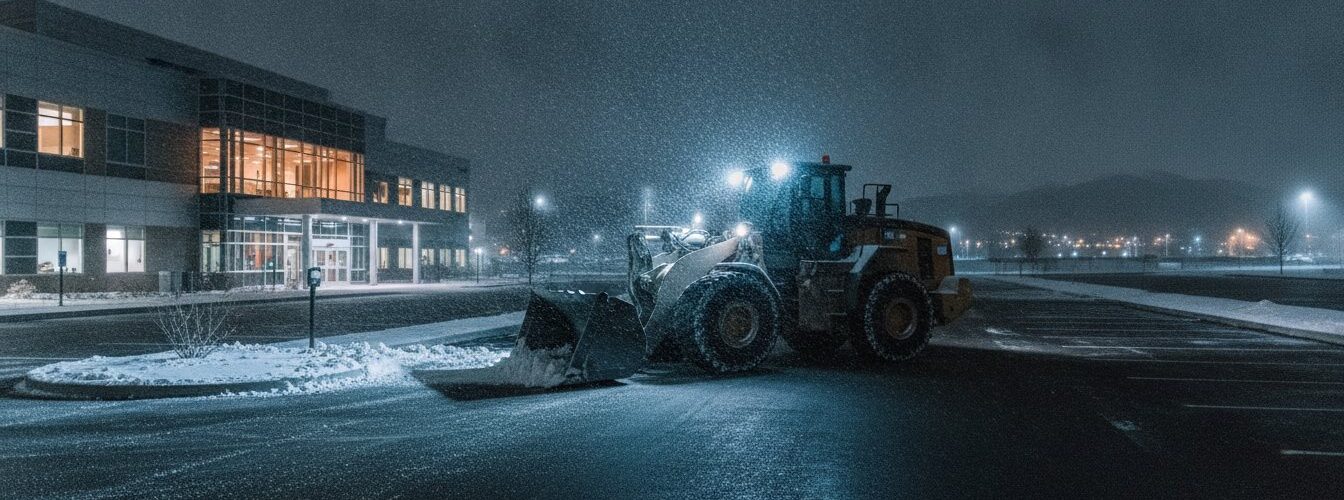
Large commercial properties demand industrial-grade equipment capable of efficiently clearing expansive parking areas. Specifications might include:
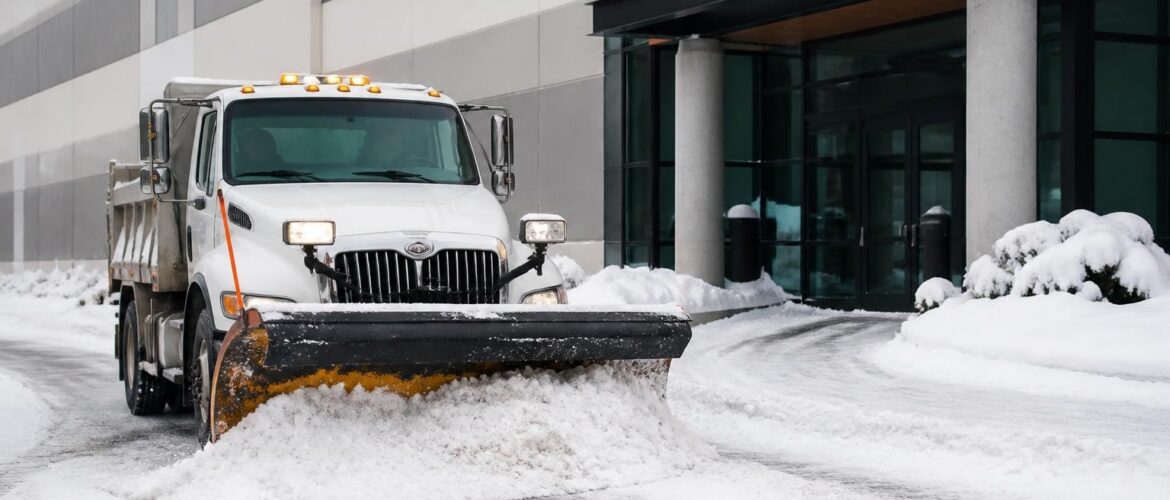
Truck-mounted plows with minimum blade widths of eight feet for parking lot clearing, equipped with rubber cutting edges to prevent pavement damage. Properties with complex parking configurations benefit from contractors maintaining diverse equipment fleets.
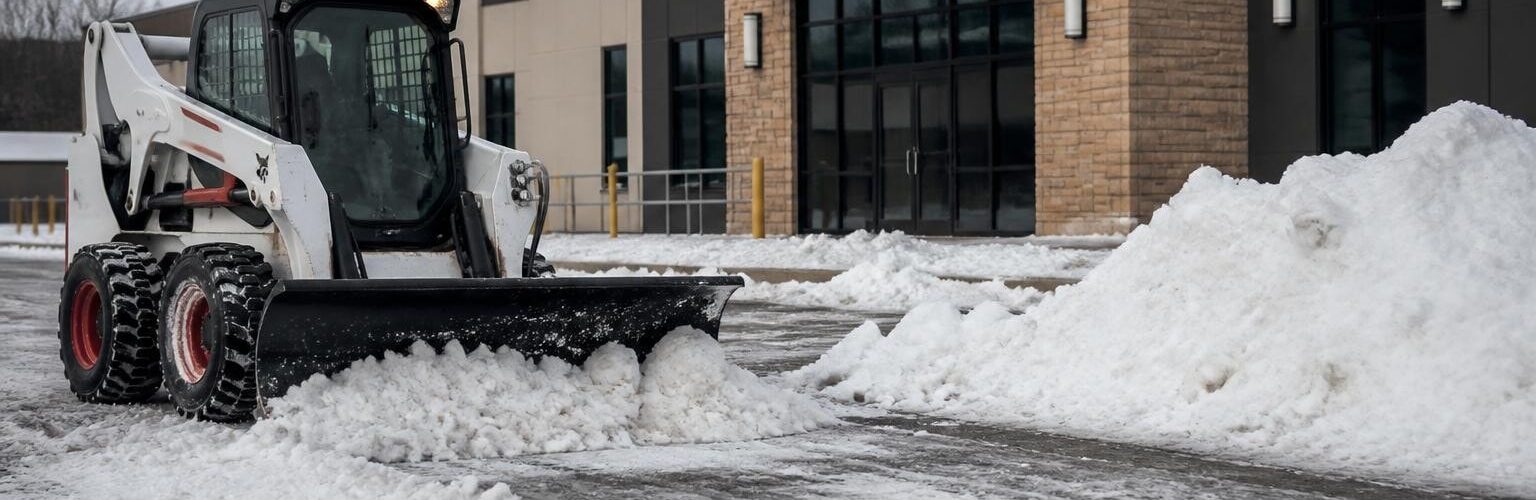
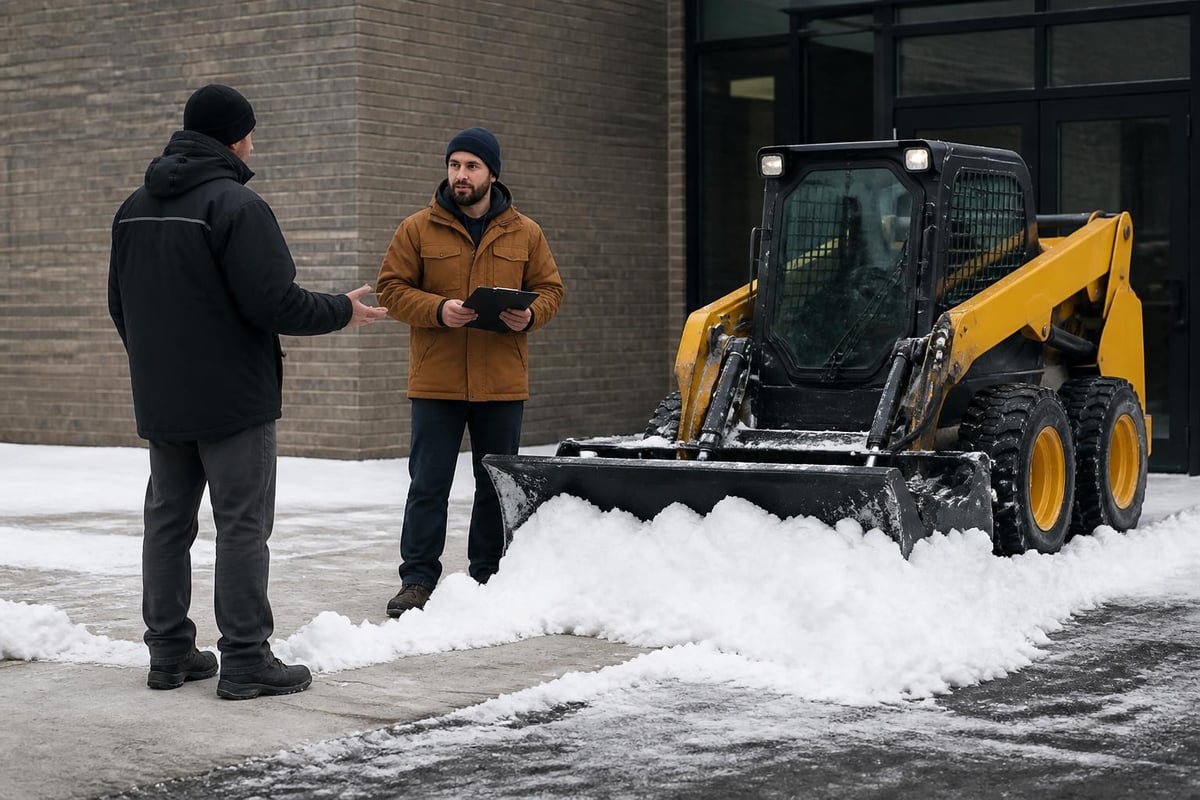
Skid steers and loaders for precision work around building entrances, islands, and tight corners where full-size trucks cannot maneuver effectively.
Salt spreaders and de-icing equipment calibrated to apply materials at optimal rates, preventing both under-application that leaves surfaces hazardous and over-application that damages landscaping.
| Equipment Type | Minimum Specification | Primary Application | Backup Required |
|---|---|---|---|
| Plow Truck | 8-foot blade, 4WD | Parking lots | Yes |
| Skid Steer | 6-foot bucket | Detail work | Optional |
| Salt Spreader | 2-cubic-yard capacity | De-icing | Yes |
| Snow Blower | Commercial grade | Sidewalks | Yes |
Material Quality and Application Rates
Salt, sand, and chemical de-icers require specification within service agreements. Contract language should address:
- Material types approved for use (rock salt, calcium chloride, magnesium chloride)
- Application rates per thousand square feet
- Environmental considerations and runoff mitigation
- Storage and handling requirements
Term Length and Termination Provisions
Duration and exit strategies provide flexibility while ensuring service continuity. Most snow removal contracts run on seasonal schedules aligned with winter weather patterns in the Denver Metro area.
Standard Contract Durations
Single-season agreements cover one winter period, typically November 1 through April 30. These contracts work well for property managers testing new vendors or anticipating property changes.
Multi-year contracts spanning two to five seasons offer pricing stability and relationship continuity. Contractors often provide discounted rates for longer commitments while clients gain protection from market price increases.
Renewal clauses establish whether contracts automatically renew or require active negotiation. Automatic renewal with opt-out provisions ensures uninterrupted service unless parties actively terminate agreements.
Termination Rights and Notice Requirements
Both parties need clearly defined exit pathways. Standard termination provisions include:
- For-cause termination allowing immediate cancellation if either party breaches material terms
- Convenience termination permitting cancellation with 30 to 60 days written notice
- Performance-based termination triggered by repeated service failures
- Force majeure clauses addressing cancellation due to circumstances beyond party control
Property managers should scrutinize early termination penalties that might trap them in relationships with underperforming contractors. You can review customizable snow removal contract templates that include balanced termination language.
Communication Protocols and Emergency Contacts
Winter storms don't respect business hours, making 24/7 communication capabilities essential. Your contract for snow removal services must establish multiple contact channels and escalation procedures.
Primary and Backup Contact Information
Contractors should provide:
- Direct mobile numbers for on-site supervisors
- After-hours emergency dispatch numbers
- Email addresses for non-urgent communications
- Secondary contacts when primary personnel are unavailable
Property managers reciprocate by designating authorized representatives who can approve additional services, report problems, or modify service parameters during active snow events.
Storm Monitoring and Proactive Communication
Professional contractors monitor weather forecasts and proactively communicate storm preparations. Contract language should require:
- Pre-storm notifications 24 hours before predicted snowfall
- Service deployment confirmations when crews dispatch
- Completion notifications with photographic documentation
- Post-storm debriefs reviewing performance and identifying improvements
These communication standards prove especially valuable for properties requiring common area snow removal coordination across multiple stakeholders.
Additional Services and Scope Modifications
Winter brings unpredictable challenges requiring flexibility beyond standard snow removal. Comprehensive contracts address supplemental services and change procedures.
Commonly Requested Add-On Services
Ice management extends beyond basic de-icing to include ice dam removal, downspout clearing, and specialized treatments for problem areas where ice persistently forms.
Snow hauling and relocation becomes necessary when properties lack adequate storage space for plowed snow. This labor-intensive service commands premium pricing but prevents parking lot capacity loss.
Roof snow removal protects structures from collapse risk during heavy accumulation years, though specialized contractors often handle this high-risk work.
Sidewalk and walkway detail work ensures pedestrian safety through hand-shoveling, targeted salting, and frequent monitoring of high-traffic areas.
Change order procedures establish how parties request, approve, and price additional services. Streamlined processes prevent delays when urgent needs arise during active storms. Many property managers find digital contract platforms simplify modification tracking and approval workflows.
Legal Compliance and Regulatory Considerations
Municipal codes and industry standards impose legal obligations on both property owners and snow removal contractors. A thorough contract for snow removal services addresses these compliance requirements.
Local Ordinance Compliance
Denver and surrounding municipalities maintain specific requirements for snow removal timing and completeness. Contracts should specify:
- Sidewalk clearing deadlines following snowfall cessation
- ADA accessibility standards for handicapped parking and pathways
- Storm drain and fire hydrant clearance obligations
- Snow pile placement restrictions and height limitations
Contractors familiar with local regulations bring valuable expertise, but ultimate legal responsibility typically rests with property owners. Clear contract language delineating compliance responsibilities protects both parties.
Environmental and Sustainability Provisions
Growing environmental awareness drives demand for sustainable snow management practices. Modern contracts increasingly address:
- De-icing material restrictions near sensitive water bodies
- Minimum salt application standards to reduce environmental impact
- Snow melt management to prevent flooding and erosion
- Recycled or environmentally friendly material preferences
Documentation and Record Keeping Requirements
Comprehensive documentation serves multiple purposes, from billing verification to legal defense in slip-and-fall litigation. Your contract for snow removal services should mandate thorough record creation and retention.
Service Documentation Standards
Professional contractors maintain detailed logs capturing:
Time-stamped service records showing exact arrival and completion times for each service event, proving contractors met response time commitments.
Photographic evidence documenting pre-service conditions, work in progress, and completed results, providing visual proof of service delivery quality.
Material usage reports tracking salt, sand, and chemical applications by location and quantity, supporting billing accuracy and environmental compliance.
Weather data from reliable sources documenting precipitation amounts, temperatures, and conditions during service periods.
Record retention periods should extend at least three years to cover typical statute of limitations periods for premises liability claims. Many contractors now provide access through digital contract management systems that archive documentation automatically.
Dispute Resolution and Conflict Management
Even well-drafted contracts encounter disagreements requiring structured resolution processes. Including dispute resolution mechanisms prevents minor conflicts from escalating into costly litigation.
Escalation Procedures
Progressive resolution steps typically begin with direct communication between operational managers, escalate to senior leadership, and finally involve formal dispute resolution if needed.
Mediation clauses require parties to attempt facilitated negotiation before pursuing litigation, often resolving conflicts faster and more economically than court proceedings.
Arbitration provisions establish binding third-party decision-making as an alternative to traditional litigation, though parties should carefully weigh the benefits and limitations of mandatory arbitration.
These structured approaches preserve business relationships while providing clear pathways toward conflict resolution. Understanding comprehensive service agreements helps property managers recognize industry-standard dispute resolution language.
Subcontractor and Partnership Provisions
Large-scale snow events often require contractors to engage additional resources beyond their core teams. Contract language should address subcontractor use and management.
Subcontractor Notification and Approval
Property managers deserve transparency regarding who actually performs services on their properties. Contracts should require:
- Advance notification when subcontractors will perform any service portion
- Approval rights for property managers before subcontractor deployment
- Insurance verification proving subcontractors carry equivalent coverage
- Quality standards binding subcontractors to identical performance requirements
Joint and several liability clauses hold primary contractors responsible for subcontractor performance, preventing property managers from pursuing multiple parties when service failures occur.
Understanding the essential elements of a contract for snow removal services empowers property managers to protect their interests while establishing productive partnerships with qualified contractors. From pricing structures and liability provisions to performance standards and termination rights, comprehensive agreements create frameworks for successful winter operations. Denver Snow Removals brings over 47 years of experience crafting and honoring professional snow removal agreements that protect clients while delivering exceptional service throughout the Denver Metro area. Contact us today to discuss customized contract solutions for your commercial property.