
Why 24/7 Snow Plowing Matters In The Denver Metro
If you manage commercial or institutional property anywhere in the Denver metro, you already know the pattern. A dry afternoon turns into a fast‑moving front, temperatures drop, and by 5 a.m. your parking lots, docks, and walkways are icy and unsafe. Tenants, employees, and visitors still expect to arrive on time, and your liability risk climbs with every slick step or fender‑bender.
That is why “24 7 snow plowing Denver metro” is more than a keyword. It is a risk management and operations problem. You are not just buying plow time. You are buying uptime for your building, safety for your users, and predictability for your budget.
This guide is written specifically for property managers, facility and HOA boards, campus leaders, and small business owners who need reliable, around‑the‑clock snow service. You will learn what 24/7 really means in contracts, how to compare providers objectively, what different property types require, and how to avoid the most common mistakes that lead to unsafe conditions or surprise invoices.
What “24/7 Snow Plowing” Really Means In Practice
Most providers advertise 24/7 service, but their definitions vary. Before you compare bids, clarify these operational details.
Triggers, timelines, and priorities
Key service variables you should see defined in writing:
- Snowfall trigger: Commonly 1 or 2 inches. Zero‑tolerance sites, such as hospitals or busy retail, often require plowing as accumulation begins.
- Response time: How quickly equipment is dispatched once the trigger is met, often 2–4 hours for standard sites and 1–2 hours for priority properties.
- Service window: Whether snow is cleared before business hours, kept clear during operating hours, or only serviced overnight.
For example, a retail center that opens at 8 a.m. may require lots and walkways fully cleared by 7 a.m., with return visits during the day if snowfall continues.
What counts as “24/7” availability
True 24/7 coverage should include:
- Night plowing during storms
- Weekend and holiday service
- On‑call return visits if drifting or refreeze occurs
- A live contact method, not just voicemail
Ask specifically whether they staff dedicated overnight teams during active storms or simply rotate daytime crews.
Key Takeaway: Do not accept “24/7 service” at face value. Require written definitions for triggers, response times, and overnight coverage so you know exactly how your property will be prioritized.
Core Criteria To Compare 24/7 Snow Plowing Providers
When several Denver metro companies say they offer full‑time service, use structured criteria so you can compare them on more than price.
Comparison framework
Use this table as a reference when reviewing proposals:
| Criterion | What To Look For | Why It Matters |
|---|---|---|
| Response time SLA | Specific times, penalties or credits if missed | Converts vague promises into measurable performance |
| Fleet size & equipment mix | Plow trucks, skid steers, loaders, sidewalk machines, backup units | Ensures they can handle multiple sites during big storms |
| Route density | How many accounts they service near your site | High density means faster returns during long events |
| De‑icing strategy | Type of ice melt, application rates, anti‑icing vs de‑icing | Impacts slip‑and‑fall risk and surface longevity |
| Communication | Storm alerts, service logs, photos, single point of contact | Reduces guesswork and tenant complaints |
| Documentation & insurance | COI, named insureds, incident reporting, site maps | Critical for risk transfer and claims defense |
| Local experience | Years in Denver metro, familiarity with microclimates and city rules | Local crews react better to fast‑changing Front Range weather |
Questions to ask during vendor interviews
- How many accounts will your crew service within 5 miles of my property?
- Can you walk me through what happens on my site during a 10‑inch overnight storm?
- Who decides when to salt, and based on what conditions or thresholds?
- How do you document service times and applications if I need proof after an incident?

Pro Tip: Ask to see actual route sheets or service logs, with identifying details redacted. Providers who already use structured systems are far more likely to deliver consistent 24/7 performance.
Matching Service Levels To Your Property Type
Not every site needs the same intensity of coverage. Aligning service levels with your risk profile keeps tenants safe without overspending.
Apartment complexes and HOAs
Primary concerns: slip‑and‑fall risk, resident access, and parking usability.
Best practices:
- Lower triggers for sidewalks and stairs than for driving lanes, since pedestrian injuries create the highest claims.
- Clear priority routes first: main entrances, mailbox clusters, accessible parking, steep internal roads.
- Plan where displaced snow can safely be stacked so it does not block sightlines or parking stalls.
HOAs often benefit from seasonal contracts that include unlimited pushes, which protects the budget in heavy winters.
See the Best Snow Plows of 2026 ❄️
Retail centers and strip malls
Primary concerns: open for business, clear visibility, safe driving lanes.
Best practices:
- Zero‑tolerance or 1‑inch triggers, particularly for grocery and high‑traffic centers.
- Continuous service during operating hours in major storms, not just pre‑open plowing.
- Close coordination with trash pickup and deliveries to avoid blocked access.
Retail centers frequently need clear documentation for national tenants. Look for a provider that offers timestamped photos and digital logs so you can respond to corporate audits. To explore additional commercial considerations, learn more.
Industrial and large production facilities
Primary concerns: truck access, dock safety, and 24‑hour operations.
Best practices:
- Clear truck courts and docks first, even before employee parking.
- Aggressive anti‑icing in high‑traffic forklift and pedestrian cross‑over zones.
- Written procedures for coordinating with shipping and safety managers during storms.
Industrial sites are where 24/7 truly matters. If a plow misses an early‑morning window, production schedules and carrier appointments can cascade into costly delays.
Important: When in doubt, choose stricter service levels for properties with high foot traffic or 24‑hour operations. The cost of one serious incident can dwarf several years of upgraded service.
Contract Types, Pricing Models, And How To Avoid Surprises
Denver winters are unpredictable. You need a contract that matches your risk tolerance and cash‑flow expectations.
Common pricing structures
| Model | How It Works | Best For |
|---|---|---|
| Per push | Flat fee for each plow visit | Low‑risk sites, variable budgets |
| Seasonal (flat rate) | Fixed price for an entire season, sometimes with caps | HOAs, campuses, properties needing budget certainty |
| Per inch | Price tiered based on storm accumulation | Sites with variable storm sizes, desire for usage fairness |
| Time & materials (T&M) | Hourly equipment rates plus materials used | Complex, unpredictable industrial or campus environments |
For 24/7 coverage, seasonal or per‑inch structures often align better, since they avoid disputes over frequent pushes during prolonged storms.
Essential terms for 24/7 service
Look for:
- Service level definitions: Clear triggers, response times, and priorities.
- Scope of work: Exactly which areas are plowed, shoveled, and de‑iced.
- Ice management: Products used, application rates, and when they are applied.
- Additional services: Hauling away snow, roof clearing, or on‑site snow relocation equipment.
- Performance documentation: Access to logs, reports, and photos following each event.
To see how professional snow operations structure service offerings, learn more.
Warning: Be cautious of the lowest bid when it comes with vague language. Under‑priced contracts often rely on overloaded routes or minimal de‑icing, which can leave you exposed during the worst storms.
Risk Management, Safety, And Legal Exposure
For many organizations, snow removal is first and foremost a liability issue. The Denver metro sees frequent freeze‑thaw cycles, which create black ice even days after a storm.
Reducing slip‑and‑fall and vehicle claims
Ask prospective providers how they handle:
- Refreeze conditions: Whether they proactively return to salt overnight after warming daytime temps.
- High‑risk zones: Ramps, crosswalks, transitions between asphalt and concrete, and north‑facing shaded areas.
- Incident response: How quickly they can respond to a reported fall or minor collision.
A good partner will help you design a site‑specific snow and ice plan that maps these hazards and sets higher service levels where needed.
Documentation that protects you
For HOAs, churches, schools, and commercial owners, documentation is often your best defense in court.
Insist on:
- Time‑stamped service logs for each visit
- Records of salt or de‑icer quantities applied
- Weather references that show temperatures and precipitation during events
- Photos after major plow and salt passes
Expert Insight: Many claims are filed weeks or months after an incident. If you cannot produce clear service records, your insurance carrier has less to work with when defending you.
Choosing The Right Level Of 24/7 Coverage For Your Budget
You do not need the same snow plan as a hospital to be responsible. The goal is a rational match between risk profile, operational needs, and cost.
Simple decision framework
Ask yourself:
- How critical is uptime? If your facility must stay open regardless of weather, pay for priority routing and lower triggers.
- What is our foot traffic profile? More daily pedestrians usually justify more aggressive sidewalk and entry service.
- How risk‑tolerant is our board or ownership? Conservative boards often prefer seasonal contracts with robust service to avoid disputes later.
- Can we manage any tasks in‑house? Some campuses or industrial facilities handle light shoveling while outsourcing plowing and de‑icing.
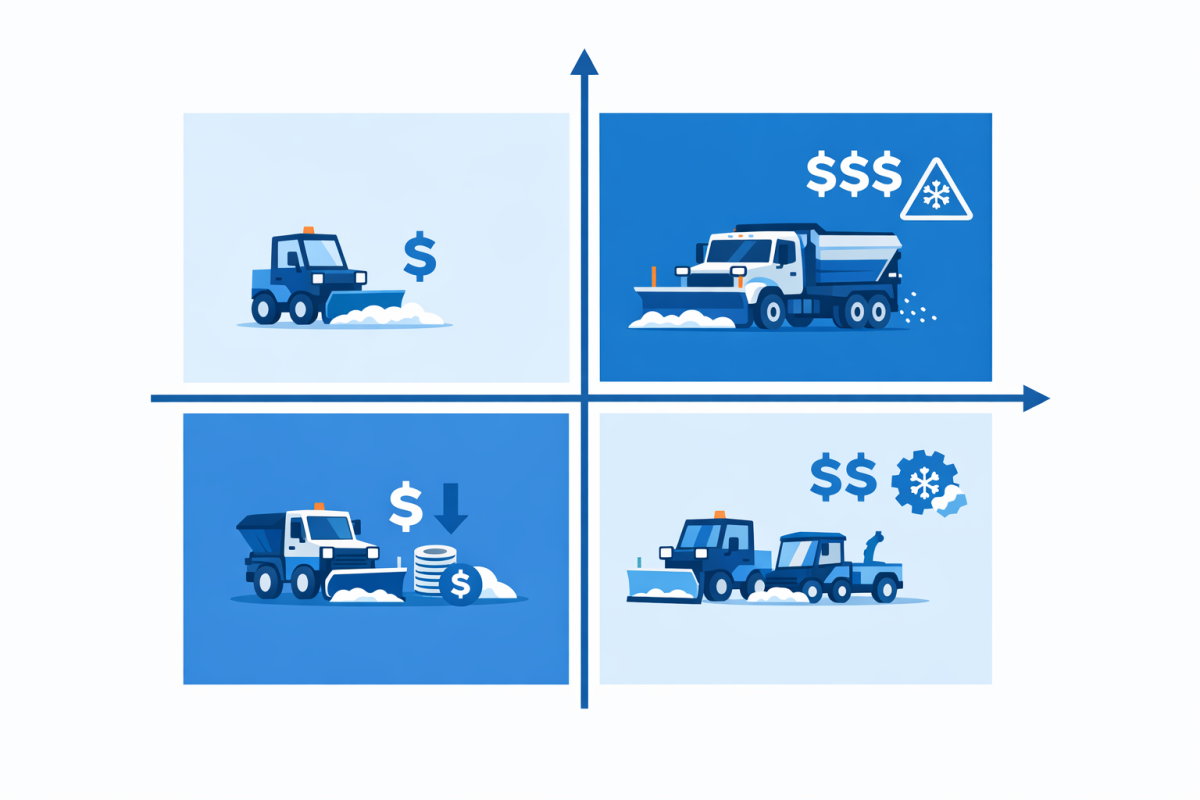
You can create a matrix with “risk level” on one axis and “budget flexibility” on the other to decide whether per‑push, seasonal, or hybrid pricing is the best fit.
To go deeper into building a winter risk strategy for your specific type of property, learn more.
When To Call A Specialist: Snow Removal Denver And Snow Plowing Denver
For many Denver metro properties, especially multi‑site portfolios and campuses, coordinating all of this in‑house becomes its own full‑time job during winter.
Snow Removal Denver and Snow Plowing Denver specialize in around‑the‑clock commercial and institutional snow management throughout the metro. They focus on:
- 24/7 monitoring of Front Range weather and storm alerts
- Route planning that prioritizes high‑risk and high‑traffic properties
- Detailed service documentation for boards, corporate tenants, and insurers
- Tailored plans for apartments, HOAs, retail centers, industrial sites, and campuses
If you are evaluating options for 24 7 snow plowing in the Denver metro and want a provider that treats snow response as a safety and operations program, not just plow passes, visit their site to review service options and request a site assessment.
Putting This Into Practice Before The Next Storm
To put this information to work quickly:
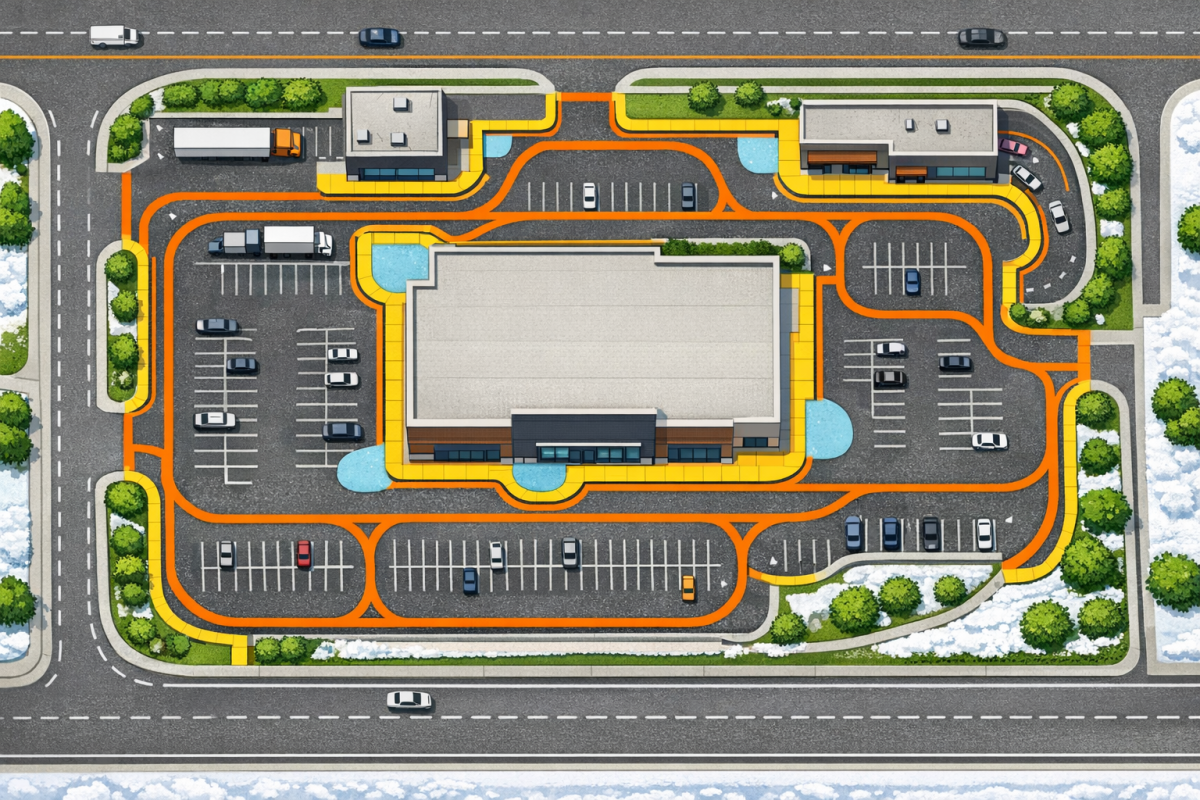
- Map your property, mark high‑priority and high‑risk areas, and define what “acceptable” looks like after a storm.
- Decide which pricing model matches your risk tolerance and cash‑flow needs.
- Prepare a short RFP or checklist that demands clear definitions for 24/7 service, documentation, and ice management.
- Interview at least two providers, using the comparison criteria and questions in this guide.
- Lock in a contract before the first major storm so you are on the route plan, not added at the last minute.
A well‑chosen 24/7 snow plowing partner will turn winter from a constant crisis into a predictable, manageable part of your operations.
Frequently Asked Questions
How much does 24/7 commercial snow plowing cost in the Denver metro?
Pricing varies widely by property size, layout, risk profile, and service level. A small retail pad site on a per‑push plan might spend a few thousand dollars per season, while large HOA communities or industrial campuses on seasonal contracts can invest significantly more. Costs are influenced by triggers, de‑icing requirements, and whether snow hauling is included. The most accurate way to budget is to get a site‑specific proposal that models both average and heavy winters.
What is a reasonable snow trigger for commercial properties?
For most Denver metro commercial sites, 1–2 inches is typical for parking lots and drive lanes. High‑risk sites, such as medical facilities, grocery centers, or steep HOAs, often opt for zero‑tolerance or sub‑1‑inch triggers. Sidewalks, stairs, and ramps often warrant lower triggers than vehicle areas, since pedestrian injury risk is higher. The key is to align triggers with your liability exposure, not just cost.
Do I really need overnight snow plowing, or is daytime service enough?
If your property opens early, operates late, or runs 24 hours, overnight plowing is critical. Without it, staff and customers may arrive to unsafe conditions, and your crews will be playing catch‑up all day. Even for daytime‑only operations, Denver’s tendency for overnight storms often makes at least pre‑opening service essential. True 24/7 coverage also matters for dealing with refreeze, drifting, and multi‑day events.
What should be included in a commercial snow plowing scope of work?
A solid scope of work specifies plowed areas, shoveled paths, de‑icing locations, snow‑stacking zones, triggers, response times, and documentation methods. It should address sidewalks, stairs, loading docks, fire lanes, and emergency exits. Many scopes also define how the contractor and property manager will communicate during storms, and whether services like snow hauling, roof raking, or loader work are included or billed separately.
How can I verify that my snow contractor actually serviced the property?
Ask for digital service logs that include timestamps, equipment used, and materials applied, plus photos after significant events. Many professional providers use GPS tracking and mobile apps for field crews, which produce reliable reports. You can also designate a staff member to periodically spot‑check conditions and compare observations with the contractor’s records. Thorough documentation not only keeps vendors accountable, it also helps defend against future claims.