
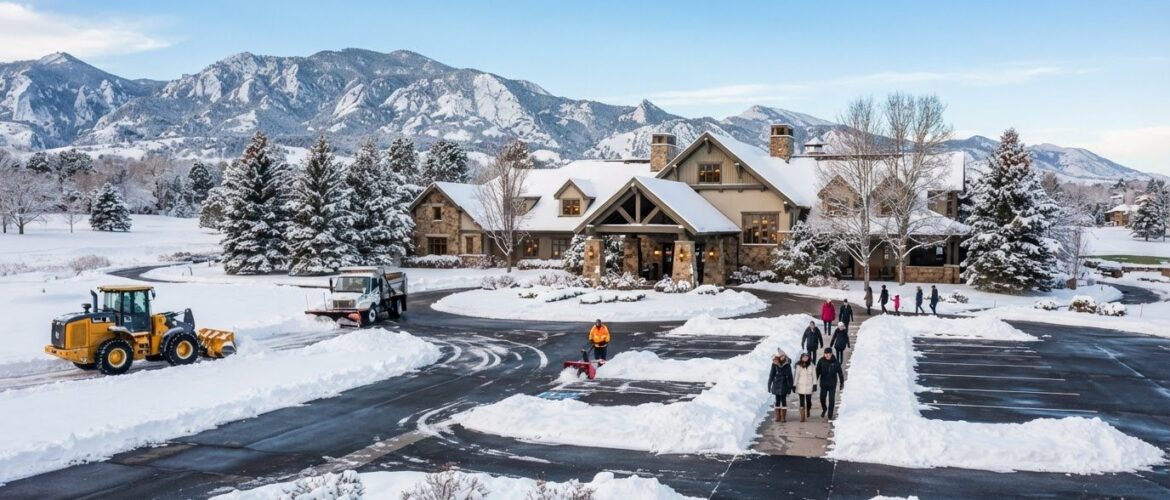
What if the safest country-club snow plan starts with more than clearing the main parking lot? Commercial snow removal for country clubs should account for the full property, from member and staff entrances to walkways, carports, and routes used for daily operations. If snow or ice affects one of these areas, access and scheduled activities elsewhere on the property may be affected too.
A practical plan organizes clearing priorities around access, safety, and operations. Since different areas of a country club serve different purposes, define what needs attention and how those areas connect before setting the service scope.
This guide explains how to assess a club’s snow removal needs, set priorities, and evaluate a service plan for members, staff, and visitors. It also covers what to consider when planning snow and ice removal and communication during storms. Snow Removal Denver is a family-owned business with over 44 years of experience serving the Denver Metro area. The company provides commercial snow plowing and removal for properties, parking lots, carports, and walkways, using trucks, front-end loaders, and snow blowers to address varied site areas.
Key Takeaways
- Map entrances, parking areas, walkways, carports, and service routes to identify where snow could affect access and club operations.
- Assess commercial snow removal for country clubs by how the service scope fits the property, not just by the number of areas listed.
- Rank clearing priorities and record operating needs on a site plan to make the scope easier to define.
- Consider how snow clearing and ice management can support access along pedestrian and vehicle routes.
- Snow Removal Denver serves commercial properties across the Denver Metro area with over 44 years of experience and a fleet that includes trucks, front-end loaders, and snow blowers.
Why country clubs in Denver need a snow removal plan built around member access
Snow and ice can affect more than the drive into a country club. Members, staff, and visitors use routes from property entrances to parking areas and buildings, while scheduled activities and daily operations depend on access to key parts of the property. A plan for commercial snow removal for country clubs should reflect how people move through the site rather than assign the same priority to every paved area.
Start with a site map showing entrances, parking areas, carports, pedestrian walkways, building approaches, and service routes. Then rank areas according to how they support access and club operations. The right order depends on the club’s layout, traffic, and daily needs.
Snow Removal Denver is family-owned and brings over 44 years of experience in snow plowing and removal.
For a broad overview of snow removal methods, including plowing and de-icing terminology, see Wikipedia’s reference on snow removal.
This short video offers a look at commercial snow removal in practice:
Which country club areas should be prioritized after snowfall?
Begin with the entrances and access routes members and staff use to reach the property. Then separate vehicle areas from pedestrian routes. Parking lots and carports need to accommodate vehicle access and movement, while walkways and building approaches serve people on foot. Service routes may also support deliveries and routine operations. Before winter, mark these areas on a site plan and rank them based on traffic, access needs, and scheduled use.
How Denver-area winter conditions affect club access planning
Conditions can change during a storm, so include a clear communication process in the plan. Decide who will share updates about changing conditions, operational priorities, or areas needing attention. Keep the site map current when routes or activities change. A winter storm preparedness guide for Denver businesses can also help managers organize broader seasonal planning. Preparation makes it easier to coordinate snow and ice removal with the club’s access needs.
What to compare in commercial snow removal for Denver country clubs
Compare the planned work by area and task, not just by a general promise to clear snow. Commercial snow removal for country clubs should account for parking lots, carports, walkways, building approaches, and entrances, since each serves a different purpose. A clear scope helps managers understand what is covered and how snow and ice needs fit together.
| What to compare | What the scope should address |
|---|---|
| Property coverage | Identify the parking lots, carports, walkways, entrances, and access points included. |
| Equipment | Consider which equipment types suit the club’s different areas and site layout. |
| Snow clearing | Define which areas need snow plowing or removal and how priorities align with club operations. |
| Ice management | Include attention to icy conditions on pedestrian and vehicle routes alongside snow clearing. |
| Communication | Set a process for sharing updates when conditions or access needs change. |
How trucks, front-end loaders, and snow blowers serve different areas
Snow Removal Denver’s commercial fleet includes trucks, front-end loaders, and snow blowers. Equipment needs depend on the site layout, the area being cleared, and snow conditions. A parking lot, carport, and pedestrian walkway have different access requirements, so consider each area when defining the work. Matching equipment and service scope to the property helps make the plan practical.
Country clubs should also consider nearby turf and plantings when planning snow and ice management. The University of Minnesota Extension explains the effects of deicing salts on turf, which is useful context when planning routes near landscaped areas.
When snow removal and ice management work together
Snow removal clears accumulated snow from designated areas. Ice management addresses icy conditions that can affect walking and driving routes, making it a separate but related part of access planning. Define the scope around where people travel and which routes matter most to the club. For more detail on this part of winter planning, see the Denver ice management services guide.
Takeaway: Match equipment and service scope to the club’s layout, and account for both snow-covered areas and icy access routes. Snow Removal Denver provides commercial snow plowing and snow and ice removal for properties, parking lots, carports, and walkways. Explore commercial snow plowing services for Denver-area properties.
Is a general commercial snow removal service enough for a country club?
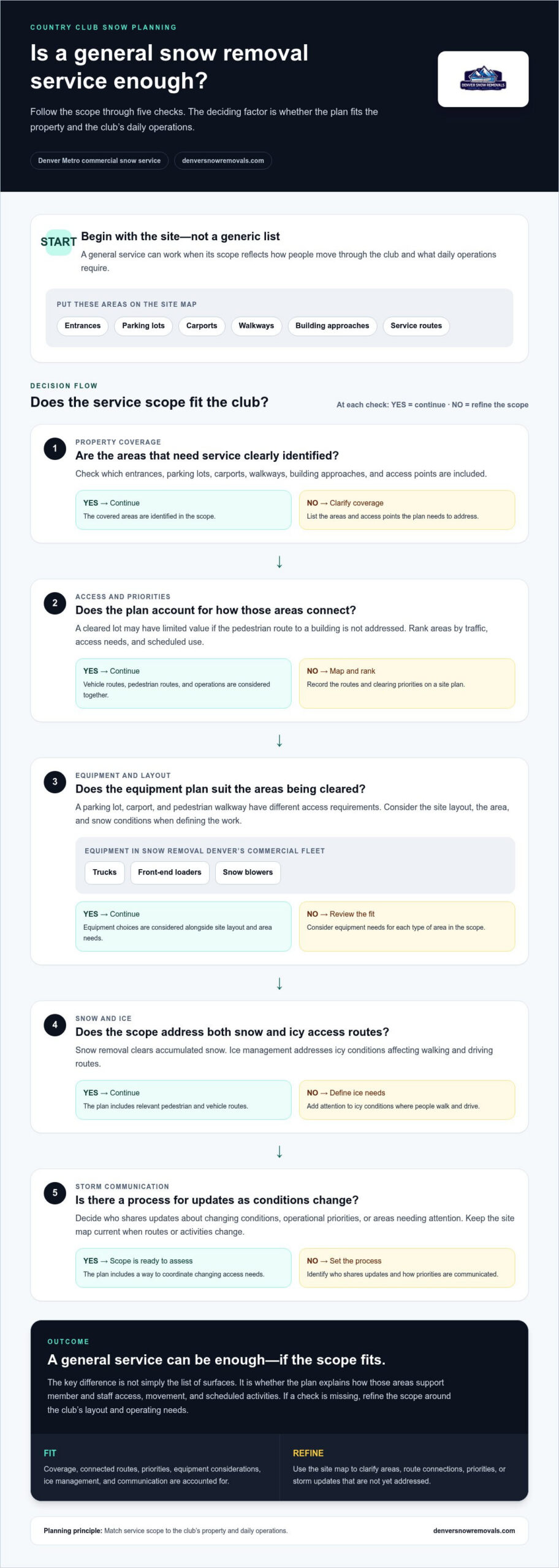
It can be, if the scope fits the property and the club’s daily operations. A general commercial snow removal service is not automatically inadequate for a country club. The key difference is between a basic list of surfaces and a plan that explains how those areas support access, staff movement, and scheduled activities.
For example, a scope might name parking lots, walkways, carports, and entrances. That is a useful start, but managers should also consider how those areas connect. Clearing a lot may have limited value if the pedestrian route to the building is not addressed. Organizing the work around access priorities turns a list of locations into a more useful service scope.
- Potential advantages: Commercial snow removal can cover multiple property areas and provide a straightforward framework for planning snow and ice work.
- Potential limitations: A generic area list may not show which routes matter most, how club operations shape priorities, or how separate areas connect.
Judge the fit by the clarity of the scope, not by whether a service is labeled “general” or “country club-specific.” Claims about past country club clients or specialized club experience should be supported by evidence. A clear property plan gives managers a practical basis for deciding whether the work aligns with the club’s needs.
Signs the service scope matches your club’s layout
A well-defined scope names the areas included, such as parking lots, carports, walkways, and entrances. Managers can then rank them based on how people use them, how they connect, and how important they are to daily operations. This makes it easier to spot gaps in a simple checklist and describe the work needed across the property.
Questions club managers can resolve before setting priorities
Start with the club’s actual patterns of use. Which entrances and pedestrian routes matter most during regular operations? Where do staff need access? Do event schedules change which approaches or parking areas should take priority on particular days? Answers help distinguish routine access needs from changing operational demands. The resulting plan should reflect the site layout and the way the club operates, rather than rely on a generic sequence that may not fit.
For commercial snow removal for country clubs, the best measure of fit is whether the defined work supports the club’s access and operating priorities. Clearly identified areas, connected routes, and practical priorities make the service easier to understand and plan around.
How to prepare a country club for commercial snow removal in Denver
Preparation gives club managers and the snow removal team a shared picture of the property before winter conditions affect access. A map, ranked priorities, and a designated communication contact help turn operating needs into a practical service scope. Use these steps to organize the details.
- 1. Map the property. Mark entrances, parking areas, carports, pedestrian walkways, building approaches, and operational access routes. Show how routes connect so the plan covers the paths people use, not only isolated surfaces.
- 2. Rank clearing priorities. Separate routes essential for member, visitor, and staff access from areas with different use or timing needs. Record why each area matters, such as regular building access, staff movement, or a scheduled activity.
- 3. Share operating needs. Provide recurring event schedules and note known changes in access patterns. Name a club contact who can communicate updates to the snow removal team when conditions or club operations shift.
Create a property map and snow-clearing priority list
Keep the site plan easy to read and update. Mark parking areas, entrances, walkways, carports, and service access points, then label them by priority or timing. For example, an entrance used throughout the day may need different attention from an area used mainly for a scheduled event. The map gives everyone a concrete reference for discussing coverage and reduces confusion about what the scope is meant to address.
Coordinate snow removal with events and daily operations
List recurring activities and consider how attendance affects access. A busy event may increase the importance of certain parking areas and building approaches, while staff routes may remain essential during regular operations. Assign one club contact to share relevant changes, such as an adjusted event schedule or a temporarily restricted route. A consistent point of contact helps keep instructions clear as winter conditions and club needs change.
These steps also provide a useful starting point for broader commercial snow removal planning. The commercial snow removal guide offers additional context for business properties, while the country club’s map and operating priorities shape its specific plan.
Use the site plan to make access priorities clear, then explore commercial snow removal in Denver for property snow and ice needs.
Choose Snow Removal Denver for dependable commercial snow removal
A useful winter plan starts with clear priorities: identify important access routes, define the areas included, and account for both snow and ice. For a country club, that means considering how entrances, parking areas, carports, and walkways support member access and daily operations. A defined scope gives managers a practical framework for planning snow removal across the property.
Snow Removal Denver is a family-owned business with over 44 years of snow plowing and removal experience. The company serves commercial properties across the Denver Metro area, bringing local experience to winter property planning.
What Snow Removal Denver brings to commercial properties
Commercial service covers snow and ice removal for properties, including parking lots, carports, and walkways. The fleet includes:
- Trucks
- Front-end loaders
- Snow blowers
Different property areas may call for different equipment and service priorities. A club’s site layout, access points, and operating needs help shape the scope. Identifying the areas that matter most gives the snow removal plan a useful starting point.
Take the next step toward a country club snow plan
As you prepare, describe the property and identify its highest-priority access areas. Include how members, visitors, and staff use entrances, parking, carports, and walkways, along with operational routes that need attention. These details help connect the service scope to the way the club functions during winter weather.
For Denver Metro properties, request a free estimate from Snow Removal Denver to discuss commercial snow removal for country clubs. A clear conversation about the property and its priorities is a practical next step toward planning winter access.
Request a free estimate for your Denver Metro property and plan for winter snow and ice needs.
Plan ahead for safer winter access
A strong country club snow plan starts with the property itself. Map the important entrances, parking areas, carports, walkways, and access routes, then set priorities based on how members, staff, and visitors use them. A clear service scope and communication process keep snow and ice planning connected to daily operations.
Commercial snow removal for country clubs should fit the site layout rather than rely on a generic list of areas. Snow Removal Denver is a family-owned business with over 44 years of experience serving the Denver Metro area. Its commercial snow and ice removal covers parking lots, carports, and walkways, supported by a fleet that includes trucks, front-end loaders, and snow blowers.
Share your property layout and highest-priority access areas to start planning for your club. Request a free estimate for commercial snow removal in the Denver Metro area. A clear scope helps your club approach winter planning with a focus on access and day-to-day needs.
Frequently Asked Questions
What does commercial snow removal for a country club include?
Commercial snow removal for country clubs can include clearing snow and ice from parking lots, carports, and walkways. The service scope should reflect the club’s layout, including entrances and access routes used by members, visitors, and staff. Snow Removal Denver serves commercial properties across the Denver Metro area. A site map and ranked priorities can help define which areas the club needs covered.
How should a country club prioritize snow removal?
Prioritize routes according to how people access and use the property. Start with key entrances and pedestrian paths, then consider parking areas, carports, building approaches, and routes needed for staff operations. The right order depends on the club’s layout and daily schedule. Mapping these areas before winter helps managers communicate which access points matter most and where different clearing priorities apply.
Can commercial snow removal cover both parking lots and walkways?
Yes. Commercial snow removal can cover parking lots and walkways, as well as carports and other areas within the service scope. Lots and carports support vehicle access, while walkways provide pedestrian routes between entrances and buildings. Defining each area helps the plan address vehicle movement and passage on foot across the property.
What equipment is used for commercial snow removal?
Snow Removal Denver’s commercial snow removal fleet includes trucks, front-end loaders, and snow blowers. The equipment used for a particular area depends on the property layout and conditions. Parking lots, carports, and walkways may have different access requirements, so match the equipment and service scope to the site instead of assuming one approach suits every area.
When should a country club arrange commercial snow removal?
A country club should plan its commercial snow removal before winter weather begins. Early planning gives managers time to map the property, identify important access routes, and account for regular activities and staff needs. It also creates a shared understanding of which areas are included in the service scope. For Denver Metro properties, preparing these details ahead of winter supports clearer coordination when conditions change.
Does a country club need ice management as well as snow removal?
Snow removal and ice management address related but distinct conditions. Snow removal clears accumulated snow, while ice management focuses on icy conditions affecting walking and driving routes. A country club’s plan should consider both when setting access and safety priorities. Identify the pedestrian paths, entrances, and vehicle routes that matter most, then make sure the scope reflects the club’s snow and ice needs.
How can a Denver country club prepare its property for snow removal?
Start with a site plan marking entrances, parking lots, carports, walkways, building approaches, and operational access routes. Rank these areas by use and importance, then note recurring events or schedule changes that could affect access. Assign a club contact to share updates with the snow removal team during winter weather. A clear map and communication process help align the service plan with the property’s needs.