
The right approach to snow removal for events is a contracted, threshold-driven plan: lock in a commercial contractor before the season starts, write an event-specific addendum to that contract, and tie mobilization to objective weather triggers rather than guesswork. Those triggers come from NWS watch and warning thresholds and OSHA’s safety rules for snow crews. Build your plan around both, and the storm becomes a logistics problem instead of a crisis.
TL;DR:
- Using weather-specific thresholds from the National Weather Service ensures contractors mobilize precisely when needed, avoiding unnecessary costs or delays.
- Equipment and crew size should match the storm’s severity, with multi-day storms requiring plows and hauling trucks, while minor flurries may only need anti-icing.
- Contractors should be engaged through seasonal contracts with clear response time commitments, proof of insurance, and documented service logs for dispute prevention.
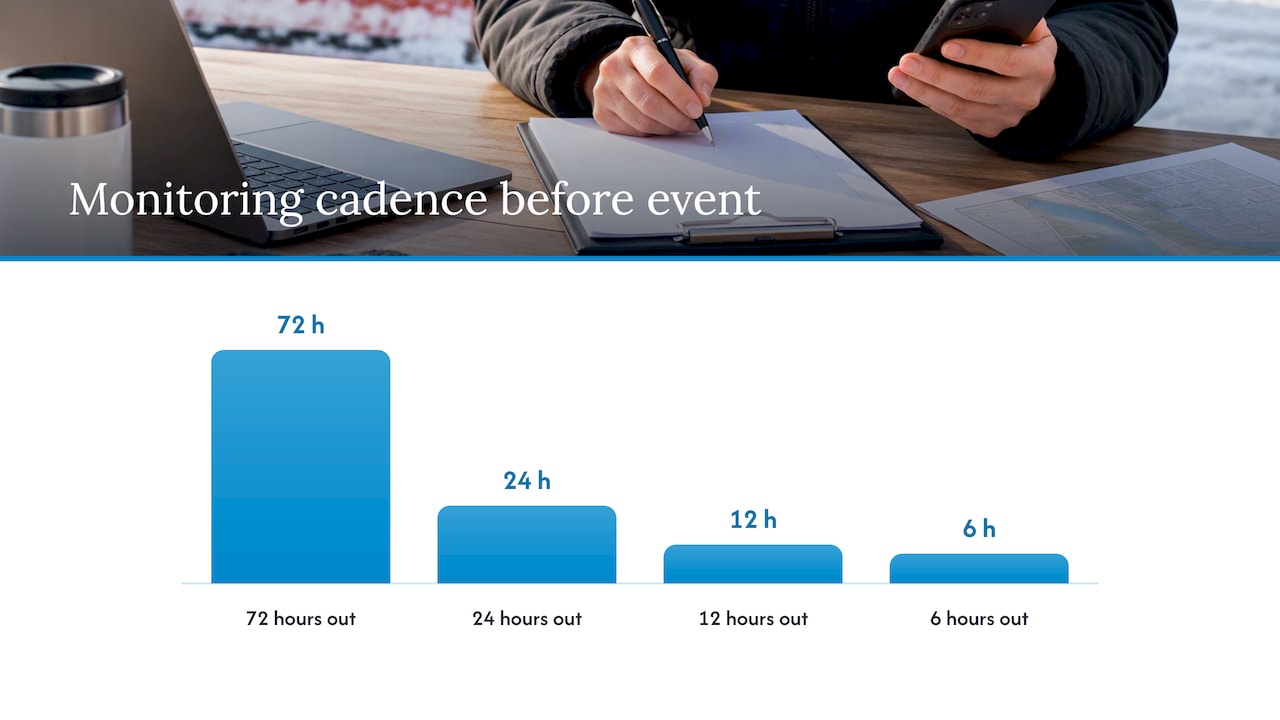
- Monitoring should begin 72 hours before an event, with escalation steps at 24, 12, and 6 hours to confirm plans and response readiness.
- Proper staging and snow pile placement depend on site layout, with early site walk-throughs aiding coordination and safety, especially around emergency lanes and pedestrian zones.
Table of Contents
- Types of Snow-Removal Events and What They Demand Operationally
- Contract Models and Pricing Shapes Planners Will Encounter
- Setting Weather Thresholds and a Monitoring Cadence
- Staging, Access Lanes, and Snow-Pile Placement on Event Day
- Safety Rules Every Event Snow Plan Needs to Cover
- Your Event Snow Removal Checklist and Timeline
- What 44 Years of Winter Operations Teaches About Vendor Selection
- Common Mistakes Planners Make With Event Snow Removal
- Get Event-Ready Snow Coverage Before the Next Storm
- FAQ
- Sources
Types of Snow-Removal Events and What They Demand Operationally
Not every snowfall calls for the same response, and treating a light flurry like a blizzard wastes money while treating a blizzard like a flurry puts attendees at risk. Four event types cover most scenarios planners face:
- Light flurries (under 2 inches): usually call for anti-icing pre-treatment on walkways and entry points, often with no plowing needed.
- Overnight accumulations (2 to 6 inches): typically require a single plow pass before gates open, paired with sidewalk de-icing.
- Multi-day storms: demand multiple plow passes, continuous monitoring, and likely snow hauling once piles crowd parking or walkways.
- Emergency rapid-onset events: need pre-staged crews on standby and a rapid mobilization clause in the contract, since there may be no lead time at all.
Equipment needs scale with the event type. A flurry might only need a liquid anti-icing sprayer. A multi-day storm usually brings in plows, skid steers for pile management, and hauling trucks once on-site storage runs out. Matching crew size and equipment to the forecast, rather than defaulting to the biggest response every time, keeps costs reasonable without leaving gaps in coverage.
Contract Models and Pricing Shapes Planners Will Encounter
Three contract structures dominate the commercial snow-removal market, and each suits a different kind of event calendar. A per-occurrence contract bills for each individual service call, which fits a single one-off event. An event add-on, often billed hourly for rapid mobilization, layers onto an existing property contract when an event falls on short notice. A seasonal contract running from fall through spring, with an event-specific clause built in, gives property managers with recurring gatherings the most predictable budget.
Cost drivers tend to repeat across providers regardless of the model chosen, as explained in detail in our masonry subcontractor winter work cost factors guide:
- Property size and layout, since larger lots and longer walkways take more labor and equipment time.
- Start time requirements, where a pre-dawn clearing deadline costs more than a flexible window.
- Anti-icing materials and application frequency.
- Snow hauling needs, when on-site piling isn’t an option.
- Guaranteed response time, since a two-hour SLA costs more than a same-day arrival.
Before signing anything, insist on a written response-time commitment, current proof of insurance, and documented service logs for every visit. These three items do more to prevent disputes after the event than any other contract clause, and our own seasonal snow removal contract page lays out how those terms typically get structured.
Setting Weather Thresholds and a Monitoring Cadence
Vague instructions like “clear the lot if it snows” leave too much room for delay. A better approach translates National Weather Service thresholds into specific, pre-agreed trigger rules written into the contract itself. A forecast of 2 inches might trigger pre-treatment only. A forecast of a heavy snow event, or the issuance of a Winter Storm Warning, should trigger full mobilization of plows and crew.
One data point makes the case for starting early: the NWS Severe Weather Planning Guide shows that a Winter Storm Watch typically goes out roughly two days ahead of an event, while a Winter Storm Warning often arrives only 12 to 18 hours before onset, and blizzard conditions can develop within a 6-hour window. That compressed timeline is exactly why waiting for the warning before calling a contractor is too late.
A practical monitoring cadence looks like this:
- 72 hours out: begin watching NWS forecasts and designate a Weather Liaison, a role the Event Ready Guide recommends for keeping one person accountable for weather decisions.
- 24 hours out: confirm contractor availability and pre-treatment schedule based on the latest forecast.
- 12 hours out: escalate to full crew staging if a Warning has been issued.
- 6 hours out: finalize go or no-go decisions and notify vendors and attendees.
Keep communication redundant, meaning more than one channel reaches the contractor and event staff, and document every decision with a timestamp. That record matters later for insurance claims or post-event review.
Staging, Access Lanes, and Snow-Pile Placement on Event Day
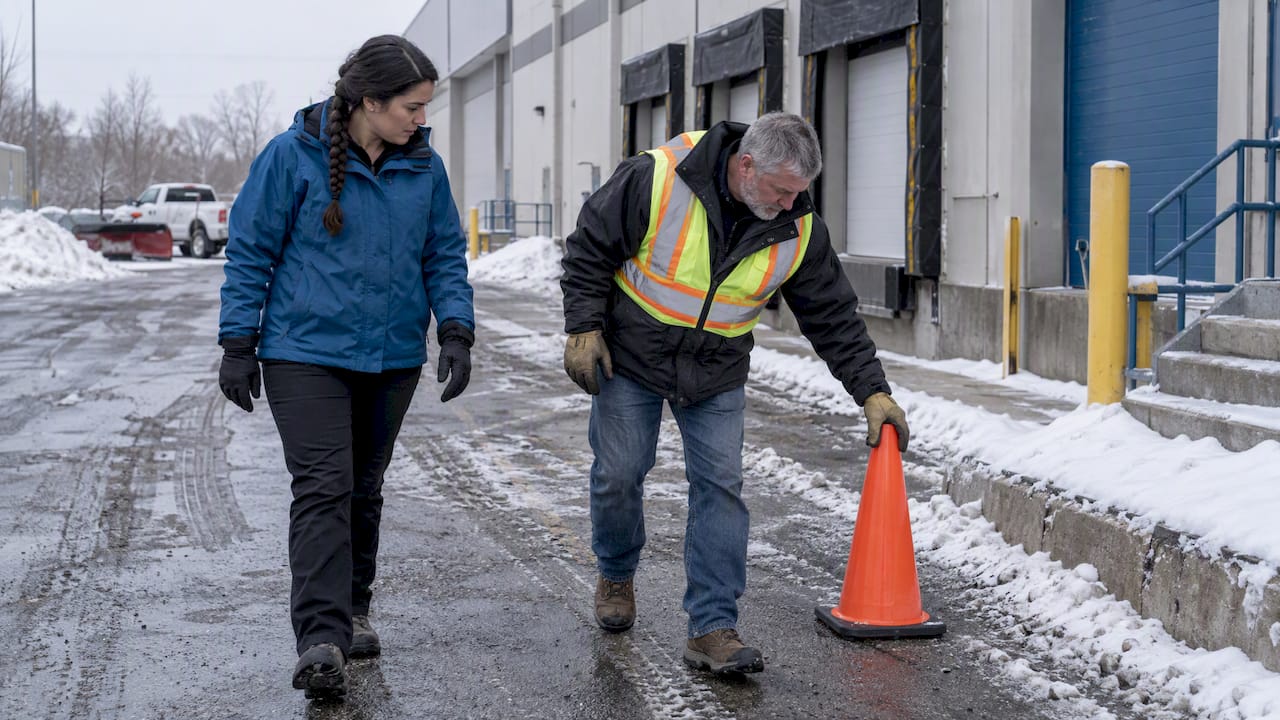
Snow operations that ignore foot traffic patterns can create more hazard than the snow itself. Crews need staging areas away from main pedestrian corridors, and those corridors need to stay protected and clearly marked throughout the event, not just before gates open.
- Stage equipment in low-traffic zones, such as back-of-house loading areas, away from attendee entry points.
- Keep emergency vehicle lanes clear at all times, with crews briefed on exactly where those lanes run.
- Place snow piles where they won’t block sightlines or eat into parking capacity, a point we cover in more detail on our parking lot snow page.
- Decide early whether piling or hauling makes sense, since a lot with no spare space needs trucks on standby rather than growing piles.
Coordination with vendors and production crews prevents a second layer of conflict. Share timing windows for plowing passes so a vendor isn’t mid-setup when a plow comes through, and assign one crew communications lead so instructions don’t get lost between teams.
Pro Tip: Walk the site with your contractor 48 hours before the event to mark pile locations and access lanes together, not after equipment is already moving.
Safety Rules Every Event Snow Plan Needs to Cover
OSHA’s guidance on snow-removal hazards flags falls, rooftop collapse, and equipment-related injuries as the most serious risks tied to this work, and rooftop removal in particular carries elevated danger that requires trained personnel and proper fall protection. Any contractor working above ground level at your event should be able to show you a fall-protection plan before they start.
Beyond the contractor’s own crew, attendee safety deserves its own checklist:
- Require a written fall-protection plan for any rooftop or elevated work.
- Confirm operators are trained on the specific equipment they’ll run on-site.
- Ask for current equipment inspection logs, not just a verbal assurance.
- Schedule de-icing passes on walkways at intervals tied to the forecast, not a single morning application.
- Use temporary mats and signage at entry points where ice risk is highest.
Your Event Snow Removal Checklist and Timeline
A simple timeline keeps the plan actionable when a storm is actually approaching:
- 72 hours: begin monitoring, confirm contractor contract and trigger thresholds.
- 48 hours: schedule pre-treatment if forecast meets the agreed threshold.
- 24 hours: confirm crew staging, equipment readiness, and notify vendors.
- 6 hours: final go or no-go decision, attendee communications sent.
- 0 hours: crews active, photographs and service logs documented in real time.
| Window | Primary action | Who’s responsible |
|---|---|---|
| 72 hours | Weather monitoring begins | Weather Liaison |
| 48 hours | Pre-treatment scheduled | Contractor |
| 24 hours | Crew and equipment confirmed | Event planner |
| 6 hours | Final decision and notifications | Event planner |
| 0 hours | Active clearing and documentation | Contractor crew |
Keep a short contingency list on hand too: an indoor shelter option, a defined cancellation threshold, and a backup contact if your primary crew lead is unreachable.
What 44 Years of Winter Operations Teaches About Vendor Selection
Experience shows up in details planners rarely think to ask about until something goes wrong. Our crews have handled nearly every combination of storm timing, lot layout, and event deadline a property manager can throw at us, backed by 24/7 dispatch and commercial-grade equipment.
When vetting any contractor for event work, ask for proof of insurance, references from a similar event, a current equipment list, and documented service logs from past jobs. A contractor who hesitates on any of these is one to question further.
Common Mistakes Planners Make With Event Snow Removal
The most frequent error we see is mobilizing too late because a planner waited for snow to actually fall instead of watching the forecast. A close second is leaving staging and pile locations undecided until crews arrive, which causes conflict with vendors mid-event. Rooftop hazards also get overlooked more often than they should. Rehearse your activation thresholds before the season starts, not during your first storm.
— Jesse
Get Event-Ready Snow Coverage Before the Next Storm
We handle event add-ons, emergency dispatch, and seasonal contracts with event clauses built in, so your gathering stays accessible no matter what the forecast does.
- Event-specific contract addenda that lock in response times ahead of the season.
- Emergency dispatch for rapid-onset storms with no lead time.
- Professional equipment sized to your lot and expected foot traffic.
Reach out through our parking lot and event snow removal page for a free estimate before your next scheduled event.
FAQ
What is the average cost for snow removal?
Cost depends on property size, response-time requirements, and whether anti-icing or hauling is needed, so there’s no single flat rate across providers. Our Residential Driveway and Walkway Clearing service pricing is available on our website, while commercial and event pricing is quoted based on the specific site and scope.
Can I pay someone to shovel my snow?
Yes, both individual shoveling services and full commercial snow-removal contractors offer this, with commercial providers typically bringing equipment suited to larger lots and walkways. For an event, a contracted provider with documented service logs and insurance coverage is the more reliable option over an informal arrangement.
What is the best option for snow removal?
For events, a seasonal contract with a built-in event addendum tends to work best, since it locks in response times and pricing before the season starts rather than scrambling during a storm. This approach pairs a predictable budget with the flexibility to add event-specific triggers.
What is the hourly rate for shoveling snow?
Hourly rates vary by region, property complexity, and whether the job requires hauling or just clearing, so there’s no universal rate to quote. Request a quote directly from a local contractor based on your specific site and timing needs.