

How much does snow removal actually cost in 2026?
Snow removal pricing in 2026 is not a single number. It is a range shaped by property size, snowfall depth, service type, and where you live. Knowing the typical brackets before you call a contractor puts you in a far stronger position when comparing quotes.
Typical cost ranges for 2026:
- Standard residential driveway (1–2 car): typically charges vary roughly between a few dozen and up to a hundred dollars per visit, or a few hundred dollars for a seasonal contract in moderate-to-heavy snow regions
- Large residential driveway (3-car or 50+ feet): costs more per visit, generally higher than smaller driveways
- Commercial lots: charges are significantly higher per event due to acreage and service level
- Seasonal contracts: generally range in the several hundreds of dollars for most residential properties; commercial contracts vary widely
- Salting or de-icing add-on: add-on costs for salting or de-icing vary and tend to be additional per visit or per acre
- Sidewalk shoveling add-on: additional charges apply for sidewalk shoveling services
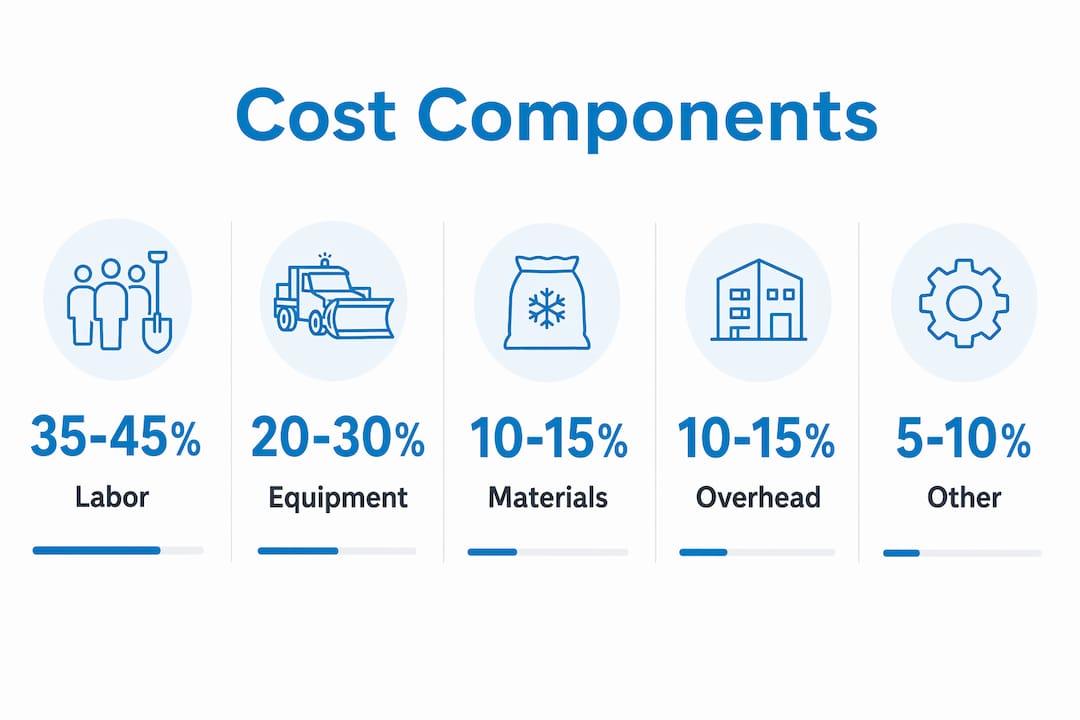
Every contractor builds a price from five components: labor (35%–45% of total cost), equipment (20%–30%), materials (10%–15%), overhead (10%–20%), and profit margin (10%–20%). Understanding that breakdown explains why two quotes for the same driveway can differ by $30 or more.
Per-visit vs. seasonal contract: The break-even point sits at roughly 8 plowable snowfalls per winter. Fewer than 8 events and per-visit pricing saves money. More than 8 and a seasonal contract typically wins on both cost and service priority.
Table of Contents
- What determines snow removal service cost: the key factors
- How costs vary by property type and location
- Common hiring mistakes that raise your total cost
- Denversnowremovals: reliable snow removal for the Denver Metro area
- Key Takeaways
- FAQ
What determines snow removal service cost: the key factors
Price variation in snow removal is not random. Each factor below directly adds or subtracts from what a contractor must charge to cover costs and stay in business.
Labor: the largest single cost driver
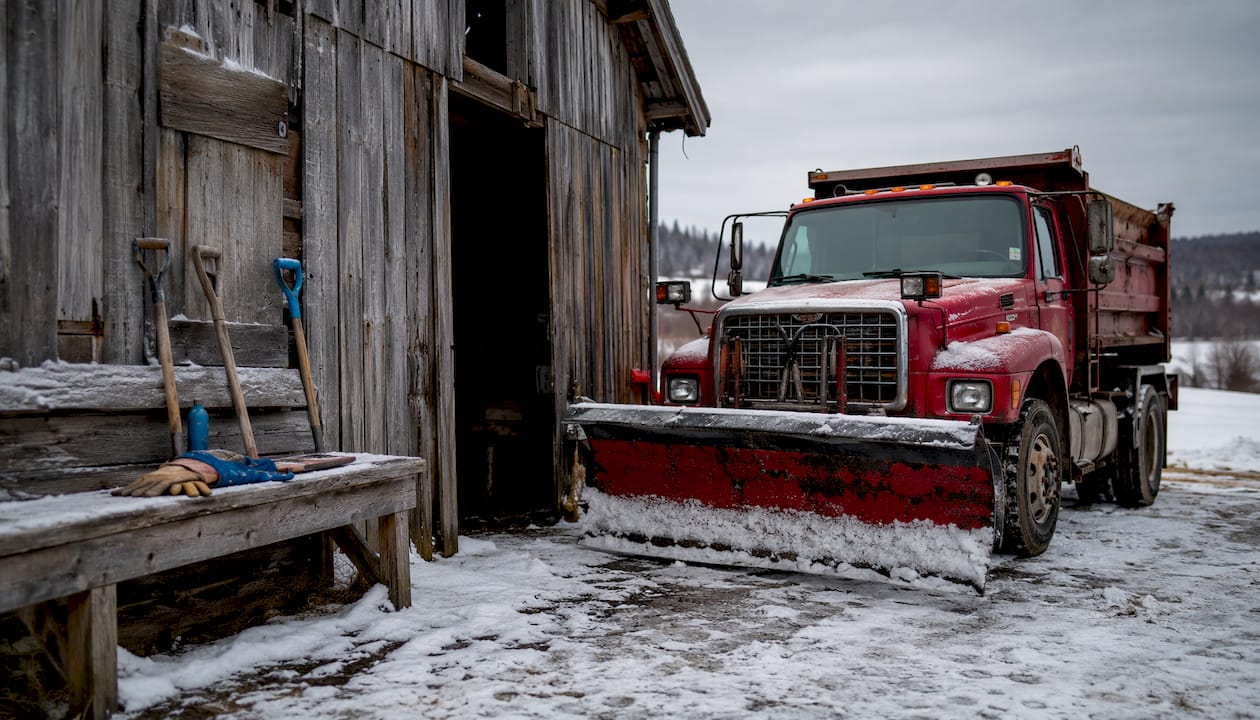
Labor generally forms the largest portion of snow removal pricing, often accounting for a substantial share of total costs. In 2026, laborer and operator wages vary based on role and region, affecting the labor portion of costs. Overtime kicks in at 1.5x the base rate for early morning, overnight, and holiday work. Travel time between jobs is also billed into the job cost, so a property at the far end of a contractor’s route costs more to service than one clustered with others nearby.
Equipment depreciation, fuel, and maintenance
Equipment costs typically form a significant share of final pricing. A commercial plow truck costing $65,000 with a seven-year useful life generates roughly $9,300 in annual depreciation that must be recovered through pricing. Fuel adds $15–$50+ per hour of operation. Blade replacements, hydraulic repairs, and engine maintenance pile on throughout the season. Contractors who invest in well-maintained, modern equipment charge accordingly, and that investment directly benefits you when a storm hits at 3:00 AM. For a closer look at how equipment affects pricing, the relationship between fleet quality and cost is worth understanding before you sign.
De-icing materials
Salt and de-icing materials contribute additional costs but exact percentages vary. Rock salt runs $80–$120 per ton in bulk; calcium chloride and magnesium chloride cost $350–$500 per ton but work at lower temperatures. Residential salt application typically runs $20–$50 per visit. If your driveway or lot requires pre-treatment before a storm, that is a separate line item from post-storm salting.
Snowfall depth and storm intensity
How snow depth affects removal pricing is straightforward: more inches means more time on site, more passes, and more material. Light snowfall events clear more quickly, while heavier storms require more time on site. Blizzard conditions with heavy snow often involve multiple passes and visits. Storm intensity surcharges often increase costs notably during heavy snowfall events.
Property size and layout complexity
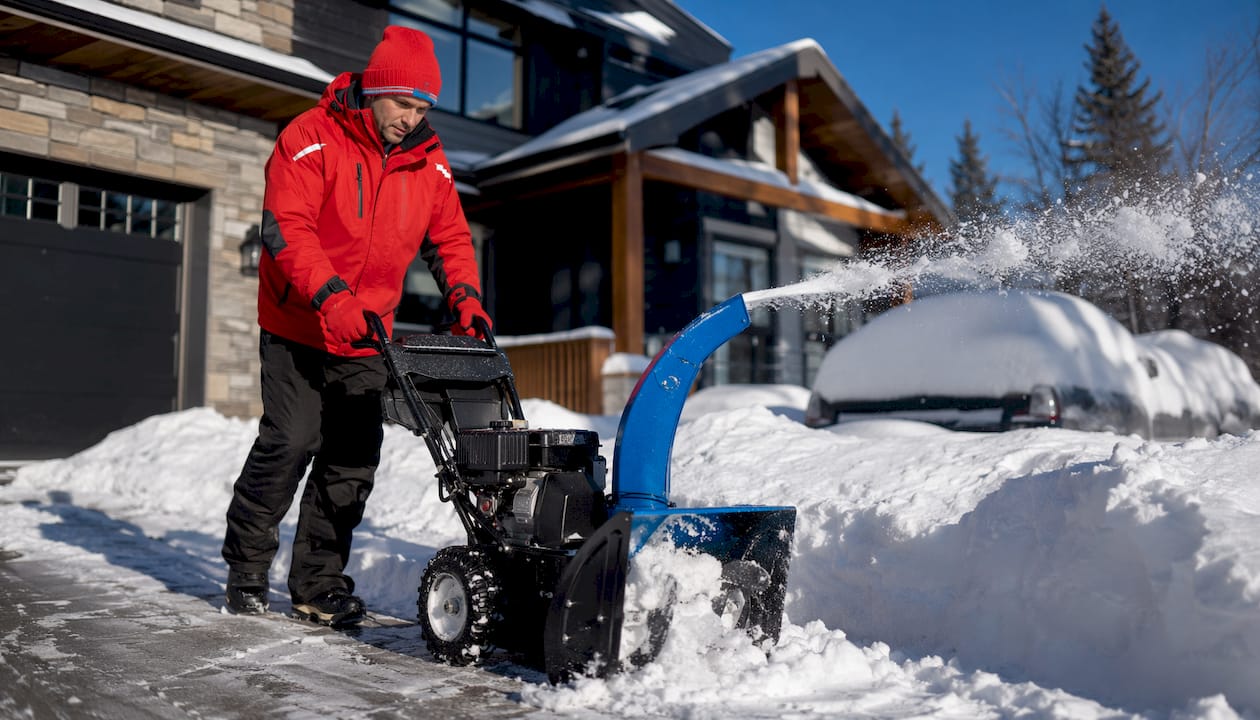
Driveway or lot size affects pricing primarily through time required on site rather than square footage alone. A standard 2-car driveway takes 5–10 minutes to clear; a 3-car driveway with a 50-foot approach takes 15–25 minutes. Steep grades appreciably increase pricing due to additional labor and care required. Narrow or curved driveways that prevent a plow from making clean passes require hand shoveling, which adds labor time. Landscaping features like retaining walls, garden beds, and buried curbs all slow a crew down and raise the final bill.
Service type: plow-only vs. full-service
Base plow-only rates increase when adding walkway shoveling and salt application; sidewalks and front steps are usually priced separately. Roof snow removal incurs additional significant charges. If your property requires snow haul-away because on-site storage is limited, expect a meaningful additional charge. Getting clarity on snow haul-away costs before signing a contract prevents unpleasant surprises mid-season.
Timing and emergency requests
Emergency or same-day service generally costs more than scheduled service, with higher premiums during nights and holidays. Contractors prioritize their seasonal contract customers during a storm backlog, which means a homeowner calling during a blizzard may wait hours or find no availability at all. Booking before the season starts is the single most effective way to avoid these premiums.
Contractor experience, insurance, and reputation
General liability insurance is a nontrivial annual expense for contractors, contributing to cost structure. Well-insured companies charge more, but they also protect you from slip-and-fall liability and property damage claims. A contractor who skips adequate coverage passes that risk directly to you. Experienced operators with larger fleets can service more properties per storm, which means shorter wait times and more reliable response. Reputation and fleet capacity are premium features, and their cost shows up in the quote.
Local regulations and required permits
Local licensing and registration fees for contractors add to operating costs and pricing considerations. Local sidewalk clearing ordinances can also mandate service within a set window after snowfall ends, which affects how contractors structure response time guarantees and price their contracts. Urban areas with higher costs of living and tighter labor markets consistently produce higher quotes than rural regions.
Pricing model comparison:
| Pricing Model | How It Works | Best Fit |
|---|---|---|
| Per-visit (flat rate) | Fixed fee each time snow is cleared | Fewer than 8 snowfalls per winter |
| Seasonal contract | One flat fee covers the full winter | 8+ plowable events per season |
| Per-inch pricing | Rate scales with snow depth | Variable snowfall regions |
| Hourly | Billed by time on site | Irregular or large commercial jobs |
| Zero-tolerance contract | Continuous service during storms | High-liability commercial sites |
How costs vary by property type and location
Residential and commercial properties do not price the same way, and geography adds another layer of variation on top of that.
- Residential vs. commercial: Commercial lots typically pay substantially more per square foot than residential driveways. Slip-and-fall liability is the primary reason. A customer who falls in a retail parking lot can produce a five-to-six-figure claim; a homeowner on their own driveway has no legal recourse against themselves. Commercial contracts also demand faster response times and more frequent service, both of which drive up cost.
- Property size and design: Long rural driveways cost significantly more per visit than standard suburban residential driveways. The gap is almost entirely explained by time on site.
- Regional snowfall norms: Regional differences create 20%–40% variance in pricing across the U.S. Northern Tier states like Minnesota, Maine, and Vermont typically see 15–25+ plowable events per winter, which makes seasonal contracts the default choice and allows contractors to build efficient, high-volume routes. Mid-Atlantic and Southern states see 3–7 plowable events, favoring per-visit pricing and producing higher per-visit overhead since routes are less dense.
- Urban vs. rural labor costs: Contractors in high-cost cities charge more because their own operating costs, including wages, insurance, and equipment storage, are higher. Rural areas with more competition and lower overhead often produce lower quotes for comparable work.
- Accessibility and landscaping: Tight city blocks, shared driveways, and properties with complex landscaping all add time and cost. If a plow cannot make a clean pass, hand shoveling fills the gap at a higher labor rate.
Pro Tip: Before requesting quotes, check your state climatology office or NOAA’s local climate data for historical plowable-event counts in your zip code. That number tells you whether a seasonal contract or per-visit pricing makes more financial sense for your specific location.
Common hiring mistakes that raise your total cost
The cheapest quote often ends up being the most expensive decision. Here is where property owners consistently go wrong.
- Booking late or during a storm: Emergency service premiums run 20%–50% above scheduled rates, and contractors prioritize their existing seasonal customers first. Calling during a blizzard often means a long wait or no service at all. Booking in September or October, before routes fill, avoids this entirely.
- Choosing on price alone: Low-price operators frequently cut corners on insurance and equipment maintenance. A contractor without adequate liability coverage leaves you exposed if a crew member is injured on your property or if a plow damages your landscaping. Always ask for proof of insurance before signing.
- Skipping the snow storage conversation: Snow haul-away is a separate cost that catches many property owners off guard. If your lot has no room to pile snow, clarify in writing whether the contractor will haul it away and what that costs. Setting clear snow clearing expectations upfront prevents disputes and unexpected charges later. Renovation and property maintenance professionals, including those at Statera Contracting, consistently note that defining scope in writing before work begins is the single best way to avoid cost disputes on any property service.
- Misunderstanding zero-tolerance contracts: Continuous service during a storm roughly doubles the base contract price. This level of coverage makes sense for medical offices or 24-hour retail, but most homeowners do not need it. Know what you are paying for.
- Ignoring fleet capacity: A solo operator with one truck is vulnerable to equipment failure during a major storm. Larger companies with multiple vehicles and crews can reroute resources when a truck breaks down. Reliability during peak demand is worth paying for.
Pro Tip: Ask every contractor for proof of general liability insurance and commercial auto coverage before signing anything. A contractor whose plow damages your garage door or landscaping needs adequate coverage to make you whole. Verifying this takes five minutes and can save thousands.
Denversnowremovals: reliable snow removal for the Denver Metro area
Budgeting for snow removal is one thing. Finding a contractor who actually shows up at 4:00 AM during a Denver blizzard is another. Denversnowremovals has served residential and commercial properties across the Denver Metro area for over 44 years, with a 24/7 team and the fleet capacity to handle demand when it peaks.
Unlike solo operators who may go dark during a major storm, Denversnowremovals maintains the equipment and crew depth to keep routes running through heavy snowfall. Free estimates make it easy to understand your costs before committing, and flexible service plans mean you are not locked into a contract that does not fit your property or snowfall patterns. Whether you need a comparison of plowing vs. snow blowing methods or want to discuss a seasonal plan tailored to your driveway, the team is ready to walk you through your options. Contact Denversnowremovals at 303-591-2089 or visit denversnowremovals.com to get your free estimate before the season fills up.
Key Takeaways
Property size, snowfall depth, service type, and local labor costs are the four factors that most directly determine what you pay for professional snow removal in 2026.
| Point | Details |
|---|---|
| Average residential cost | A standard 2-car driveway runs $35–$75 per visit or $350–$700 for a seasonal contract. |
| Break-even for seasonal contracts | Seasonal pricing saves money when your area sees 8 or more plowable snowfalls per winter. |
| Labor dominates the price | Labor accounts for 35%–45% of total cost, making crew size and overtime the biggest variables. |
| Emergency service costs more | Same-day or storm-time service runs 20%–50% above scheduled rates, with no guaranteed availability. |
| Denversnowremovals | Offers free estimates and flexible plans for Denver Metro residential and commercial properties, backed by 44 years of experience. |
FAQ
How much do people usually charge for snow removal?
A standard residential driveway visit costs $35–$75, while seasonal contracts typically run $350–$800 depending on driveway size and regional snowfall. Commercial lots generally start at $150 per event, with costs rising significantly based on lot size and service requirements.
What factors influence the cost of snow removal?
The main factors are property size, snow depth, service type (plow-only vs. full-service with shoveling and salting), timing, contractor experience and insurance, and geographic location. Regional differences cause significant variance in snow removal pricing across the U.S.
What is a fair price for shoveling a driveway?
A fair price for shoveling a standard 2-car driveway ranges from $35–$75 per visit, depending on snow depth and location. Heavier snowfall adds to that base rate.
When should you book snow removal to get the best rate?
Booking snow removal services before the winter season helps avoid emergency premiums and secures timely service.
Recommended
- How Equipment Drives Affordable Snow Removal Costs – Snow Removal Denver 303-591-2089
- Why Hire a Snow Removal Service: 2026 Guide – Snow Removal Denver 303-591-2089
- Top 6 Sabellsinc.com Alternatives Snow Removal Providers 2026 – Snow Removal Denver 303-591-2089
- Snow Removal Scope of Work: A Denver Property Guide – Snow Removal Denver 303-591-2089