

A snow removal discount program is a financial arrangement that reduces the cost of snow clearing services for qualifying homeowners, businesses, or vulnerable residents. These programs fall into two main categories: government-sponsored assistance for low-income seniors and disabled residents, and private contractor promotions such as seasonal contracts with early-bird pricing. Understanding both types gives you real options for cutting winter costs without sacrificing service reliability. Denversnowremovals has worked with Denver Metro property owners for over 44 years and sees firsthand how the right program choice protects both budgets and safety.
What is a snow removal discount program and who qualifies?
A snow removal discount program is any structured offer that lowers the price of snow plowing, shoveling, or deicing services below standard market rates. The industry uses two recognized terms: “subsidy programs” for government-funded assistance, and “seasonal discount contracts” for private contractor promotions. Both serve the same core goal: making reliable snow clearing more affordable.
Qualifying residents vary by program type. Government subsidy programs target low-income seniors, disabled residents, and households below defined income thresholds. Private contractor discounts are open to any homeowner or business owner willing to commit early in the season.
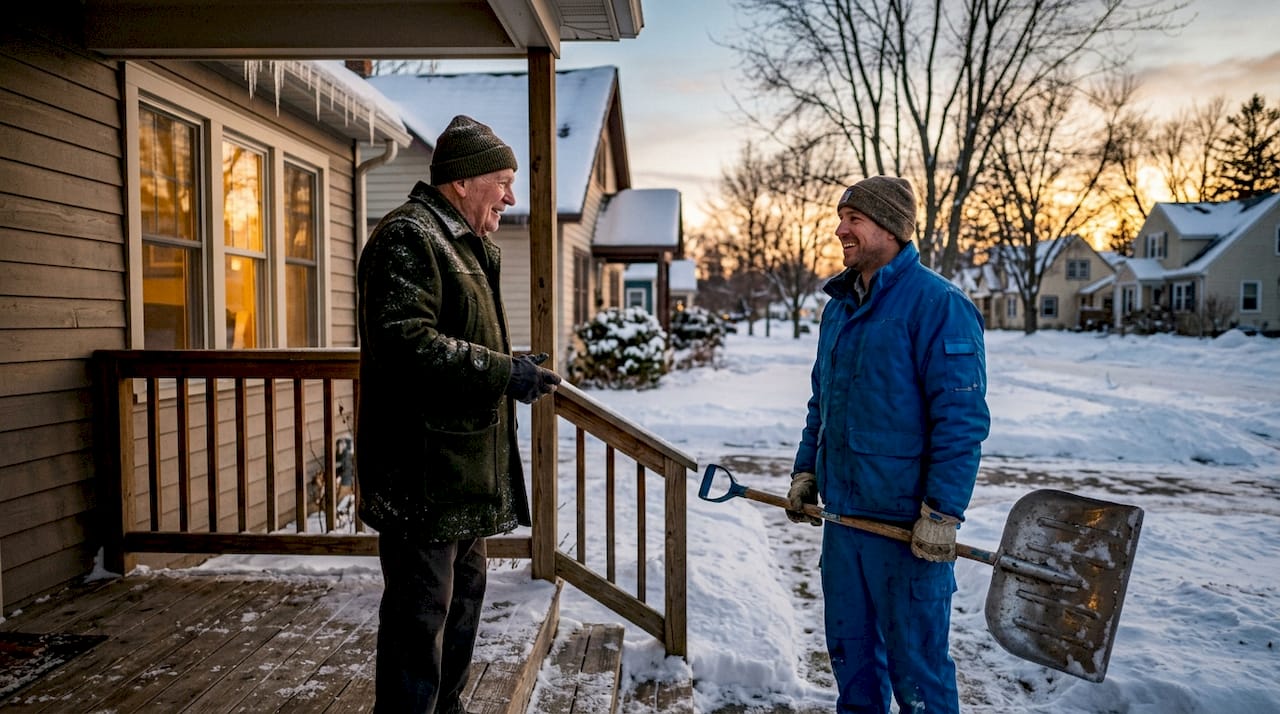
The financial stakes are real. Uncleared snow creates slip-and-fall liability, violates local sidewalk clearing ordinances, and can block emergency vehicle access. A discount program reduces the cost barrier that causes property owners to delay or skip professional service. That delay is where accidents happen.
What types of snow removal discount programs are available?
Two main categories cover the full range of snow removal savings plans available to property owners.
Government-sponsored assistance programs
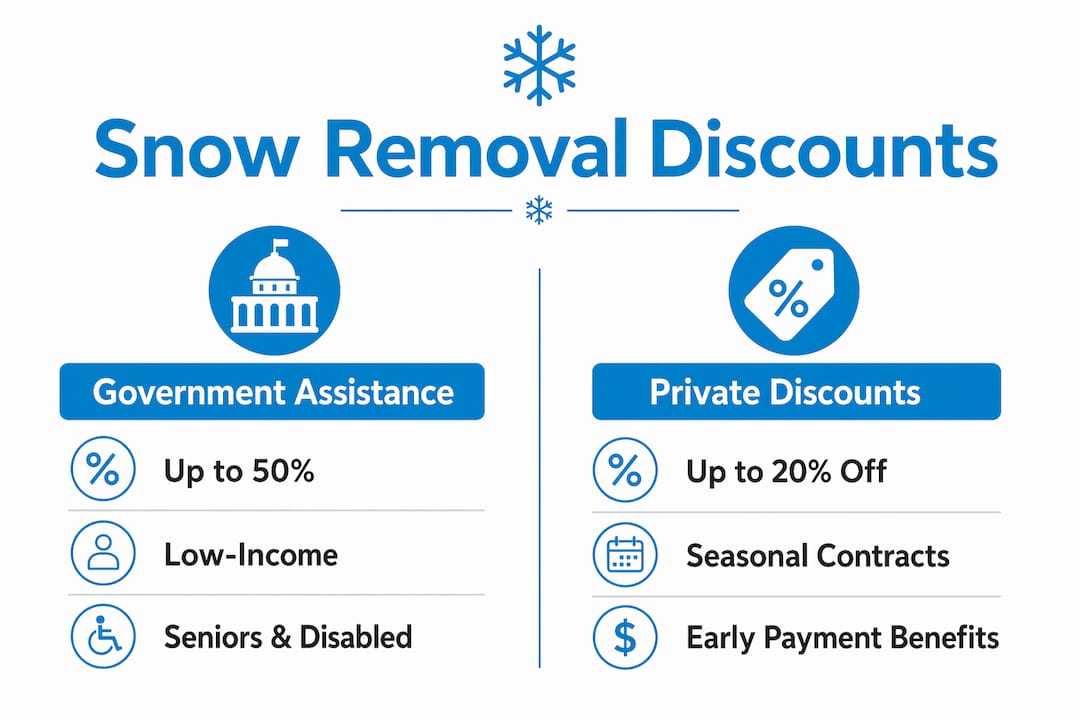
Municipal and county programs provide subsidized snow removal for vulnerable populations. These programs typically offer around 50% reductions in service costs for qualifying low-income seniors and disabled residents. That level of savings can mean the difference between affording professional service and going without it entirely.
Examples include Ottawa’s Snow-Go Assist program and Burlington’s Windrow Clearing program. Burlington’s program restricts participation to a limited number of households, with Burlington capping enrollment at 1,000 homes. Mentor, Ohio runs Operation Snow Lift, a pilot program that provides 74 households with vouchers funded by HUD grants for winter 2025–2026. These programs are real, but they are small by design.
Private contractor seasonal discounts
Private snow removal companies offer discounts on snow removal services through several common promotion types:
- Early-bird seasonal contracts: Contractors offer up to 20% off or fixed cash deductions when you sign before winter begins.
- First-time customer discounts: New clients often receive around 10% off their first seasonal contract.
- Referral rewards: Existing customers earn credits or discounts for referring neighbors or business contacts.
- BOGO deals: Some contractors offer buy-one-get-one promotions valid before peak season starts.
- Website inquiry discounts: A small number of providers offer a 5% discount when customers mention the company’s website during their initial call.
| Program Type | Typical Savings | Who Qualifies |
|---|---|---|
| Government subsidy | Up to 50% off | Low-income seniors, disabled residents |
| Early-bird seasonal contract | Up to 20% off | Any homeowner or business |
| First-time customer offer | Around 10% off | New clients only |
| Referral reward | Varies by provider | Existing contract holders |
| Upfront full payment | Best available rate | Any customer paying in full |
How do government-sponsored snow removal assistance programs work?
Government snow removal assistance programs operate through a structured application process with strict eligibility gates. Most programs require documented proof of income, disability status, or enrollment in a qualifying government benefit program such as Medicaid or Supplemental Security Income. Most discount programs require documented qualification, making early documentation preparation vital.
The application process typically follows these steps:
- Check eligibility criteria. Confirm your income level, disability status, or age meets the program’s threshold before applying.
- Gather required documents. Collect proof of income, disability certification, and property ownership records in advance.
- Watch for enrollment windows. Some programs only open for two weeks in fall and prioritize applicants on a first-come basis. Missing the window means waiting a full year.
- Submit your application early. Programs with participant caps fill quickly. Mentor, Ohio’s Operation Snow Lift, for example, serves only 74 households per season.
- Confirm your placement. Once accepted, verify what services are covered, how to request clearing, and what response times to expect.
Funding for these programs comes from a mix of user fees and public taxes. Some municipalities offset 47% of program costs with user fees and cover the remainder with tax revenue. That cost-sharing model keeps programs financially sustainable, but it also means fees can increase year over year.
Pro Tip: Search your city’s official website for “senior snow removal assistance” or “winter property maintenance subsidy” each september. Municipal programs rarely advertise widely, and the enrollment window can close before most residents realize it opened.
What are the benefits of private seasonal snow removal contracts?
Private seasonal contracts deliver two distinct advantages: predictable costs and priority service queuing. Properties under contract get cleared ahead of on-demand customers during storms. That prioritization matters most during heavy snowfall events when demand spikes and on-demand customers face long waits.
The financial benefits of a locked-in flat rate are equally significant:
- No per-visit cost volatility. Seasonal contracts eliminate surprise charges after major storms. You pay one agreed rate regardless of how many times the crew visits.
- Protection from price surges. After the first major snowfall of the season, contractors face peak demand and have little incentive to negotiate. Signing early locks in the best available rate.
- Predictable budgeting. Homeowners and businesses can plan winter operating costs accurately when snow removal is a fixed line item.
- Bundled service options. Many seasonal contracts include deicing, ice remediation, and sidewalk clearing as part of the package, services that cost significantly more when booked individually.
Pro Tip: Pay your seasonal contract in full upfront. Contractors generally provide discounts only when paid in full before the season starts. Mid-season discount requests almost always fail because demand-driven pricing takes over once snow falls.
Seasonal contracts also function as a safety subscription. You are not just buying a discount. You are buying guaranteed access and peace of mind during the months when property liability risk is highest. Reviewing why to hire a snow removal service before signing helps you understand exactly what that reliability is worth.
How to maximize savings with snow removal discount programs
Combining government subsidies with private discounts is the most effective strategy for reducing winter snow removal costs. Few property owners pursue both, which means significant savings go unclaimed each season.
- Research municipal programs in early fall. Government assistance programs often open enrollment in september or october. Missing the window means a full year’s wait.
- Prepare documentation before you need it. Gather proof of income, disability status, and property ownership now. Applications move fast when enrollment windows are short.
- Sign your private seasonal contract before the first snowfall. Early-bird discounts disappear once contractors fill their capacity. Signing in september or october secures the best rate.
- Pay upfront for maximum savings. Full payment before the season starts triggers the deepest discounts from most private contractors.
- Avoid last-minute bookings. On-demand snow removal during a storm costs significantly more than a pre-arranged seasonal rate. The clock starts ticking the moment snow is forecast.
- Ask about referral programs. If you have neighbors or business contacts who also need service, a referral discount can reduce your own cost further.
Pro Tip: Review your seasonal snow preparation steps before contacting any provider. Knowing your property’s specific needs, driveway length, sidewalk footage, and parking lot size, lets you get accurate quotes and compare programs fairly.
What misconceptions do property owners have about snow removal discounts?
The most common misconception is that discount programs mean free service. They do not. Even government subsidy programs involve cost-sharing, and recipients typically pay a reduced fee rather than nothing at all.
Several other misunderstandings cause property owners to miss out or feel disappointed:
- Subsidies are not universal. Government programs serve a narrow slice of the population. Most homeowners and businesses do not qualify and must rely on private contractor promotions.
- Participant caps are real. Programs like Burlington’s Windrow Clearing limit enrollment to a fixed number of households. Qualifying does not guarantee a spot.
- Seasonal contracts are not just discounts. They are priority service agreements. The discount is a benefit of commitment, not the primary product.
- Mid-season negotiations rarely work. Once winter starts, mid-season discount negotiations rarely succeed because contractors operate at full capacity and face high demand.
“A snow removal discount program reduces your cost, but it does not eliminate it. The real value is predictable pricing and guaranteed service during the months when both are hardest to find.”
Understanding these limits helps you set realistic expectations and plan your budget accurately. If you want to understand how service agreements are structured before signing, reviewing snow clearing expectations for residents gives you a practical framework.
Key Takeaways
Snow removal discount programs deliver the most value when you combine government subsidies with private seasonal contracts and act before the first snowfall of the year.
| Point | Details |
|---|---|
| Two program types exist | Government subsidies serve vulnerable residents; private contracts serve all property owners. |
| Government savings reach 50% | Qualifying low-income seniors and disabled residents can cut costs in half through municipal programs. |
| Early-bird contracts save up to 20% | Signing a seasonal contract before winter locks in the best private rate available. |
| Enrollment windows are short | Some government programs open for only two weeks in fall; missing them means a full year’s wait. |
| Pay upfront for best rates | Full payment before the season starts triggers the deepest discounts from private contractors. |
What I’ve learned after years of watching property owners navigate winter costs
Jesse here. After years of working in the Denver Metro snow removal space, the pattern I see most often is this: property owners wait too long and then pay too much.
The homeowners who get the best outcomes treat their seasonal snow removal contract the way they treat their insurance policy. They sign it before they need it, they pay it in full, and they stop thinking about it. When the storm hits, their driveway gets cleared first. That is not luck. That is planning.
The biggest mistake I see is assuming that government assistance programs are widely available and easy to access. They are not. Most programs serve fewer than 1,000 households in an entire city. If you qualify, apply the moment enrollment opens. If you do not qualify, your best move is a private seasonal contract signed in september or october.
The second biggest mistake is treating snow removal as a variable expense to manage reactively. On-demand pricing during a storm is always higher than a pre-arranged rate. Every year, property owners call after the first major snowfall and are surprised by the cost. The surprise is avoidable.
My honest advice: research your city’s municipal programs in early fall, prepare your eligibility documents in advance, and sign your private contract before the leaves are off the trees. Combining both where possible is the most effective way to reduce costs and guarantee service when it matters most.
— Jesse
Denversnowremovals: seasonal contracts and reliable winter service for Denver
Denversnowremovals offers seasonal snow removal contracts with locked-in flat rates for both residential and commercial properties across the Denver Metro area. Property owners who sign before winter get priority service queuing, meaning their driveways, parking lots, and walkways are cleared ahead of on-demand requests during storms.
With over 44 years of experience and a team available 24/7, Denversnowremovals delivers the service reliability that seasonal contracts promise. Free estimates are available, and flexible service plans cover everything from basic driveway plowing to full commercial lot clearing and deicing. Whether you are comparing snow plowing vs. snow blowing or ready to lock in your rate for the season, visit Denversnowremovals to get started before enrollment fills.
FAQ
What is a snow removal discount program?
A snow removal discount program is a structured offer that reduces the cost of snow clearing services for qualifying residents or customers. Programs include government subsidies for low-income seniors and disabled residents, and private contractor promotions such as early-bird seasonal contracts.
Who qualifies for government snow removal assistance programs?
Government programs typically require documented proof of low income, disability status, or enrollment in a qualifying benefit program such as Medicaid. Programs like Mentor, Ohio’s Operation Snow Lift and Ottawa’s Snow-Go Assist each have specific income and residency requirements.
How much can I save with a seasonal snow removal contract?
Private contractors offer early-bird discounts of up to 20% off when contracts are signed before winter. Government subsidy programs can reduce costs by up to 50% for qualifying residents.
When should I sign up for a snow removal discount program?
Sign up in september or october for the best results. Government enrollment windows can close within two weeks, and private contractor early-bird rates disappear once capacity fills before the first snowfall.
Can I combine a government subsidy with a private contractor discount?
Yes, and doing so is the most effective way to reduce total winter snow removal costs. If you qualify for a municipal subsidy, apply first, then negotiate a private seasonal contract to cover any remaining service needs.