
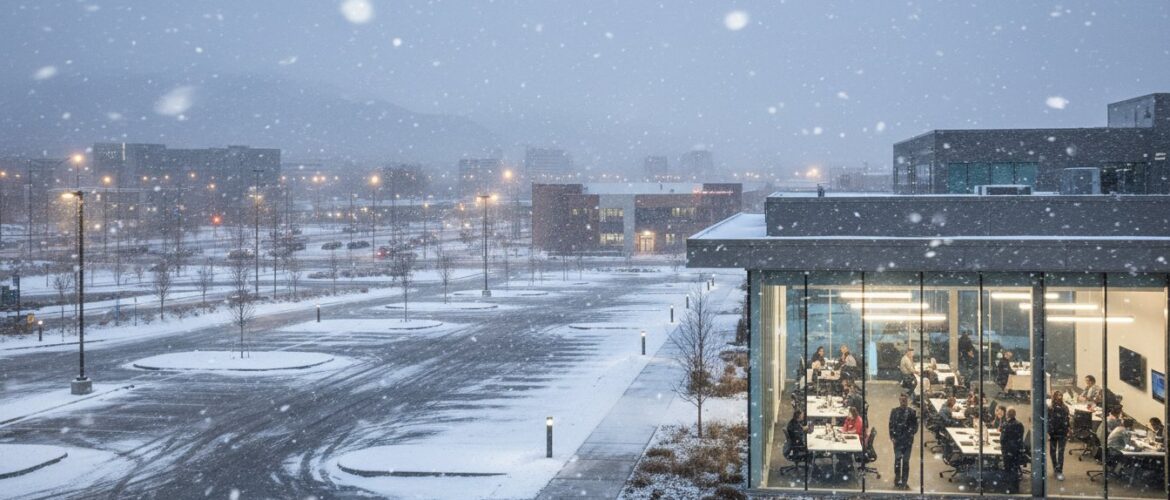
The forecast calls for a major winter storm, and the familiar anxiety sets in. Will you be forced to close your doors, losing critical revenue? Are you prepared for the liability of an employee or customer slipping on an icy walkway? For many Denver business owners, a heavy snowfall brings a storm of uncertainty, threatening both safety and profitability. This is precisely why having a professional winter weather business continuity plan is not a luxury-it is an essential tool for protecting your people and your assets.
A reliable plan removes the guesswork and reactive panic, replacing it with a clear strategy to keep your operations running smoothly and safely, no matter what the Colorado skies deliver. This step-by-step guide provides the actionable template you need. We will walk you through creating a plan that ensures the safety of everyone on your property, minimizes operational downtime, and protects your bottom line from the financial impact of severe weather. It’s time to gain the peace of mind that comes with being fully prepared.
Key Takeaways
- Proactively address the significant financial risks of winter storms, from lost sales to supply chain disruptions, before they impact your bottom line.
- A comprehensive plan must be built on four core pillars: protecting your People, securing your Property, maintaining your Processes, and vetting your Partners.
- Follow our actionable template to create a detailed winter weather business continuity plan that keeps your Denver business safe and operational.
- Discover why a professional snow removal contractor is a non-negotiable partner in your plan, ensuring reliable access for employees and customers.
Why a Winter Storm Can Shut Down Your Business (And How a Plan Prevents It)
A heavy Denver snowstorm is more than a simple inconvenience; it is a direct threat to your company’s survival. Without a professional strategy, a single winter event can halt operations, trigger significant financial losses, and expose your business to serious legal risks. An effective winter weather business continuity plan moves you from a reactive to a proactive position. This formal process, often called business continuity planning, is not a luxury for large corporations but an essential lifeline for any Denver business aiming to remain operational and profitable through the winter.
To understand the critical risks involved, watch this brief overview on preparing your business for severe weather:
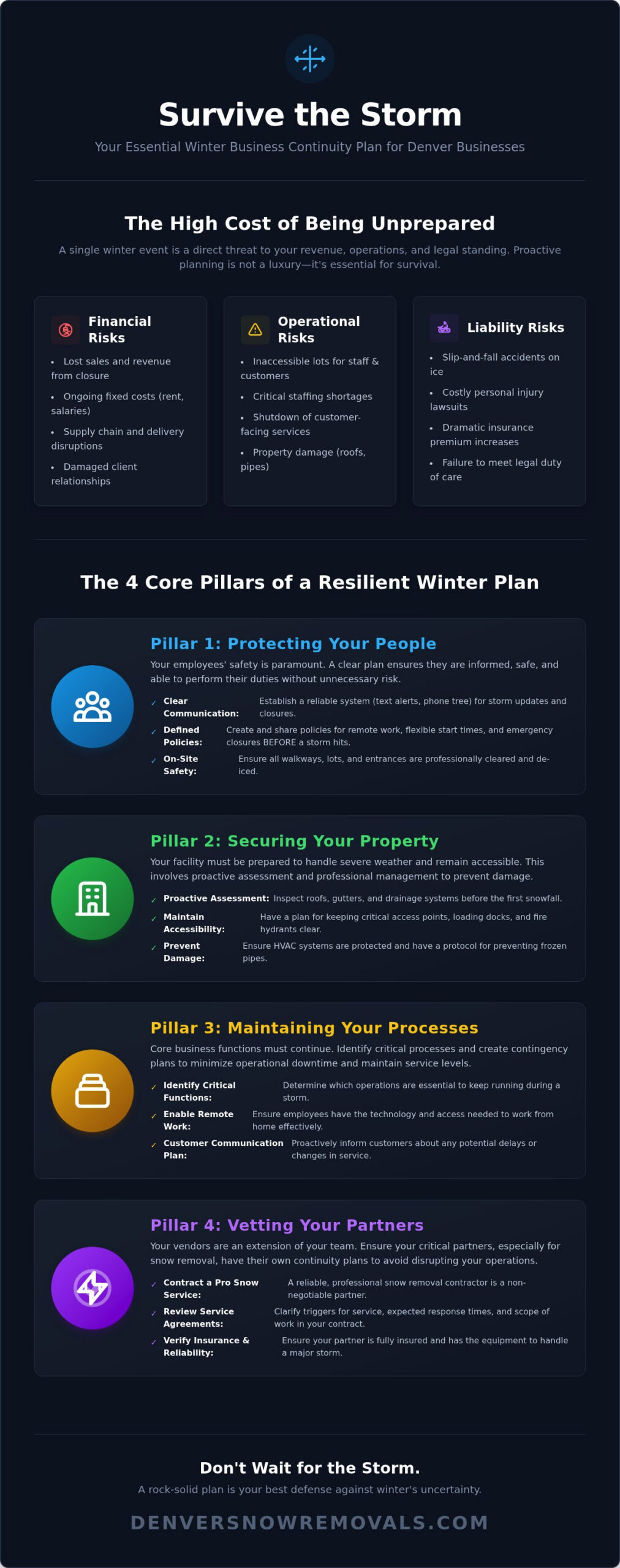
The risks of being unprepared are severe and multifaceted, impacting every area of your operations:
- Financial Risks: Every hour your doors are closed means lost sales and revenue. Meanwhile, fixed costs like rent, utilities, and salaries continue to accumulate. Missed project deadlines and supply chain disruptions can further damage your bottom line and client relationships.
- Operational Risks: Impassable parking lots and walkways prevent both employees and customers from safely accessing your facility. This leads to critical staffing shortages and a complete shutdown of customer-facing services. Heavy snow can also cause direct property damage, from roof strain to frozen pipes.
- Liability Risks: Failing to maintain a safe property is a significant legal and financial liability. A single slip-and-fall accident on ice can lead to costly lawsuits and a dramatic increase in your insurance premiums, jeopardizing your company’s financial health.
The True Cost of Downtime
Calculating the cost of a shutdown goes beyond immediate lost revenue. You must factor in the fixed operational costs you continue to pay even when closed. More importantly, failing to deliver services or products on time severely damages your brand’s reputation. In a competitive market, customers who cannot rely on you during a storm will quickly find a competitor who is prepared to serve them.
Understanding Your Legal Responsibility
Under premises liability law, business owners have a legal duty to provide a reasonably safe environment. During winter, this duty extends to the timely and effective clearing of snow and ice from parking lots, sidewalks, and entryways. Professional, reliable snow removal and proper documentation of your efforts are your first and best defense against costly slip-and-fall litigation.
The 4 Core Components of a Rock-Solid Winter Continuity Plan
A winter storm doesn’t have to mean a complete operational shutdown. An effective winter weather business continuity plan is built on four interconnected pillars that address every facet of your organization. By focusing on People, Property, Processes, and Partners, you can create a resilient framework that protects your assets and maintains momentum, no matter the forecast. Neglecting even one of these core components puts your entire operation at risk. This professional approach removes the anxiety from winter weather, replacing it with calm preparedness.
Pillar 1: Protecting Your People
Your employees are your most valuable asset, and their safety is paramount. A clear plan ensures they are informed, safe, and able to perform their duties without unnecessary risk. This pillar focuses on:
- Clear Communication: Establishing a reliable system (like text alerts or a phone tree) to communicate storm updates, delays, or closures in a timely manner.
- Defined Policies: Creating and communicating policies for remote work, flexible start times, and emergency closures before a storm hits.
- On-Site Safety: Ensuring all walkways, parking lots, and entrances are professionally cleared and de-iced to prevent slips and falls.
Pillar 2: Securing Your Property
Your facility must be prepared to handle severe weather and remain accessible. This involves proactive assessment and professional management to prevent damage and ensure safety. Key actions include performing a pre-season site assessment to identify potential hazards like poor drainage or areas prone to ice buildup. A professional plan guarantees safe, reliable access for employees, customers, and emergency services by keeping critical pathways clear. It also includes strategic snow stacking to prevent damage to landscaping, fire hydrants, and building foundations.
Pillar 3 & 4: Maintaining Processes with Key Partners
Your core business functions cannot continue if your property is inaccessible. This is where your processes and partners become inseparable. The first step is identifying which operations are critical-shipping and receiving, customer access, or manufacturing-and what is needed to keep them running. As the U.S. Small Business Administration notes, it is vital to prepare your small business for winter storms by aligning your needs with vendor capabilities. Your most critical winter partner is a reliable snow and ice management contractor. Aligning their service levels (e.g., pre-treating surfaces, specific snow accumulation triggers for plowing) with your operational needs is the final, crucial piece of your winter weather business continuity plan.
Actionable Template: Build Your Winter Business Continuity Plan Here
A plan on paper is the difference between chaos and control during a severe storm. Use this straightforward template to build a professional winter weather business continuity plan for your commercial property. Fill in the blanks for your organization, share the document with your team, and ensure everyone understands their role before the first flake falls. A proactive approach is the only reliable way to protect your people, property, and operations.
Writing this down is the most critical step. An undocumented plan is merely an idea, but a documented plan is a tool for efficient and safe action.
Section 1: Emergency Roles & Responsibilities
Clearly defined roles prevent confusion when response time is critical. Assign a primary and a backup for each responsibility to ensure coverage. Your team needs to know who to listen to for decisive instructions.
- Decision-Maker (Closure/Delays): _________________________
- Communications Lead (Staff/Customer Alerts): _________________________
- Facilities Lead (Site Safety/Snow Removal Coordination): _________________________
Section 2: Communications Protocol
Timely and clear communication is essential for safety and minimizing disruption. Document your primary and secondary methods for reaching key groups and compile a master contact list that is accessible even if your primary systems are down.
- Internal Alerts: Specify your system (e.g., SMS alert service, company-wide email, phone tree).
- External Updates: Detail how you will inform customers (e.g., website banner, social media post, update Google Business Profile).
- Key Contacts: Maintain an updated list of employees, key suppliers, emergency services, and your snow removal contractor.
Section 3: Site & Facility Preparedness Checklist
A safe property is a prepared property. Following official winter weather preparedness guidelines from the U.S. government is a crucial part of a complete winter weather business continuity plan. Use this checklist to stay ahead of the storm.
- Pre-Season: Confirm your professional snow removal contract is active. Mark curbs, fire hydrants, and other potential obstacles before they are covered in snow.
- Pre-Storm: Treat walkways and parking lots with de-icer. Check your emergency supply inventory (salt, shovels, flashlights).
- Post-Storm: Conduct a thorough site inspection for any property damage. Schedule removal of large snow piles that obstruct visibility or access.
Need a reliable partner for your plan? Get a free estimate.
Section 4: Employee & HR Policies
Address employee questions and concerns before a storm hits to ensure operational continuity and fairness. Your documented policies should be unambiguous and communicated to all staff members well in advance of the winter season.
- Personnel Status: Clearly define which roles are ‘essential’ (must report to site if safe) and ‘non-essential’ (can work remotely or are excused).
- Remote Work Policy: Outline expectations, procedures, and required IT support for employees working from home.
- Payroll Procedures: State exactly how employees will be paid for weather-related closures, delayed openings, or early dismissals.
The Most Critical Partner in Your Plan: Your Snow Removal Contractor
While internal communication and remote work policies are important, the physical accessibility of your property is the foundation of operational readiness. Of all the components in your winter weather business continuity plan, none is more critical than your relationship with a professional snow and ice management partner. This is the partner who ensures your employees, customers, and suppliers can safely access your facility, preventing a winter storm from becoming a complete shutdown.
Why a Shovel and a Bag of Salt Isn’t Enough
A DIY approach to commercial snow removal is inefficient and creates significant liability. Asking employees to clear snow exposes your business to workers’ compensation claims if they are injured. It also pulls them away from their primary, revenue-generating roles, creating hidden operational costs. Furthermore, consumer-grade equipment is simply no match for a heavy Denver snowstorm, leading to inadequate clearing and unsafe conditions that can cause slip-and-fall lawsuits. Understanding when to call a snow removal service — from dangerous ice buildup to snow depths that exceed your team’s capacity — is a critical decision that directly impacts your liability and business continuity.
What to Demand from Your Snow Removal Partner
Your business continuity depends on a contractor’s reliability and professionalism. A true partner isn’t just a person with a plow; they are a risk management asset. Before signing any contract, demand proof of the following:
- Proper Insurance: They must carry multi-million dollar commercial general liability insurance and full workers’ compensation to protect your business from any incidents on your property.
- A Well-Maintained Fleet: A single truck is not a fleet. A professional service has a range of equipment, from heavy-duty plows and loaders to sidewalk-clearing machines, with backup units ready to go.
- 24/7 Proactive Monitoring: The best service doesn’t wait for your call. They monitor meteorological data and dispatch crews before, during, and after a storm to keep your property clear and safe.
- Deep Local Experience: Denver’s storms are unique. A contractor with decades of experience in the area understands how to handle everything from wet, heavy snow to icy blizzard conditions efficiently.
Integrating Your Contractor Into Your BCP
To make your partnership effective, your contractor must be fully integrated into your winter weather business continuity plan. Work with them to establish clear service triggers, such as automatic dispatch when snow accumulation reaches two inches. Provide a detailed site map that highlights priority areas like main entrances, emergency exits, loading docks, and critical walkways. Finally, ensure their 24/7 emergency contact number is documented and accessible to all key personnel in your plan. This preparation turns a reactive problem into a managed, professional process, ensuring your business remains open and safe. For professional snow and ice management in Denver, ensuring your partner meets these criteria is non-negotiable.
Putting Your Plan into Action: Activation, Review, and Improvement
A plan sitting in a binder is not enough to protect your operations from a severe winter storm. Your winter weather business continuity plan is a living document, designed to be activated, tested, and improved over time. Effective execution is what transforms preparation into resilience, ensuring the safety of your people and the stability of your business when the snow starts to fall.
When to Activate Your Plan
Proactive monitoring is the first step to a successful activation. Your team should be closely watching weather forecasts 24-48 hours in advance of any potential storm. The critical ‘trigger point’ for action is typically when the National Weather Service issues a Winter Storm Watch or Warning for your area. This is the signal to initiate pre-storm communications, alerting staff to potential changes in operations, confirming schedules with essential contractors, and ensuring all pre-storm preparations are complete.
During the storm, your focus must shift to execution. Follow your established communication protocols to keep employees and customers informed of closures, delays, or remote work policies. The primary goal is always safety. Do not ask employees or clients to travel in unsafe conditions. Rely on the procedures you have already established to maintain critical functions while prioritizing well-being.
After the Storm: Debrief and Refine
Once the storm has passed and operations have normalized, the work is not over. It is essential to conduct a post-storm review with key personnel. This debrief is not about assigning blame; it is about identifying opportunities for improvement in a calm, professional environment. Ask critical questions to strengthen your response for next time:
- What worked well? Acknowledge successful communication channels or procedures.
- What were the bottlenecks? Identify any challenges with remote technology, supply chain disruptions, or facility access.
- How did our partners perform? Was your snow removal service timely and effective? Were other vendors responsive?
The insights gained from this review are invaluable. Use them to update and refine your winter weather business continuity plan annually, well before the first snowfall. A strong plan, supported by reliable partners, ensures you are prepared to handle any winter weather challenge. For professional and timely snow management services that enhance your continuity strategy, contact Snow Removal Denver.
Your Proactive Partner in Winter Preparedness
Winter storms are an inevitable part of doing business in Denver, but operational disruptions are not. The key to resilience is proactive preparation. A comprehensive winter weather business continuity plan ensures your employees and customers remain safe while your operations continue smoothly. The most critical component of this strategy is securing a reliable snow and ice management partner before the first flake falls, transforming your plan from a document into a decisive action.
For over 44 years, Denver Snow Removals has been the dependable choice for commercial properties. With 24/7 emergency dispatch and fully licensed and insured services, we provide the professional, timely response your business requires to eliminate winter-related anxiety and risk. We are prepared to handle any snow removal work, ensuring your property is safe and accessible.
Don’t wait for the first blizzard. Secure your priority service with a seasonal contract today.
Take this final step to protect your business and face the winter season with complete confidence.
Frequently Asked Questions
When is the best time to create a winter weather business continuity plan?
The ideal time to develop and finalize your winter weather business continuity plan is during the late summer or early fall. This proactive approach allows you ample time to vet and secure professional snow removal contracts, stock necessary supplies, and train employees on emergency procedures. Waiting until the first forecast of snow creates unnecessary urgency and can lead to costly mistakes and oversights that jeopardize safety and operations during a storm.
How does a snow removal contract impact my business insurance?
A professional snow removal contract is a critical risk management tool that can positively affect your business insurance. Many insurers view a formal contract with a reliable, insured provider as a proactive measure to reduce slip-and-fall liability. This can sometimes lead to more favorable general liability premiums. Always request a certificate of insurance from your snow removal contractor to ensure they carry adequate coverage, which further protects your business from potential claims.
What is the biggest mistake businesses make during winter storms?
The most significant mistake is underestimation and inaction. Many businesses wait until a storm is already underway to implement their plans, assuming it will not be severe. This reactive approach leads to unsafe conditions for employees and customers, unplanned closures, and significant operational disruption. A dependable continuity plan requires proactive activation based on credible weather forecasts, not a “wait and see” attitude that puts your business and personnel at risk.
Can my business be held liable if someone slips even if I have a snow removal service?
Yes, your business can still be held liable. While hiring a professional and insured snow removal service is a crucial step in mitigating risk, property owners typically retain the ultimate responsibility for maintaining a safe premises. Your contract should clearly define the scope of services, response times, and liability. It is essential to partner with a reliable provider and remain diligent in monitoring your property’s condition to ensure it remains safe for everyone.
How do I communicate a closure to customers effectively?
Effective communication requires a prompt, multi-channel approach. Immediately update the homepage of your website with a clear banner and post the closure notice on all your social media profiles. You should also change your business’s voicemail greeting to reflect the closure and operating hours. For direct communication, send an email or text message to your customer list. The key is to be clear, consistent, and timely across all platforms to prevent confusion.
Should my plan include contingencies for power outages during a storm?
Absolutely. Power outages are a common and disruptive consequence of severe winter weather. A complete plan must address how your business will function without electricity. This includes having backup power sources for critical systems like servers, security, and heating, as well as establishing non-digital communication methods. Planning for an outage ensures you can maintain core operations and keep your facility safe and secure even when the power grid fails.