
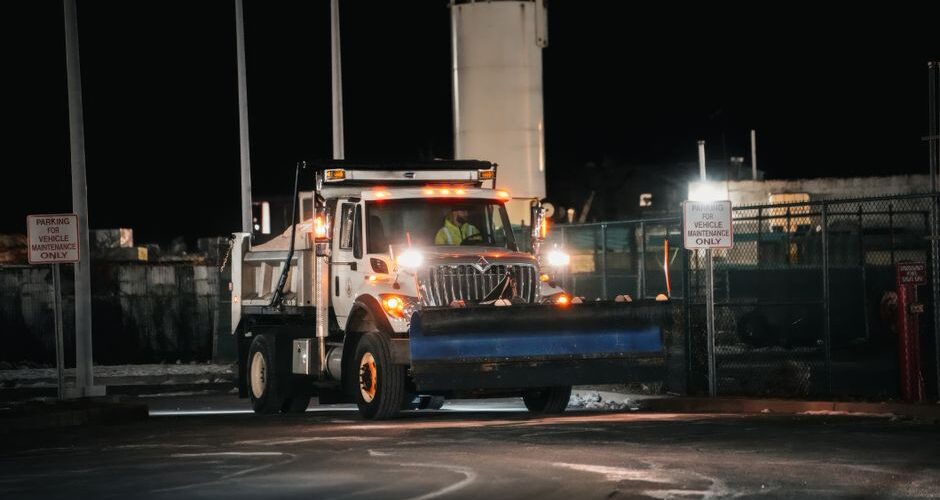
You call a private snow removal contractor with an overnight standby crew, not the City and County of Denver. The city's residential plows operate only between 3:00 a.m. and 3:00 p.m. and never clear driveways, parking lots, or sidewalks. In Denver, "24 hour snow removal" describes storm-triggered overnight response for commercial lots, HOAs, and residential driveways, not a guaranteed one-hour arrival after you call.
Table of Contents
- What does 24 hour snow removal in Denver actually mean?
- Why can't you rely on the city for overnight snow clearing?
- What should you check before hiring an overnight snow contractor in Denver?
- When should you book 24 hour snow removal in Denver?
- How much does 24 hour snow removal in Denver cost?
- What are the best snow removal services in Denver for overnight response?
- What happens if your lot or sidewalk isn't cleared in time?
- Key Takeaways
- References
What does 24 hour snow removal in Denver actually mean?
It means a contractor keeps crews and trucks on standby overnight and dispatches them when snowfall reaches a pre-agreed trigger depth. It does not mean a worker sits in your parking lot around the clock waiting for flakes.
Commercial clients typically choose between zero-tolerance and 1-inch trigger thresholds, according to JLS. Zero-tolerance means crews respond to any measurable accumulation, which suits medical facilities, banks, and high-traffic retail. A 1-inch trigger reduces unnecessary visits and is common for industrial sites and lower-priority lots.
The City and County of Denver does not plow driveways, parking lots, or sidewalks. Those surfaces are the property owner's legal responsibility, per Denver DOTI. A 24 hour contractor fills that gap.
"24 hour" is a service window, not a promise of bare pavement within 24 hours. The term describes availability for overnight dispatch, not a deadline for completion. Contractors define response windows in the contract, and those windows vary by property size, trigger depth, and storm intensity.
Why can’t you rely on the city for overnight snow clearing?
You cannot rely on the city because Denver DOTI prioritizes main streets and emergency routes, not driveways, lots, or sidewalks. The city deploys about 70 large plows across roughly 2,050 lane miles of main streets, according to Denver DOTI.
The Residential Snow Plow Program covers about 1,260 center lane miles of residential streets using 4×4 pickup trucks with plows. Those residential plows run between 3:00 a.m. and 3:00 p.m., which means overnight accumulation after 3:00 p.m. waits until the next morning.
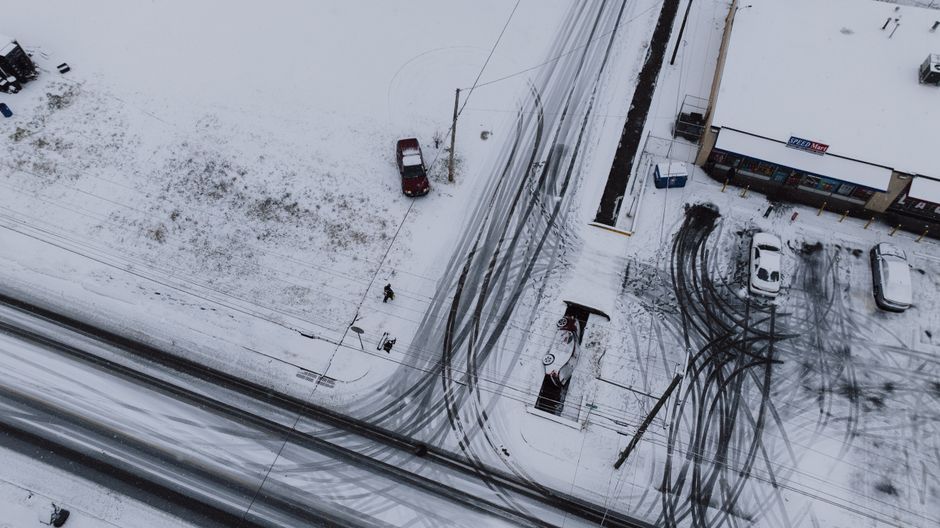
Residential plows make one pass down the center of every side street and do not expose bare pavement. Residential areas in Denver receive no de-icing materials at all. Deicers are reserved for main streets and, in liquid form, the downtown area.
Sidewalks are the property owner's job. Denver enforces sidewalk clearing through inspection with a time-stamped notice. Commercial properties get a matter of hours to comply, residences get 24 hours, and a re-check can result in a $150 fine, per Denver DOTI and Zenith Services.
What should you check before hiring an overnight snow contractor in Denver?
Confirm that the contractor's fleet is staged locally and on standby for the season, not subcontracted after the storm hits. A subcontractor arrangement adds delay and uncertainty when overnight response is the entire point of the contract.
Ask about trigger depth, response window, and whether ice management is included or billed separately. JLS offers zero-tolerance and 1-inch trigger thresholds per client preference, which shows that trigger flexibility should be a written term, not a verbal assumption.
Verify that sidewalk clearing is covered. Sidewalk enforcement is the most commonly fined obligation in Denver, and plow-only contracts often exclude it. A commercial property owner can have a perfectly plowed lot and still face a fine for an uncleared walk.
Ask where hauled snow goes and confirm the contractor does not push snow into public streets, alleys, or rights-of-way. Denver prohibits pushing, plowing, or depositing snow into public streets and alleys, according to Zenith Services. A contractor who cuts corners by pushing snow into the street transfers liability to you.
When should you book 24 hour snow removal in Denver?
Book in late summer through autumn, before the first storm. Snow contracts in Denver are typically arranged during that window, according to Zenith Services. Waiting until the forecast turns means standing in line behind property managers who planned ahead.
Denver Snow Removals keeps its fleet on standby from September to May, which is the practical window a 24 hour commitment has to cover on the Front Range. A contractor whose standby season ends in March leaves you exposed during spring storms.
Late-season snow is real in this market. The Front Range experienced significant late-season snowfall in spring 2026, and JLS maintained operations through May. A 24 hour snow removal commitment that ends in February does not match Denver's actual snow season.
The booking question is whether the contractor's standby season matches Denver's snow season, not just December through February. September to May is the realistic window, and contracts signed in autumn secure priority routing and crew assignments before demand peaks.
How much does 24 hour snow removal in Denver cost?
Residential driveway removal typically runs $35 to $65 depending on driveway size, snow depth, and whether walks or salting are included. That range applies to standard residential work, not commercial lots or overnight emergency response.
Commercial work is usually priced per push or as a seasonal contract rather than hourly. Per-hour rates are not publicly standardized in the Denver market, so comparing bids requires looking at what each push includes.
Commercial pricing is driven by lot square footage, trigger threshold, response priority, hauling, and ice management. A zero-tolerance contract on a 200-space lot costs more than a 1-inch trigger on a small industrial yard because crews visit more often and carry more liability.
Overnight and after-hours response carries a premium over standard daytime plowing. Hauling snow off-site to an approved disposal location also adds cost, as JLS uses 20-yard end dump trucks for that purpose. A contractor who quotes a daytime per-push rate is not quoting 24 hour service.
What are the best snow removal services in Denver for overnight response?
No source provides a definitive ranked list of Denver snow removal services, so the best fit depends on verifiable criteria: standby season, trigger flexibility, hauling capability, certification, and sidewalk coverage. Three contractors illustrate the range of options.
Denver Snow Removals states it has over 47 years of experience and serves commercial, industrial, and HOA properties. Its fleet uses Chevy 2500HD trucks with commercial plows and stands by from September to May.
JLS holds Certified Snow Professional credentials and reports that snow and ice management represents 60% of its annual revenue. The company tracks meteorological data 12 to 24 hours ahead of every storm and offers zero-tolerance or 1-inch trigger thresholds.
Zenith Services provides commercial snow removal and ice management in Denver. The company's published material emphasizes compliance with Denver's prohibition on pushing snow into public rights-of-way.
The best fit depends on property type. A single driveway and a 200-space commercial lot are not the same contract. Compare standby dates, trigger options, hauling equipment, and sidewalk coverage before signing.
What happens if your lot or sidewalk isn’t cleared in time?
Denver enforces sidewalk clearing by inspection with a time-stamped notice. Commercial properties have a matter of hours to comply before an inspector's re-check, and residences have 24 hours, according to Denver DOTI.
The re-check can result in a $150 fine per the enforcement description. Confirm the current amount with the city, as sources do not verify that figure in body content.
Pushing, plowing, or depositing snow into public streets, alleys, or other rights-of-way is prohibited in Denver, per Zenith Services. A contractor who violates that rule exposes the property owner to enforcement action.
Liability exposure extends beyond fines. Slip-and-fall claims on uncleared walks and lots are the larger financial risk for commercial property owners. A single injury claim can exceed years of snow removal contract costs.
Key Takeaways
- Denver's residential plows operate only between 3:00 a.m. and 3:00 p.m. and make a single center pass, so side streets are never cleared to bare pavement.
- The City of Denver does not clear driveways, parking lots, or sidewalks; those surfaces fall to the property owner or their contractor.
- Denver residential streets receive no de-icing materials; deicers are reserved for main streets and, in liquid form, downtown.
- Commercial properties in Denver get only a matter of hours after a time-stamped notice to clear sidewalks before a re-check and a potential $150 fine.
- Denver prohibits pushing or depositing snow into public streets, alleys, and rights-of-way.
- Residential snow removal in Denver typically costs $35 to $65, while commercial work is priced per push or by seasonal contract.
- Snow contracts in Denver are normally signed late summer through autumn, and Denver Snow Removals' fleet stands by from September to May.
References
- Snow Removal – City and County of Denver — date unknown
- Snow Removal Denver – 24/7 Plowing — date unknown
- Commercial Snow Removal & Ice Management in Denver, CO — date unknown
- Snow Removal Companies Denver CO — date unknown