
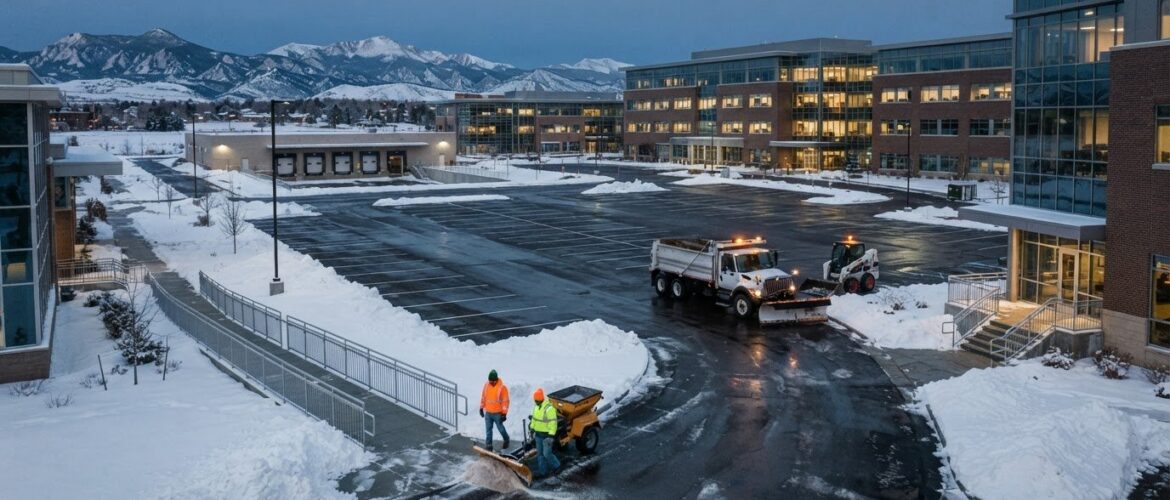
A cleared parking lot means nothing if icy sidewalks, slick ramps, and hidden exclusions leave your business shuttered and vulnerable to slip-and-fall lawsuits. Property managers know the anxiety of watching a winter storm roll in, wondering if their contractor has the dedicated heavy equipment fleet required to handle rapid accumulation. When severe weather strikes, knowing exactly what’s included in a full service snow contract is the difference between seamless daily operations and a premises liability disaster.
A true commercial agreement guarantees operational continuity, not merely pushed snow. You deserve absolute clarity on your trigger depths, de-icing protocols, and pedestrian clearing schedules before the first freeze arrives. In this guide, you’ll discover every essential service, response standard, and liability protection that belongs in a reliable commercial snow plowing and ice management agreement. We’ll walk through the complete scope of work so you can evaluate contractor bids with confidence, eliminate safety exposures, and ensure safe passage across your entire property all winter long.
Key Takeaways
- Learn what’s included in a full service snow contract to eliminate ambiguous scopes, prevent unexpected fees, and protect your commercial budget.
- Discover why true commercial agreements must integrate proactive ice management and pedestrian walkway clearing to mitigate slip-and-fall liability.
- Master the critical operational triggers, accumulation thresholds, and guaranteed response times that ensure your doors open safely before morning business hours.
- Identify standard industry exclusions, such as emergency blizzard clauses and off-site relocation, before signing an agreement.
- Understand how to vet a contractor’s dedicated heavy equipment fleet and specific insurance endorsements for reliable storm performance.
Defining the Full Service Snow Removal Contract vs. Basic Plowing
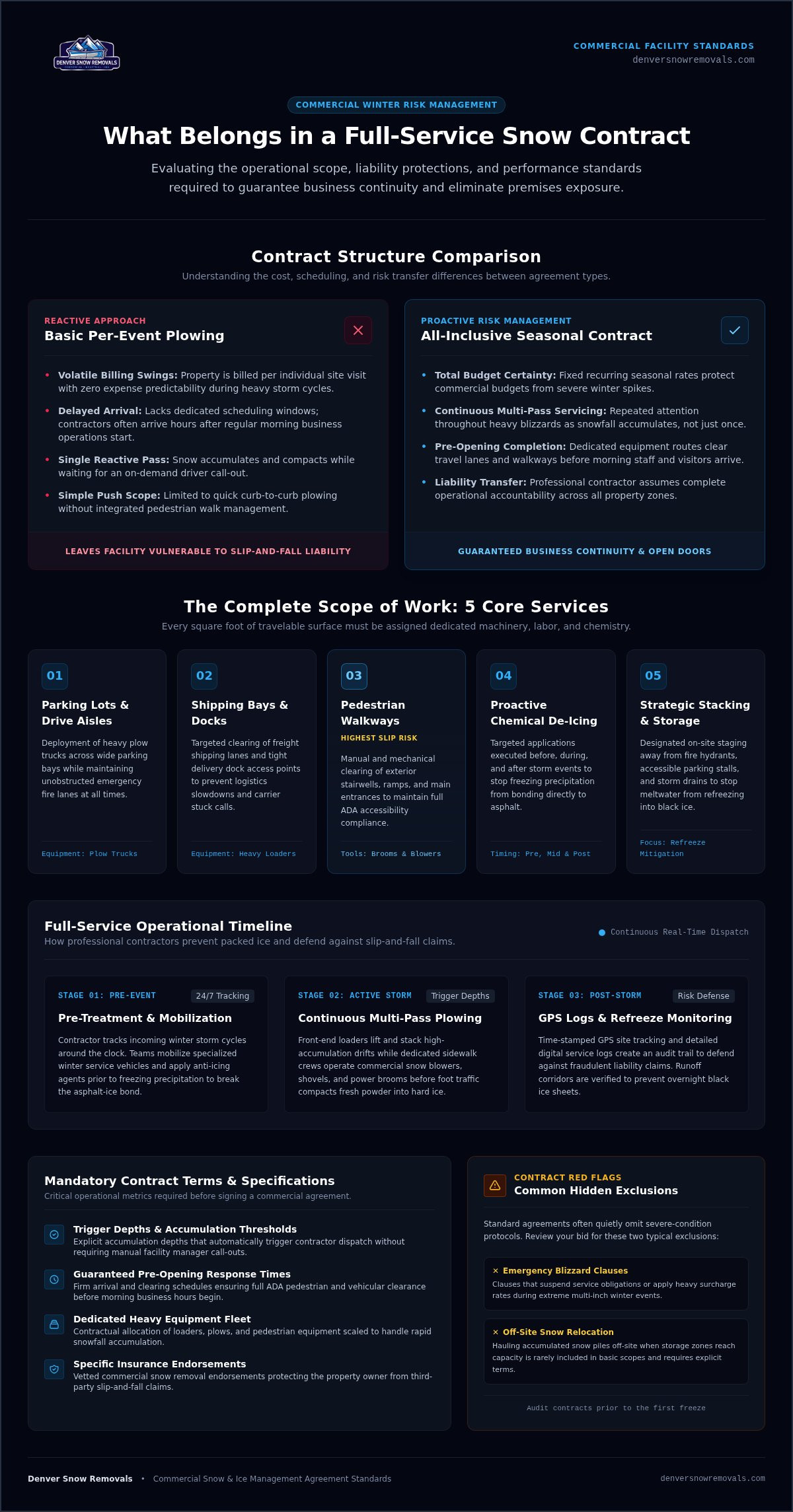
Basic plowing is simple curb-to-curb pushing. A driver drops a plow blade, makes a few quick passes through your main driving lane, and moves on to the next property. In contrast, an end-to-end commercial agreement functions as a comprehensive risk management strategy. Understanding exactly what’s included in a full service snow contract reveals how professional management transfers winter liability away from busy facility directors and onto experienced winter contractors.
To better understand the structural differences between these agreements, watch this breakdown of essential contract terms:
Rather than relying on spotty call-outs, comprehensive contracts mobilize specialized winter service vehicles automatically based on real-time weather data. This proactive operational model keeps commercial properties open, accessible, and protected against sudden freeze events.
Per-Event Plowing vs. All-Inclusive Seasonal Coverage
Per-push agreements bill for every individual site visit, which creates volatile billing swings during severe storm cycles. Worse, per-event plows often arrive hours after your morning business operations start because they lack dedicated scheduling windows. An all-inclusive seasonal agreement establishes total budget certainty through fixed recurring rates. These seasonal contracts guarantee continuous multi-pass servicing during heavy blizzards, ensuring your property receives repeated attention as snowfall accumulates rather than a single delayed pass.
Why Proactive Site Management Outperforms Reactive Plowing
Waiting for accumulation to pile up guarantees packed ice. Professional teams track incoming Front Range winter storms around the clock, deploying equipment before freezing precipitation bonds to asphalt. Detailed service logging and GPS site tracking provide vital documentation against fraudulent slip-and-fall claims. Partnering with a dedicated provider for commercial snow removal Denver businesses rely on takes the diligent work out of winter maintenance, ensuring your lots stay safe and your doors stay open.
The Core Services Included in a Comprehensive Snow Contract
A true commercial agreement covers every square foot of travelable surface on your property. When evaluating what’s included in a full service snow contract, you must examine the specific machinery, labor allocation, and chemical treatments assigned to each zone. Leaving any area unassigned creates severe slip hazards and operational bottlenecks.
A thorough commercial scope synchronizes several primary operations:
- Plowing wide parking fields and maintaining unobstructed fire lanes.
- Clearing freight shipping bays and tight delivery dock access points.
- Dedicated mechanical and manual clearing of every pedestrian corridor.
- Targeted chemical applications before, during, and after winter weather events.
- Strategic snow stacking and designated on-site relocation zones.
Parking Lot, Drive Lane, and Loading Dock Clearing
Heavy plow trucks handle the broad travel lanes and open parking bays. However, large commercial properties also need heavy machinery like front-end loaders to lift, push, and stack heavy snow drifts during high-accumulation storms. Proper site maps designate storage areas away from fire hydrants, handicapped stalls, and storm drains. This prevents melting snow from pooling across active drive aisles and refreezing into sheets of black ice overnight.
Dedicated Sidewalk and Pedestrian Walkway Management
Sidewalks carry the highest slip-and-fall exposure on any commercial parcel. Full-service agreements deploy dedicated sidewalk crews equipped with commercial snow blowers, power brooms, and shovels to clear exterior stairwells, ramps, and main entrances. This meticulous labor ensures full ADA accessibility compliance, creating safe passage for employees and visitors before foot traffic compacts fresh snowfall into stubborn ice layers.
Proactive De-Icing and Continuous Ice Management
Effective winter maintenance requires continuous chemical treatment rather than a single post-plow salt drop. Technicians apply anti-icing agents to curb early accumulation and eliminate bonding. After plowing, de-icing treatments break up hard-packed residue on shaded surfaces, traffic lanes, and crosswalks. Reviewing proven proactive ice management services in Denver will show you how consistent monitoring stops refreeze cycles before they threaten pedestrian safety.
When you need reliable commercial snow plowing and complete site protection, consider requesting an assessment from the local specialists at denversnowremovals.com to secure complete seasonal coverage.
Crucial Contract Terms, Triggers, and Operational Specifications
A vague service agreement invites operational failure during major storms. When establishing what’s included in a full service snow contract, clear benchmarks must govern every site deployment. Clear accumulation thresholds, certified response windows, and detailed digital reporting eliminate misunderstandings when severe weather impacts your facilities.
Every commercial agreement requires five core operational specifications:
- Defined accumulation triggers indicating the exact snowfall depth requiring dispatch.
- Specified completion timeframes guaranteeing open transit lanes before morning business hours.
- Site engineering plans showing approved snow push zones and protected utilities.
- Around-the-clock winter weather monitoring for Front Range cold fronts.
- Time-stamped GPS service logs confirming plowing passes and material distribution.
Understanding Snow Triggers: From Zero-Tolerance to Two Inches
Accumulation triggers set the rules for crew mobilization. A zero-tolerance trigger dispatches de-icing trucks at the first trace of freezing rain, sleet, or light snow. This standard fits hospitals, 24-hour retail centers, and high-traffic corporate offices. In contrast, standard one-inch or two-inch triggers allow light accumulation before plows deploy, balancing municipal safety requirements against seasonal budgets for low-traffic industrial complexes.
Pre-Season Site Mapping and Property Inspection
Effective winter site maintenance begins in the autumn. Technicians must conduct a walking inspection to log existing asphalt cracks, damaged curbs, and drainage grates. Teams install high-visibility fiberglass stakes around landscape beds, speed bumps, and fire hydrants. The contractor then develops an engineering map designating approved snow storage zones away from sightlines, keeping entrances visible and accessible.
Freeze-Thaw Protocols and Return Inspections
Denver’s intense winter sunshine causes unique operational challenges. Midday sun quickly melts snowbanks, sending runoff across sloped parking fields. As evening temperatures drop below freezing, that runoff turns into sheets of invisible black ice. A dependable commercial snow plowing and ice management agreement must include automated return inspections. Morning monitoring sweeps re-treat active runoff zones, preventing dangerous refreeze near high-liability building thresholds.
Hidden Exclusions and What Is Often NOT Included
Many facility managers assume an all-inclusive agreement automatically shields them from every winter expense. In reality, reviewing what’s included in a full service snow contract requires spotting the service boundaries contractors leave off the page. Without precise contractual definitions, surprise line-item fees can quickly inflate your winter maintenance budget.
Snow Relocation vs. Off-Site Snow Hauling
Standard plowing moves snow to designated retention areas along the perimeter of your parcel. During severe storms, heavy drifts exhaust that retention space and begin encroaching on driving aisles. Moving snow across a lot using front-end loaders is standard on-site relocation. Hauling that snow entirely off your commercial property requires dedicated dump trucks and municipal disposal fees. Most baseline agreements exclude off-site hauling, billing it as a separate equipment service unless negotiated upfront.
Blizzard Clauses and Extreme Accumulation Limits
Seasonal contracts frequently contain blizzard clauses to manage extreme weather liabilities. These provisions establish a maximum snowfall threshold for a single storm cycle or the entire season. Once total accumulations surpass that cap, supplemental equipment and labor terms take effect. Reviewing operational strategies for winter storm preparedness for business Denver properties rely on ensures your emergency response plans remain intact during catastrophic blizzards.
Sidewalk Hand Work, De-Icing Material Caps, and Refreeze Work
Do not assume your contractor clears every exterior pathway automatically. Contracts often exclude narrow fire escapes, detached dumpster pads, and perimeter municipal walkways, categorizing them as extra hand labor. Chemical material caps represent another common limitation. Some service providers cap total de-icing tonnage per visit, billing extra when sub-zero temperatures require heavier applications. Additionally, separate trip charges often apply if afternoon meltwater refreezes after the primary storm pass.
Consult our detailed guide on how to choose a snow removal company to audit contractor scopes effectively. Before signing your next seasonal proposal, protect your facility from unexpected exclusions by requesting a comprehensive site inspection from denversnowremovals.com today.
Choosing the Right Full Service Commercial Partner in Denver
Selecting an exterior maintenance partner requires vetting operational readiness beyond simple marketing promises. Knowing what’s included in a full service snow contract means evaluating insurance protections, fleet capability, and local experience. A reputable commercial snow plowing provider guarantees operational continuity while actively mitigating your premises liability.
Before entering any binding winter agreement, ensure your contractor meets three foundational benchmarks:
- Dedicated commercial general liability policies with specific snow removal indemnification riders.
- A company-owned heavy equipment fleet backed by mechanical reserve capacity.
- Decades of localized experience managing Front Range storm systems and rapid freeze-thaw cycles.
Verifying Commercial Insurance, Licensing, and Liability
General contractor insurance rarely protects against winter premises liability. Verify that your snow removal provider maintains commercial general liability policies with specific completed operations endorsements for snow and ice management. Insist on receiving a certificate of insurance naming your commercial property management firm as an additional insured. Comprehensive contracts must feature strict hold-harmless and indemnification clauses, transferring slip-and-fall exposure directly to the contractor.
Evaluating Fleet Capabilities and Heavy Equipment Readiness
Light pickup plows fail during heavy Front Range blizzards. Reliable service requires a dedicated commercial fleet equipped with heavy plow trucks, front-end loaders, and commercial snow blowers. Front-end loaders are essential for stacking massive drifts and maintaining clear freight aisles. Inquire about equipment maintenance schedules and emergency backup vehicles. If a plow truck suffers mechanical failure at 3:00 AM, your contractor must have reserve units ready to deploy immediately.
The Value of 44+ Years of Denver Snow Experience
Navigating Colorado’s severe temperature fluctuations requires local knowledge that national aggregators cannot match. Snow Removal Denver brings over 44 years of continuous commercial snow plowing and ice management experience across the Denver Metro area. As a family-owned business, our 24/7 on-call dispatch and weather monitoring ensure safe passage across client parking facilities and walkways throughout the winter season. We understand strict municipal clearance deadlines and deliver reliable solutions that gain your professional trust. Take the anxiety out of winter management and request a comprehensive commercial snow quote for your property today.
Protect Your Business with Proactive Winter Site Management
Reviewing what’s included in a full service snow contract ensures you eliminate hidden exclusions, secure zero-tolerance ice safety, and partner with a contractor equipped for severe Front Range blizzards. Clear accumulation triggers, detailed site engineering maps, and proactive de-icing protect your commercial facility from costly slip-and-fall liabilities before winter weather begins.
Snow Removal Denver takes the anxiety and diligent work out of winter maintenance. Backed by over 44 years of family-owned experience, our team operates a dedicated heavy fleet featuring plow trucks, front-end loaders, and commercial snow blowers with 24/7 on-call dispatch across the Denver Metro area. We deliver reliable snow plowing and ice management services that guarantee safe passage for your tenants, employees, and visitors through every freeze-thaw cycle. Secure Your Commercial Snow Contract with Snow Removal Denver today to keep your doors open and your property protected all season long.
Frequently Asked Questions
What is the typical trigger depth for a commercial snow contract?
The typical trigger depth for a commercial agreement is one to two inches of accumulation, though critical facilities often mandate zero-tolerance triggers. High-liability properties like medical centers, shopping plazas, and corporate entrances benefit from immediate dispatch at the first trace of freezing precipitation. Industrial parks or distribution hubs often select a two-inch threshold to balance operational needs. Clarifying trigger depths in writing prevents delayed plow dispatch during sudden Denver storms.
Are de-icing chemicals and salt applications included in full service contracts?
De-icing treatments are typically included, but contracts differ on chemical volume caps and application frequency. A comprehensive agreement specifies both pre-storm anti-icing treatments and post-clearing ice management to stop freeze bonding. Property managers must confirm whether material tonnage is all-inclusive or capped at a set threshold. Understanding what’s included in a full service snow contract helps you avoid surprise line-item fees for extra ice melt after sub-zero cold snaps.
What happens if a severe blizzard exceeds standard contract accumulation limits?
When an extreme blizzard exceeds contracted seasonal or single-storm accumulation caps, emergency blizzard provisions dictate crew response and supplemental equipment billing. Contractors shift into emergency response operations to clear main transit arteries first. Heavy machinery like front-end loaders and dedicated plow trucks are deployed continuously to keep parking access open. Establishing clear blizzard clauses beforehand prevents service abandonment and unexpected hourly surcharges during record Front Range snowstorms.
Does a full service snow contract cover city sidewalks adjacent to properties?
City sidewalks along commercial perimeters are not automatically included unless explicitly specified in your site plan. Many basic plowing contracts cover only vehicular parking bays and interior lot paths. Denver municipal regulations require property owners to clear public walkways within strict legal deadlines following snowfall. To avoid code violations and pedestrian slip-and-fall liability, your site scope must explicitly include perimeter sidewalks, exterior ramps, and public crosswalks.
How do snow removal contractors handle freeze-thaw refreeze conditions?
Dependable contractors handle freeze-thaw cycles by conducting automated morning site sweeps and re-treating refrozen runoff. Denver’s sunny winter afternoons melt stacked snow piles, which quickly send water across sloped lots that refreezes into black ice overnight. A comprehensive snow plowing and ice management agreement includes scheduled return visits to monitor drainage corridors, apply targeted treatments, and ensure safe pedestrian passage before morning business hours begin.
What is the difference between snow plowing, stacking, and off-site hauling?
Plowing pushes fresh accumulation off active drive lanes, while stacking uses heavy front-end loaders to lift and consolidate snow into designated retention zones. Off-site hauling involves loading massive snowbanks into dump trucks and transporting them away from the property entirely. Knowing what’s included in a full service snow contract ensures you understand whether your site has adequate snow storage or requires separate off-site trucking logistics when capacity runs out.
Why is a seasonal snow contract safer than paying per push for businesses?
Seasonal contracts provide predictable budgeting and prioritize your property for automated storm response ahead of sporadic call-out accounts. Per-push services often leave facilities waiting for hours during major blizzards while contractors attend to contracted commercial accounts first. Seasonal agreements shift winter liability to experienced professionals who actively monitor Front Range forecasts, deploying heavy equipment 24/7 to ensure zero-tolerance accessibility and prevent hazardous ice buildup.