
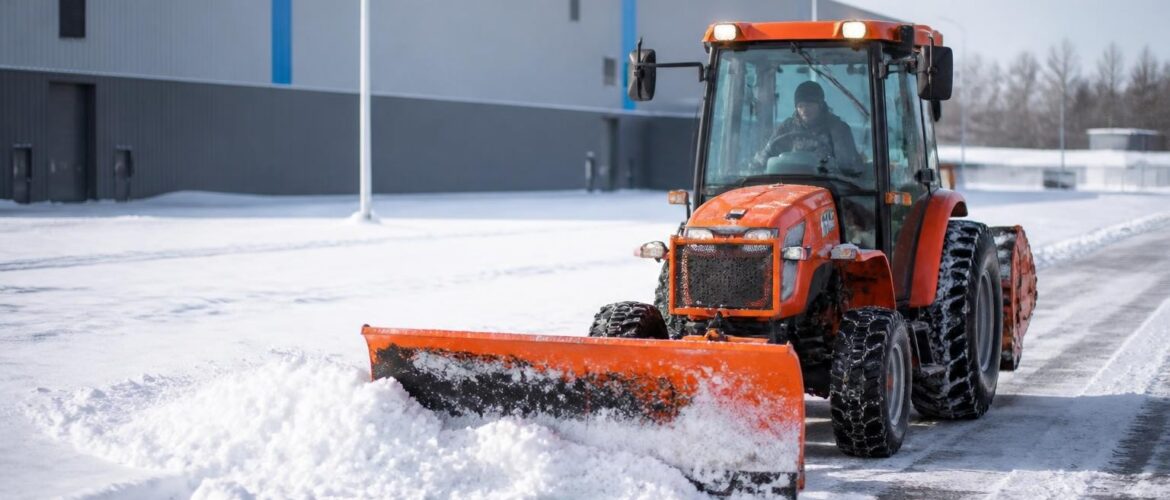
When winter storms blanket commercial properties across the Denver Metro area, property managers and facility directors face critical decisions about snow removal equipment. A properly equipped tractor for snow plowing delivers the power, versatility, and efficiency needed to clear large parking lots, industrial parks, and office campuses quickly and thoroughly. Unlike smaller vehicles or manual methods, tractors provide the hydraulic capacity, weight distribution, and attachment compatibility required for professional-grade snow management across expansive commercial properties.
Understanding Tractor Classifications for Snow Removal
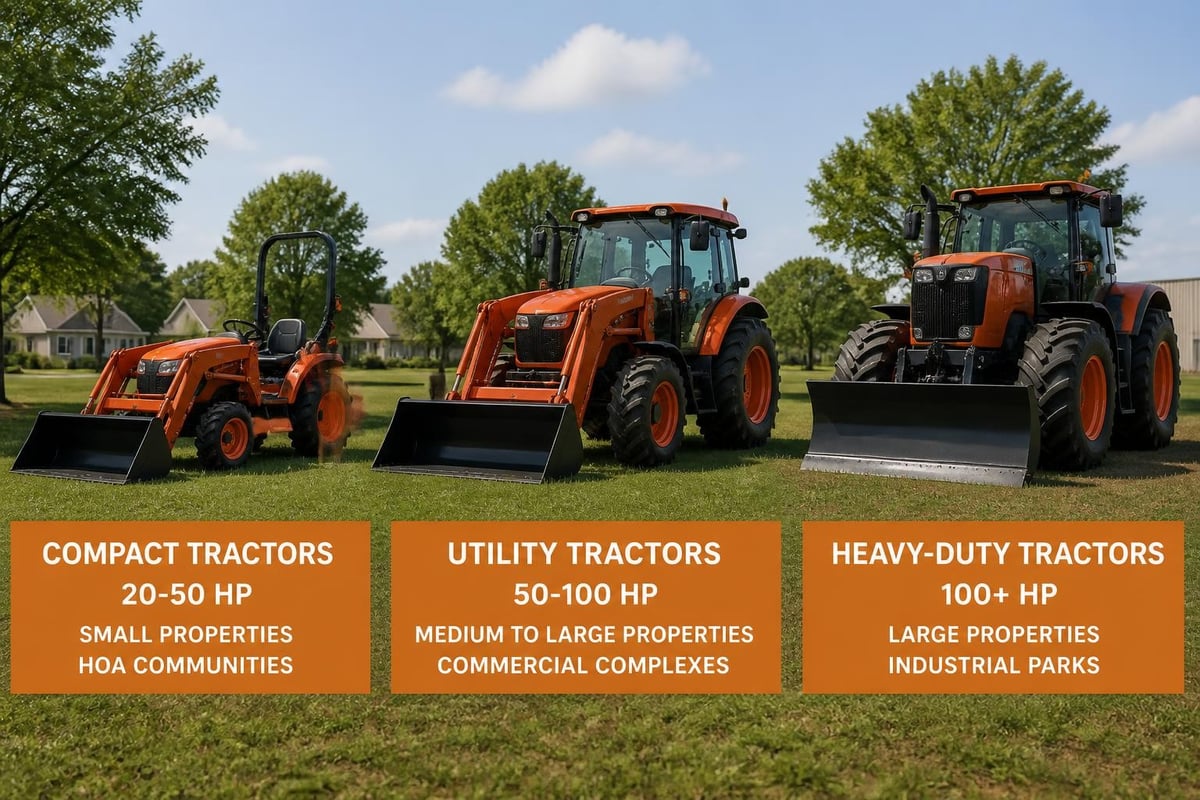
Commercial snow removal operations require careful equipment selection based on property size, snowfall patterns, and terrain characteristics. Tractors designed for snow plowing typically fall into three primary categories, each offering distinct advantages for different commercial applications.
Compact tractors ranging from 25 to 50 horsepower excel in HOA communities, smaller parking areas, and properties with tight maneuvering requirements. These machines balance power with agility, making them ideal for navigating between parked cars and around landscape features.
Utility tractors between 50 and 100 horsepower represent the workhorses of commercial snow removal. These mid-sized machines deliver sufficient hydraulic flow for multiple attachments while maintaining excellent visibility and control. For snow plowing services across large office campuses, utility tractors offer the optimal combination of power and precision.
Heavy-Duty Industrial Tractors
Tractors exceeding 100 horsepower tackle the most demanding commercial snow removal scenarios. Industrial parks, distribution centers, and massive retail complexes require this level of power to move heavy, wet snow efficiently across acres of pavement.
| Tractor Class | Horsepower Range | Ideal Property Type | Typical Clearing Width |
|---|---|---|---|
| Compact | 25-50 HP | HOA communities, small lots | 6-8 feet |
| Utility | 50-100 HP | Office campuses, medium lots | 8-10 feet |
| Industrial | 100+ HP | Industrial parks, large complexes | 10-14 feet |
The right tractor classification directly impacts operational efficiency and cost-effectiveness throughout the winter season.
Essential Attachments and Equipment Configuration
Transforming a standard tractor into an effective tractor for snow plowing requires strategic attachment selection. Modern commercial operations typically deploy multiple attachment types to address varying snow conditions and property requirements.
Front-mounted blades remain the most common snow removal attachment, offering straightforward operation and reliable performance. Straight blades work efficiently on flat surfaces, while V-plows and angle blades provide superior versatility for windrow management and snow stacking. According to comprehensive attachment comparisons, adjustable blade positions significantly enhance clearing efficiency across diverse property layouts.
Snow Blower Systems
When dealing with heavy snowfall exceeding 12 inches, snow blowers mounted to tractor PTO systems dramatically outperform traditional plows. These attachments pulverize snow and project it distances up to 40 feet, eliminating the need for multiple passes and reducing snow storage challenges.
- Single-stage blowers: Best for light, fluffy snow up to 8 inches
- Two-stage blowers: Handle heavy, wet snow up to 24 inches
- Three-stage blowers: Commercial-grade systems for extreme conditions
The investment in quality attachments pays dividends through faster clearing times and reduced equipment strain during emergency snow removal situations.
Ballast and Weight Distribution
Proper tractor ballasting ensures maximum traction and prevents dangerous front-end lifting during plowing operations. Rear-mounted weights, liquid-filled tires, and wheel weights combine to optimize power transfer to the pavement.
Operational Techniques for Commercial Properties
Professional snow removal demands systematic approaches that maximize efficiency while minimizing property damage. When deploying a tractor for snow plowing across commercial properties, operators must consider traffic patterns, drainage systems, and landscape protection strategies.
Straight-line plowing works best for long, unobstructed parking aisles. Begin at one edge and work methodically across the property, maintaining consistent overlap between passes. This technique minimizes missed spots and ensures uniform snow removal depth.
For properties with complex layouts, the perimeter-first approach clears building entrances, fire lanes, and primary access routes before addressing general parking areas. This method ensures critical pathways remain accessible even if snowfall continues during operations. The best way to plow snow with a tractor involves adapting techniques to specific property characteristics and stakeholder priorities.
Managing Snow Storage Locations
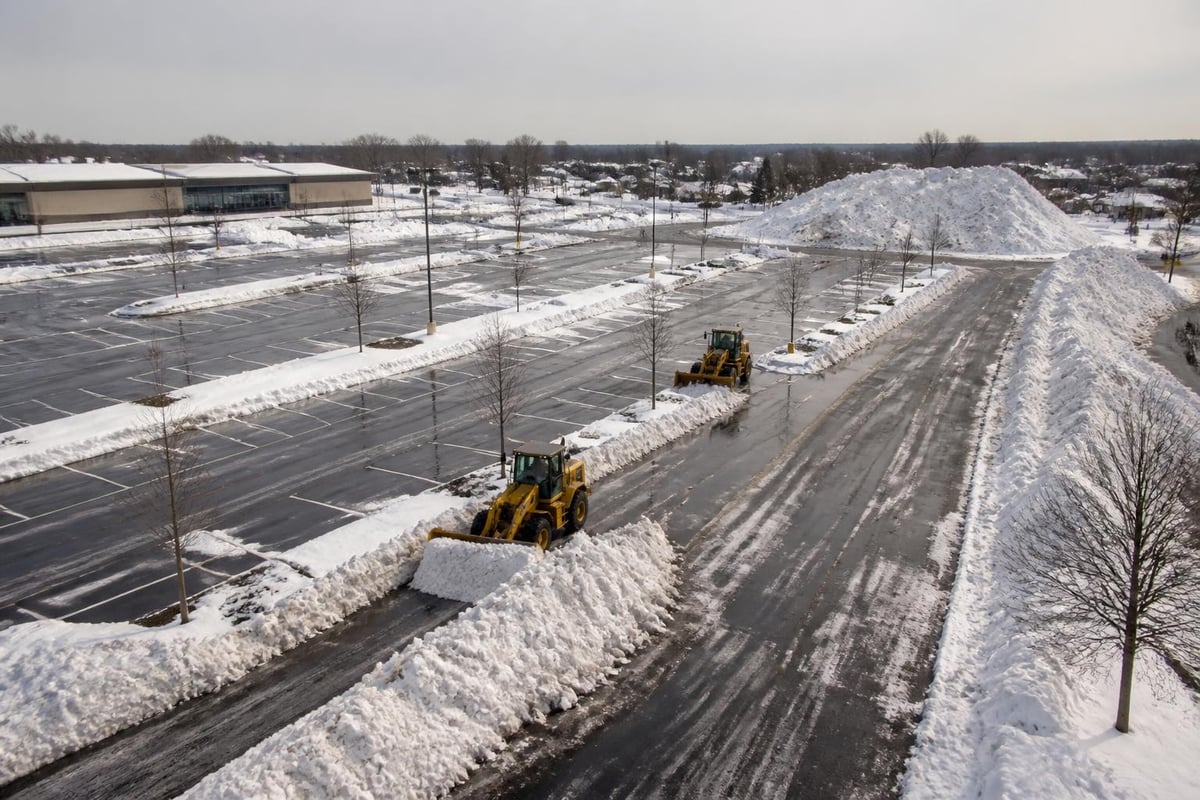
Commercial properties require designated snow storage areas that don't obstruct traffic flow, block visibility, or create drainage problems during spring thaw. Experienced operators identify optimal storage zones during pre-season property assessments.
Push-to-perimeter operations move snow toward property edges, while central collection methods create strategic snow piles in designated areas. The choice depends on property configuration, available space, and municipal regulations governing snow disposal.
Maintenance Protocols and Pre-Season Preparation
Equipment reliability determines whether commercial snow removal operations succeed or fail during critical winter storms. A well-maintained tractor for snow plowing delivers consistent performance throughout the demanding winter season.
Pre-Winter Inspection Checklist
- Hydraulic system: Check fluid levels, inspect hoses for cracks, test cylinder operation
- Electrical components: Verify battery charge, test lighting systems, inspect wiring harnesses
- Drivetrain: Change engine oil, inspect transmission fluid, lubricate all grease points
- Tire condition: Assess tread depth, check air pressure, install chains if required
- Attachment connections: Test quick-hitch systems, verify pin retention, check cutting edges
Professional operators complete these inspections in October or early November, allowing sufficient time for parts ordering and repair scheduling before snow season begins. The best practices for tractor snowplowing emphasize preventive maintenance as the foundation of reliable operations.
Mid-Season Maintenance Requirements
During active snow season, daily pre-operation checks prevent unexpected breakdowns. Inspect fluid levels, check tire pressure, verify attachment security, and test all safety systems before each shift.
Safety Considerations and Risk Management
Commercial snow removal presents unique hazards that require constant vigilance and proper safety protocols. Operating a tractor for snow plowing involves heavy machinery, reduced visibility, and unpredictable surface conditions.
Visibility enhancement starts with clean windows, functioning mirrors, and adequate lighting. Many commercial operators install additional LED work lights to improve visibility during nighttime operations and whiteout conditions.
| Safety Equipment | Purpose | Recommended Specification |
|---|---|---|
| Strobe lights | Vehicle visibility | 360-degree amber LED |
| Backup alarms | Pedestrian warning | 97-112 decibels |
| Radio communication | Crew coordination | Weather-resistant two-way |
| First aid kit | Emergency response | OSHA compliant |
When clearing properties with active pedestrian traffic, establish clear safety zones and use spotters for high-risk areas. The techniques outlined in professional snow plowing resources emphasize communication and situational awareness as critical safety elements.
Operator Training and Certification
Professional snow removal companies invest in comprehensive operator training covering equipment operation, property-specific procedures, and emergency protocols. New operators should complete supervised practice sessions before handling commercial accounts independently.
Fuel Efficiency and Operating Economics
Commercial snow removal profitability depends heavily on fuel management and operational efficiency. Diesel tractors typically deliver better fuel economy than gasoline alternatives, especially during extended operating sessions common with 24 hour snow removal commitments.
Idle time reduction significantly impacts fuel consumption and operating costs. Modern tractors equipped with efficient hydraulic systems allow operators to shut down between properties or during brief pauses, reducing unnecessary fuel waste.
Cost-Per-Acre Analysis
- Fuel consumption: 2-4 gallons per hour depending on tractor size and conditions
- Attachment wear: Cutting edge replacement every 20-40 operating hours
- Maintenance intervals: Oil changes every 100-150 hours during snow season
- Tire replacement: 800-1,200 hours with proper inflation and ballasting
Understanding these economics helps commercial operators bid accurately and maintain profitability throughout the winter season.
Tractor Selection Criteria for Different Property Types
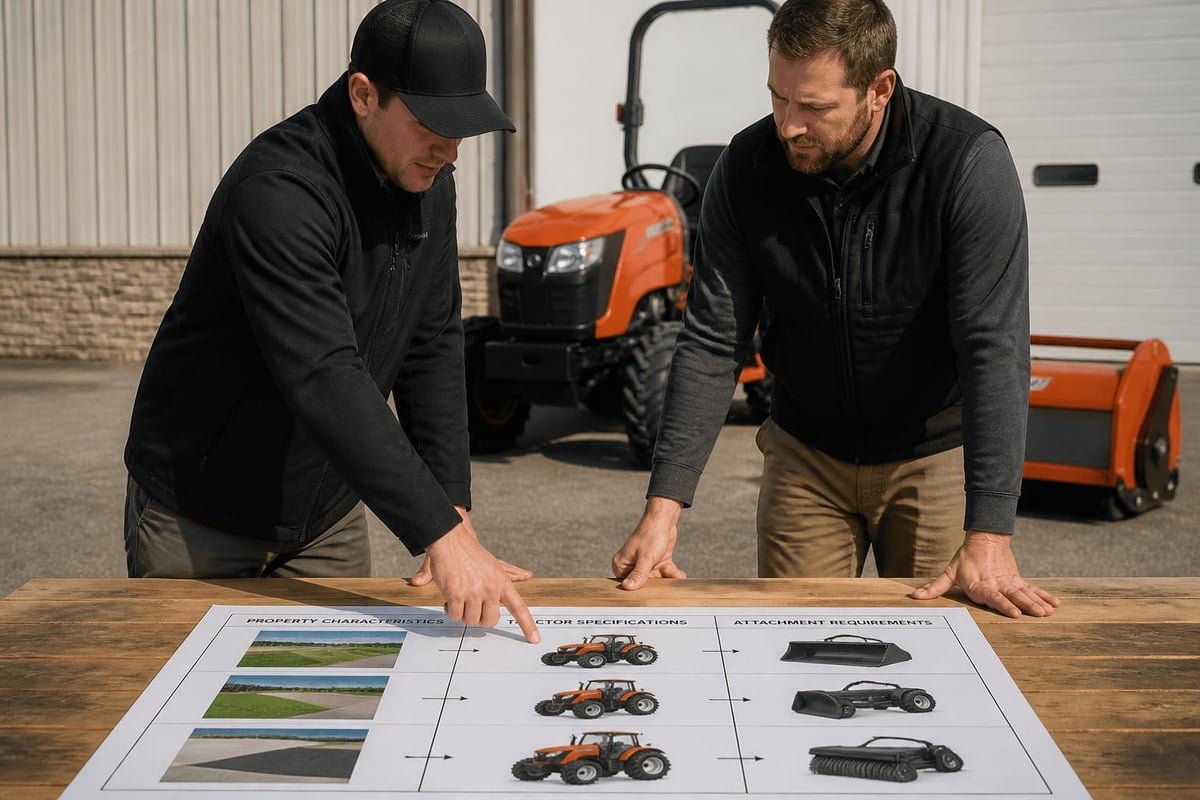
Choosing the optimal tractor for snow plowing requires careful analysis of property characteristics, snowfall patterns, and service level agreements. Top tractors for snow removal vary significantly based on these operational parameters.
Parking Lot Specifications
Large retail parking lots demand tractors with wide clearing capacity and high travel speeds. Look for models offering 10-foot blade widths, hydrostatic transmissions for smooth speed control, and comfortable enclosed cabs for extended operating sessions.
Industrial parks require tractors capable of handling loading dock areas, truck courts, and perimeter roads. Four-wheel drive becomes essential when clearing inclined surfaces or dealing with compacted snow conditions.
For HOA communities requiring common area snow removal, compact tractors with excellent maneuverability navigate residential streets and cul-de-sacs efficiently while minimizing disruption to residents.
Advanced Technology Integration
Modern tractors designed for commercial snow removal increasingly incorporate technology that enhances efficiency and documentation capabilities. GPS tracking systems monitor equipment location, operating hours, and coverage patterns, providing valuable data for billing verification and route optimization.
Telematics systems alert managers to maintenance needs, track fuel consumption, and monitor operator performance. These tools prove particularly valuable for companies managing multiple tractors across extensive service areas throughout the Denver Metro region.
Weather Monitoring and Deployment Systems
Integrated weather stations and monitoring software help commercial operators anticipate snowfall timing and intensity. This information enables proactive equipment deployment and crew scheduling, ensuring properties receive timely service before snow accumulation creates hazardous conditions.
Real-time precipitation tracking allows operators to adjust plowing strategies based on snowfall rates, optimizing the balance between clearing frequency and operational costs.
Environmental Considerations and Sustainable Practices
Commercial snow removal increasingly emphasizes environmental responsibility alongside operational efficiency. A properly operated tractor for snow plowing minimizes environmental impact through precise de-icer application, careful drainage management, and strategic snow storage placement.
Biodegradable hydraulic fluids reduce contamination risks in environmentally sensitive areas, while modern diesel engines meeting Tier 4 emissions standards significantly decrease particulate matter and nitrogen oxide emissions.
Protecting Landscape Features
Professional operators understand the importance of protecting landscaping during snow plowing operations. Clearly marked boundaries, raised curbing indicators, and pre-season property walks identify vulnerable landscape features requiring special attention.
Adjustable blade shoes prevent damage to decorative pavement, while careful snow pile placement avoids burying shrubs, crushing ornamental grasses, or blocking drainage systems.
Multi-Tractor Fleet Management Strategies
Large commercial snow removal operations often deploy multiple tractors simultaneously to meet aggressive service level agreements. Coordinating fleet operations requires sophisticated scheduling, communication protocols, and equipment standardization.
Standardized attachment systems allow operators to switch between tractors without retraining, while common maintenance procedures streamline service requirements across the entire fleet. This standardization proves especially valuable during high-volume snow events requiring all available equipment.
Backup Equipment Protocols
Professional commercial operators maintain backup tractors and attachments to ensure service continuity if primary equipment experiences mechanical failure. This redundancy becomes critical when servicing properties with zero-tolerance policies for snow accumulation.
Comparing Snow Removal Methods
Property managers frequently evaluate different snow removal approaches when planning winter maintenance strategies. Understanding how tractor-based operations compare to alternative methods helps inform equipment investment decisions and service provider selection.
| Method | Coverage Rate | Equipment Cost | Labor Efficiency | Best Application |
|---|---|---|---|---|
| Tractor plowing | 2-4 acres/hour | High initial | Excellent | Large open areas |
| Pickup truck plows | 1-2 acres/hour | Moderate | Good | Mixed-use properties |
| Skid steers | 1-3 acres/hour | High initial | Very good | Confined spaces |
| Snow blowers | 0.5-1 acre/hour | Moderate | Fair | Heavy accumulation |
When comparing snow plowing vs snow blowing methods, tractors equipped with interchangeable attachments offer the flexibility to employ either technique based on current conditions.
Contract Specifications and Service Expectations
Commercial snow removal contracts increasingly specify equipment requirements, response times, and performance standards. Property managers seeking reliable winter maintenance should understand how tractor capabilities align with contract obligations.
Trigger depths determine when plowing operations commence, typically ranging from 2 to 4 inches for commercial properties. A properly sized tractor for snow plowing handles these accumulations efficiently, completing initial clearing passes before snow depth complicates operations.
Service level agreements often mandate specific clearing priorities: building entrances first, then fire lanes, followed by general parking areas and perimeter roads. Tractors equipped with GPS logging document completion times and coverage patterns, providing verification of contract compliance.
Selecting and operating the right tractor for snow plowing transforms winter challenges into manageable, systematic operations that keep commercial properties safe and accessible. Whether you manage office campuses, industrial parks, or HOA communities across the Denver Metro area, professional snow removal expertise makes all the difference when winter storms arrive. Denver Snow Removals brings over 47 years of commercial snow clearing experience, specialized equipment, and 24/7 emergency response capabilities to ensure your properties remain operational throughout Colorado's demanding winter season.