
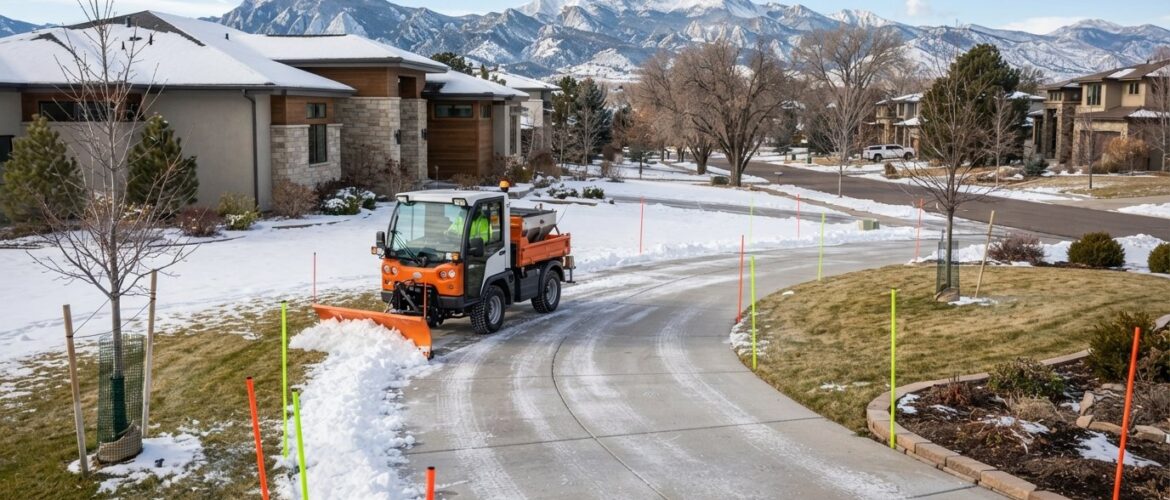
Imagine walking out to your driveway on the first warm day of March only to find your manicured lawn looking like a construction site. It’s incredibly frustrating to invest time and money into your Denver landscaping only to see it shredded by heavy equipment during the winter. You need your property cleared for safe passage, but you don’t want to deal with peeled turf, snapped shrub branches, or the white crust of salt burn on your lawn. We understand the anxiety that comes with winter maintenance. A damage-free spring starts with the right preparation and professional expertise.
Fortunately, mastering snow plow damage to landscaping protection doesn’t require a miracle. It just takes a proactive plan. This guide provides an expert-led checklist for shielding your turf, trees, and hardscapes from even the heaviest snow plows. With over 44 years of experience in Denver snow removal, we’ve seen exactly what goes wrong and how to prevent it. You’ll learn cost-effective ways to mark your property boundaries and how to establish clear communication with your snow removal provider. This checklist ensures your landscape remains as beautiful in April as it was in October.
Key Takeaways
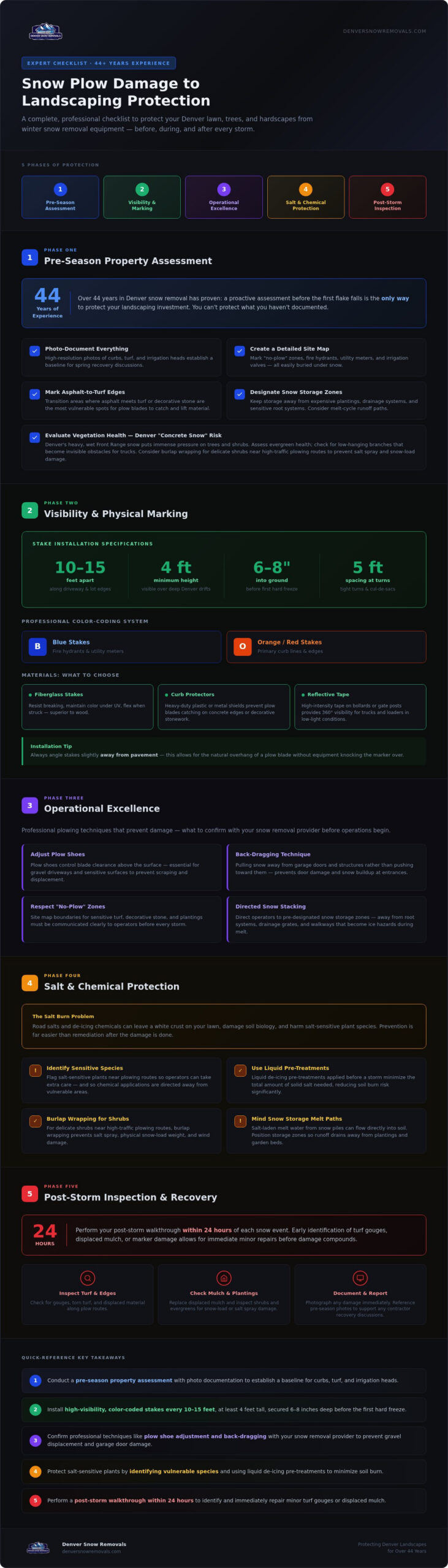
- Conduct a pre-season property assessment with photo documentation to establish a baseline for your curbs, turf, and irrigation heads.
- Implement high-visibility, color-coded staking every 10–15 feet to provide clear snow plow damage to landscaping protection for operators.
- Learn the professional plowing techniques, such as adjusting plow shoes and back-dragging, that prevent damage to gravel and garage doors.
- Protect salt-sensitive landscaping by identifying vulnerable species and using liquid de-icing pre-treatments to minimize soil burn.
- Perform a post-storm walkthrough within 24 hours to identify and immediately repair minor turf gouges or displaced mulch.
Pre-Season Preparation: The Property Assessment Checklist
Successful snow management starts before the first flake falls. Walking your property perimeter before the first frost is essential to identify hidden hazards that disappear under a blanket of white. Our team at Denver Snow Removal has spent over 44 years learning that a proactive assessment is the only way to ensure safe passage without destroying your investment. You can’t protect what you haven’t documented. High-resolution photos of your curbs, turf, and irrigation heads today provide the necessary baseline for any spring recovery discussions.
Mapping Your Property Boundaries
A detailed site map is your first line of defense. Create a clear visual guide for your contractor that highlights “no-plow” zones and sensitive areas. You must mark the location of all fire hydrants, utility meters, and irrigation valves. These objects are easily buried and can cause catastrophic damage to both your property and the snow plow equipment and operations if struck. Pay special attention to transition areas where asphalt meets sensitive turf or decorative stone. These edges are the most vulnerable spots for snow plow damage to landscaping protection, as blades can easily catch and lift material if the operator isn’t warned.
Denver-Specific Vegetation Concerns
Denver winters present a unique challenge known as “Denver Concrete.” This heavy, wet snow typical of the Front Range puts immense pressure on your trees and shrubs. Evaluate the health of your evergreens now; weaker trees are much more prone to snow-load damage or snapped limbs. For delicate shrubs located near high-traffic plowing routes, consider burlap wrapping to prevent salt spray and physical weight issues. Check for low-hanging branches that will sag under the weight of this moisture-rich snow. These branches often become invisible obstacles for trucks and loaders once the storm begins.
Identifying Snow Storage Zones
Designating specific “snow storage” zones is a critical step in your checklist. These areas should be located away from expensive plantings or delicate drainage systems. Piling snow on top of sensitive root systems or blocking drainage grates leads to spring headaches that are easily avoided with a little foresight. When choosing these spots, consider the melt cycle. You don’t want a massive pile of “Denver Concrete” melting directly onto a walkway, creating a secondary ice hazard. Proper placement is a key component of snow plow damage to landscaping protection that keeps your soil and plants healthy until the thaw.
Visibility and Marking: The Physical Protection Checklist
Visual markers are the most effective way to provide snow plow damage to landscaping protection during a storm. When visibility drops and snow accumulates, even the most experienced operators need physical guides to navigate safely. You should install high-visibility reflective stakes every 10 to 15 feet along the edges of your driveways and parking lots. These markers must be at least 4 feet tall to remain visible over deep Denver snow drifts. Secure each stake at least 6 to 8 inches into the ground before the first hard freeze makes installation impossible.
Color-coding your markers is a professional standard that prevents costly mistakes. Use blue stakes for fire hydrants and utility meters, while orange or red markers should define the primary curb lines. This system allows drivers to identify hazards instantly without slowing down their operations. Following guidelines for protecting urban trees and landscaping ensures that these physical barriers don’t just mark boundaries, but actively preserve the health of your property’s greenery throughout the winter months.
Choosing the Right Marking Materials
Fiberglass stakes are superior to traditional wood markers because they resist breaking and maintain their color under harsh UV exposure. They flex when struck by snow or wind rather than snapping. You should also consider using heavy-duty curb protectors. These plastic or metal shields prevent plow blades from catching on concrete edges or decorative stonework. For permanent features like bollards or gate posts, apply high-intensity reflective tape. This provides 360-degree visibility for trucks and front-end loaders working in low-light conditions.
Installation Best Practices
Proper installation technique is just as important as the materials you choose. Always angle your stakes slightly away from the pavement. This allows for the natural overhang of a plow blade without the equipment knocking the marker over. Tight turns and cul-de-sacs require closer spacing, often every 5 feet, to guide the equipment through complex maneuvers. If you have sensitive garden beds near the street, temporary snow fencing can act as a physical barrier against heavy snow piles. If you’re preparing your property for professional residential snow removal, having these markers in place ensures our team can work with maximum precision. Taking these steps creates a clear roadmap for operators and significantly reduces the risk of accidental turf scalp or shrub damage.
Operational Excellence: How Professional Plowing Prevents Damage
Professional snow management relies on the skill of the operator and the precision of their equipment. Skillful execution is the most critical element of snow plow damage to landscaping protection during a heavy Denver storm. Our operators prioritize site-familiarity by reviewing property maps and markers before the first flake falls. This preparation ensures they know exactly where delicate features are hidden beneath the drifts. When an operator understands the terrain, they can move quickly without sacrificing the safety of your turf or hardscapes.
Adjusting plow “shoes” is a standard practice for protecting uneven surfaces. These shoes act as spacers that keep the heavy metal blade slightly off the ground. This setting is essential for gravel driveways or decorative stone paths where a low blade would scrape away expensive material. We also utilize “float” mode on our equipment. This setting allows the plow to follow the natural contour of your land. It prevents the blade from digging into high spots or gouging the lawn, which is a common issue with inexperienced seasonal workers.
Equipment Settings and Blade Control
The type of equipment used determines the level of protection your property receives. Rubber cutting edges are often installed on our blades to reduce the impact on decorative pavers and sensitive concrete. These edges provide a squeegee effect that clears snow without the harsh metal-on-stone contact. Denver Snow Removals maintains a diverse fleet of trucks, front-end loaders, and snow blowers to match the specific needs of every property size. Front-end loaders offer superior visibility and precision for stacking snow compared to standard pickup trucks.
Strategic Snow Stacking
Where we put the snow is just as important as how we move it. We avoid “blind piling,” which occurs when an operator pushes snow into an area without knowing what lies beneath. This technique prevents crushed shrubs and broken irrigation components. Our team ensures that snow piles do not block critical sightlines for drivers or cover essential drainage grates. Managing the weight of these piles is vital for snow plow damage to landscaping protection. We distribute the “Denver Concrete” weight to prevent soil compaction in your planting beds, ensuring your perennials can emerge healthy in the spring. Precise stacking keeps your property functional and your landscape intact.
We also utilize the “back-dragging” technique for delicate areas. Instead of pushing snow toward a garage door or a stone wall, the operator pulls the snow away from the structure first. This creates a safe buffer zone and eliminates the risk of equipment striking your building or decorative landscape features. It is a slower process, but it is the only way to guarantee a damage-free result for your most valuable assets.
Salt and Chemical Protection: Shielding Your Soil
Chemical damage is often more permanent than a simple turf gouge. Salt burn can ruin expensive landscaping long after the snow melts. Identifying salt-sensitive plants like White Pine or Boxwoods is your first priority. These species are highly vulnerable to salt spray from passing plows. You should create physical barriers or move these plants away from the splash zone of your driveway. We recommend applying gypsum to your soil in the fall. This mineral helps neutralize anticipated salt runoff, providing a critical layer of snow plow damage to landscaping protection for your root systems.
Directing plow discharge is another simple but effective tactic. Professional operators should always aim the snow away from high-value planting beds. This prevents concentrated salt from leaching into the soil as the pile melts. Liquid de-icing pre-treatments are a professional’s best tool. By treating the surface before the storm, we reduce the total volume of rock salt needed to maintain safe passage. This proactive approach is a hallmark of Denver Snow Removal and ensures your property stays clear with minimal chemical impact.
Choosing Safer De-Icing Alternatives
Magnesium Chloride is the preferred choice for Denver landscapes compared to traditional Sodium Chloride. It’s effective at lower temperatures and is significantly less corrosive to plant tissue. While sand provides immediate traction, it can clog drainage grates and smother small plants if over-applied. Our team focuses on Proactive Ice Management Services in Denver to balance safety with environmental health. This approach ensures your property remains clear without sacrificing your spring curb appeal.
Creating Physical Salt Barriers
Plastic or burlap shields act as a raincoat for your roadside hedges. These barriers catch salt spray before it touches the foliage. You can also use the “snow berm” strategy. This involves placing a layer of clean, shoveled snow as a buffer between the driveway and your plants. This clean snow absorbs the salt spray, keeping it away from your soil. Once the storm passes, sweeping excess salt off your hardscapes is essential. Leaving piles of salt to sit on concrete leads to runoff that eventually kills your grass. It’s a simple step that provides lasting snow plow damage to landscaping protection.
Protecting your soil requires a plan that goes beyond just pushing snow. If you want a strategy that prioritizes the health of your lawn and gardens, contact us for a professional ice management quote today.
Post-Storm Inspection: The Recovery and Repair Checklist
Don’t wait for the spring thaw to assess your property. You should conduct a thorough property walk-through within 24 hours of snow removal completion. This is the most critical window for identifying issues before they become permanent or hidden by the next storm. Look specifically for “turf scalp” or deep gouges where a plow blade might have caught the grass. If you find displaced turf, tamp it down immediately while the ground is still moist. This simple action can save the root system and prevent a dead patch from forming in April. Waiting weeks to address these minor issues often results in the need for expensive sod replacement later.
Inspect your trees and shrubs for any “salt crust” on the needles or leaves. If temperatures are above freezing, rinse the foliage with fresh water to remove de-icing residue. You must also verify that all drains and catch basins are clear of plowed debris. Blocked drainage leads to ice damming and localized flooding during the melt cycle, which can drown your landscaping. These quick post-storm checks are essential for snow plow damage to landscaping protection and maintaining a safe, professional site for your visitors.
Immediate Damage Mitigation
If you find broken branches, prune them quickly. A clean cut prevents the weight of the snow from further tearing the bark and exposing the tree to disease. Re-secure any markers or stakes that were displaced during the plowing process. Dislodged markers leave your property vulnerable during the next weather event. Effective maintenance is a partnership between the property manager and the service provider. Communicate your findings immediately to your commercial snow removal provider. Sharing photos of specific trouble spots helps us adjust our approach and ensures we maintain your professional trust throughout the season.
Preparing for the Next Storm
Every storm provides valuable data on how snow naturally drifts and piles on your unique property. Use this information to adjust your site map. If a specific stack location is blocking a drain or leaning too heavily on a sensitive hedge, move it. Evaluating these locations now prevents cumulative damage. Update your operator instructions based on these real-world observations. Effective snow plow damage to landscaping protection is an iterative process that improves with every weather event. We use these insights to refine our precision and protect your investment.
- Tamp down displaced turf while the soil is still moist to save the roots.
- Rinse salt spray from evergreens if temperatures allow.
- Clear drainage grates to prevent ice damming and flooding.
- Prune jagged branch breaks to protect the health of your trees.
- Reset all boundary markers to guide operators during the next storm.
Secure Your Landscape Before the First Flake Falls
Protecting your Denver property requires a combination of proactive preparation and professional execution. By implementing a strict marking system and conducting immediate post-storm inspections, you ensure that your investment in turf and trees remains intact throughout the winter. Effective snow plow damage to landscaping protection is not just about avoiding obstacles; it’s about partnering with an experienced team that treats your property with respect. You can avoid the frustration of torn-up turf and broken branches with the right plan in place.
Denver Snow Removal brings over 44 years of local experience to every job. As a family-owned and operated business, we understand the unique challenges of Front Range winters and the weight of heavy snow. We utilize specialized precision equipment, including front-end loaders, to ensure safe passage without the risk of heavy-handed damage. You don’t have to face the anxiety of winter maintenance alone. Get a Free Estimate from Denver’s Most Careful Snow Removal Team today. Enjoy a damage-free spring and the peace of mind that comes with reliable, expert service.
Frequently Asked Questions
Will a snow plow always damage my lawn?
No, a professional operator should not damage your turf if the property is properly prepared. Damage typically happens when blades are set too low or boundaries aren’t clearly marked. Our team uses specialized precision equipment and adjusts plow shoes to keep the metal blade slightly above the grass line. Effective snow plow damage to landscaping protection relies on this combination of operator skill and high-visibility property markers.
What are the best markers to use for driveway protection?
Fiberglass stakes are the superior choice for Denver properties because they flex under pressure and won’t snap in extreme cold. You should choose reflective markers that stand at least 48 inches tall to ensure they remain visible above deep snow drifts. Using color-coded stakes helps operators identify specific hazards quickly. Orange is ideal for curb lines, while blue should be used to protect fire hydrants or utility meters.
Can I hold a snow removal company liable for landscape damage?
Liability is usually determined by your service contract and whether the property was correctly marked. Most professional providers require clients to install stakes before they accept responsibility for turf or curb gouges. It’s a good idea to document your property condition with photos before the first frost. This creates a clear baseline for communication and helps resolve any disputes regarding damage that occurs during heavy winter storms.
How do I protect my boxwoods from salt spray?
Physical barriers like burlap wrapping or plastic snow fencing offer the best defense for salt-sensitive shrubs. These shields catch the spray kicked up by plow blades before it reaches the foliage. You can also use a buffer of clean, shoveled snow to insulate the base of the plants. If you’re concerned about chemical burn, ask your provider about liquid de-icing treatments which stay in place better than traditional rock salt.
Does “liquid salt” cause less damage than rock salt?
Liquid de-icing agents are generally safer for your soil because they allow for much more precise application. Since these treatments are applied before the storm, they prevent snow from bonding to the pavement. This reduces the total volume of chemicals needed to maintain safe passage. Utilizing liquid alternatives is a pro-level strategy for snow plow damage to landscaping protection that helps preserve the health of your perennials and lawn.
What should I do if a plow hits my irrigation head?
You should immediately flag the area and take a photo to share with your service provider. While our team focuses on precision, hidden irrigation components can sometimes be struck if markers are displaced. If the ground isn’t frozen, you may want to cap the line to prevent issues during your spring system startup. We recommend marking every head near the pavement edge with a small stake to prevent these accidents from happening.
How tall should snow stakes be for Denver winters?
Your markers must be at least four feet tall to be effective in the Denver Metro area. Shorter stakes often disappear under the heavy, wet snow typical of the Front Range, leaving the operator blind to your property edges. Tall, reflective fiberglass poles ensure visibility during night operations and through the highest drifts. If an operator can’t see the marker, they can’t protect the landscaping hidden beneath the snow.
Is there a way to fix salt-damaged grass in the spring?
You can help your lawn recover by flushing the affected areas with plenty of water once the ground thaws. This helps leach the salt away from the root zone. Some property owners apply gypsum to the soil, which can help neutralize sodium levels and improve soil structure. If the turf is completely dead, you’ll need to rake out the debris and reseed the area once soil temperatures remain consistently above 50 degrees.