
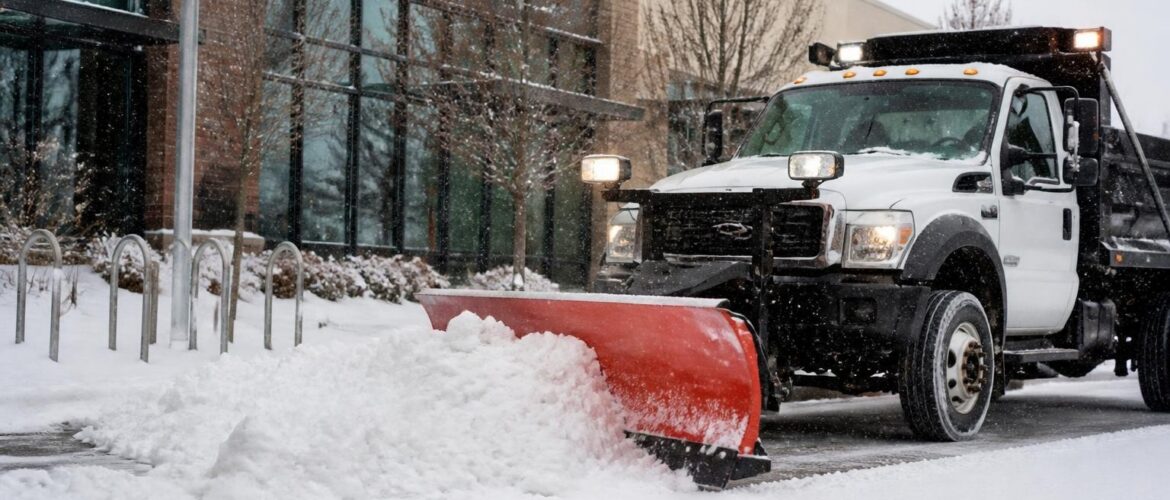
When winter storms blanket your commercial property with snow and ice, searching for "snow shoveling services near me" becomes an urgent priority. For property managers, business owners, and HOA boards across the Denver Metro area, professional snow removal isn't just about aesthetics-it's about liability protection, accessibility compliance, and maintaining operations during Colorado's unpredictable winter months. Understanding what separates reliable contractors from mediocre providers can mean the difference between a safely cleared property and costly slip-and-fall litigation.
Understanding Professional Snow Removal Services
Professional snow removal encompasses far more than simple shoveling. Commercial-grade services involve coordinated teams, specialized equipment, and systematic approaches to clearing large areas efficiently.
What Defines a Professional Service
When evaluating snow shoveling services near me, property managers should recognize that true professionals operate with proper licensing, comprehensive insurance coverage, and adherence to industry-developed standards and best practices. These providers maintain fleets of equipment ranging from commercial-grade snow blowers to truck-mounted plows, depending on your property's specific needs.
Professional services typically include:
- Pre-storm treatment with anti-icing products to prevent bonding
- Active storm management with priority-based clearing schedules
- Post-storm cleanup including sidewalk edging and pile relocation
- Ice management using appropriate deicing materials
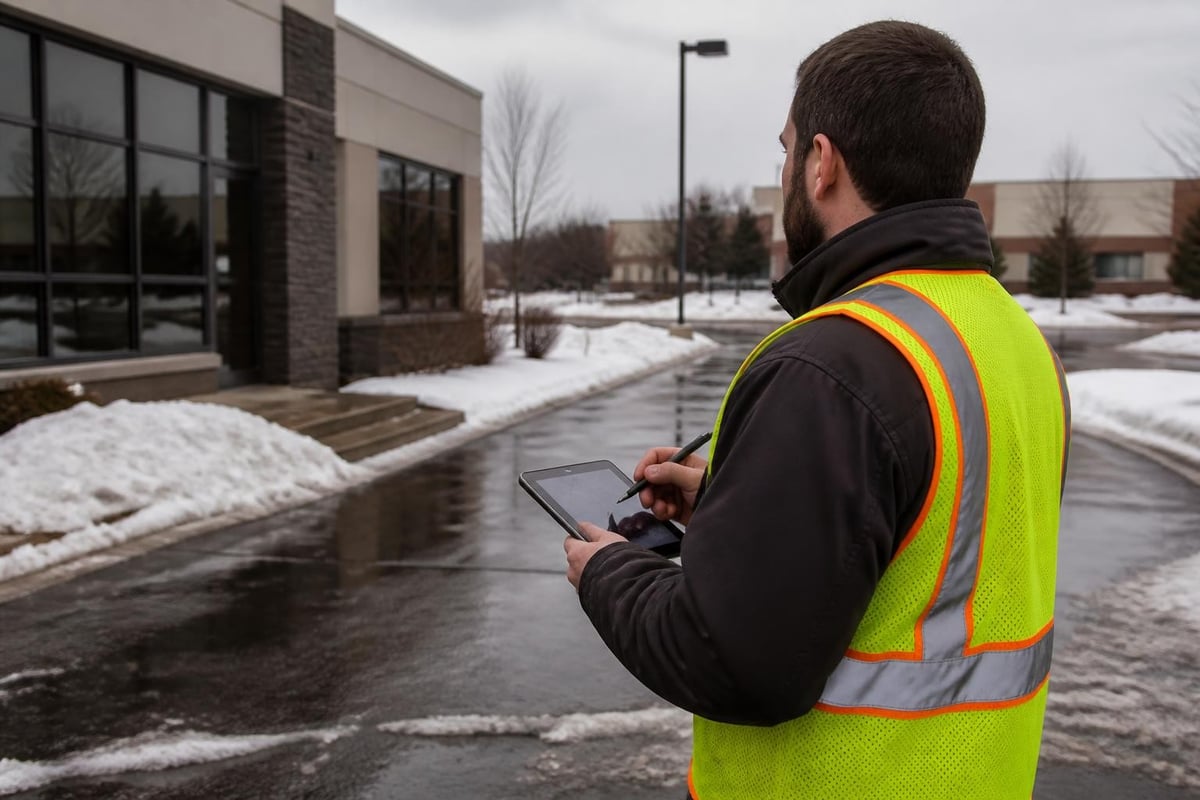
- Documentation with time-stamped photos and service reports
The distinction between a professional operation and a casual snow removal provider becomes evident during multi-day storm events. Established companies maintain 24/7 dispatch systems, backup equipment, and trained crews capable of rotating shifts throughout extended weather events.
Medical and Safety Considerations
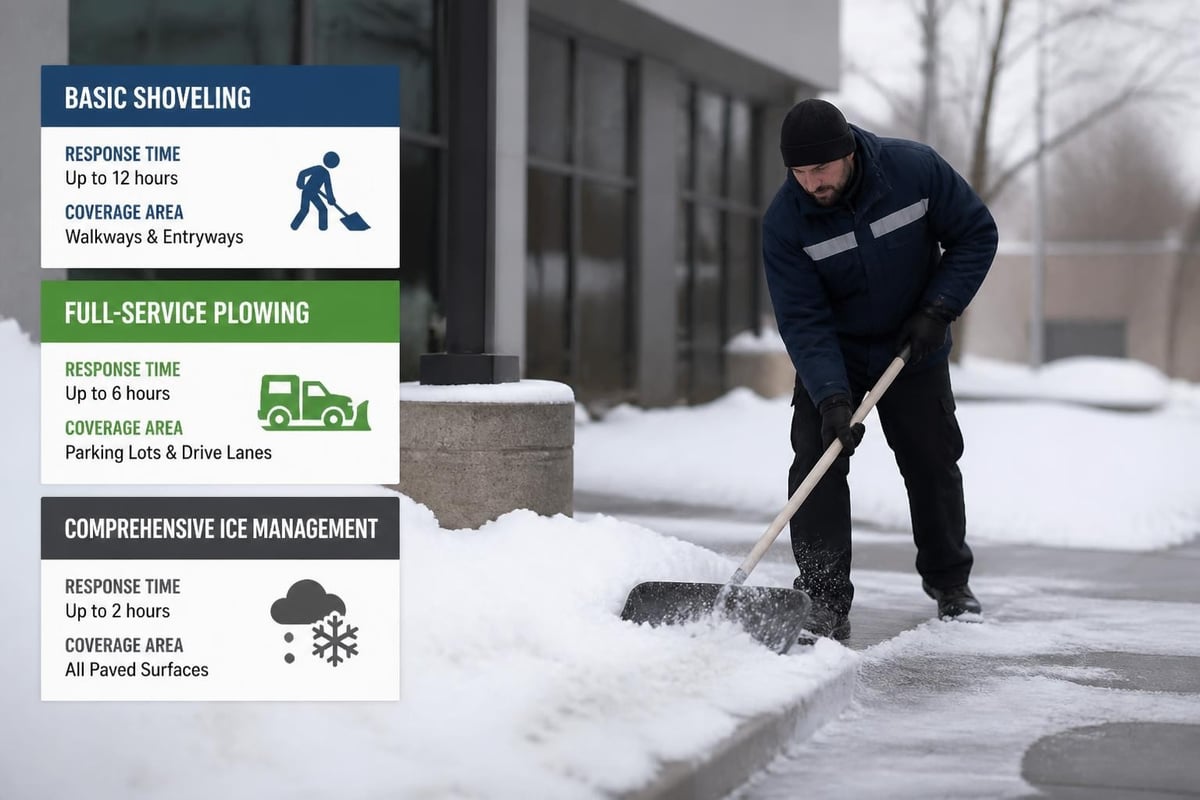
The physical demands of snow removal pose serious health risks, particularly for individuals with cardiovascular conditions. According to the American Heart Association’s research on snow shoveling risks, sudden exertion in cold weather significantly increases heart attack risk. Clinical studies have documented emergency department visits and cardiac events directly linked to manual snow clearing efforts.
For commercial property managers, these health risks translate into liability exposure. When employees or maintenance staff attempt to clear parking lots manually, you assume responsibility for their safety. Professional services eliminate this exposure entirely while ensuring thorough, consistent results.
| Health Risk | Impact | Professional Solution |
|---|---|---|
| Cardiac events | Heart attacks during exertion | Trained crews with proper pacing |
| Musculoskeletal injuries | Back strains, shoulder damage | Mechanical equipment reduces manual labor |
| Cold exposure | Frostbite, hypothermia | Rotating shifts, appropriate gear |
| Slip-and-fall | Fractures, head trauma | Systematic ice treatment protocols |
Finding Quality Local Providers
Locating dependable snow shoveling services near me requires more than a quick online search. Property managers need to evaluate providers based on concrete criteria that predict reliability and performance.
Vetting and Verification Steps
The FTC’s guide to hiring contractors outlines essential verification steps applicable to snow removal services. Begin by confirming proper business registration, general liability insurance (minimum $2 million for commercial work), and workers' compensation coverage. Request certificates of insurance (COIs) naming your property as an additional insured.
Check for professional affiliations and certifications. Reputable providers often maintain memberships in industry organizations that require adherence to operational standards. Experience matters significantly in snow removal-companies with multi-decade track records demonstrate the financial stability and operational expertise needed to handle Denver's variable winter conditions.
Beyond credentials, evaluate the provider's equipment inventory. Ask about:
- Truck capacity: How many properties can they service simultaneously?
- Backup equipment: What redundancy exists if machinery breaks down?
- Material sourcing: Where do they obtain deicing products during shortages?
- Communication systems: How do they coordinate crews and provide updates?
- Emergency protocols: What triggers activation during overnight storms?
Understanding Service Agreements
Professional snow removal operates under formal contracts that define triggers, response times, and scope of work. The ANSI-approved procurement standard for snow management provides a framework for structuring these agreements.
Service contracts typically follow one of three pricing models:
- Per-event billing: Charged each time crews mobilize (suitable for properties requiring occasional service)
- Seasonal contracts: Fixed fee covering unlimited service throughout winter
- Hourly rates: Time-and-materials billing for unpredictable properties
When searching for snow shoveling services near me, ensure contracts specify measurable triggers-typically snowfall accumulation depths (e.g., "mobilize when accumulation reaches 2 inches") rather than vague language. Clear trigger definitions prevent disputes and ensure timely service.
Service Options for Different Property Types
Commercial properties vary dramatically in their snow removal needs. A 50-space office parking lot requires different resources than a 400-unit HOA community or a sprawling industrial campus.
Parking Lot and Office Campus Services
Large paved areas demand truck-mounted plows and loader equipment to efficiently relocate snow. Professional providers develop site-specific plans identifying priority clearing zones, snow pile locations, and traffic flow patterns. High-traffic areas near building entrances receive priority attention, followed by fire lanes and accessible parking spaces.
For multi-tenant office buildings, coordination becomes critical. Services must clear parking and walkways before business hours without disrupting overnight operations. This requires precise scheduling and reliable execution-qualities that separate experienced providers from unreliable operators when you search snow shoveling services near me.
HOA Community Considerations
Homeowner association properties present unique challenges with multiple sidewalks, individual driveways, and community standards for snow pile aesthetics. Professional services designate appropriate snow storage areas that don't obstruct sightlines or encroach on landscaping.
HOA boards benefit from providers offering detailed documentation. Post-service reports with photographs demonstrate compliance with community standards and protect board members from resident complaints. Transparent communication systems allow property managers to track crew arrival times and service completion.
Environmental Responsibility
Modern snow removal balances effectiveness with environmental stewardship. Traditional rock salt (sodium chloride) damages concrete, corrodes vehicles, and harms vegetation. The EPA’s salt resources guidance documents chloride pollution impacts on water quality and ecosystems.
Progressive providers offer alternative deicing products:
| Product Type | Temperature Range | Environmental Impact | Cost Factor |
|---|---|---|---|
| Calcium chloride | -25°F to 35°F | Moderate chloride load | Medium |
| Magnesium chloride | -15°F to 35°F | Lower chloride, vegetation-friendly | Medium-high |
| Potassium acetate | -15°F to 35°F | Minimal environmental harm | High |
| Treated salt blends | 15°F to 35°F | Reduced application rates | Low-medium |
Property managers concerned about landscape preservation or stormwater compliance should discuss deicing options when evaluating snow shoveling services near me. The modest premium for environmentally responsible products often proves worthwhile compared to spring landscape restoration costs.
Pricing Factors and Budget Planning
Snow removal costs vary substantially based on property characteristics, service levels, and regional market conditions. Understanding pricing structures helps property managers budget appropriately and evaluate proposals.
Cost Variables
Several factors influence pricing when comparing snow shoveling services near me:
- Property size: Measured in square footage of pavement and linear feet of sidewalk
- Site complexity: Obstacles, tight corners, and elevation changes increase labor time
- Service frequency: More frequent clearing reduces per-event snow depth but increases seasonal visits
- Response time requirements: Premium rates apply for guaranteed 2-hour mobilization
- Additional services: Sidewalk salting, hand shoveling, and ice dam prevention
Denver Metro pricing for commercial properties typically ranges from $0.08 to $0.15 per square foot for seasonal contracts on parking lots. Sidewalk clearing adds $2 to $4 per linear foot per event. These figures fluctuate based on winter severity-mild seasons may see unused capacity driving competitive pricing, while heavy snow years tighten contractor availability.
Contract Structures That Protect Your Investment
Seasonal contracts provide budget certainty but require careful structuring. Include cancellation provisions allowing either party to exit with 30-day notice if performance expectations aren't met. Define scope exclusions clearly-most contracts exclude snow removal from landscaped areas or rooftop clearing unless specifically added.
Payment terms significantly impact cash flow. Common structures include:
- Upfront deposit: 25-30% paid before season start
- Monthly installments: Equal payments October through March
- Per-occurrence billing: Invoiced after each service event
- Seasonal reconciliation: Guaranteed minimum with overages billed separately
When evaluating proposals from providers found through snow shoveling services near me searches, compare total seasonal costs rather than per-event rates alone. A seemingly expensive seasonal contract may deliver better value than per-event billing during heavy snow years.
Technology and Communication Standards
Modern snow removal leverages technology for improved accountability and client communication. Property managers should expect certain technological capabilities from providers servicing commercial properties.
Real-Time Tracking and Documentation
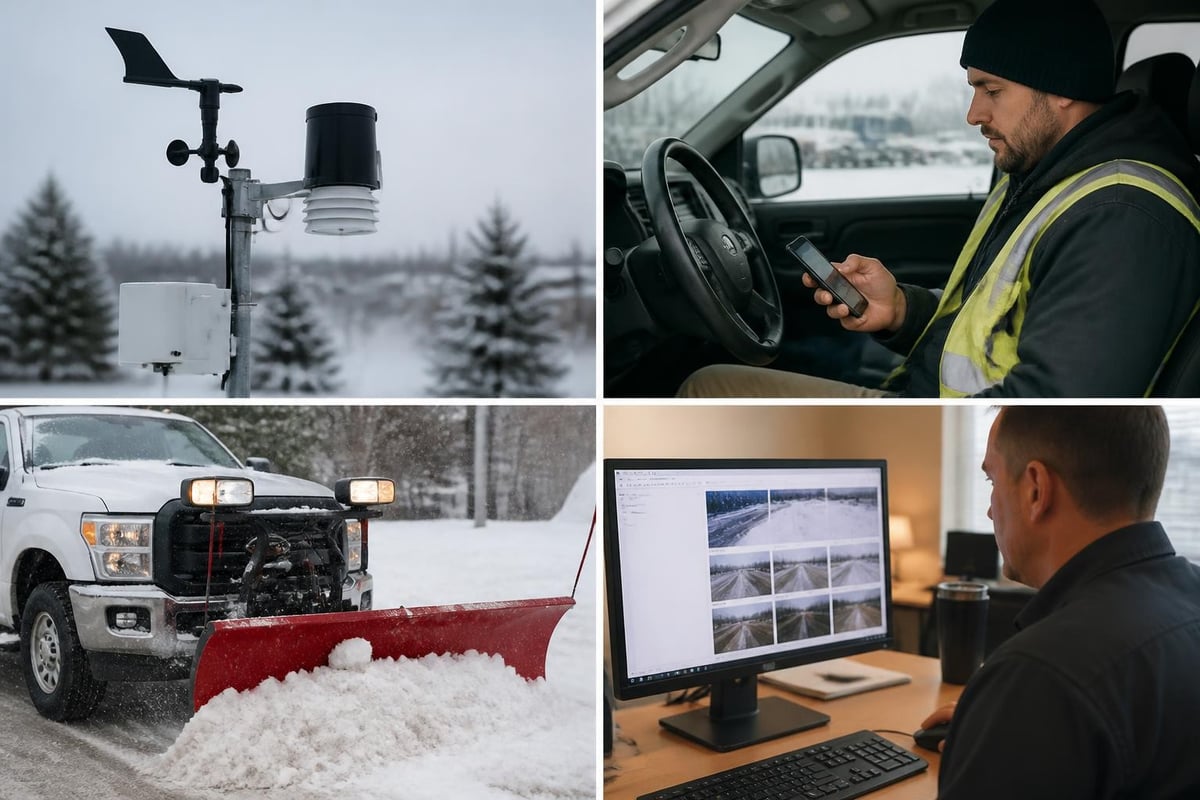
GPS-equipped vehicles enable real-time service verification. Advanced providers offer client portals displaying truck locations, service timestamps, and photographic documentation. This transparency proves invaluable when tenants claim service wasn't provided or when documenting due diligence for liability purposes.
Automated alert systems notify property managers when crews mobilize, arrive on-site, and complete service. These systems eliminate the morning uncertainty of wondering whether your parking lot will be clear when employees arrive. When comparing snow shoveling services near me, prioritize providers offering robust communication platforms rather than relying on phone calls and manual reporting.
Weather Monitoring Integration
Professional services maintain sophisticated weather monitoring capabilities, often subscribing to specialized meteorological services beyond standard weather apps. These systems provide hyper-local forecasting, allowing providers to pre-position equipment and optimize crew scheduling.
Property managers benefit when contractors proactively communicate storm preparations. A simple email or text notification stating "Forecast shows 4-6 inches overnight; crews will mobilize at 3 AM for completion by 6 AM" demonstrates operational sophistication and allows you to inform tenants or employees appropriately.
Insurance and Liability Protection
Snow removal carries significant liability exposure. Professional providers maintain comprehensive insurance specifically addressing the unique risks of commercial snow management.
Required Coverage Types
Adequate insurance protection includes several distinct policies:
- General liability: Covers property damage and bodily injury from operations
- Commercial auto: Protects vehicles and equipment during transit and use
- Workers' compensation: Mandatory coverage for employee injuries
- Completed operations: Addresses claims arising after service completion
- Contractual liability: Covers indemnification obligations in service agreements
Request current certificates of insurance before signing contracts. Verify that coverage limits meet your property's risk profile-typically $2 million general liability for mid-sized commercial properties, scaling to $5 million or more for large campuses. The certificate should name your property as an additional insured, extending the contractor's coverage to protect your interests.
Indemnification and Hold Harmless Clauses
Most professional service agreements include reciprocal indemnification provisions. The contractor agrees to defend you against claims arising from their negligence, while you indemnify them against claims resulting from property defects or your actions. Have legal counsel review these provisions to ensure balanced risk allocation.
When searching for snow shoveling services near me, recognize that legitimate providers welcome insurance discussions. Evasive responses or inadequate coverage signal serious red flags warranting immediate disqualification.
Maintenance Between Service Visits
Professional snow removal services typically operate on trigger-based schedules, mobilizing when accumulation reaches defined depths. Understanding your responsibilities between visits ensures continuous property safety.
Property Manager Responsibilities
Even with contracted service, property managers maintain certain obligations. Inspect high-traffic areas during active snowfall, particularly if rates exceed contractor trigger thresholds before scheduled checks. Keep emergency supplies on-site including backup ice melt, snow shovels, and caution signage.
Monitor weather forecasts independently. While professional providers track conditions continuously, your awareness enables informed decision-making about building closures, schedule modifications, or requesting supplemental service before standard triggers activate.
Documentation practices protect against liability claims. Photograph property conditions before and after service, noting timestamps. Maintain logs of contractor communications, service completion notifications, and any weather-related decisions affecting property access.
Coordinating with Professional Services
Effective partnerships between property managers and snow removal providers require clear communication channels. Designate a single point of contact on your team empowered to authorize additional services or address issues during storms. Provide contractors with updated site maps noting any changes to access points, tenant parking assignments, or areas requiring special attention.
Schedule pre-season walkthroughs with your contractor. Review site-specific concerns, confirm equipment storage locations if applicable, and discuss lessons learned from previous winters. These meetings strengthen working relationships and prevent misunderstandings during high-stress storm events.
Emergency Response Capabilities
Winter storms don't respect business hours. Severe weather often arrives overnight or during weekends, requiring providers capable of true 24/7 response when you need snow shoveling services near me.
Defining Emergency Service Levels
Standard contracts specify routine service parameters-typical 6-8 hour response windows during daytime storms. Emergency provisions address situations requiring faster mobilization: utility access for repairs, medical emergencies requiring ambulance access, or severe storms creating immediate safety hazards.
Emergency service triggers might include:
- Snowfall rates exceeding 2 inches per hour
- Ice accumulation creating hazardous conditions
- Municipal snow emergencies or travel advisories
- Property-specific urgent needs (medical emergencies, critical operations)
- Post-storm drifting blocking fire lanes or accessible routes
Understand the pricing premium for emergency response. After-hours mobilization typically commands 150-200% of standard rates-worthwhile for genuine emergencies but unsustainable for routine service.
Backup Plans and Contingencies
Reliable providers maintain backup contractors for extraordinary circumstances when demand exceeds capacity. Ask potential contractors about their contingency plans during the evaluation process. Companies with mutual-aid agreements or subcontractor networks demonstrate operational maturity.
Property managers should develop internal contingency plans addressing contractor failure scenarios. Identify backup providers willing to respond on short notice. Maintain emergency supplies adequate for interim self-clearing of critical areas if necessary. These preparations rarely prove necessary with established, reputable contractors but provide essential insurance during unprecedented weather events.
Long-Term Relationship Building
The most successful commercial snow management involves multi-year partnerships rather than annual contractor rotation. Stable relationships deliver superior results through accumulated site knowledge and aligned expectations.
Benefits of Consistency
Contractors serving your property across multiple seasons develop institutional knowledge that improves service quality. Crews learn property-specific challenges: the drainage issue in the south lot, the door that freezes shut when snow accumulates, or tenant parking patterns affecting pile placement.
Consistent providers justify investing in site-specific equipment modifications-truck-mounted cameras for blind spots, custom plow edges for delicate pavers, or specialized tools for unique architectural features. This specialized adaptation rarely occurs in single-season relationships when searching annually for snow shoveling services near me.
Long-term partnerships enable proactive maintenance planning. Experienced contractors identify infrastructure improvements-drainage enhancements, heated walkway options, or reconfigured snow storage-that reduce long-term costs and improve winter operations.
Performance Evaluation Framework
Systematic performance evaluation ensures accountability while providing contractors actionable feedback. Establish measurable criteria including:
| Metric | Target | Measurement Method |
|---|---|---|
| Response time | Within 2 hours of trigger | GPS timestamps |
| Completion time | Before 6 AM for overnight storms | Photo documentation |
| Surface quality | Zero ice patches in high-traffic zones | Physical inspection |
| Communication | Updates within 30 minutes of mobilization | System logs |
| Documentation | Reports within 24 hours | Submission tracking |
Conduct formal quarterly reviews during winter months, discussing performance against these metrics. Address concerns promptly rather than accumulating grievances for end-of-season discussions. This ongoing dialogue maintains service quality and demonstrates your commitment to the partnership.
Professional snow removal services protect your commercial property, reduce liability exposure, and ensure uninterrupted winter operations through systematic clearing and proactive ice management. Whether you manage parking lots, office campuses, or HOA communities across the Denver Metro area, choosing the right provider requires evaluating experience, technology capabilities, insurance protection, and proven reliability during Colorado's demanding winter conditions. Denver Snow Removals brings 47 years of commercial snow management expertise to properties throughout the region, delivering 24/7 emergency response and comprehensive clearing services tailored to your property's specific needs.