
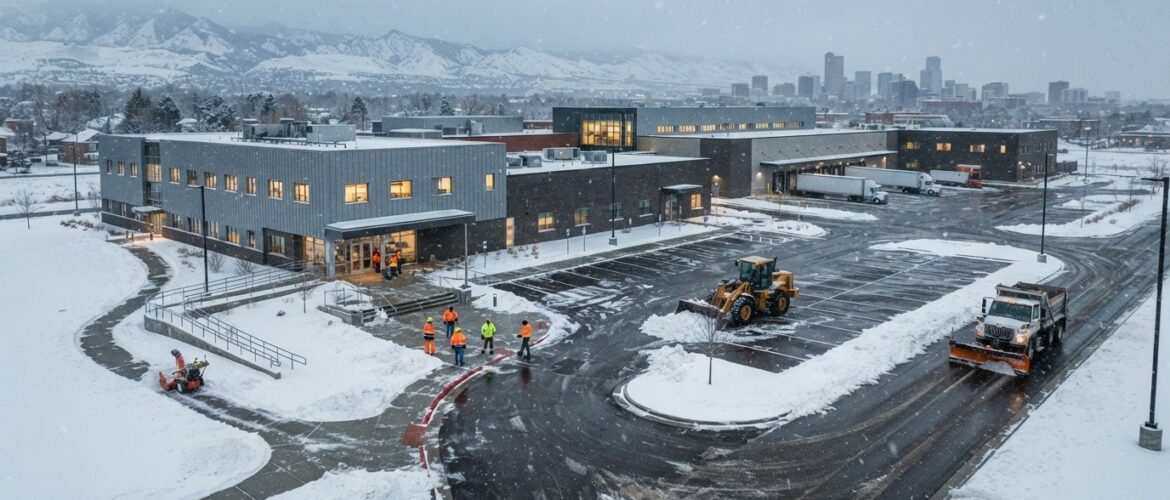
Commercial snow removal for post offices starts with more than clearing the parking lot. A useful plan accounts for public entrances, walkways, accessible routes, staff access, and vehicle movement, then sets an order for addressing them. If snow or ice blocks one of these areas, getting to and around the facility can become difficult.
Before choosing a contractor, ask what the proposed service covers, which areas take priority, and how the provider will communicate about changing conditions. Clarify the scope, dispatch schedule, storm triggers, and reporting process, and confirm that the contractor can serve the specific site. A general commercial service description alone does not establish that it fits a particular postal facility.
This guide covers site priorities, equipment and experience to ask about, and practical ways to compare Denver-area providers. Snow Removal Denver is a family-owned company with over 44 years of experience serving commercial customers across the Denver Metro area. Its fleet includes trucks, front-end loaders, and snow blowers for varied site areas. Use these details as a starting point, then request a site-specific estimate based on your facility’s layout and access needs.
Key Takeaways
- Rank public entrances, pedestrian routes, staff access, and vehicle circulation before comparing bids for commercial snow removal for post offices.
- Map pedestrian routes separately from vehicle areas so contractors can assess the site and define what is included.
- Compare Denver contractors on location coverage, equipment, snow and ice management, communication, and written scope.
- Before requesting an estimate, prepare site priorities, operating constraints, and facility contacts. Verify dispatch plans and reporting details.
- Consider Snow Removal Denver’s Denver Metro coverage, commercial experience, and equipment when assessing whether the company fits your site.
What Commercial Snow Removal for Post Offices Needs to Cover
Commercial snow removal is planned snow clearing and ice management for business properties. At a postal facility, the plan should reflect the property’s layout and operating priorities. Public entrances, pedestrian routes, staff access, and vehicle circulation may all affect how people and vehicles reach the building.
Snow Removal Denver provides commercial snow and ice clearing across the Denver Metro area, including parking lots, carports, and walkways. Ask whether the exact facility address is within service coverage, then discuss which areas need attention. Don’t assume every post office needs the same service package.
For context on the range of possible approaches, review these commercial snow removal methods.
This video offers a real-world look at a commercial plowing visit at a post office:
Which post office areas should a snow plan prioritize?
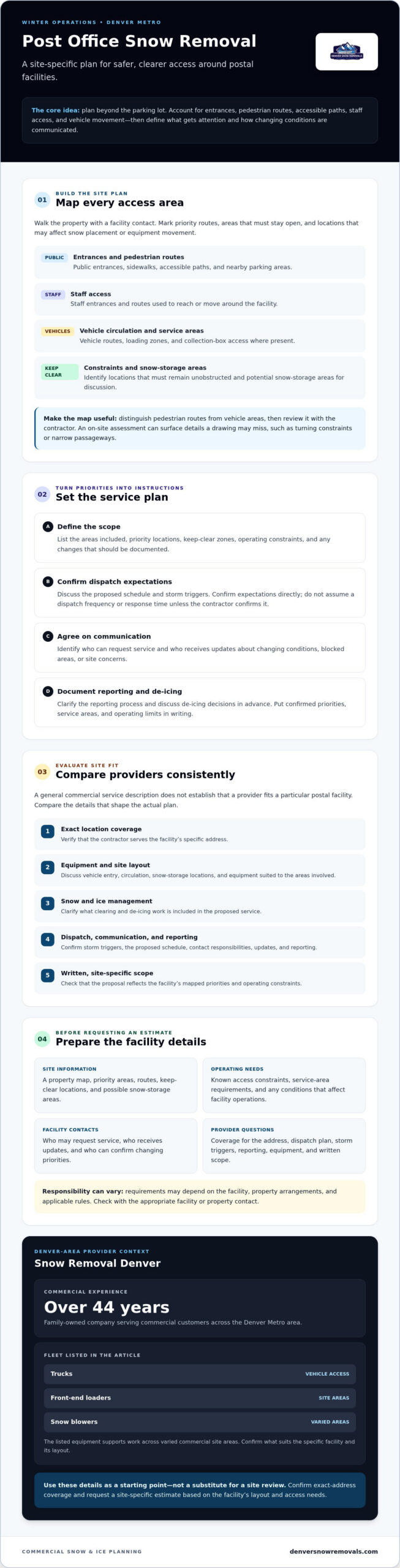
Walk the property with a facility contact and identify areas that need clearing, along with any locations that must remain unobstructed. Consider:
- Public entrances, pedestrian routes, accessible paths, and nearby parking areas.
- Staff entrances and vehicle routes used to reach or move around the facility.
- Loading zones and collection-box access, where present.
Mark priority areas and keep-clear zones on a site plan. Separate pedestrian routes from vehicle areas so the contractor can assess each part of the property and define the proposed scope. Confirm who will tell the contractor if operating needs or access priorities change.
Why does Denver location and site layout matter?
Confirm service coverage for the exact address rather than relying on a contractor’s general presence in the Denver area. Before winter, discuss vehicle entry and circulation, available snow-storage locations, and areas that need to stay open. These details can affect how the work is planned and what equipment may suit the site. Snow Removal Denver’s trucks, front-end loaders, and snow blowers support work across varied commercial site areas.
Requirements and responsibility may depend on the facility, property arrangements, and applicable rules. Check with the appropriate facility or property contact rather than relying on a general assumption. Put confirmed priorities, service areas, and operating constraints in writing so the proposed plan reflects the site.
How a Post Office Snow and Ice Plan Supports Daily Access
A written winter service plan turns facility priorities into clear instructions. It can show which routes need attention first, how pedestrian and vehicle areas differ, and how the contractor should communicate as conditions change. For commercial snow removal for post offices, a site-specific plan helps staff and the contractor work from the same information instead of making assumptions during a storm.
How should a facility map its priority routes?
Start with a property map. Mark primary entrances, accessible paths, sidewalks, parking areas, and vehicle routes. Add loading zones or collection-box access if they are part of the facility’s operations. Mark potential snow-storage areas for discussion as well, since a pile in the wrong place could obstruct access.
Use separate colors or symbols for pedestrian routes and vehicle areas. Have the facility contact and contractor review the map together before winter operations. A map is a planning aid, not a substitute for a site assessment. An on-site review can help identify turning constraints, narrow passageways, or other details a drawing may not show.
What communication should a winter service plan address?
Agree on who can request service and who should receive updates. Clarify how the contractor will communicate about changing conditions, blocked areas, or concerns at the property. Confirm the proposed schedule and storm-response expectations directly, and document any limits or changes to the agreed scope. Don’t assume a dispatch frequency or response time unless the contractor confirms it.
Discuss de-icing decisions in advance. The appropriate approach can depend on surface conditions, site needs, and the services included in the agreement. Ask what ice management covers, when it may be considered, and how the contractor will communicate any recommended action. The snow and ice control best practices handbook can provide useful background, but the facility and contractor should agree on a plan that fits the property.
Keep the approved map and contact process accessible to the people coordinating winter operations. Review them if access patterns or facility priorities change. A clear plan helps the contractor understand what matters while giving facility staff a way to raise concerns and confirm the agreed scope.
For a Denver Metro site, a property-specific discussion can help determine whether the proposed service areas and priorities are a fit. Explore commercial snow and ice services as a starting point for that conversation.
How to Compare Denver Commercial Snow Removal Contractors
Compare proposals against the same site map and priorities. A clear explanation of what the facility needs, what the service includes, and what still needs confirmation is more useful than a broad promise. For commercial snow removal for post offices, verify coverage and site-specific scope before weighing proposals.
Use this framework to distinguish documented capabilities from details that need written clarification:
| Comparison area | What to verify | What needs written clarification |
|---|---|---|
| Coverage | Does the provider serve the facility’s specific Denver Metro location? | Confirm that the exact address can be considered for service. |
| Areas included | Can the contractor review the property map and identify requested zones? | List included and excluded walkways, parking areas, entrances, and other priority areas. |
| Equipment | Ask which equipment may suit the site’s different areas and access conditions. | Confirm the proposed equipment approach for the actual property. |
| Communication | Discuss service requests, operational updates, and how to raise site concerns. | Document contacts and the agreed communication process. |
| Ice management | Ask what ice-management service is offered and how decisions are made. | Clarify responsibilities, scope, and any exclusions. |
Which contractor capabilities should a post office verify?
Ask each provider to assess the property rather than relying on a generic service description. Snow Removal Denver serves commercial customers across the Denver Metro area and uses trucks, front-end loaders, and snow blowers. These equipment types can support work across varied site areas, but confirm coverage for the specific postal facility and whether the proposed scope addresses its walkways, parking lot, and other requested zones.
What should buyers clarify before comparing proposals?
Request the same information from each contractor. Get a clear scope that identifies covered areas, exclusions, and how ice management is handled. Ask who can request service, who receives updates, and how staff should report blocked access or other concerns. Verify any proposed schedule and storm-response expectations directly. Treat unconfirmed timing or communication claims as unresolved, not as established capabilities.
Then compare proposals side by side against the facility’s documented priorities. If one quote covers a parking lot while another includes walkways and ice management, the proposals are not equivalent until the scope is aligned. A contractor’s willingness to review the property and explain what remains unconfirmed can help you assess fit without relying on unsupported promises. For a broader overview of commercial snow removal in Denver, review the service details and compare them with your site’s needs.
What to Prepare Before Requesting a Post Office Snow Removal Estimate
A useful estimate starts with accurate site information. Before contacting contractors, gather the property address, a site map if available, and a short list of operating priorities. This gives the provider a clearer basis for assessing the property and helps you compare proposals against the same needs. For commercial snow removal for post offices, access and coordination details matter alongside the list of areas to clear.
What site information helps a contractor assess the property?
Prepare a layout showing entrances, sidewalks, parking areas, pedestrian routes, and vehicle access. Note delivery routes, restricted areas, loading zones, or locations that require coordination. If the site has preferred snow-storage locations, mark them for discussion and ask whether they are practical for the proposed service. Identify the facility decision-maker and the person who can explain access constraints during an assessment.
Use this preparation sequence before the first discussion:
- Map the site: Share a current layout and mark the areas that may need service.
- List priorities: Note which routes or entrances matter most to facility operations.
- Confirm contacts: Identify who can approve the scope, request service, and receive updates.
- Request a defined scope: Ask the contractor to document included areas, exclusions, and service assumptions.
What questions should buyers ask about the proposed service?
Ask the provider to specify which areas are included and how site priorities will be agreed before winter. Clarify how staff can request service, who receives updates, and how changes in conditions or access will be communicated. Ask what ice-management work is included and what would require separate approval. Confirm any proposed dispatch schedule and storm-response expectations directly with the contractor. Get the answers in writing so you have a clear reference when reviewing the estimate.
Keep a separate list of unresolved questions. Where can snow be placed without blocking routes? What happens if a delivery entrance is inaccessible? Who should staff contact about an area that needs attention? The answers can show whether the provider has understood the property and whether the proposal reflects its operating constraints. They also help identify assumptions to settle before approving a plan.
For broader preparation ideas, consult this Denver winter storm preparedness guide. Then share the site details with a Denver Metro provider and ask whether service is available at your specific facility. Request a site-specific snow removal estimate based on your property layout, access priorities, and requested snow and ice service scope.
Choosing a Denver Snow Removal Partner for Your Post Office
Choose based on a clear match between the facility’s documented priorities and the contractor’s verified capabilities. Review the property map and requested service areas alongside the written scope. Confirm location coverage, communication steps, ice-management responsibilities, and any proposed dispatch expectations before deciding. A general promise to clear snow does not confirm what a specific property needs.
Why consider Snow Removal Denver for commercial snow clearing?
Snow Removal Denver is a family-owned company with over 44 years of experience serving commercial properties across the Denver Metro area. Its fleet includes trucks, front-end loaders, and snow blowers to support snow clearing across varied site areas. Commercial services include clearing parking lots and walkways. These details are a starting point for assessment, not confirmation of postal-facility experience or availability at a particular post office.
For commercial snow removal for post offices, ask the contractor to review the property and confirm whether its location can be served. Check that the proposed scope addresses the facility’s requested areas and operating constraints. A clear description of what is included, excluded, and still subject to confirmation is more useful than an unsupported assurance.
What happens when a facility requests an estimate?
Share the property location, available site layout, priority areas, and access or coordination requirements. Ask about communication, snow placement, ice management, and the proposed service schedule. Have the company confirm availability for that property and describe its proposed scope in writing. Review the details with the facility contact before agreeing to a plan, especially if a priority route or operating constraint has not been addressed.
This process turns a broad service inquiry into a site-specific assessment. Snow Removal Denver’s Denver Metro coverage, experience, and commercial snow-clearing capabilities may make it worth including in your comparison, provided the specific location and requirements are confirmed. Request an assessment based on the facility’s documented needs.
Request a commercial snow removal estimate and provide the location, site details, and priorities for review.
Build a Winter Plan Around Your Facility’s Needs
A practical snow plan begins with clear priorities. Map entrances, pedestrian routes, parking areas, and vehicle access, then confirm which locations the contractor will cover. Compare providers using written details about service scope, ice management, communication, and proposed response expectations.
Snow Removal Denver is a family-owned company with over 44 years of experience serving commercial properties across the Denver Metro area. Its commercial snow clearing covers parking lots and walkways, supported by trucks, front-end loaders, and snow blowers. Confirm availability for your facility and review the proposed scope before deciding. A site-specific assessment can help determine whether the service fits your priorities for commercial snow removal for post offices.
Share your facility location, site layout, and access priorities to begin. Request a site-specific commercial snow removal estimate, then confirm the service details that matter to your property.
Frequently Asked Questions
Does a post office need commercial snow removal?
A post office may need planned snow and ice service to keep important routes accessible during winter weather. The appropriate scope depends on the facility’s layout and operating needs, including public entrances, staff access, pedestrian paths, parking, and vehicle circulation. Commercial snow removal for post offices should be based on a site review, not a standard package. Confirm the facility’s requirements and priorities with the appropriate contact.
What areas should a snow removal contractor clear at a post office?
Ask the contractor to assess the areas the facility relies on instead of assuming every property needs the same coverage. Common priorities may include public entrances, sidewalks, accessible paths, parking areas, staff entrances, delivery routes, and loading zones. Include collection-box access if it is part of the site. Mark vehicle routes separately from pedestrian paths, and identify restricted or keep-clear areas before agreeing on the scope.
How do I choose a snow removal company for a post office in Denver?
Choose a provider only after confirming it serves the facility’s specific Denver Metro location and can assess the property. Compare written proposals for included areas, exclusions, ice management, equipment, communication, and proposed dispatch expectations. Confirm availability and every proposed service detail for your site.
Can a commercial snow removal service clear sidewalks and parking lots?
Commercial snow removal services may include sidewalks and parking lots, but the exact areas depend on the contractor’s confirmed scope. Snow Removal Denver’s commercial services include snow and ice clearing for parking lots, carports, and walkways. Identify the sidewalks, entrances, accessible paths, and parking zones the facility wants assessed. Ask the contractor to list included areas and exclusions in writing.
What should a post office include in a snow removal service agreement?
Document service areas, priorities, exclusions, and the ice-management scope. The agreement should also clarify how service is requested, which contacts receive updates, how changing site conditions are reported, and what dispatch schedule or storm-response expectations have been proposed. Specify snow-placement constraints that affect access. Review the terms with the facility contact and check that the written scope matches the property map and operating needs.
Who is responsible for clearing snow at a post office?
Responsibility can depend on the facility, property arrangements, and applicable agreements, so don’t assume it belongs to the post office, property owner, or contractor. Ask the appropriate facility or property contact to clarify who coordinates snow service and which areas are covered. Verify applicable requirements with an authoritative source. A contractor’s service agreement describes its agreed scope, but it should not be treated as proof of legal responsibility.
How soon should a Denver post office arrange snow removal service?
Start planning before winter operations begin so there is time to map priority areas, review site access, compare proposals, and confirm the scope. Don’t assume a particular booking deadline or response time. Ask providers about availability for the specific facility, proposed dispatch schedule, storm triggers, and communication process. Early discussion gives the facility and contractor time to resolve questions before snow or ice affects access.