
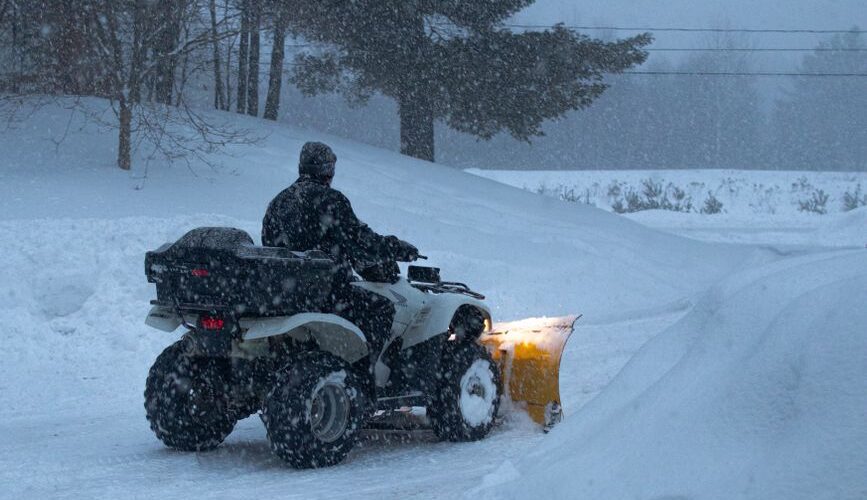
Snow removal in Denver in 2026 is priced by the visit for residential driveways and by the season or per-push contract for commercial parking lots. Most residential jobs land in a predictable per-service range, while commercial quotes are driven by lot square footage, trigger depth, and response time. The City and County of Denver only plows main streets and residential side streets, so private property owners are responsible for their own driveways, lots, and sidewalks. denversnowremovals.com handles both commercial parking lots and residential driveways in Denver.
Table of Contents
- What does snow removal in Denver cost in 2026?
- What is the difference between residential and commercial snow removal in Denver?
- How fast can a snow removal crew respond in Denver?
- Which Denver snow removal services does denversnowremovals.com offer?
- What are Denver's own snow removal rules and how do they affect private service?
- How do I schedule snow removal in Denver for 2026?
- What should I ask before hiring a Denver snow removal company?
- Key Takeaways
- References
What does snow removal in Denver cost in 2026?
Residential driveway service in Denver is typically quoted per visit, with the rate based on driveway length, slope, and whether walkway and step clearing is included. Seasonal residential contracts are also available and are billed as a flat monthly or per-season fee. The per-visit model works best for homeowners who want service only after larger storms, while seasonal contracts suit those who want guaranteed coverage without watching the forecast.
Commercial parking lot service follows a different pricing structure. Most commercial accounts are seasonal contracts billed monthly across the winter, or per-push billing triggered by each storm. Per-push rates are set by lot acreage and the trigger depth written into the contract. A one-acre lot with a two-inch trigger will cost differently than a half-acre lot with a one-inch trigger, because the equipment, labor, and material needs change.
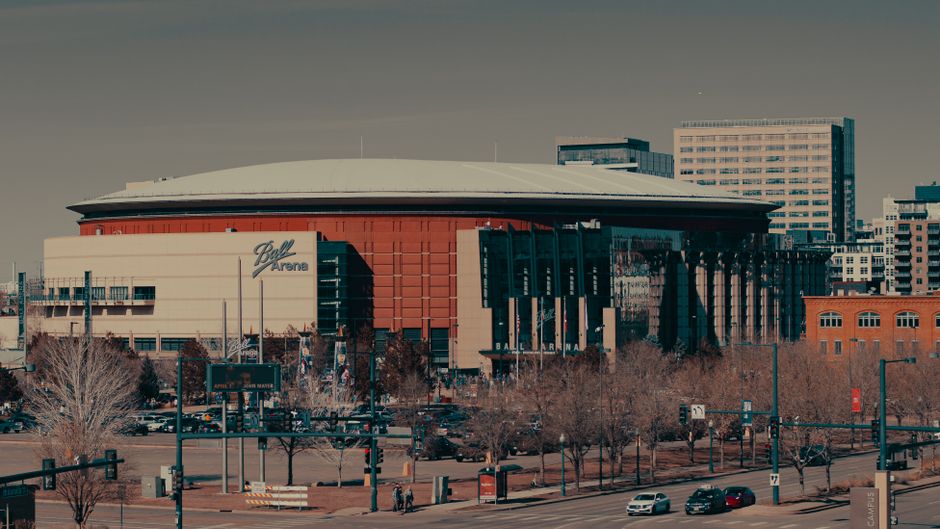
The City and County of Denver does not publish private snow removal rates, and the sources reviewed do not state average or typical costs for private providers. According to the City and County of Denver Department of Transportation & Infrastructure, the city's own snow response covers public streets, not private driveways or parking lots. SaBell's, a Denver-area provider operating since 1973, also does not list current pricing publicly, which reflects the industry norm of site-specific quoting.
2026 rates reflect fuel, insurance, and equipment costs. Insurance is a major line item for any legitimate snow contractor, and it protects property owners if a plow damages a curb, gate, or landscape feature. Equipment costs include plows, salt spreaders, skid steers, and maintenance, all of which have risen with supply chain and labor pressures. The only firm number a reader can get is a site-specific quote.
denversnowremovals.com quotes both residential driveways and commercial parking lots in Denver, and pricing is confirmed at the time of the quote. The company's service area is limited to the City and County of Denver, which keeps routes tight and response times predictable. A quote requires property dimensions, surfaces to be cleared, and whether de-icing is part of the scope.
What is the difference between residential and commercial snow removal in Denver?
Residential snow removal covers driveways, walkways, steps, and sometimes sidewalk frontage. The equipment is smaller, often a pickup-mounted plow or snow blower, and routes are neighborhood-based. A residential crew can clear several driveways on the same block in a single pass, which keeps per-visit pricing lower than commercial work. Homeowners typically choose between on-call service after a set accumulation and a fixed seasonal route.
Commercial snow removal covers parking lots, loading zones, ADA ramps, and sidewalks, and typically includes de-icing and snow hauling off site. According to GroundMasters Denver, the company provides commercial snow removal and de-icing using equipment that includes a Snowrator for sidewalk management. GroundMasters also pre-designates alternative dump sites for snow hauling, which matters when piled snow consumes parking spaces.
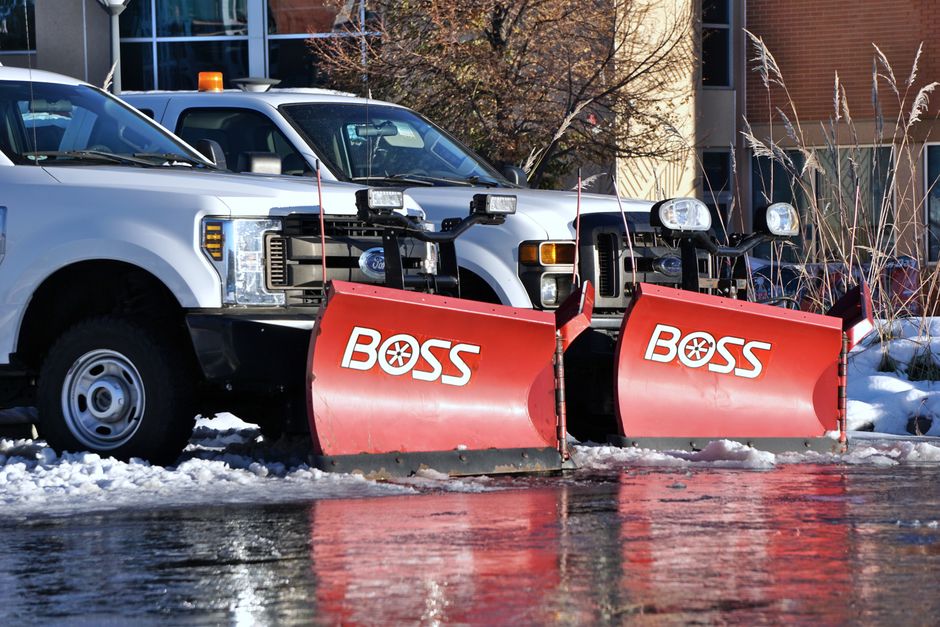
Commercial contracts usually carry a trigger depth and a response window. A trigger depth is the snowfall amount that automatically dispatches a crew, such as one inch or two inches. The response window is the time by which the lot must be cleared after the trigger is met. Residential service is often on-call or on a fixed route after a set accumulation, with less formal service-level language.
Denver requires property owners to clear snow and ice from sidewalks, including adjacent ADA ramps and bus stops, according to the City and County of Denver Department of Transportation & Infrastructure. This requirement applies to both homes and businesses. A homeowner with a corner lot may have more sidewalk frontage to clear than a mid-block neighbor, and a commercial property with a bus stop adjacent to its lot carries the same obligation.
BrightView Denver, located at 12570 E. 39th Ave, Denver, CO 80239, offers 24/7 storm monitoring as part of its commercial snow and ice services. That level of monitoring is standard for larger Denver commercial providers, because a missed trigger can mean an unplowed lot during business hours. Residential providers do not typically offer 24/7 monitoring, since residential routes run on a different schedule.
How fast can a snow removal crew respond in Denver?
Response time is the single biggest variable in both price and contract terms for Denver snow removal. A commercial account that requires a two-hour response window after a one-inch trigger will pay more than an account with a six-hour window after a three-inch trigger. The faster the required response, the more crews and equipment a provider must keep available, and that cost is passed through to the contract.
Commercial accounts are typically written with a trigger depth and a response window, and 24/7 storm monitoring is a standard feature of larger Denver commercial providers. BrightView Denver offers 24/7 storm monitoring from its location at 12570 E. 39th Ave, Denver, CO 80239. That monitoring means a dispatcher is watching weather data and can call crews before snow begins falling, rather than waiting for a property manager to report accumulation.
Residential routes run after accumulation hits a set threshold, so timing depends on route position and storm size. A homeowner near the start of a route may see service within hours of the trigger, while a homeowner at the end of the route may wait until the following morning. Large storms slow every route, because each property takes longer to clear and crews must return to earlier stops as snow continues to fall.
For context on the public side, Denver residential plowing runs between 3:00 a.m. and 3:00 p.m., according to the City and County of Denver Department of Transportation & Infrastructure. Residential plows take one pass down the center of every side street. That single pass leaves a windrow of snow across driveway aprons, which is why private service is what clears the driveway apron the city plow fills in.
Private crews cannot always match the city's schedule, but they can clear the areas the city does not touch. A residential plow from denversnowremovals.com clears the driveway itself, plus walkways and steps if those are included in the scope. A commercial crew clears the parking lot, loading zone, and sidewalks, then applies de-icing material where the contract specifies.
Which Denver snow removal services does denversnowremovals.com offer?
denversnowremovals.com offers commercial snow plowing for parking lots, including pre-season contracts, per-push service, and de-icing. Pre-season contracts lock in a rate before winter and guarantee that a crew is assigned to the property. Per-push service bills only when snow falls and a visit is triggered, which suits properties with flexible budgets or lower traffic.
denversnowremovals.com also offers residential snow plowing for driveways, including walkway and step clearing. The company's residential service is designed for homeowners who want the driveway cleared without waiting for the city's residential plow program to make its single center pass. Walkway and step clearing is included when the property owner requests it, which helps meet Denver's sidewalk clearing requirement.
Scheduling and dispatch are handled directly by the company, with service confirmed before the storm. That means a property owner knows a crew is assigned before snow begins falling, rather than calling after the storm and hoping for availability. Direct dispatch also means the same company handles the property throughout the season, which helps with consistency.
Both commercial and residential work is limited to the City and County of Denver. The company does not serve suburbs or other counties, which keeps routes concentrated and reduces travel time between properties. A Denver-only service area also means the company is familiar with Denver's street grid, alley access, and parking patterns, which matters when plowing tight lots and narrow driveways.
The City and County of Denver's own snow response covers public streets, not private property. According to the city's Department of Transportation & Infrastructure, the residential plow program covers about 1,260 center lane miles of residential streets, but those plows do not clear driveways or private lots. That gap is exactly what private service from denversnowremovals.com fills.
What are Denver’s own snow removal rules and how do they affect private service?
Denver's Department of Transportation & Infrastructure handles emergency snow response for roughly 2,050 lane miles of main streets with a fleet of 70 large plows, according to the City and County of Denver. Those main streets are the priority during and after a storm, because they carry the most traffic and connect emergency routes. Residential side streets are a separate program with different rules.
The residential plow program covers about 1,260 center lane miles, was created during the blizzards of 2006-07, and runs 3:00 a.m. to 3:00 p.m. Residential plows take one pass down the center of every side street. That single pass does not clear the full street width, and it does not clear driveway aprons, sidewalks, or parked car areas.
Residential areas do not receive de-icing materials. The city uses solid Ice Slicer on main routes and liquid magnesium chloride downtown, according to the City and County of Denver. Ice Slicer is a naturally-mined product from Utah that is more than 90-percent chloride salts, and its red color comes from 60 trace minerals naturally found in the deicer. Residential side streets get plowed but not treated.
Denver requires property owners to clear snow and ice from sidewalks, including adjacent ADA ramps and bus stops. That rule applies to homes and businesses alike. A homeowner who does not clear the sidewalk in front of the house can face enforcement action, and a business with an ADA ramp or bus stop adjacent to its property carries the same obligation.
The practical takeaway is that city plows clear the street, not the driveway or lot. A city plow passing down a residential street will push snow into the driveway apron, leaving a windrow that the homeowner must clear. A commercial lot on a main street will see city plows pass by, but the lot itself, its sidewalks, and its ADA ramps remain the property owner's responsibility. Private service is what makes a property usable after a storm.
How do I schedule snow removal in Denver for 2026?
Book before the season starts. Commercial accounts are usually signed in fall, and residential routes fill as winter approaches. A property owner who waits until the first major storm to call will find that most providers are already committed to existing contracts. Scheduling in September or October gives the provider time to inspect the property and assign equipment.
Have the property details ready when requesting a quote. The address, driveway or lot dimensions, surfaces to be cleared, and whether de-icing is wanted are the basic facts every provider needs. A commercial property manager should also know the number of parking spaces, the location of ADA ramps, and whether snow hauling is required. GroundMasters Denver pre-designates alternative dump sites for snow hauling, which shows why dump site planning matters before the season starts.
Confirm the trigger depth, response window, and whether billing is per push or seasonal before signing. A trigger depth is the snowfall amount that dispatches a crew, and the response window is the time by which the property must be cleared. Per-push billing charges only when snow falls, while seasonal billing spreads the cost across the winter months. Both models are common in Denver.
Ask what happens during a multi-day storm and how snow is stacked or hauled. A multi-day storm may require multiple visits, and the contract should state whether those visits are included or billed separately. Lot space matters commercially, because piled snow can consume parking spaces. If the lot cannot hold the snow, hauling off site becomes necessary, and that cost should be in the contract.
What should I ask before hiring a Denver snow removal company?
Ask about insurance and licensing, plus who is actually on the crew and what equipment they run. A legitimate Denver snow removal company carries liability insurance that covers property damage, and the crew should be trained on the equipment they operate. Equipment matters because a full-size plow truck cannot clear a tight residential driveway, and a small snow blower cannot clear a commercial lot.
Ask whether the contract is seasonal or per push, and what triggers a visit. The trigger depth and response window should be written into the contract, not left to a verbal agreement. Ask how de-icing is handled and which materials are used on walks, ramps, and lots. Denver's city crews use Ice Slicer on main routes and liquid magnesium chloride downtown, but private providers choose their own materials.
Ask what the provider does with piled snow, and whether hauling is included. A commercial lot that fills with piled snow loses parking spaces, and hauling off site is a separate cost if it is not in the contract. Ask whether the company serves only Denver or also surrounding areas, since the scope of this article is Denver city only. denversnowremovals.com serves the City and County of Denver.
Key Takeaways
- Denver's DOTI plows about 2,050 lane miles of main streets with 70 large plows and about 1,260 center lane miles of residential streets.
- Denver residential plowing runs from 3:00 a.m. to 3:00 p.m. and leaves one pass down the center of each side street, with no de-icing in residential areas.
- Denver property owners are required to clear snow and ice from sidewalks, including adjacent ADA ramps and bus stops.
- Residential snow removal is priced per visit or by seasonal contract, while commercial parking lot service is priced seasonally or per push.
- Commercial contracts in Denver typically specify a trigger depth and response window, and larger providers offer 24/7 storm monitoring.
- denversnowremovals.com provides both commercial parking lot plowing and residential driveway plowing within Denver.
- Scheduling for the 2026 season should be done before winter, with property dimensions, surfaces, and de-icing needs confirmed at booking.
References
- Snow Removal – City and County of Denver — date unknown
- Snow Removal Denver — date unknown
- Denver, CO Commercial Snow & Ice Services – BrightView — date unknown
- Denver, CO Snow & Landscape Experts – GroundMasters — date unknown