

Denver’s average first frost arrives right around October 6. The average first measurable snow lands near October 18. Those two dates sit only twelve days apart, and they mark the narrow stretch when a property manager can still choose a snow removal company instead of taking whatever is left. Our snow season contracts run October 1 through May 1, which means route planning, equipment assignments, and crew scheduling for the Denver metro are already underway. Every day after October 18, the list of available slots gets shorter and the price of waiting gets steeper.
Why October 6 Through 18 Is the Real Deadline
Frost is the first warning. When overnight temperatures drop to freezing in early October, pavement temperatures follow, and the first ice patches show up on shaded sidewalks, bridge decks, and north-facing parking lot entries long before any plow is needed. That frost date is the moment de-icing and ice control become a real line item rather than a theoretical one.
Measurable snow is the second warning, and it lands roughly two weeks later. Between those two markers, commercial snow contractors in Denver are finalizing route maps, confirming salt and de-icing supply, bringing seasonal operators back onto payroll, and staging equipment. A property that signs during that window gets placed into a planned route. A property that signs in November gets squeezed into whatever gap remains, or pays emergency rates for the same work.
What Waiting Until the First Storm Actually Costs You
Emergency dispatch pricing exists for a reason. When a storm hits and a property has no contract, the call goes out the same morning as everyone else’s. Response depends on crew availability, not on a scheduled route position. The work still gets done, but the property pays a premium for being a same-day request instead of a planned stop.
The bigger cost is usually not the invoice. It is the hour or two between snowfall and service, when a parking lot is unplowed and sidewalks are slick. Retail tenants open late. Office staff park on the street. An HOA board starts fielding calls from residents. Distribution centers hold trucks at the gate. Those operational losses are hard to recover and rarely appear on a snow removal bill, but they are the real reason October booking matters for Denver commercial properties.
Denver’s Sidewalk Ordinance Puts a 24-Hour Clock on Your Property
The City and County of Denver requires property owners and occupants to clear snow and ice from adjacent sidewalks, and the standard window for doing so is 24 hours after snow stops falling. That clock does not pause for a second storm, a weekend, or a holiday. It also does not care whether the sidewalk fronts a storefront in Cherry Creek or a residential block in Wash Park.
For commercial properties, the practical effect is that sidewalk clearing has to be built into the same response plan as the parking lot. A plowed lot with an icy, snow-covered sidewalk in front of it still fails the requirement. Our sidewalk clearing and shoveling crews are dispatched alongside plow operators so both surfaces are handled in the same pass. Residents and property managers should confirm current ordinance language and any specific deadlines with the City and County of Denver, since enforcement details can change.
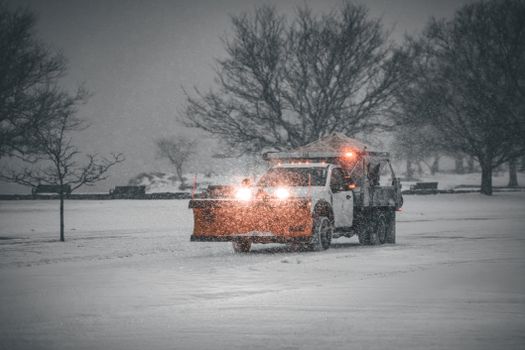
Slip-and-Fall Liability Is the Expensive Half of a Denver Snow Event
A slip-and-fall claim on an untreated sidewalk or parking lot surface can cost far more than an entire season of snow removal. The exposure is not limited to the fall itself. It includes medical costs, lost wages, legal defense, and the reputational hit when a tenant or customer gets hurt at your address.
Documentation matters as much as the work. Time-stamped service records showing when a lot was plowed, when de-icer was applied, and when sidewalks were cleared give a property owner a defensible record. That record is one of the quiet reasons seasonal contracts outperform ad hoc calls. A scheduled route generates a paper trail automatically. A panicked mid-storm phone call often does not.
Seasonal Contracts vs Per-Push Emergency Calls
The two models serve different needs, and the differences show up most clearly during the first heavy storm of the season.
| Consideration | Seasonal contract | Per-push emergency call |
|---|---|---|
| Storm priority | Route position secured before the season | Depends on who calls first that morning |
| Cost predictability | Budgeted for the full October 1 to May 1 season | Varies by storm, timing, and demand |
| Equipment commitment | Plows, skid steers, and de-icing units assigned in advance | Whatever can be diverted from existing routes |
| Service records | Generated with every scheduled visit | Inconsistent during high-volume events |
| Sidewalk coverage | Built into the same visit as the lot | Often arranged separately and later |
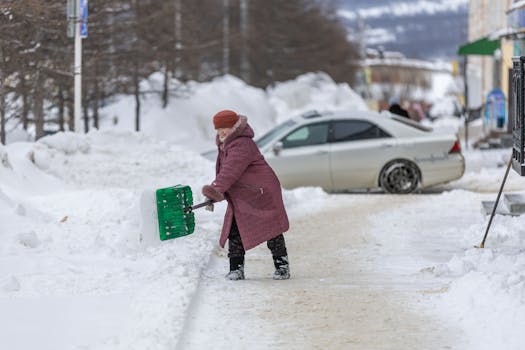
What a Denver Snow Season Contract Covers
Our season runs October 1 through May 1 and is structured around trigger-depth terms, which define the snow accumulation level that starts a service visit. That structure removes guesswork. Instead of calling after every forecast, a property knows the crew mobilizes when accumulation reaches the agreed depth, and the property knows what that visit includes.
Coverage typically spans parking lots, drive lanes, loading zones, entryways, walkways, and sidewalks. De-icing and ice control are layered in when conditions call for them, particularly during freeze-thaw cycles when meltwater refreezes overnight and creates black ice on concrete. For properties with limited snow storage space, snow hauling is added so piles do not swallow parking stalls or block sight lines.
Full Denver Snow Removal Services
Everything below is dispatched from Denver for Denver properties, with 24/7 coverage through the season.
Commercial Snow Plowing
Parking lots, drive lanes, and access roads are plowed to agreed trigger depths using equipment sized to the property. Large surface lots move faster with a skid steer and truck plow combination, while tighter urban sites in Downtown and Capitol Hill call for more precise equipment that works around parked cars, planters, and loading docks.
Snow Hauling and Disposal
When a lot has nowhere left to push snow, hauling removes it entirely. This matters in dense commercial districts and small residential lots where piled snow eliminates parking, blocks fire lanes, or creates blind corners at exits. Snow is loaded and trucked off site so the property returns to full use rather than shrinking around its own snow piles.
De-Icing and Ice Control
Plowing clears snow. De-icing handles what is left behind. Ice control treatments are applied to parking surfaces, entryways, ramps, and sidewalks to break the bond between ice and pavement and to reduce refreeze overnight. Denver’s freeze-thaw pattern makes this a season-long need rather than a one-time application.
Shoveling and Sidewalk Clearing
Hand crews clear sidewalks, walkways, stairwells, bus stops, and building entries that plow blades cannot reach. This is the service that keeps a property compliant with Denver’s sidewalk clearing expectation and keeps pedestrians off ice. It is scheduled with the plow visit so a cleared lot never sits behind an uncleared walkway.
24/7 Emergency Snow Response
Storms do not respect business hours, and neither does our dispatch. Emergency response is available around the clock during snow events for contracted properties and for urgent requests, covering plowing, de-icing, sidewalk clearing, and hauling when conditions escalate faster than forecast.
HOA and Apartment Community Snow Management
HOA communities and apartment complexes have pedestrian traffic that commercial lots do not. Residents walk dogs, children cross interior streets, and mail areas and clubhouse entries get constant use. Service plans for these properties prioritize sidewalks, interior drives, parking bays, and mailbox and amenity areas alongside the main lots.
Industrial, Warehouse and Distribution Snow Removal
Industrial parks and warehouses cannot afford blocked truck courts, dock doors, or trailer staging areas. Plans for these sites prioritize trailer paths, dock aprons, and employee parking first so freight keeps moving, with perimeter areas handled as equipment allows during the event.
Skid Steer Snow Removal
Skid steers handle the work full-size plows cannot. They clear tight parking structures, narrow service alleys, walkway networks, and congested lots where turning radius matters more than blade width. For Downtown, LoDo, and Central Denver properties with limited space, skid steer crews are often the difference between a cleared site and a partially blocked one.
Metro Denver Neighborhoods and Property Types We Serve
Service covers the City and County of Denver and the surrounding metro, including Central Denver, Downtown, LoDo, Cherry Creek, Capitol Hill, and Wash Park. Property types range from office campuses, retail centers, and hotels to HOA communities, apartment buildings, industrial parks, and distribution facilities.
Each of those neighborhoods has its own constraints. Downtown and LoDo sites deal with limited snow storage, alley access, and heavy pedestrian volume. Cherry Creek properties balance customer parking against sidewalk visibility. Capitol Hill and Wash Park properties often juggle older sidewalks, mature trees, and tight residential parking. A service plan that ignores those differences tends to produce complaints regardless of how much snow gets moved.

Who Should Book First
Properties with the tightest constraints should lock in dates first. That includes sites with no snow storage area, buildings with high pedestrian counts, HOAs with strict resident expectations, and industrial facilities with early shift changes. These are the properties where a delayed response becomes a visible problem within the first hour of a storm.
The order of operations is straightforward. Confirm the property details, agree on trigger depths and the surfaces to be covered, decide whether hauling and de-icing are part of the plan, and get the contract signed before the window closes. Properties that complete this in the October 6 to 18 stretch start the season inside a planned route instead of waiting on a call-back list.
Frequently Asked Questions
When does Denver usually get its first measurable snow?
The average first measurable snow in Denver falls around October 18, with the average first frost arriving near October 6. Those are averages, not guarantees, and the city has seen snow arrive earlier and later. The practical takeaway is that the window for booking service without competing against a full storm response is roughly the first two and a half weeks of October.
How quickly do I have to clear my sidewalk in Denver?
Denver requires property owners and occupants to clear snow and ice from adjacent sidewalks, with a 24-hour window after snow stops falling. Commercial properties should treat that as a hard deadline and build sidewalk clearing into the same service visit as the parking lot. Confirm current requirements and enforcement details with the City and County of Denver.
Is a seasonal contract cheaper than paying per visit?
Seasonal contracts spread cost across the October 1 to May 1 season and secure a position on a planned route. Per-push emergency calls are priced for immediate, unplanned response, so the same property can pay more for slower service. Seasonal terms make budgeting easier and typically reduce the premium paid for short-notice dispatch.
Why do snow removal companies fill up in October?
Route density has a ceiling. Each truck and crew can only cover so many properties within a reasonable response time, so contractors cap the number of sites per route. Once those slots are assigned, additional properties either get added to a longer route, wait for emergency availability, or go unserved during peak storms.
Can you handle snow hauling when there is nowhere left to push?
Yes. Snow hauling is built for exactly that situation. Crews load snow from lots, alleys, and staging areas and truck it off site so parking stalls, fire lanes, and sight lines stay usable. This service is common in Downtown, LoDo, and dense Cherry Creek properties where storage space simply does not exist.